
test
Luang Prabang
Things To Do of testtt
Gallery
Things To Do in Luang Prabang
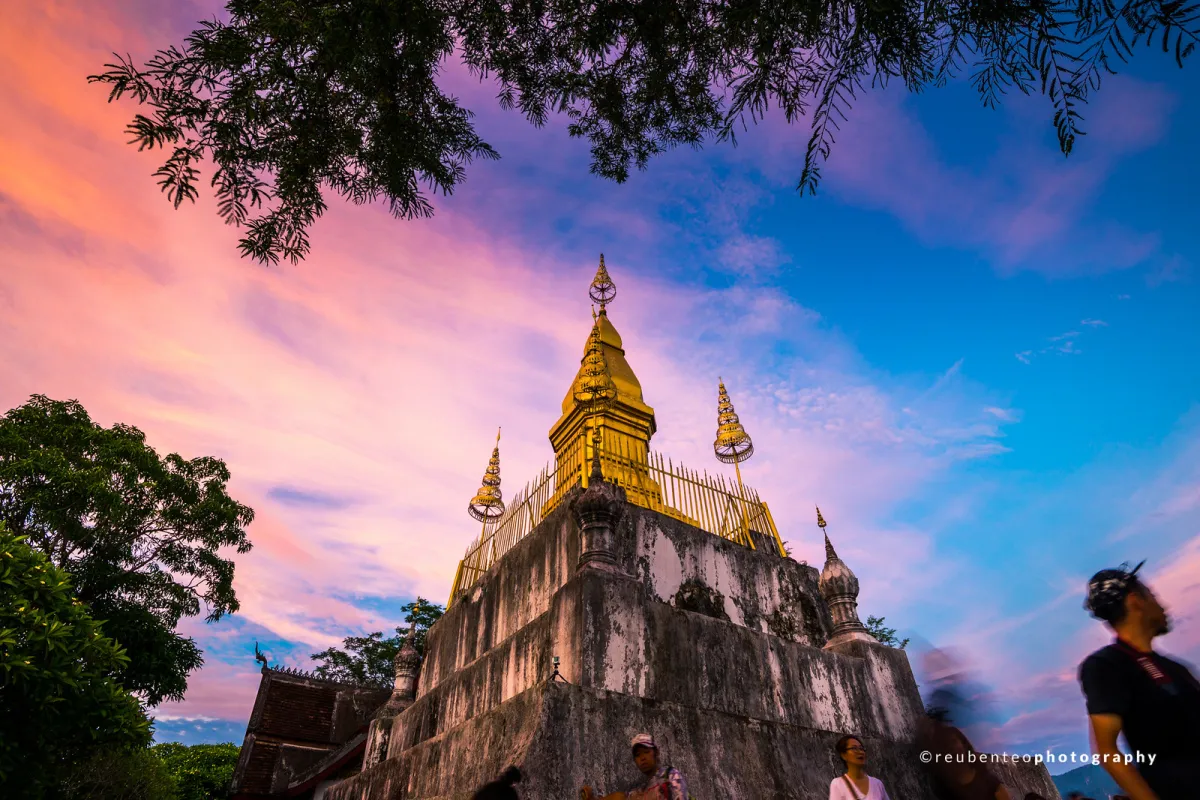
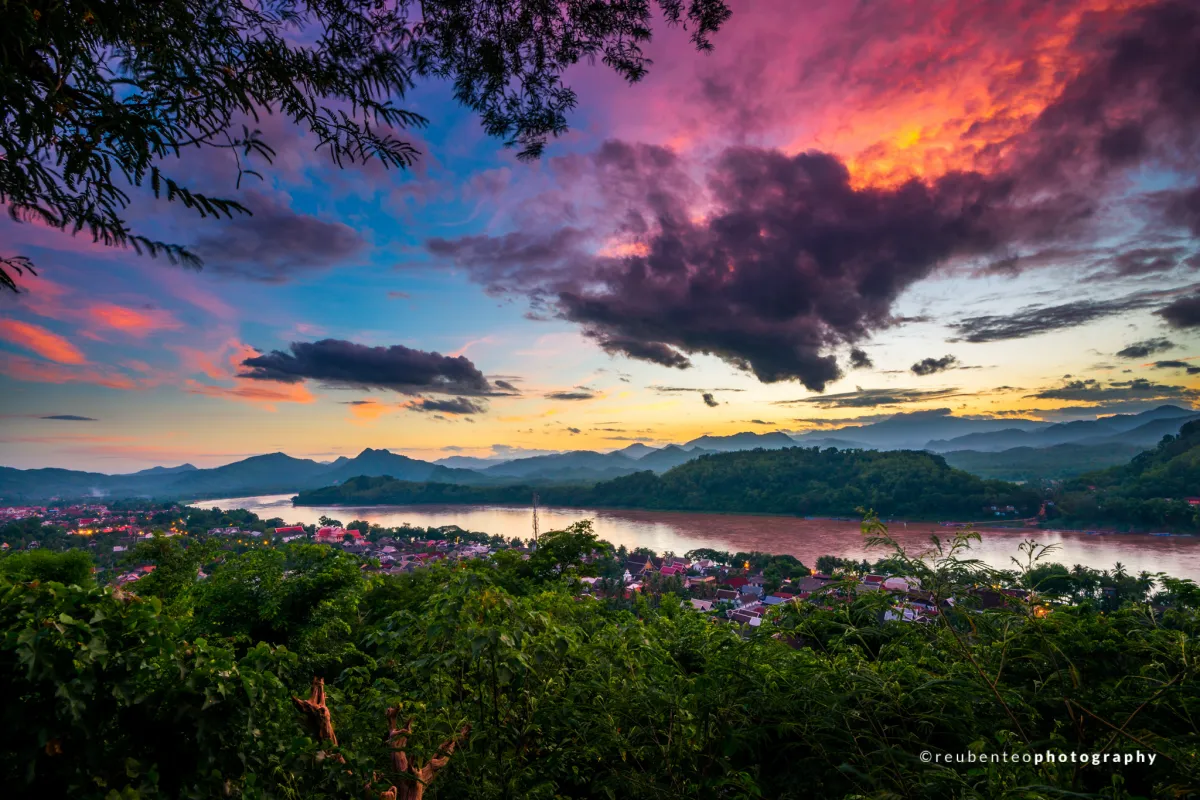
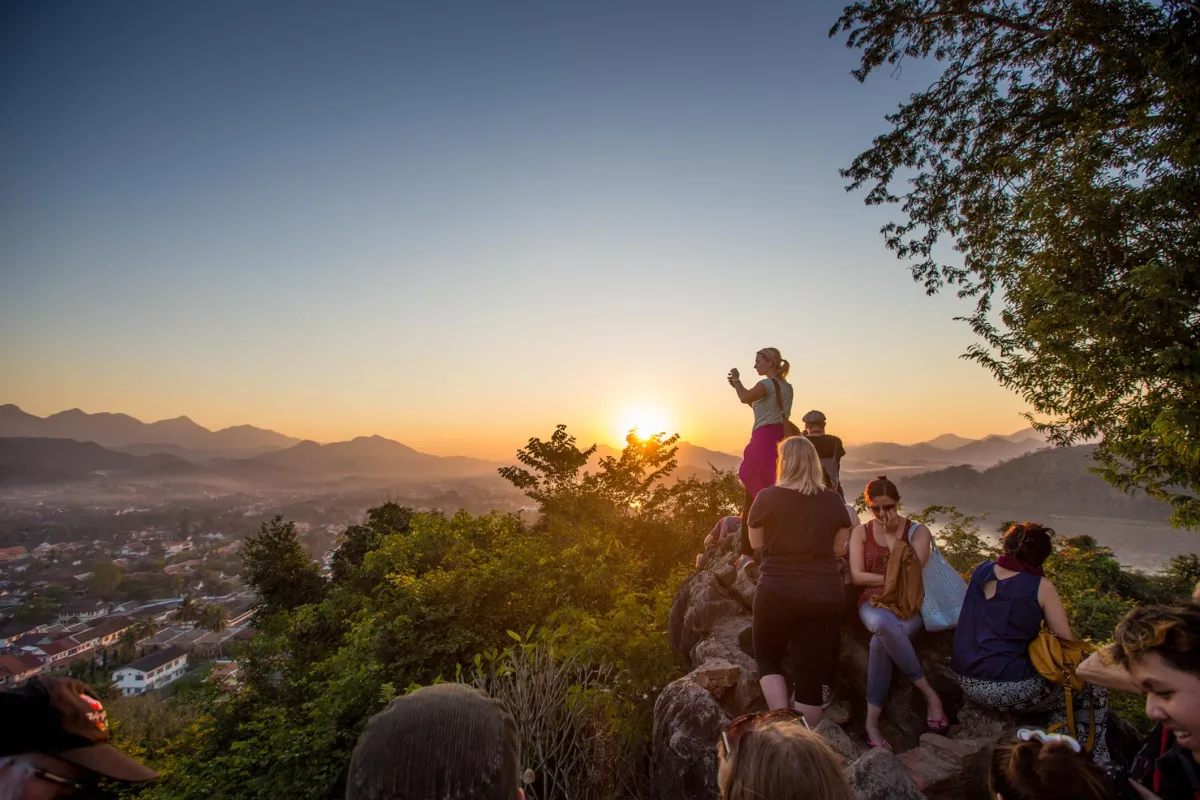
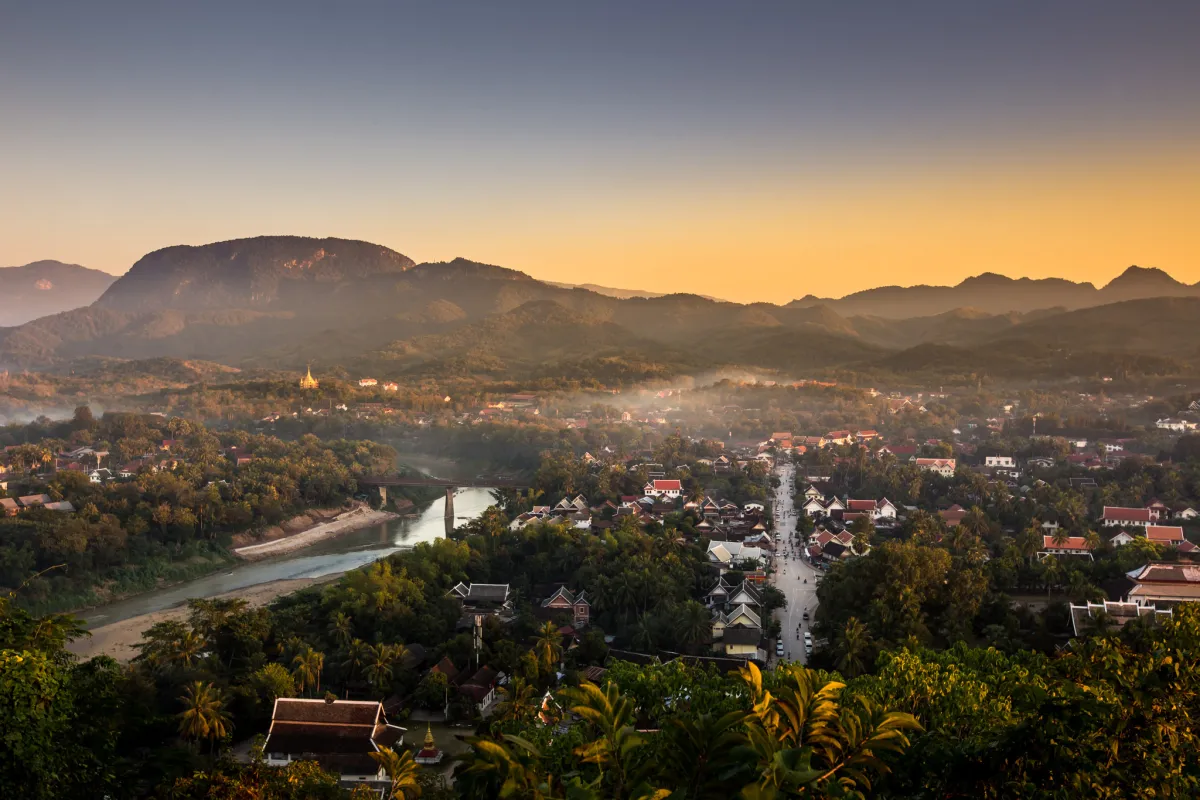
Sacred Mount Phousi
From the summit, you can enjoy a spectacular 360-degree outlook across the city and its many temples, and out over the surrounding landscape to the mountains in the distance. Count on spending a couple of hours for the climb and descent, with several stops to see the temples, rest under the shady trees and admire the magical views.
There are hundreds of steps to negotiate, but the climb is gentle enough for anyone who is in reasonable health. For a complete experience, go up Mount Phousi on one side and use the other set of steps to make your way down again. You can pray and make offerings at several temples along the way. Next to Wat Chomsi at the top of the hill, you can buy flowers to offer for blessings, as well as caged birds. Laos believes that if you set a bird free you will enjoy good luck and happiness in the future.
During peak tourist seasons, many tourists await on top of the Stupa the sunset and it does get very busy and crowded. DiscoverLaos Team would recommend that you visit in the morning for a relaxing journey and chance to snap a beautiful photo instead.
Opening Hours: 8am - 5pm
Entrances Fees: 20,000 KIP
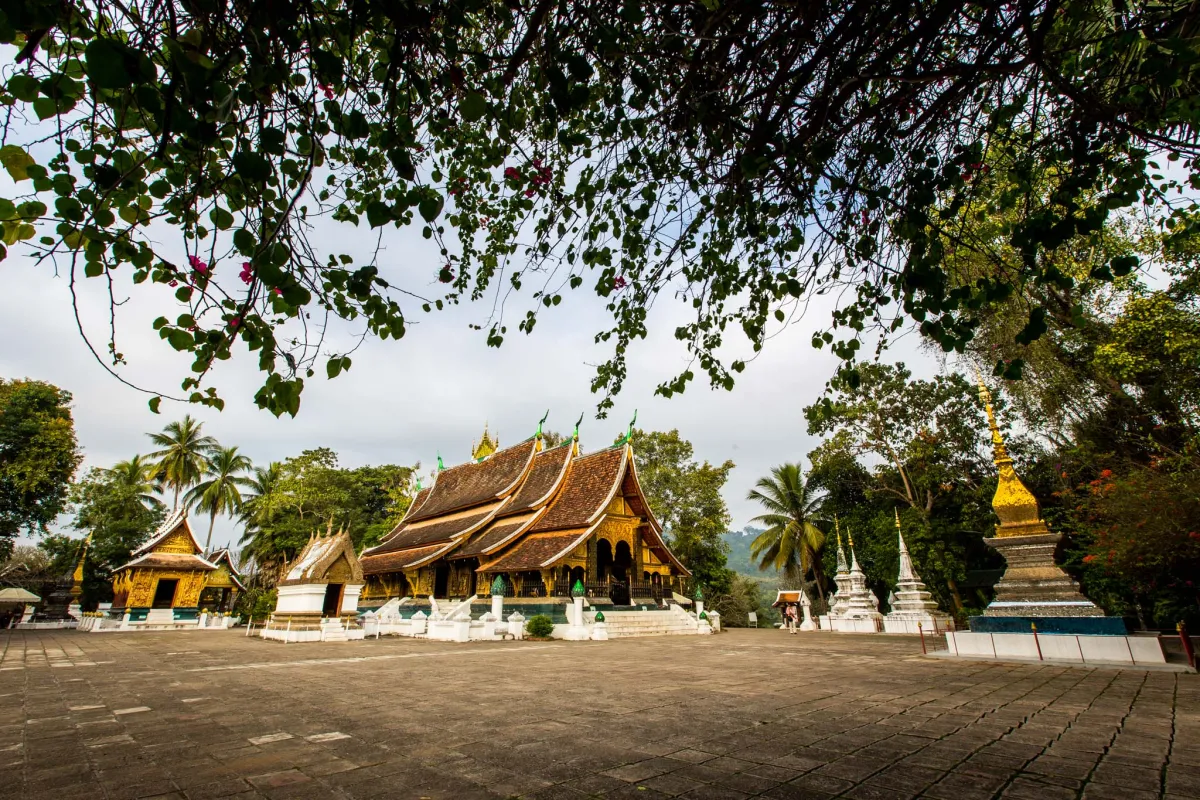
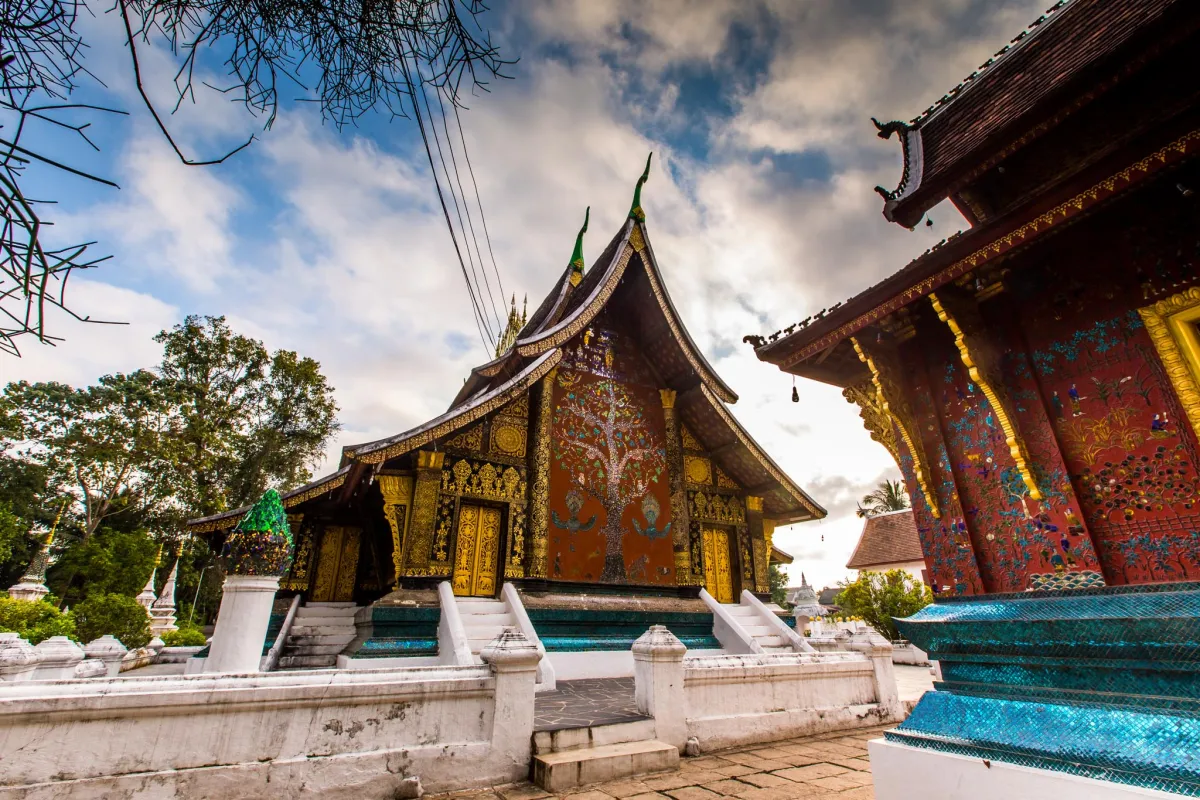
Wat Xieng Thong Temple
Also known as the ‘Golden Tree Monastery’, Wat Xieng Thong acts as a gateway to Luang Prabang as it is strategically situated close to where the Mekong joins the Nam Khan River. This site is famous as the location for the coronation of Lao kings and as an important gathering place for significant annual festivities.
The original temple was created in 1560 under the royal instruction of King Setthathirath and narrowly missed invasion on several occasions, nevertheless, time took hold and much-needed remodelling took place during the 1960s. The temple still remains in its original form with repairs undertaken to the roof, and gold leaf gilding and gold lacquering restoration added to the walls and entrance.
Opening Hours: Daily from 08:00-17:00
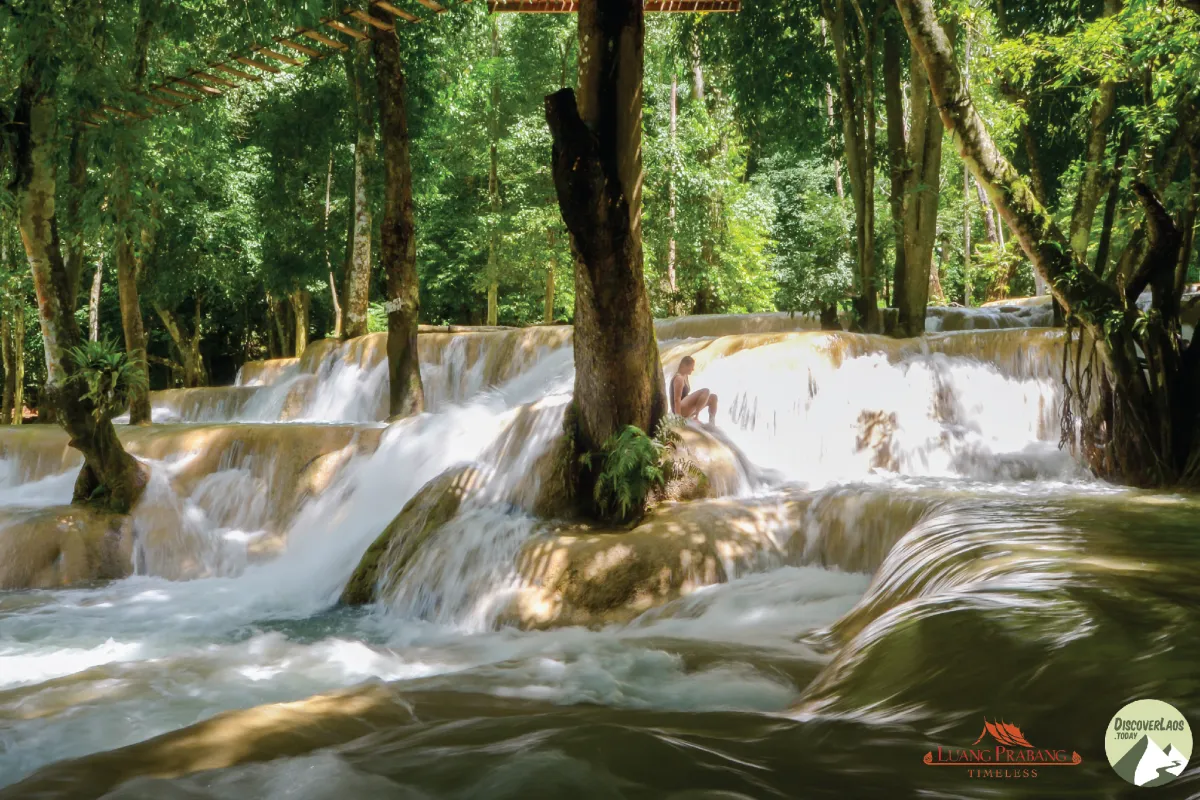
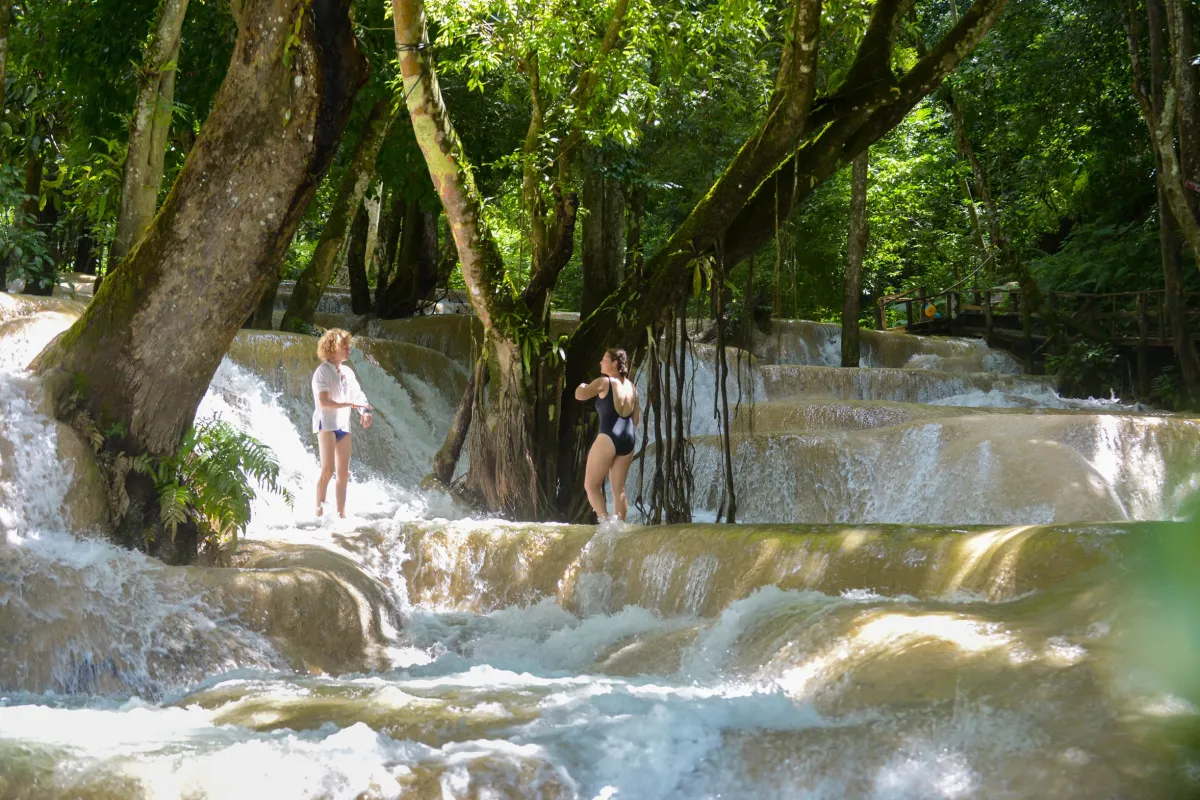
Tad Sae Waterfalls
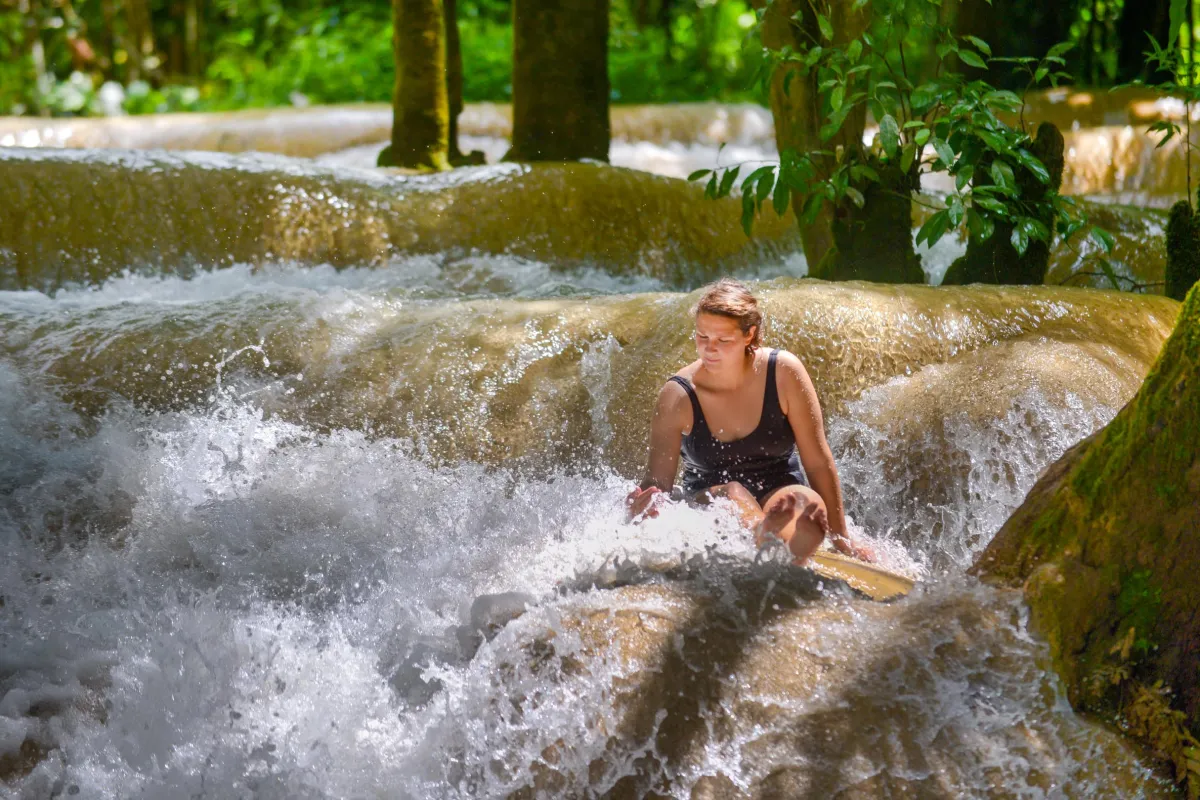
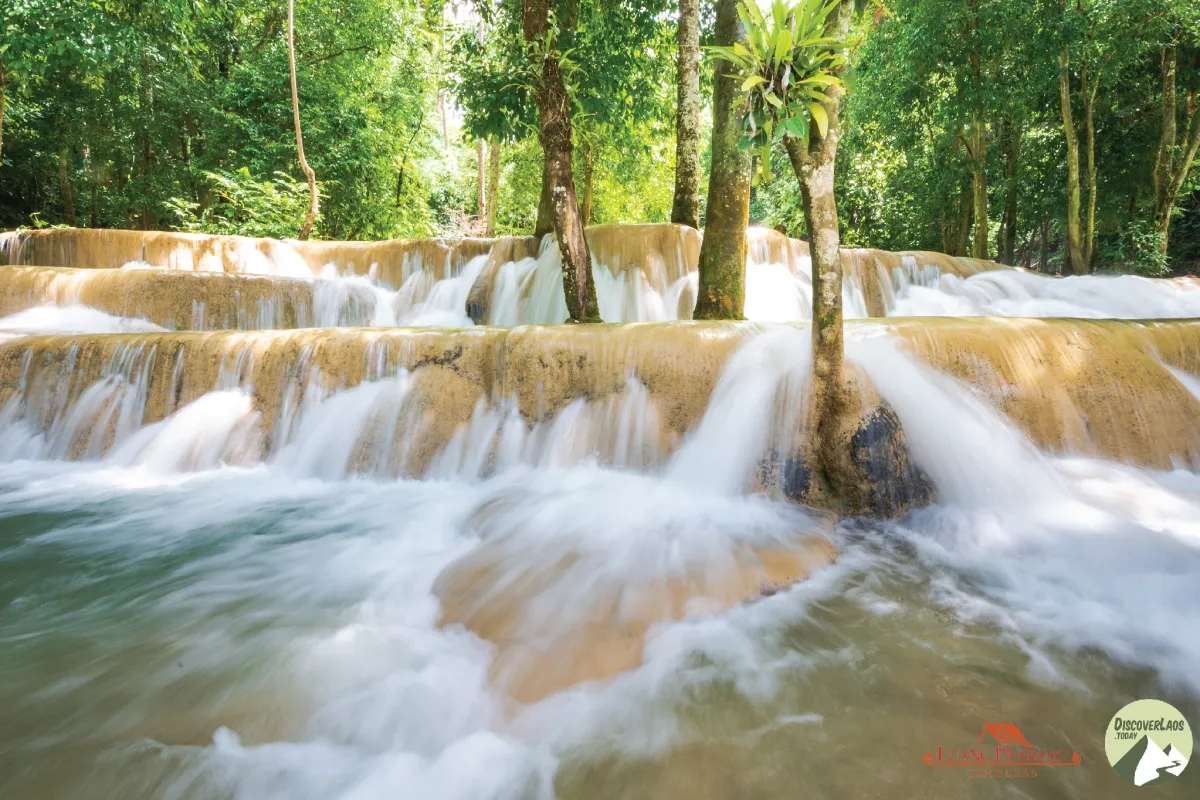
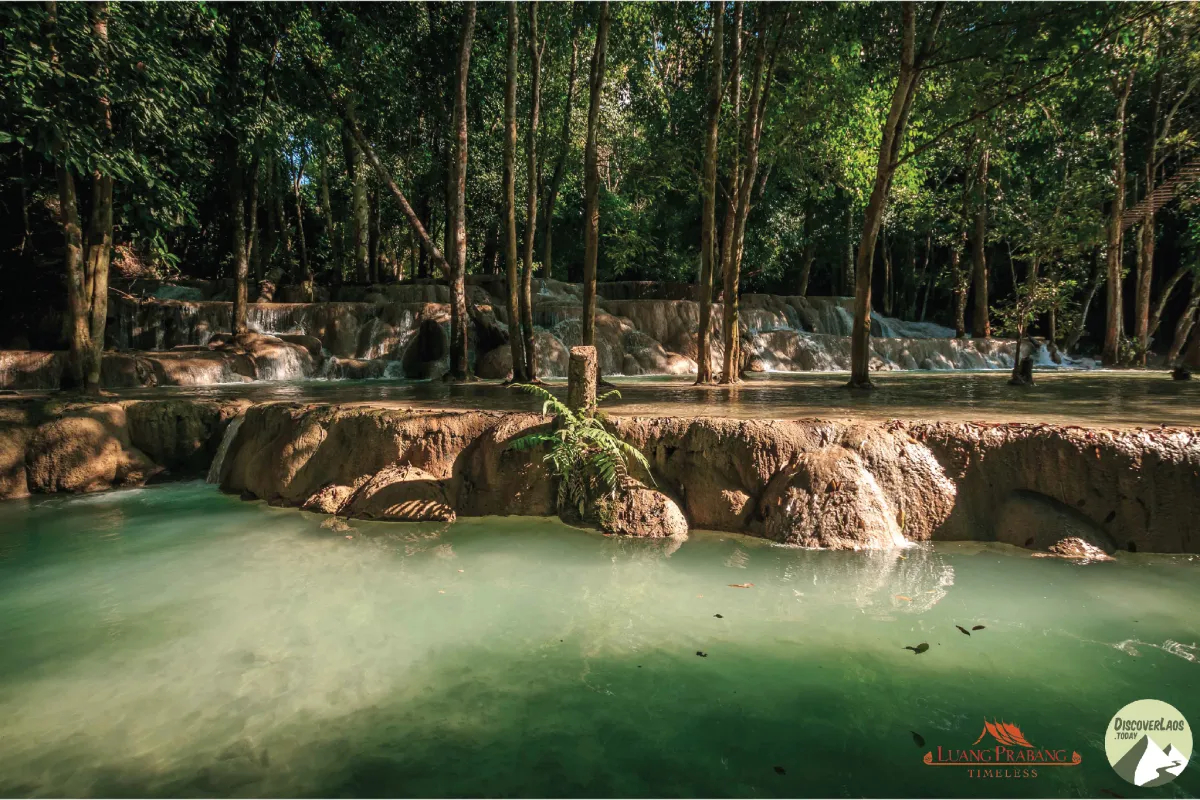
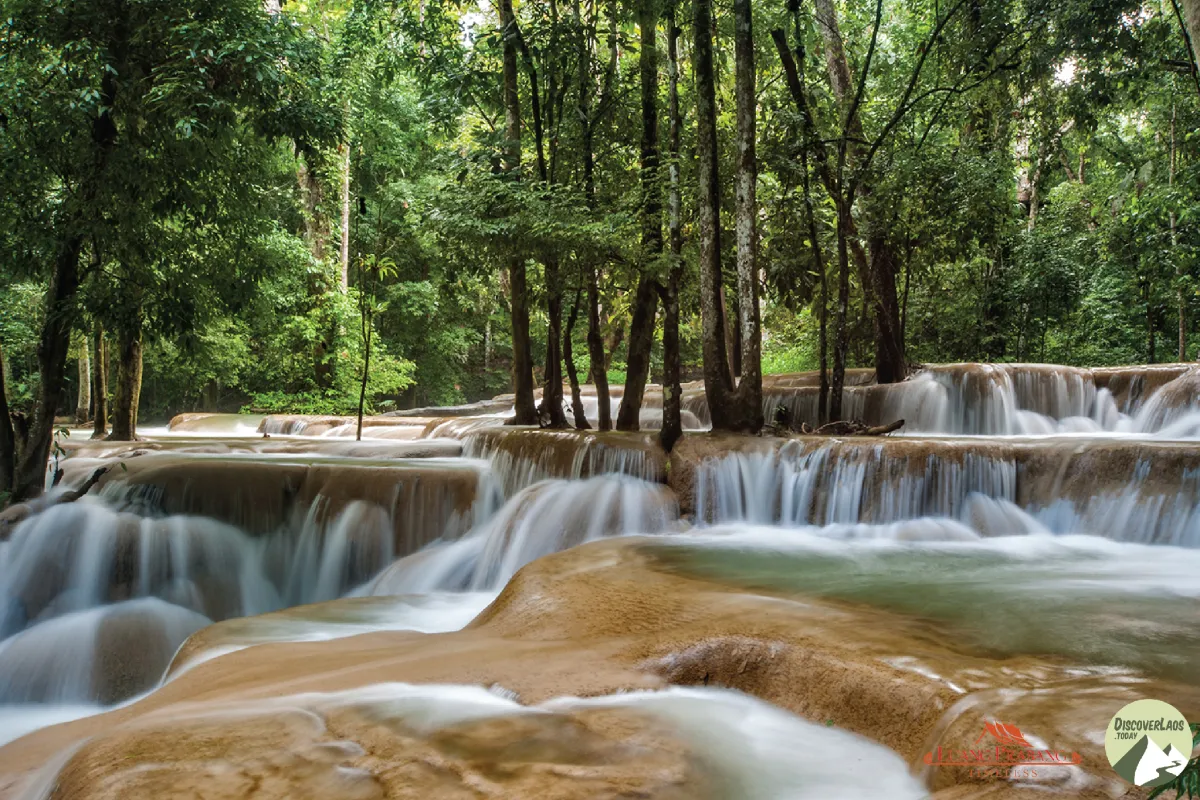
A spectacular natural masterpiece which is best appreciated in the rainy season, as the months from March through July there is hard water in the pools for swimming. Although not as high as the famous Kuang Si, the Tad Sae Waterfalls is still one of the most beautiful Laos waterfalls. The water pours over the incredible limestone cliffs across many levels before flowing into large pools.
The cascades of the Tad Sae give photographing travellers a fantastic chance to record amazing pictures. Travellers will have a chance to see the wonder of nature with beautiful waterfalls and majestic limestone formations among the lush green tropical jungle.
For adventurous, you can get to Tad Sae Waterfall by many Kayaking on the Nam Khan River. It is a popular activity in Luang Prabang as the river is slow-paced and mild. Ideal for beginners or first-timers to learn their first kayaking experience.
Otherwise, you can also rent transportation to their local pier and transfer to a local boat for 10,000 kip/pax to go to the waterfall. Entrance fees not included.
Opening Hours: 8am - 5pm
Entrance Fees: 15,000 KIP
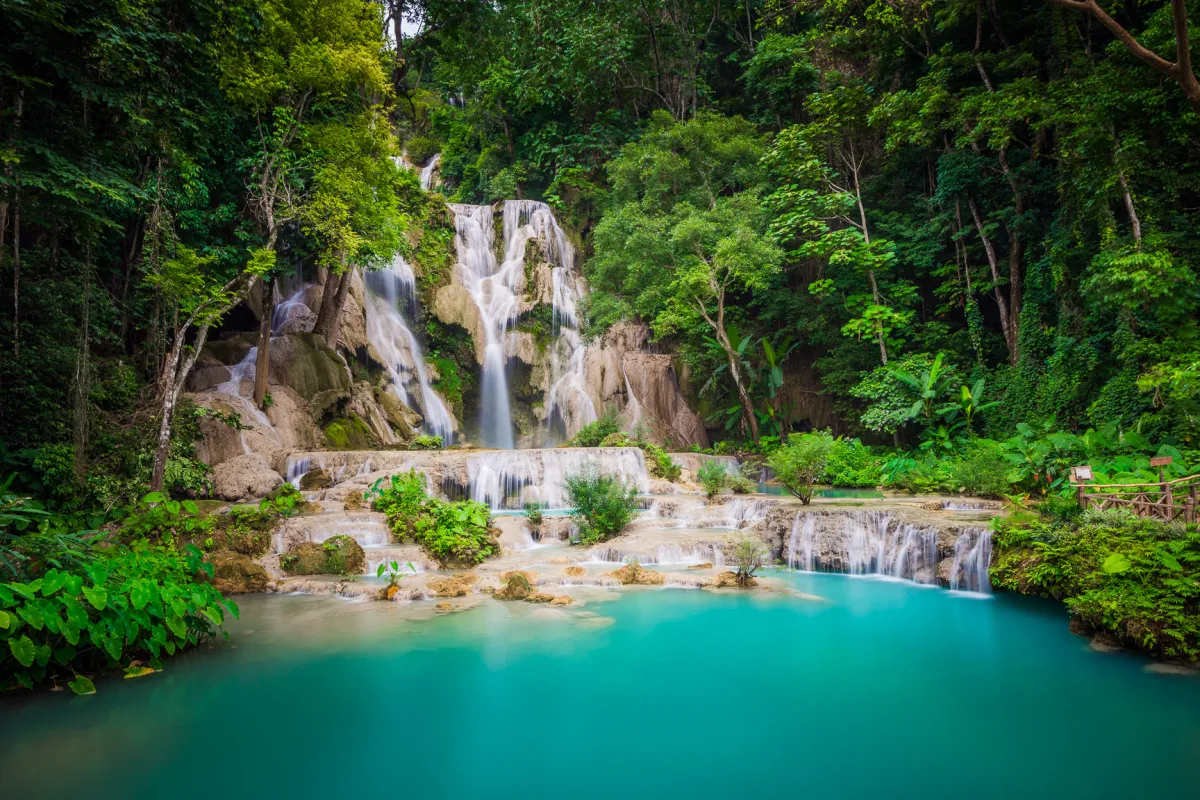
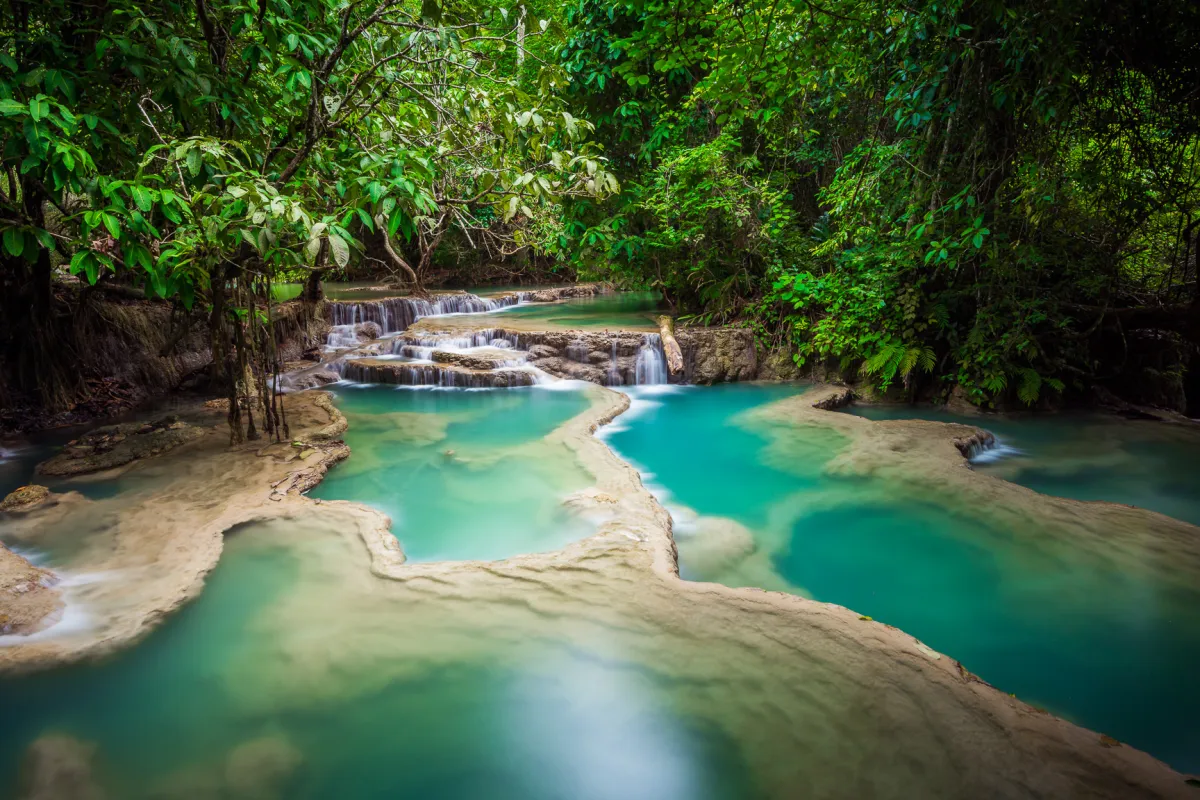
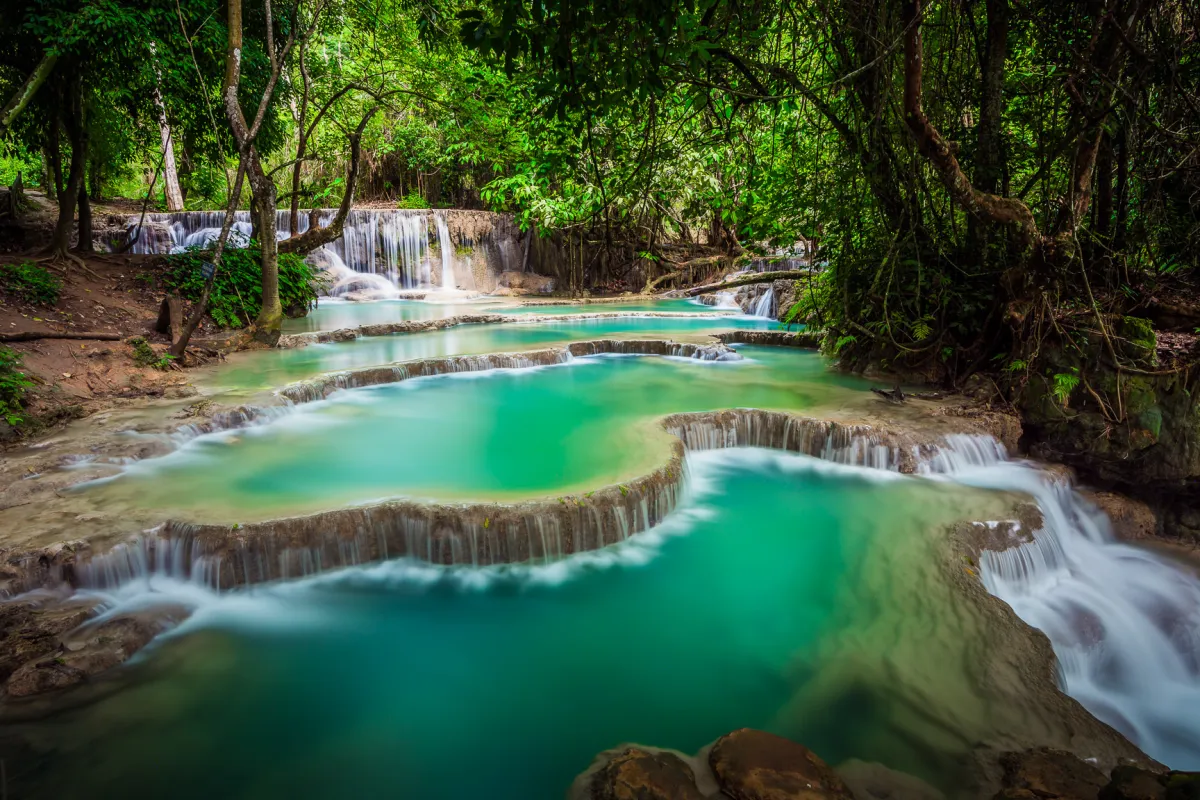
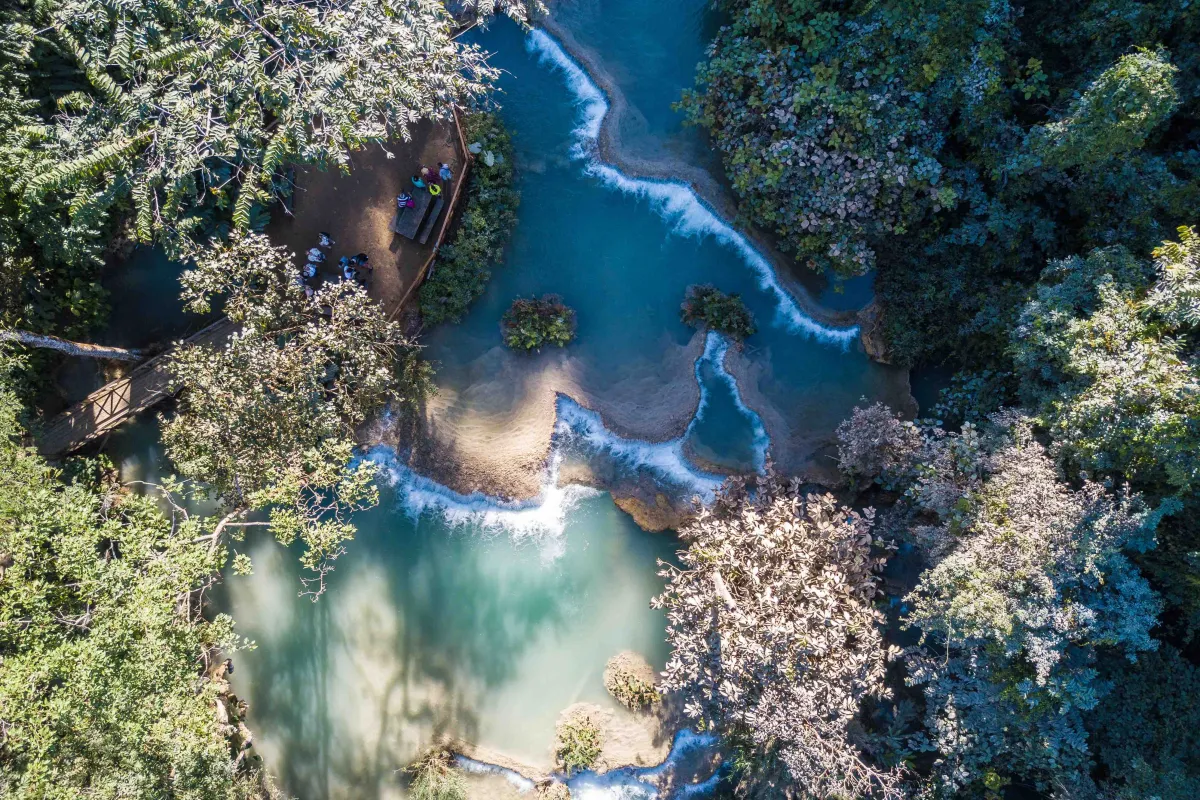
Kuang Si Waterfalls
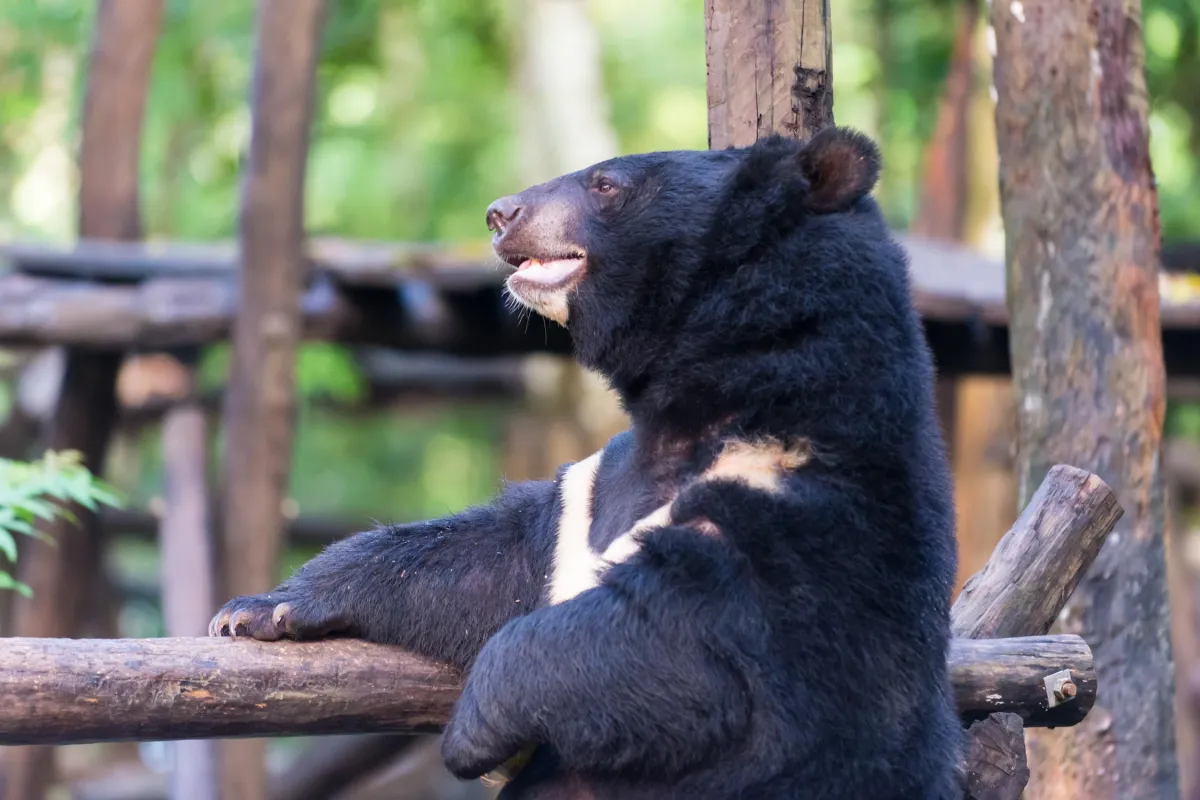
Learn about the various bear species and the sanctuary’s rescue efforts. Trek up to the top of the waterfall for some great photo opportunities or dip into one of the many cooling pools as you go downstream.
The forests around Kuang Si Waterfall have always attracted a large number of butterflies. Olaf and Ineke from the Netherlands sold everything they had and moved to Luang Prabang to realise their dream of creating a research centre studying and publishing about Laos butterflies, host plants and other conservation projects.
A jaw-dropping inspiring piece of nature at its finest. Be sure to take your time soaking it all in, before finishing it up with a dip into one of the many pools at the waterfall.
For the adventurous, you can do 3 hours trekking journey through minority ethnic village and forest before ending on the top of the waterfall, overlooking the majestic falls.
Le Carpe Diem Restaurant and Vanvisa By the Falls Restaurant are also one of the many hidden secrets of this waterfall for tourists not to miss! Enjoy Local/French Food with the sights & sounds of nature surrounding you.
Opens Daily: 8am - 5pm
Entrance Fees: 20,000 KIP
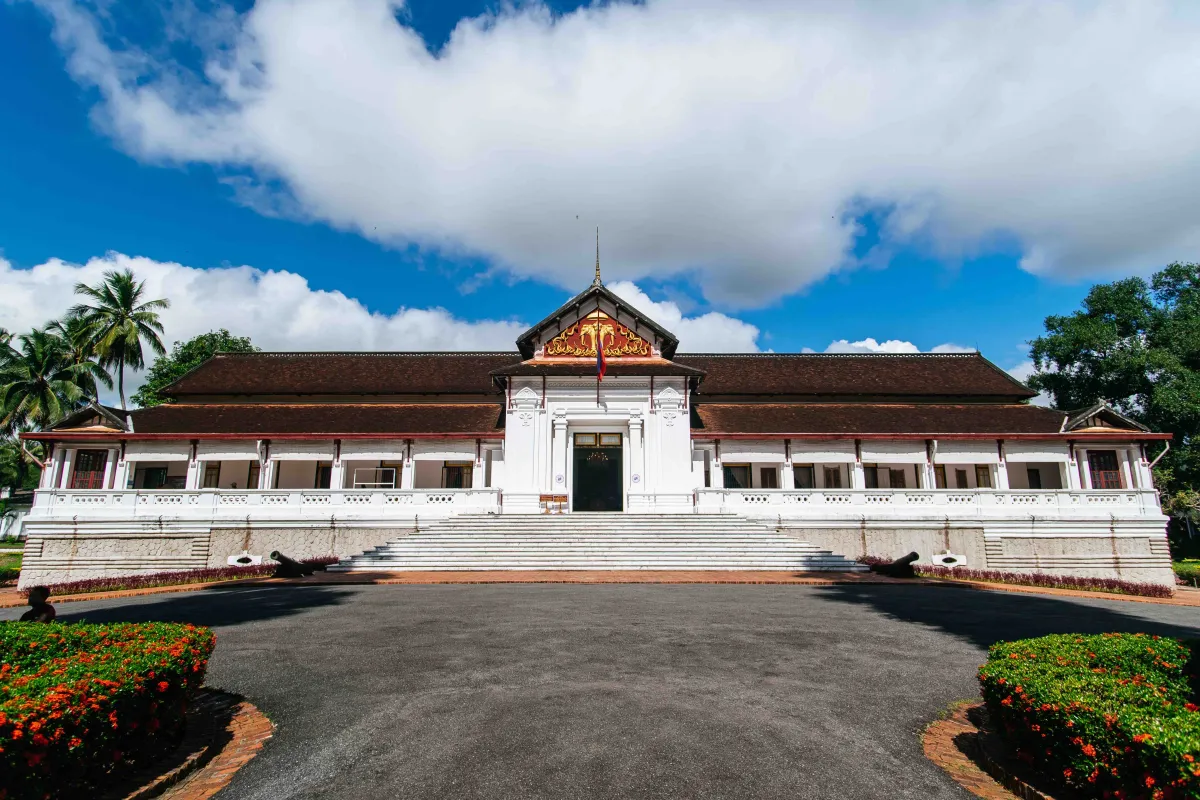
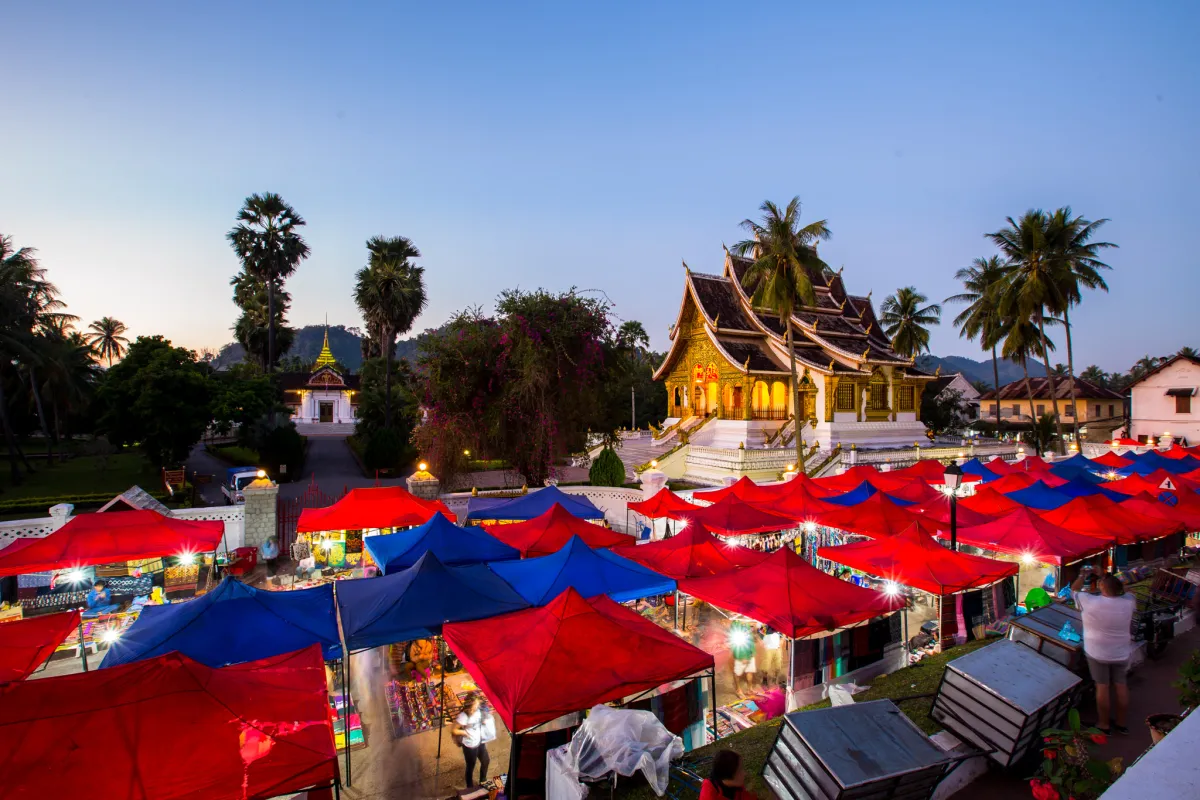
Royal Temple Museum
The former Royal Palace was build in 1904 and abdicated in 1975 with the Pathet Lao took over Laos’ government. Now a museum, admission is 30,000 kip ($3.75 USD) and photography and personal belongings are not permitted inside. Make sure to check out the Phabang Buddha statute that dates back to the 14th century and gave Luang Prabang its name.
A gentle reminder to cover your knees and shoulder with proper attire before entering the museum or rent their traditional attire. Otherwise you will be denied entry.
Open daily: 08:00am – 11:30am and 13:00pm – 15:30pm (Cleaning on Thursday, they close at 15:00pm) Close on Sunday
Counter ticket: 08:00am – 11:00am and 13:00pm – 15:00pm
Entrance Fee: 30,000 KIP
Wat Wisunarat Temple (Wat Visoun)
Built in 1512 or 1513, rebuilt in 1896-98
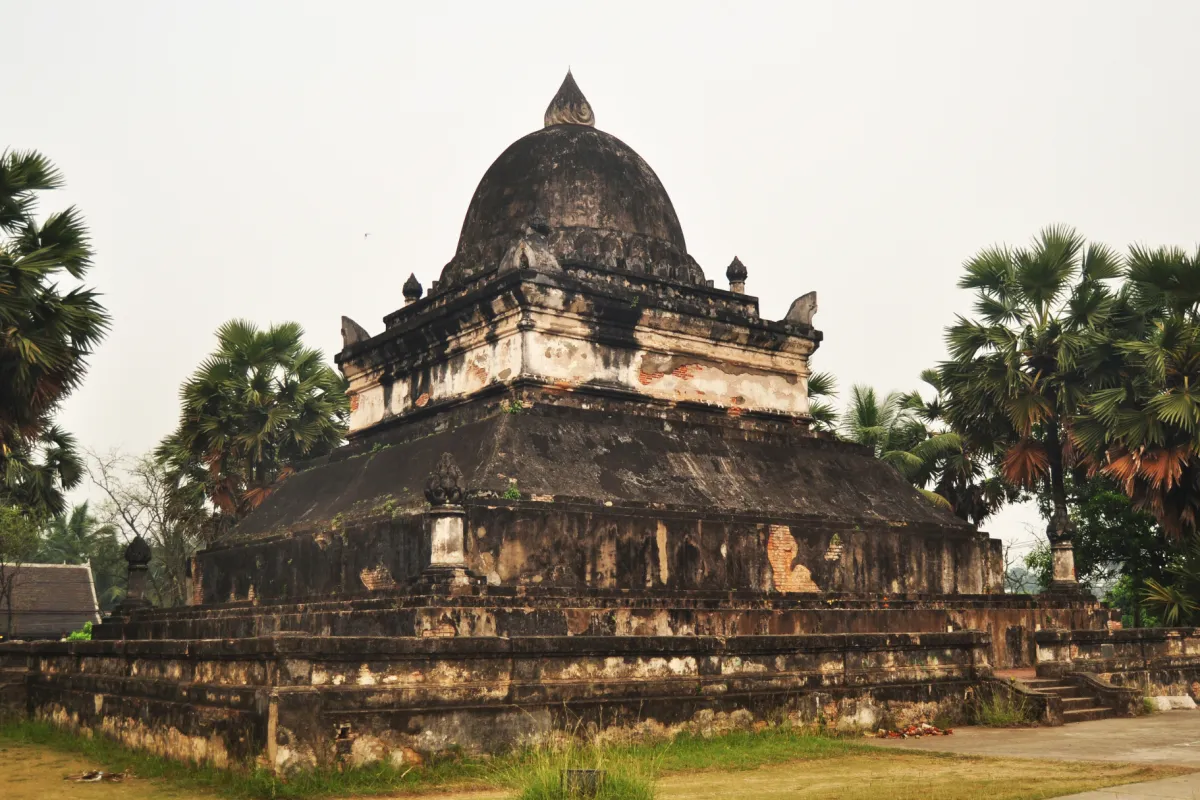
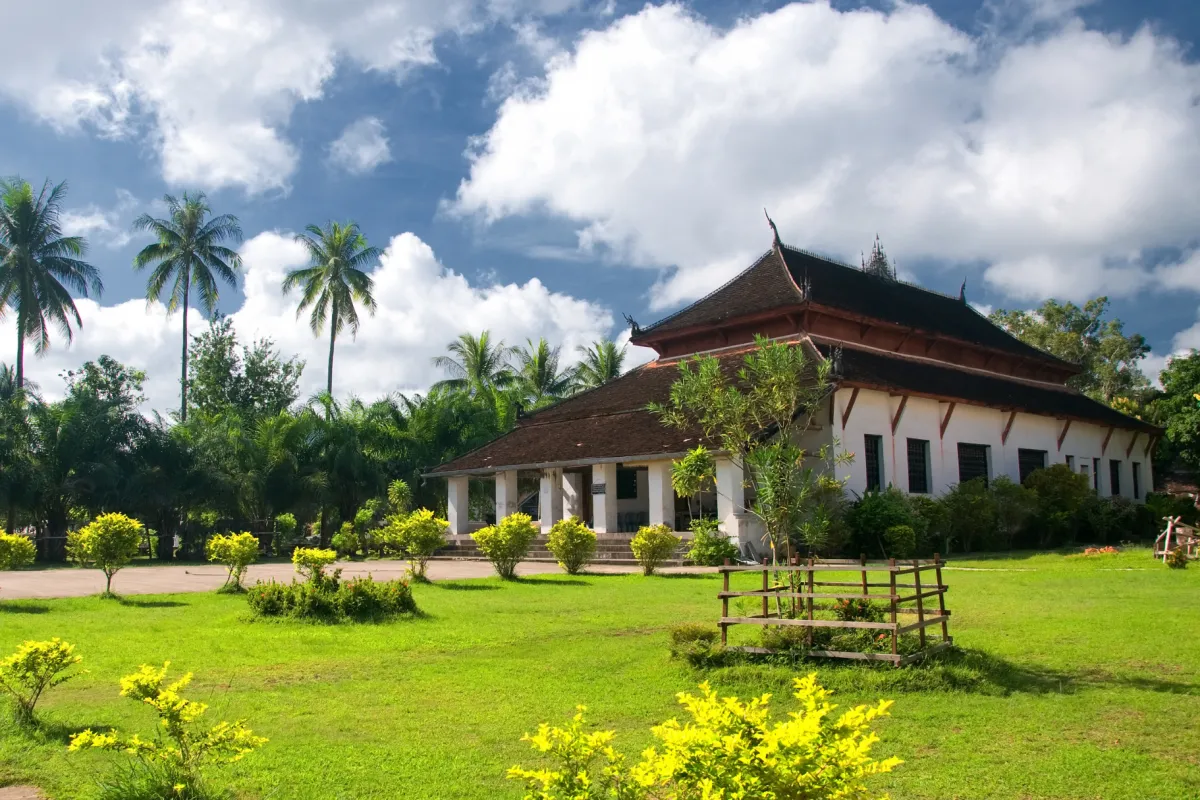
Wat Visounnalat was originally built during the reign of King Wisunarat (or Vixoun, 1501-1520) in 1513 (some suggest 1512) and represents the earliest style, sometimes referred to as Luang Prabang Style I, of Lao temple architecture. This style also includes the sims of Wat That Luang and Wat Mai. Wat Wisunalat is Luang Prabang’s oldest operating temple. As with the sims of most Lao wats, there are multiple roof structures. In the Style I form the first and second roofs extend around the entire perimeter of the structure. Except for the sim at Wat Mai, which was embellished by two additional gable roofs and two roofed side galleries, the style evokes simplicity, since the sim employs neither the high peaks of the gable nor the dramatic low sweeping roofs of many of the other sims of Luang Prabang. Located and adjoining Wat Aham to the southeast, it was probably built on the rice fields of the guardian spirits of the city (devata luang), Pu No and Na No (Phou Nheu and Nha Nheu). The sacred Prabang image was housed in the sim from 1513 until it was taken to Vientiane in 1707.
The original highly ornate wooden sim was a spectacular example of Lao craftsmanship at its finest and was one of the most imposing religious structures of old Luang Prabang. It had a double roof with the upper roof raised high above the lower roof. It was over 118 ft. (36m) long and 59 ft. (18m) wide; perhaps 4,000 trees were used in its construction. Each of the twelve pillars supporting the roof was almost 100 ft. (30 meters) high. There were twenty-one windows with turned wooden balustrades. Louis Delaporte’s engraving of its appearance in the 1860s is included in the series of photographs that follow on this site and shows the unique character of the sim. Most of the partitions of the original building were carved wood, and the exterior, as portrayed in the engraving, made it one of the most beautiful in Luang Prabang. It also housed a major collection of rich religious objects and other "objets d’art". Much of the sim and the city were destroyed during the invasion of the Chinese Haw Black Flags marauders in 1887.
The sim was rebuilt between 1896 and 1898 and during the reign of King Sakkarin Kamsuk (r. 1894-1903). The style was somewhat to the old sim with its numerous massive wooden beams, window placement and style of the roof, albeit the major part of the structure was brick and plaster in place of the wood. The window balustrades attempt to capture the flavor of the older turned wooden balustrades of the original sim. The sim today continues its existence as a valuable of museum religious art with numerous centuries old Buddha statues in bronze and gilded and unadorned wood, ordination precinct stones and other religious objects.
Another important and prominent feature of the wat is its unique That Pathoum, or Stupa of the Great Lotus, in the front and northeastern side of the sim. It is known more popularly as That Makmo, the "Watermelon Stupaï" because of its rounded dome. The dome stylistically reflects a Sinhalese influence and is the only stupa of such a shape in Laos, and perhaps even in Cambodia or Vietnam. Originally erected between 1514 and 1515, it was destroyed during the Haw Black Flag incursion in 1887. Inside were numerous ancient Buddha images. Many were destroyed; a number are in the National Palace Museum, and some are in the sim itself. Its reconstruction was not seriously undertaken until the late 1920s, over thirty years after the reconstruction of the sim, and was completed in 1932. The stupa sets on a number of different square tiers and has a Lao-Buddhist style Usnisa crown at its top.
-
Entrance Fee: 20,000 KIP per person
-
Opening hours: Everyday, from 08:00 am to 05:00 pm.
---
Authenti-city
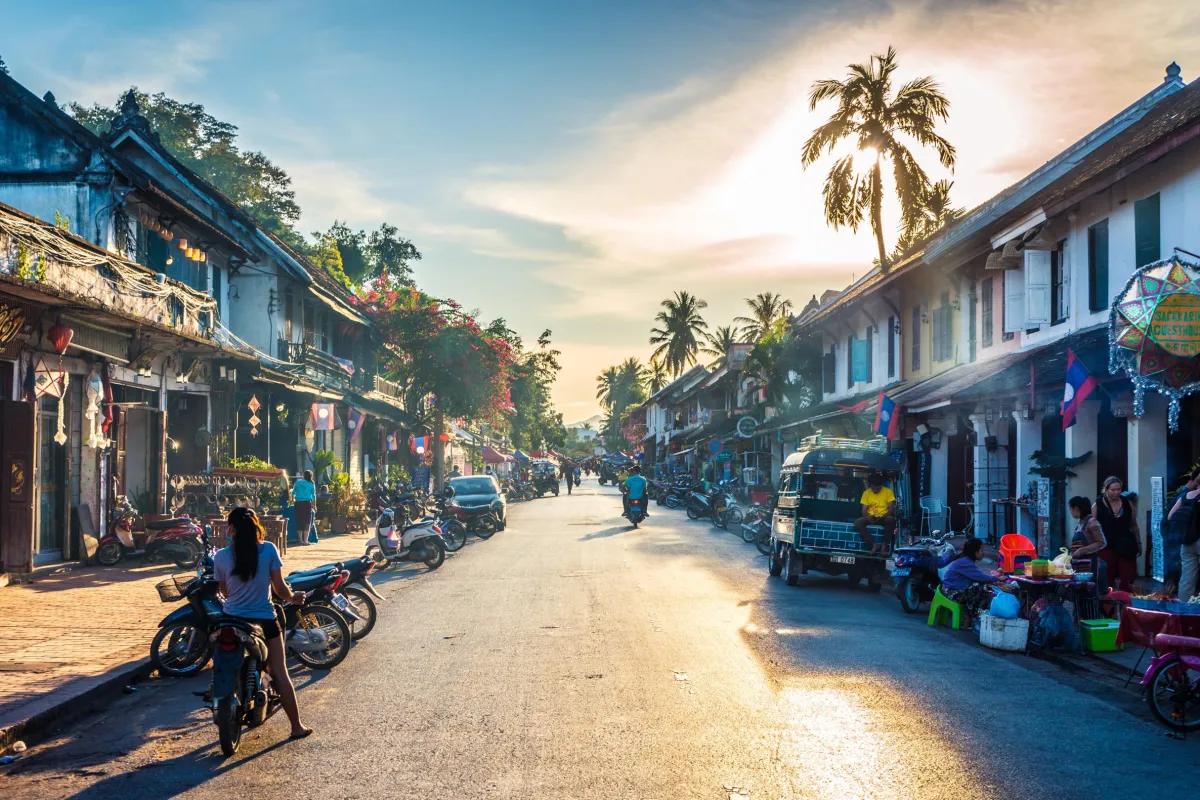
Discover the charm, unique pace & authenticity of life here by enjoying a cup of coffee or tea at the local café or strolling/cycling around to mingle with the friendly local faces and architecture.
The landscapes and urban fabric retain a high degree of authenticity, and the site is not disturbed by any major construction. The religious buildings are regularly maintained; monks teach young monks restoration techniques for their heritage. Moreover, the Buddhist cult and the cultural traditions related to it (rites and ceremonies) are still alive and practised diligently. However, the degree of the authenticity of materials and construction techniques of many houses is low, since, for a long period, unsuitable modern techniques and materials (concrete, in particular) have often been used to replace traditional materials.
Experience a different side of Laos as you visit Luang Prabang, a place that appears to be caught in a delightful time warp, where life still goes on like the days of the past. Gain insights into the day to day experiences of the locals who live here.
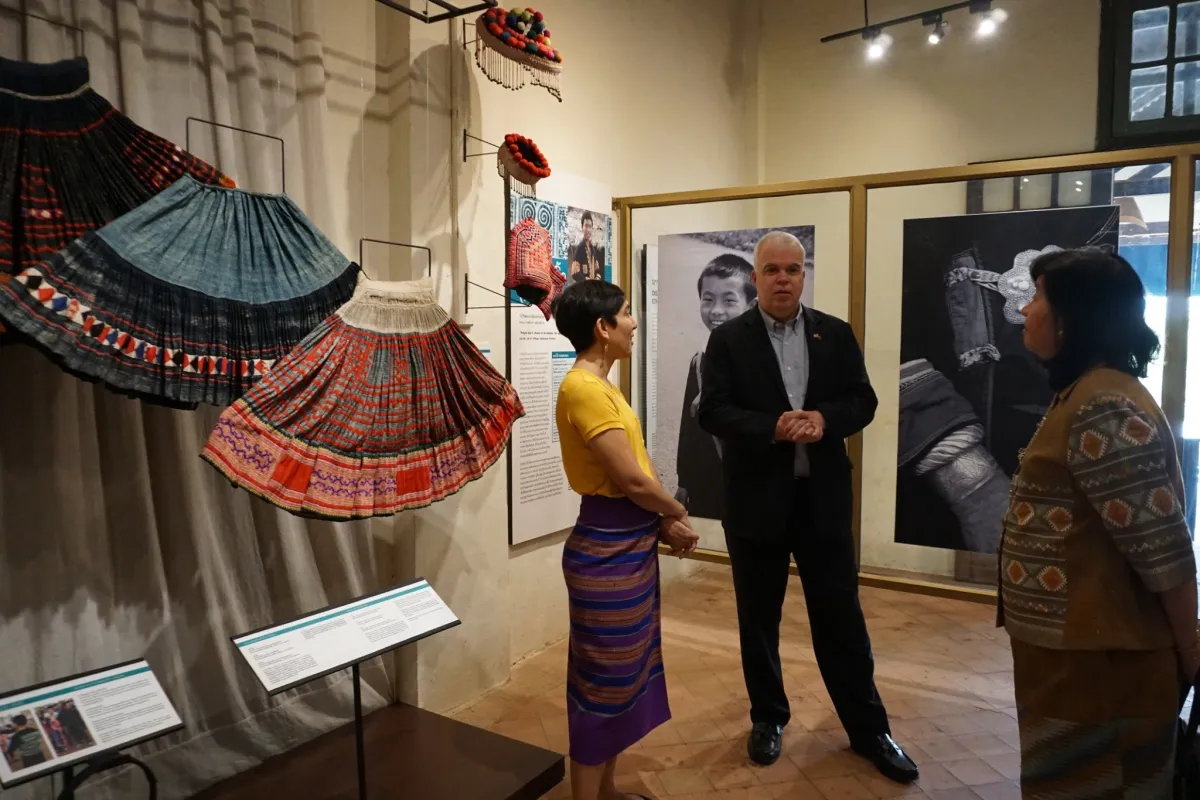
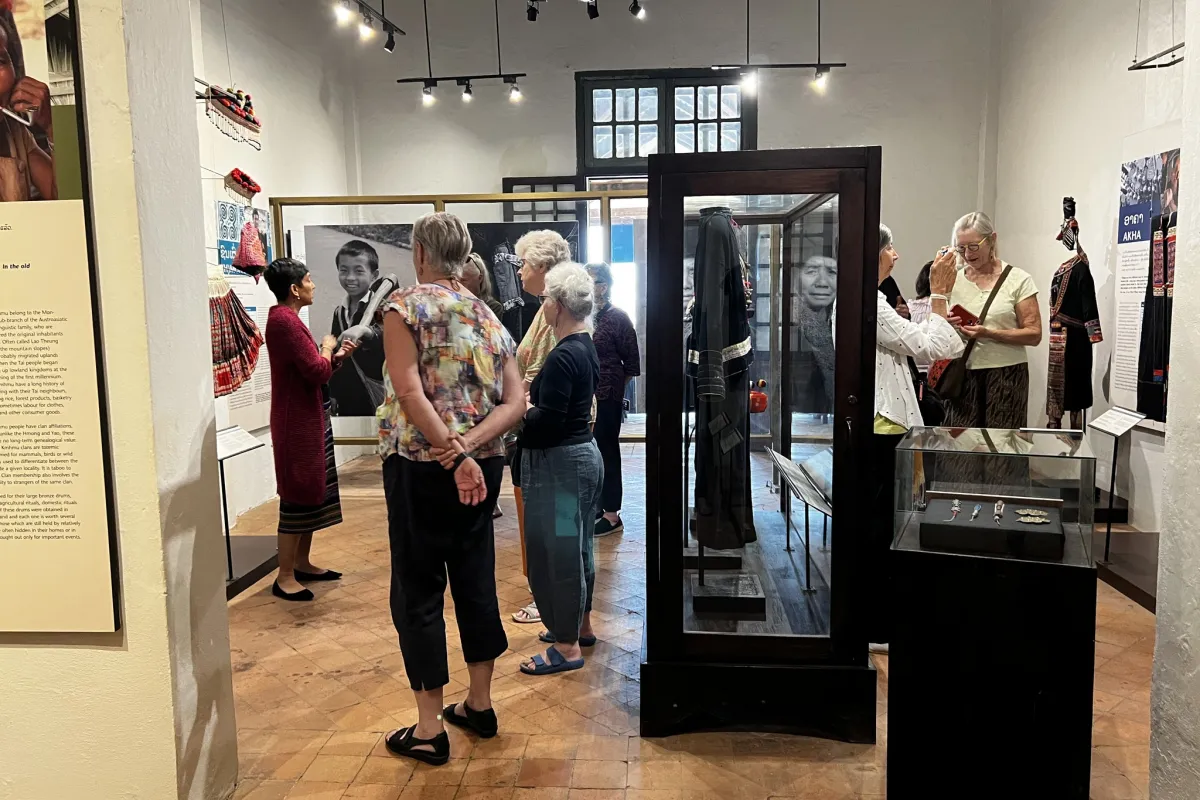
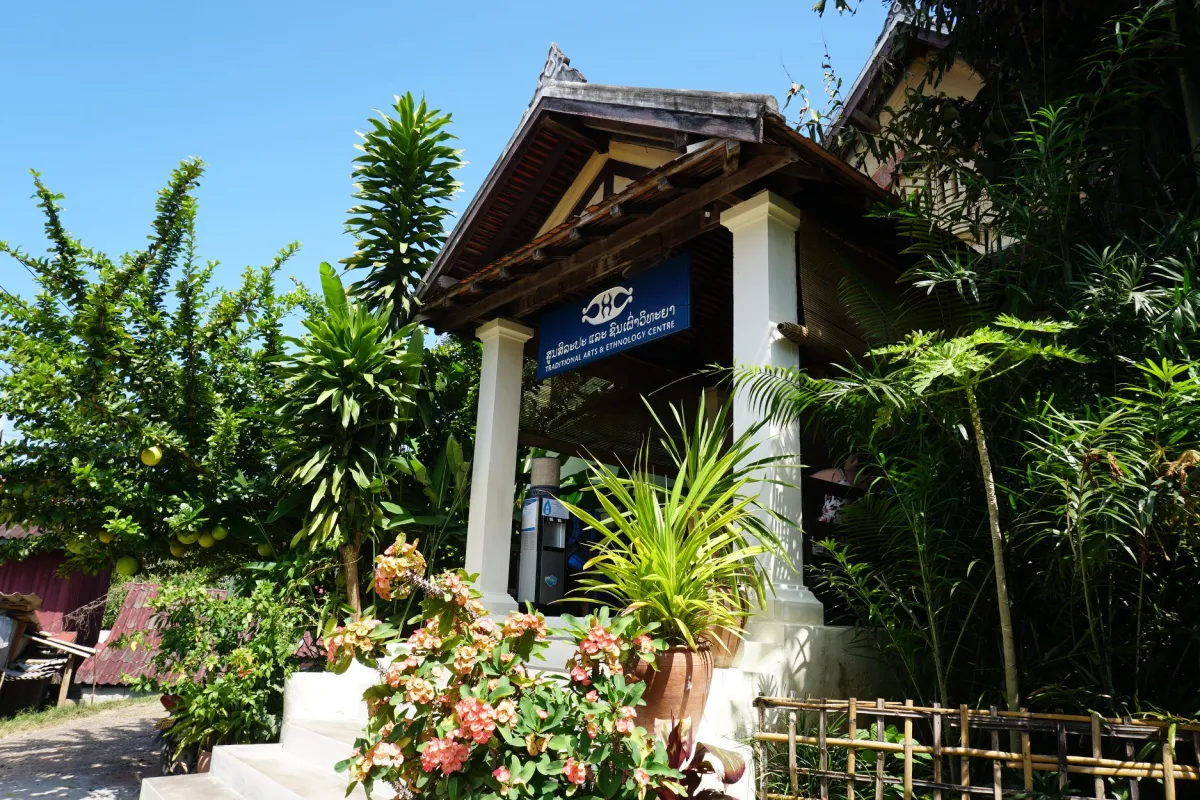
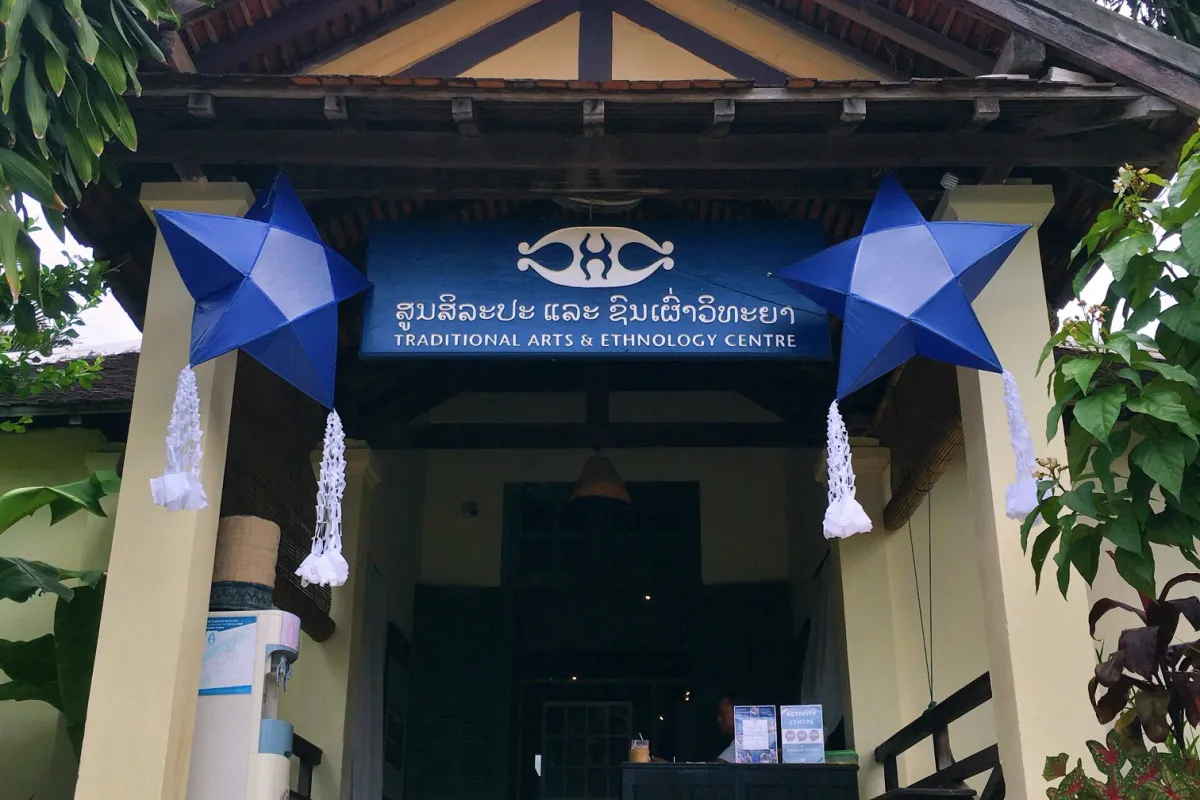
Learn About Diverse Tribes' Cultures At TAEC
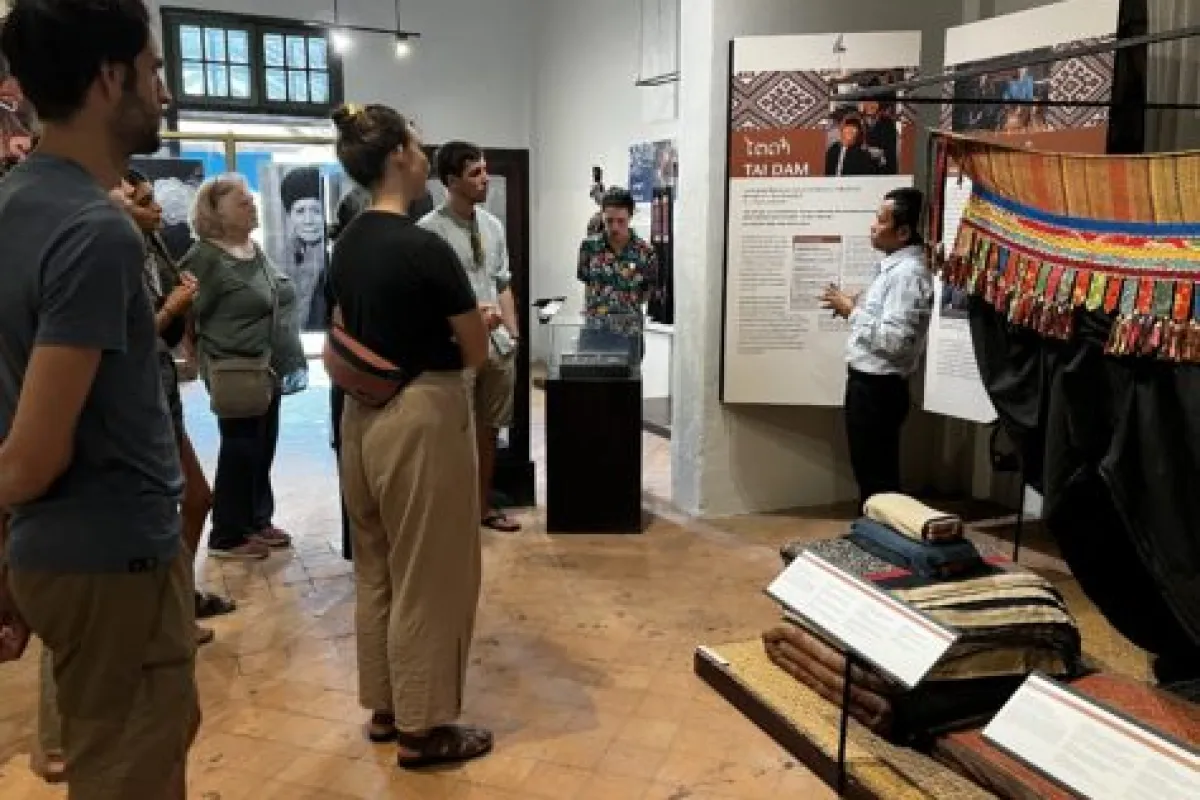
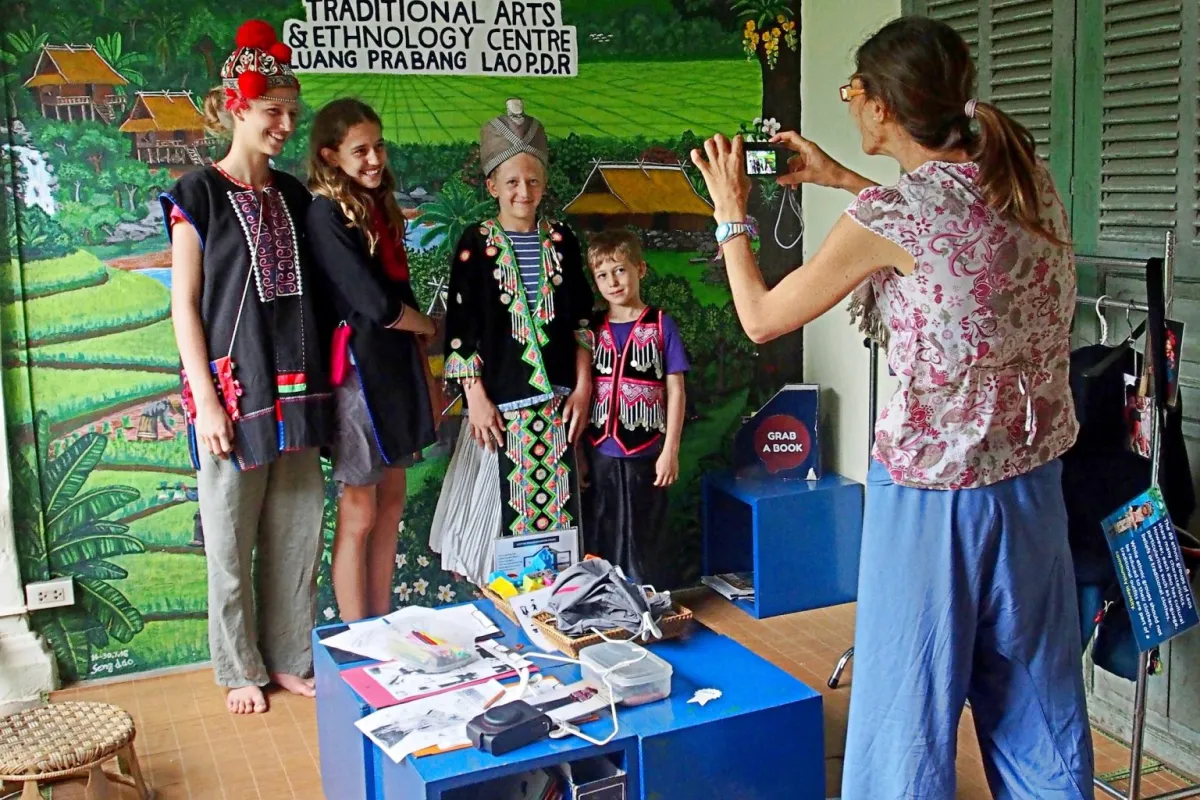
Laos has at least 49 ethnic groupings and 240 subgroups, making it the country in mainland Southeast Asia with the most ethnic diversity. The cultural diversity of Laos is truly remarkable, and there is no better place to gain an understanding of these many traditions than at the Traditional Arts and Ethnology Center (TAEC).
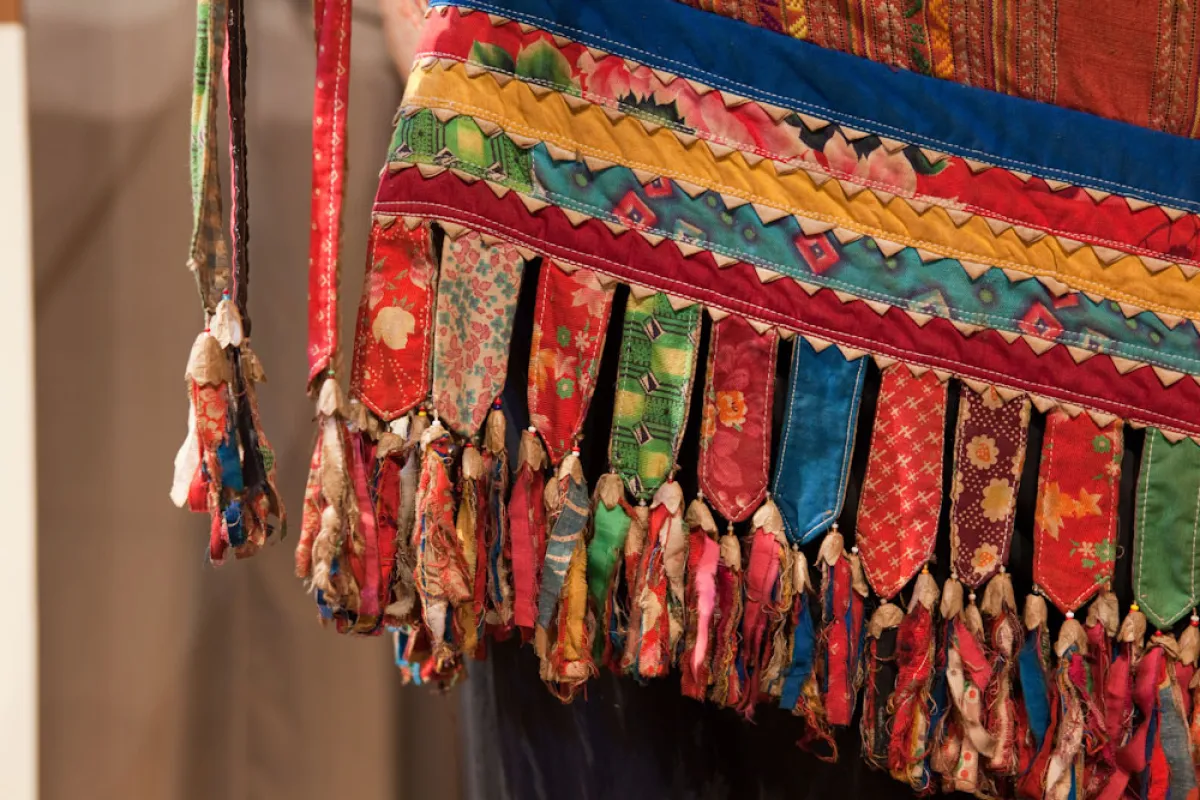
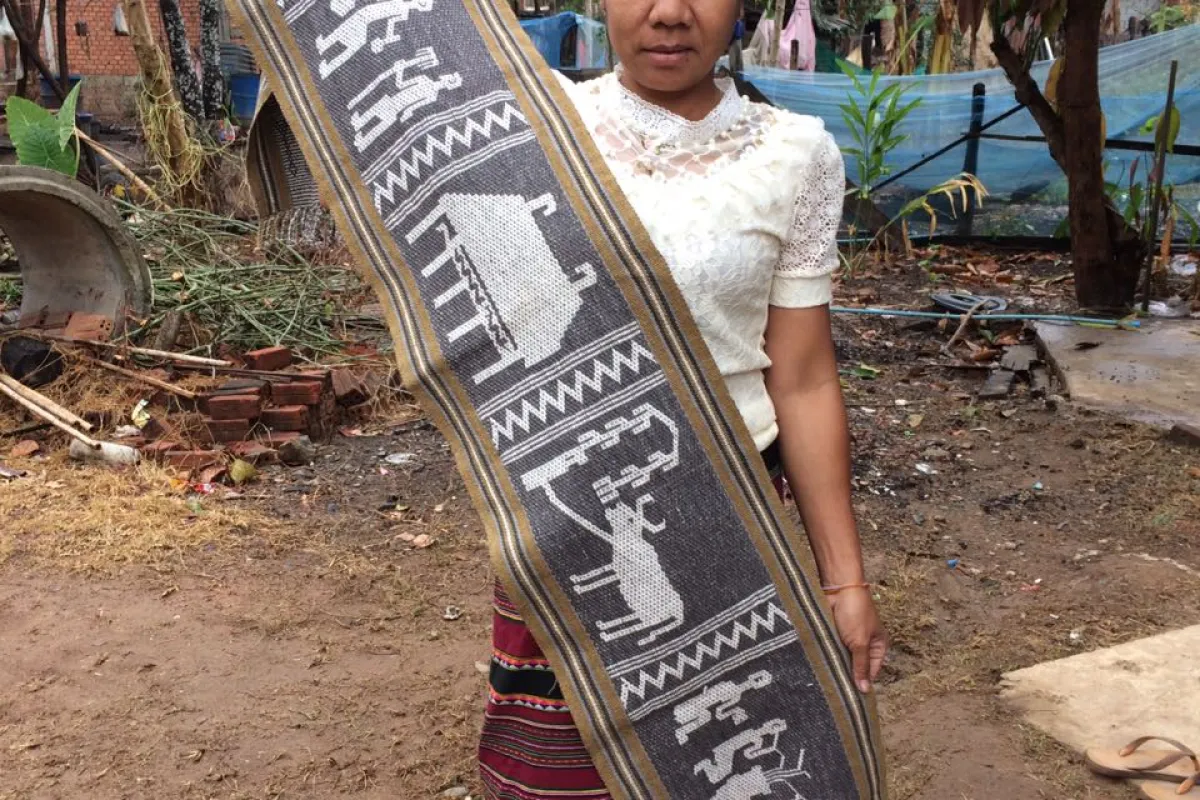
A permanent exhibition of clothes, costumes, tools, and textiles from the various ethnic groups of Laos is superbly researched and displayed, with thorough English signs and information pamphlets in additional languages. There are also numerous interactive elements, such as videos. Themes such as Hmong New Year and traditional woven baskets are explored in special exhibitions.
-
Entrance Fee: 25,000 KIP per person
-
Opening hours: Tuesday to Sunday from 9AM - 6PM
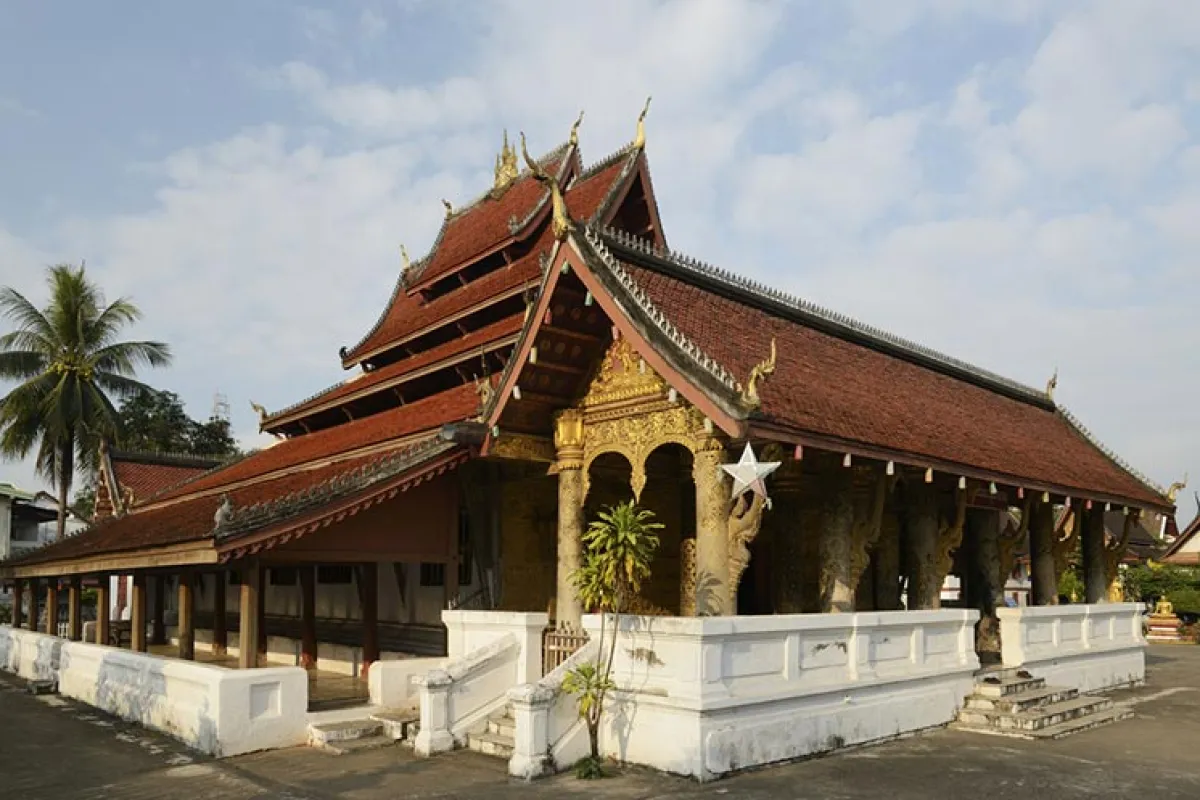
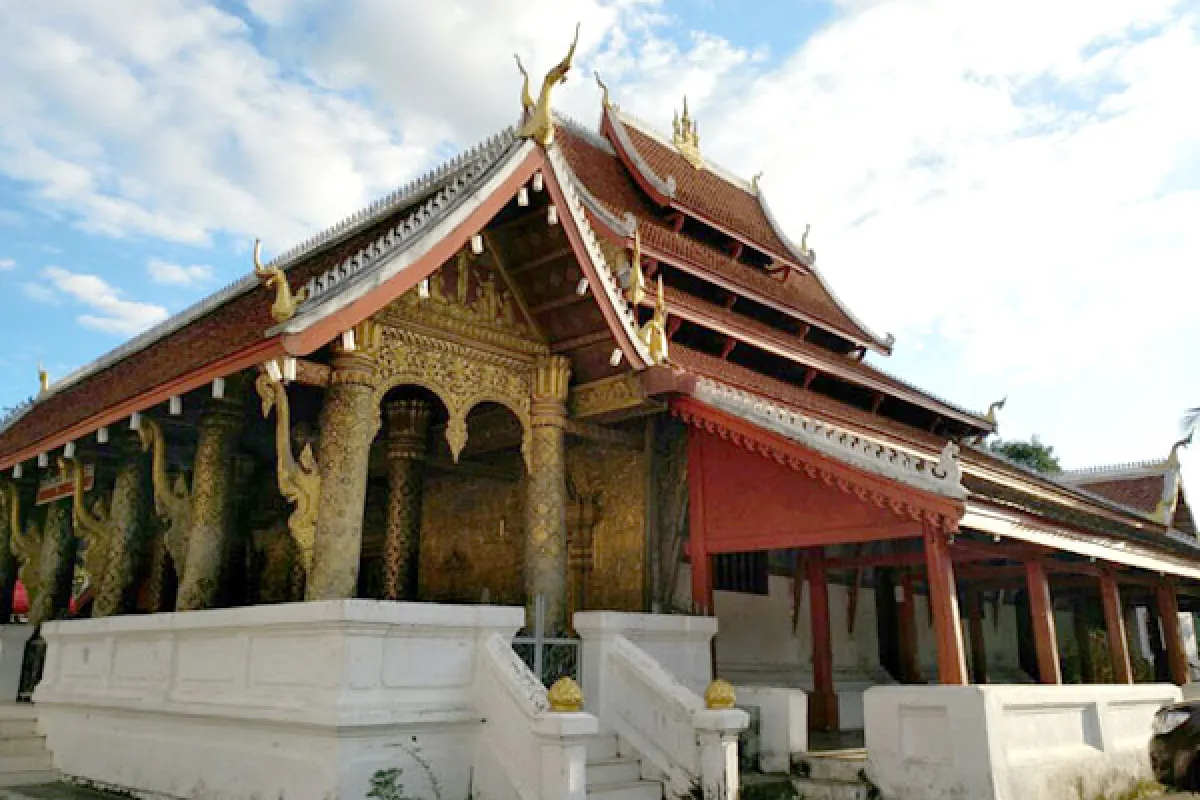
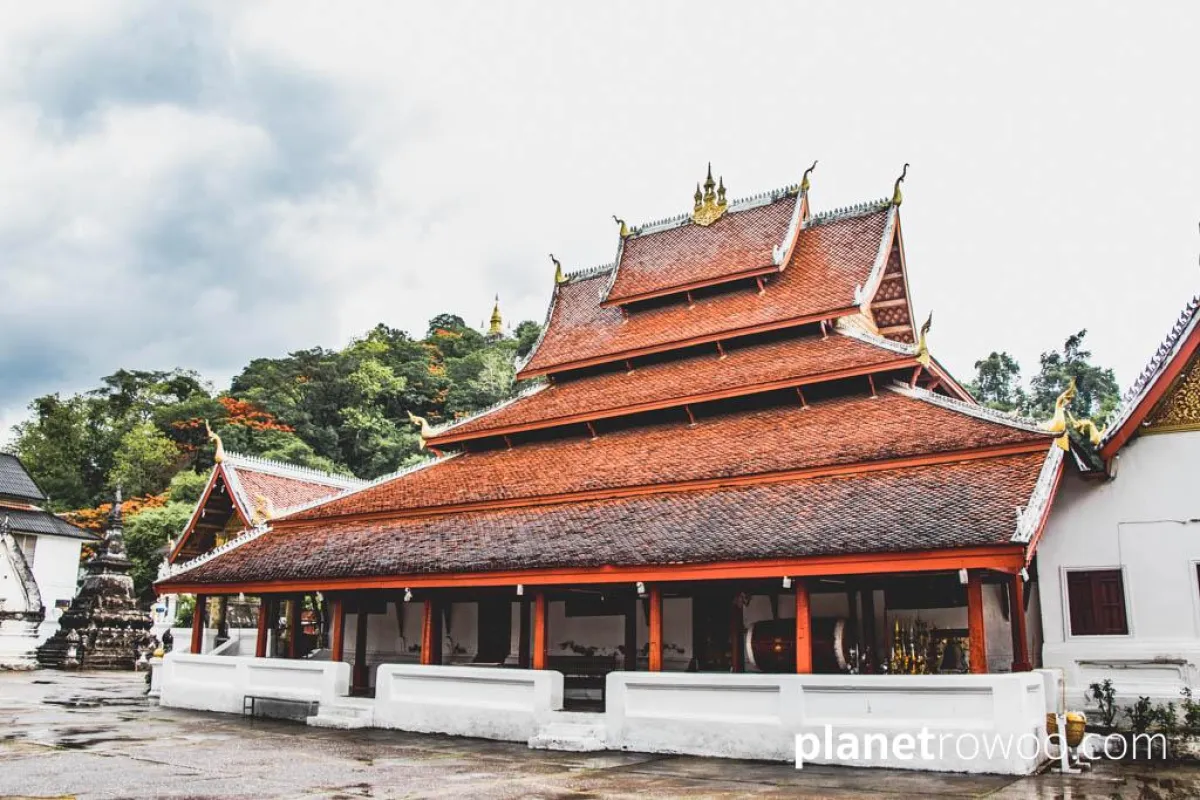
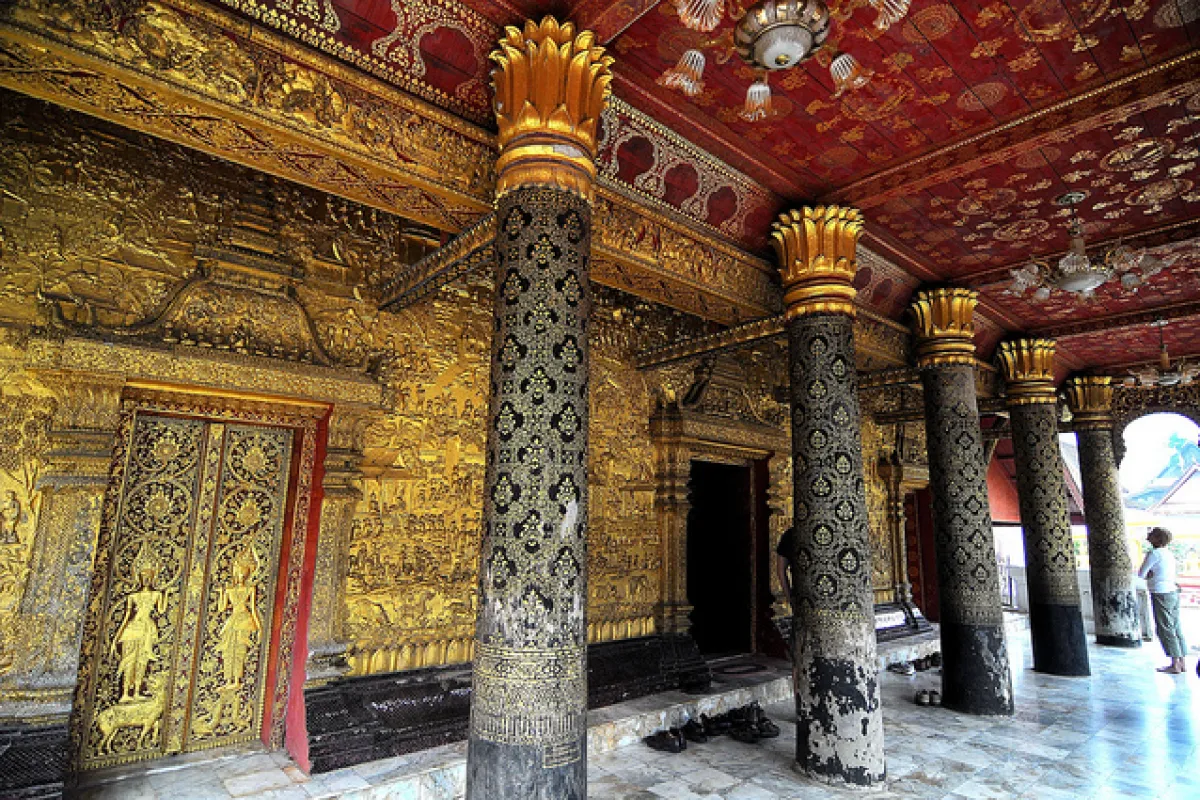
Wat Mai Suwannaphumaham
Built late 18th century, 1821, and onward
The Wat Mai Suwannaphumaham or Wat Mai (New Monastery) is one of the biggest and most beautiful temples in Luang Prabang. Its central position (in front of the night market and beside the Royal Palace) makes it one of the most visited temples of this ancient royal town.
This Wat was built by King Anourout at the end of the XVIIIth century and was enlarged in the XIXth century. Its restoration, during the reign of King Manthatourat (1817-1836) gave it it’s final name of "New Monastery".
This temple is very important for the Laotians of Luang Prabang. After the Chinese had destroyed the town in the last half of the XIXth century, it served as a temple for the royal family, and also sheltered for a long time the Phra Bang, which is a mystical emblem in this country. It was also, the residence of the highest Lao Buddhist dignitary, Pra Sangkharat.
During Pimay, the Lao New Year, the Pha Bang is put on display in this temple for 3 days. Devout Laotians from all over the country come to devoutly sprinkle the statue with water whilst making wishes.
-
Entrance Fee: 10,000 KIP per person
-
Opening hours: Everyday, from 8AM - 5PM
---
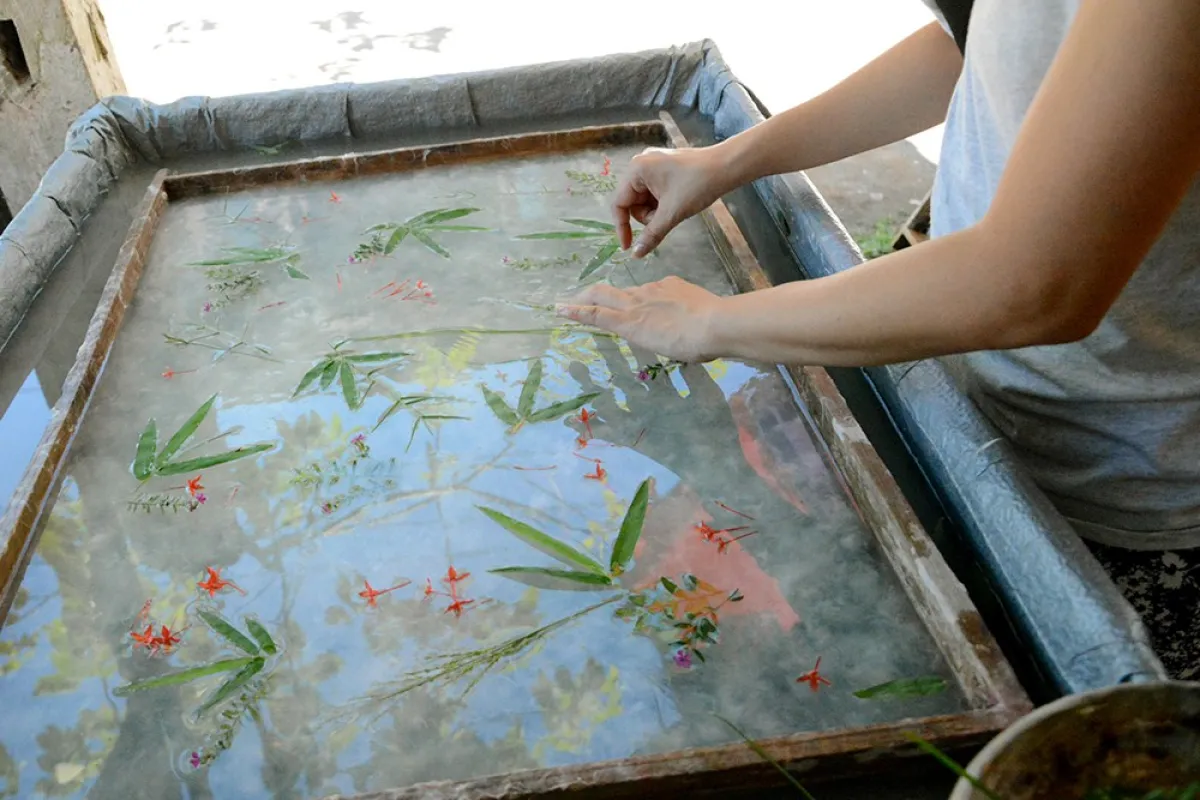
Ban Xang Khong (Sa Paper Village)
There are a few handicraft village in Luang Prabang but Ban Xang Khong is most accessible and more unique villages with many old shophouses and artisans running private businesses.
If you are travelling by foot, it is accessible by walking across the bamboo bridge during the low tide seasons. Once you cross the bamboo bridge from the Mekong River and NamKhan River intersect, just continue walking uphill and you will hit the main paved road. Continue walking around 500metres and you will see authentic Laos Traditional Houses making a variety of paper, wood and silk products.
Alternatively, many cyclists enjoy riding across the old wooden bridge which is itself an attraction. After crossing the old bridge turn left one the first junction, a gentle ride along the Nam Khan River of 15-20 minutes will bring you the village.
The specialities here are handwoven silk and saa paper, which is paper made from fast-growing mulberry bark naturally shed by the tree—so you don't need to worry about being a tree killer.
The newly paved road brings great convenience and accessibility. You can join daily activities and observe how local products at the night market are produced such as Sa Paper painting/lantern/bookmarks using environmentally friendly techniques handed down for generations.
Our site works directly with the fair trade villages and allows you to try one of their unique activities.
Culture & History
Rich in Heritage Traditions and Culture
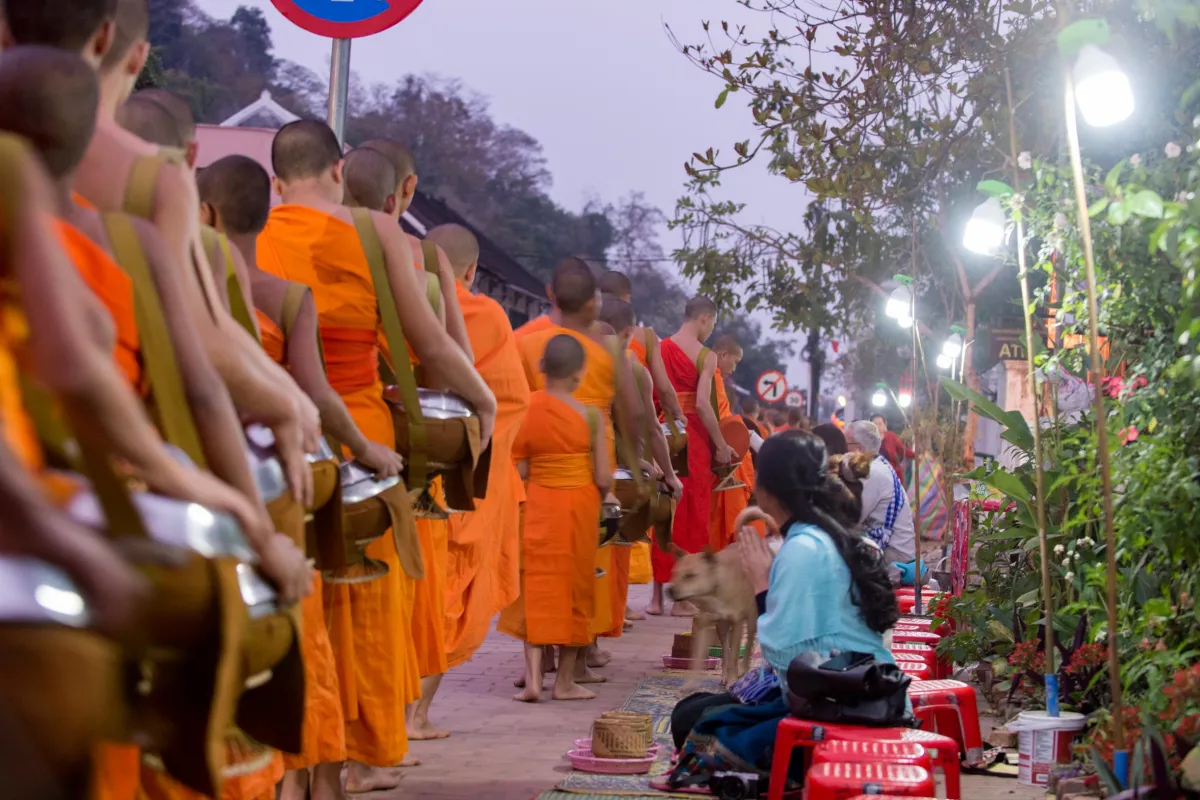
Immerse yourself in tradition by dressing up with their traditional Lao Sinh or embracing the timeless tradition spirit of Alms Giving.
Celebrate the Water Festival or Lao New Year by splashing water to ever eager crowds of locals in April, watch the yearly Boat Racing Festival in September by the Namkhan River Bank or celebrate the night with people singing, chanting and dancing with fireworks and lights accompanied by a big captivating parade on the streets of Luang Prabang. Watch in wonder as the boats are paraded through the streets and launched onto the river to set on fire.
Cruises on the Mekong River
Sunset, Kwuangsi, Pak Ou Caves, Dinner and Dance Cruises on the Mekong River and many more
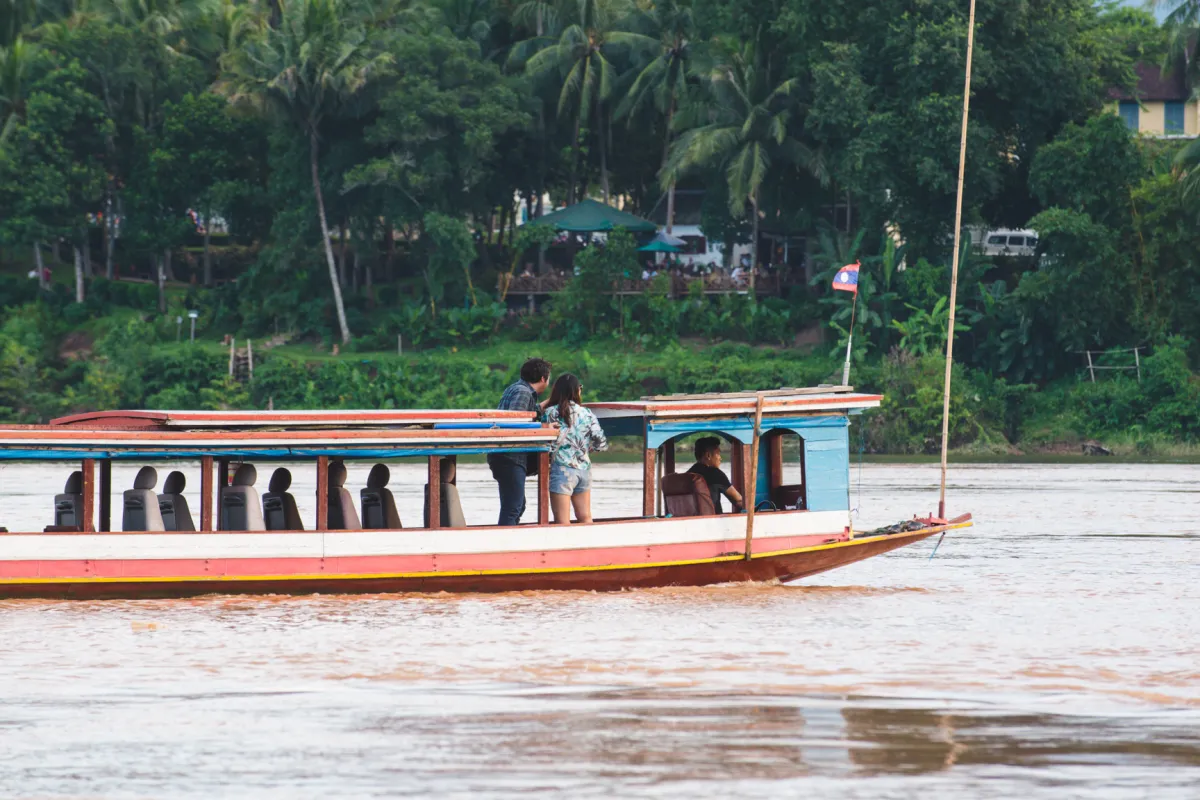
The Mighty Mekong is how people usually quip about the river. Just how mighty is it, you have to experience it for yourself by going on one of these cruises available in Luang Prabang.
A 2 days cruise from Huay Xai stopping over at Pakbeng connecting tourists coming from Chiang Rai, Thailand to Luang Prabang. This journey across the river allows you to gain a different perspective of Lao's sights and sounds, reconnect with nature and yourself as you wander in peace on Mekong River's pace. Shompoo Cruise is highly regarded for this journey.
For the luxury travelers, Mekong Kingdom allows you to experience the wonders of the Mekong, aboard a luxurious Luang Prabang cruise.
For travellers who do not have time to travel days by cruise to Thailand or other provinces. The best way to experience the Mekong in a few hours will be a Sunset Cruise on the Mekong River. Have a relaxed and carefree time lazying around the boat while enjoying the slight breeze in your face and warm sunshine glowing. As you float towards the ever-expanding river and mountains while the orange glow slowly fades into the background. It doesn't hurt to have a few beers and snacks along the way to make your journey perfect.
A half-day cruise on the Mekong is also a popular option for visiting the Pak Ou Cave or Kwuangsi Waterfalls or Pottery/Handicraft Village.
Check out our cruise selections under tours section for choices of exciting cruises and excursions that allow you to explore one of Laos's most magical destinations just the way you want.
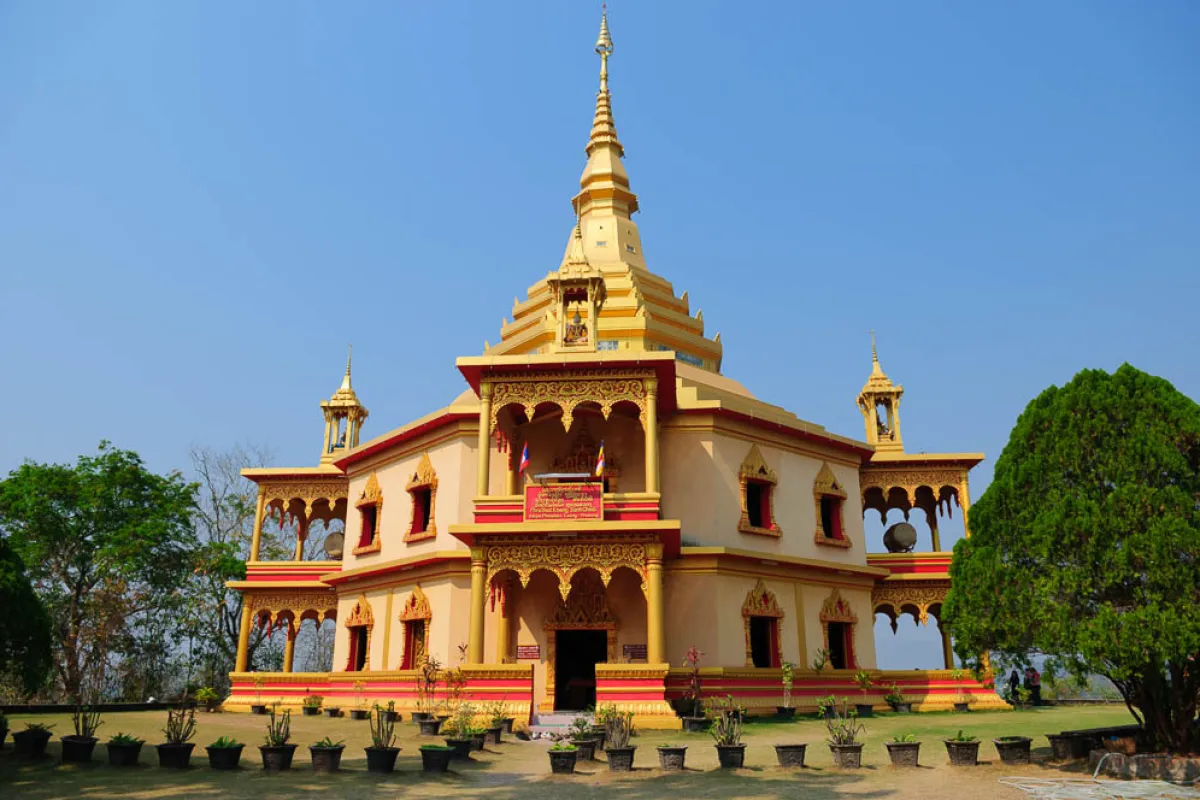
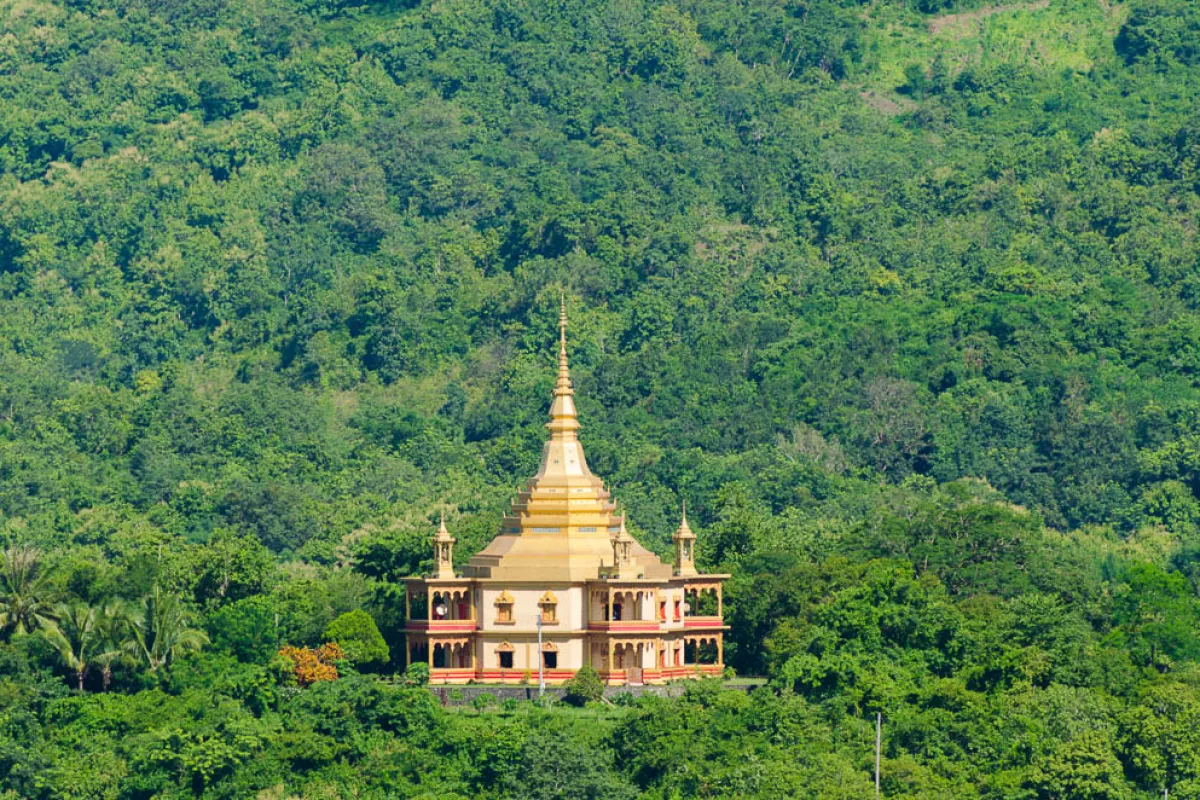
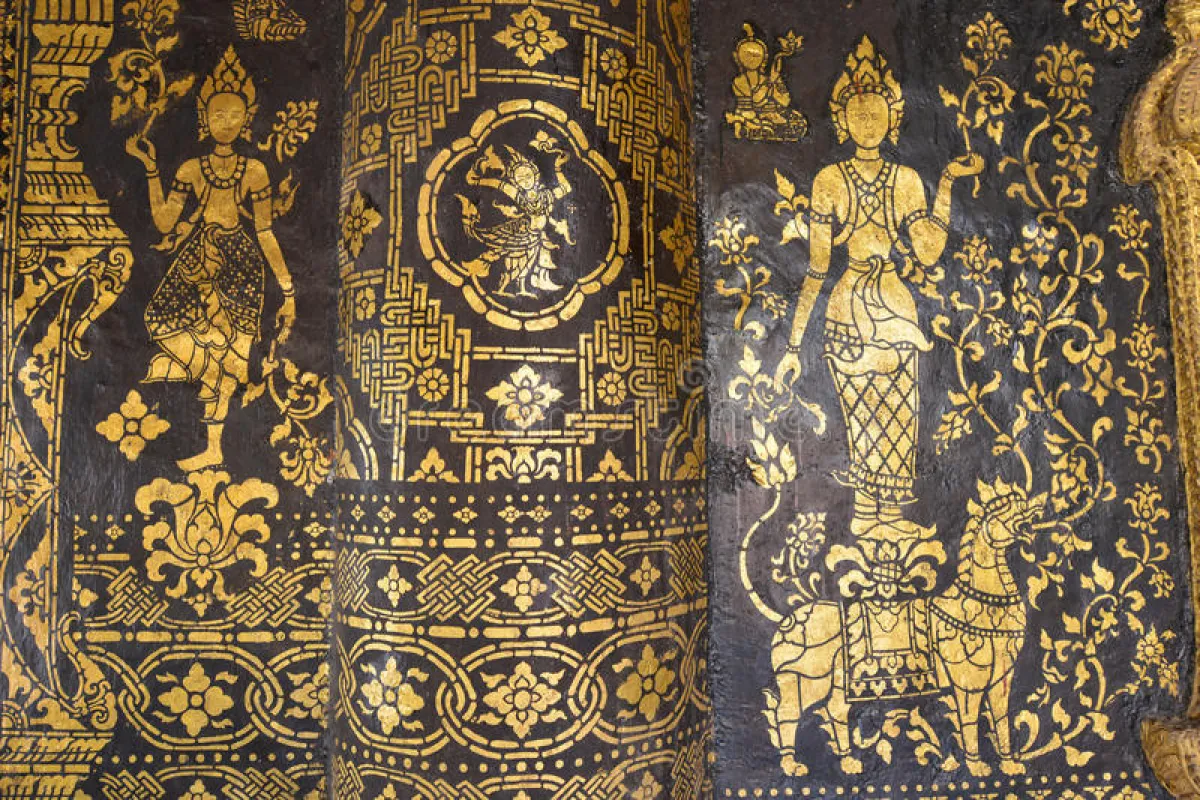
Wat Pa Phon Phao
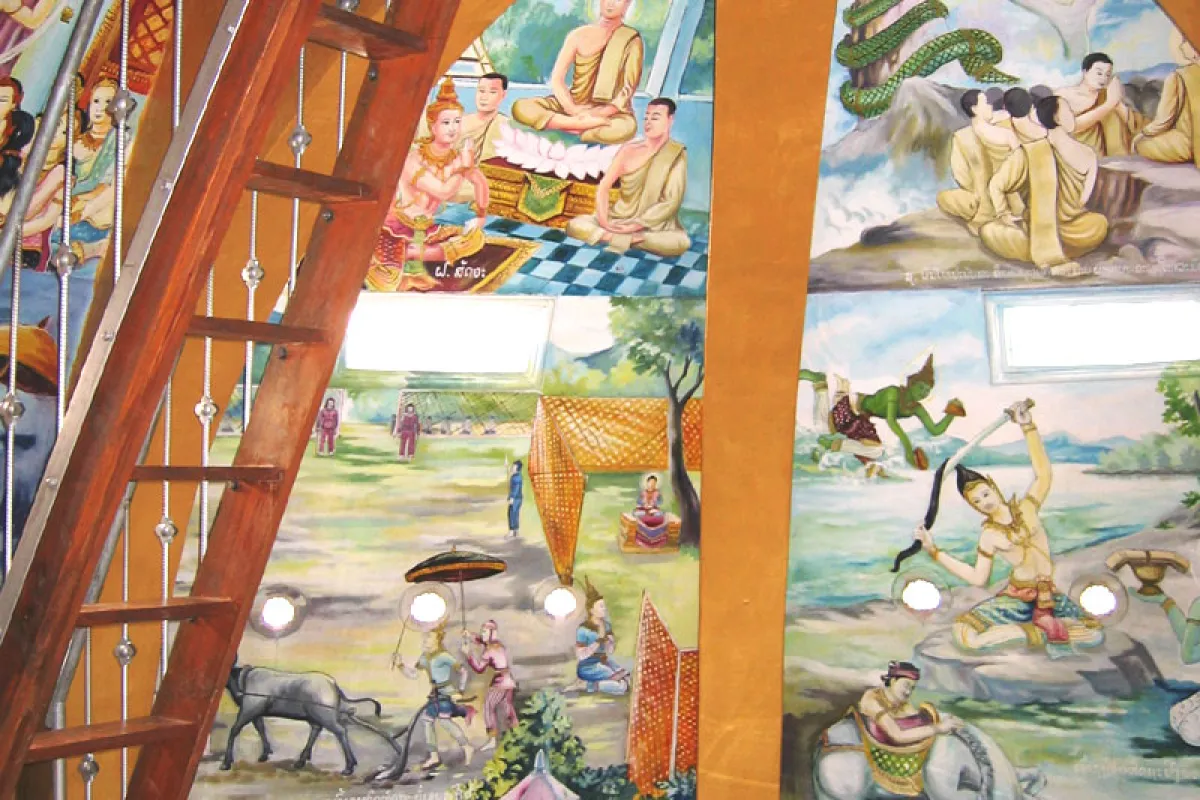
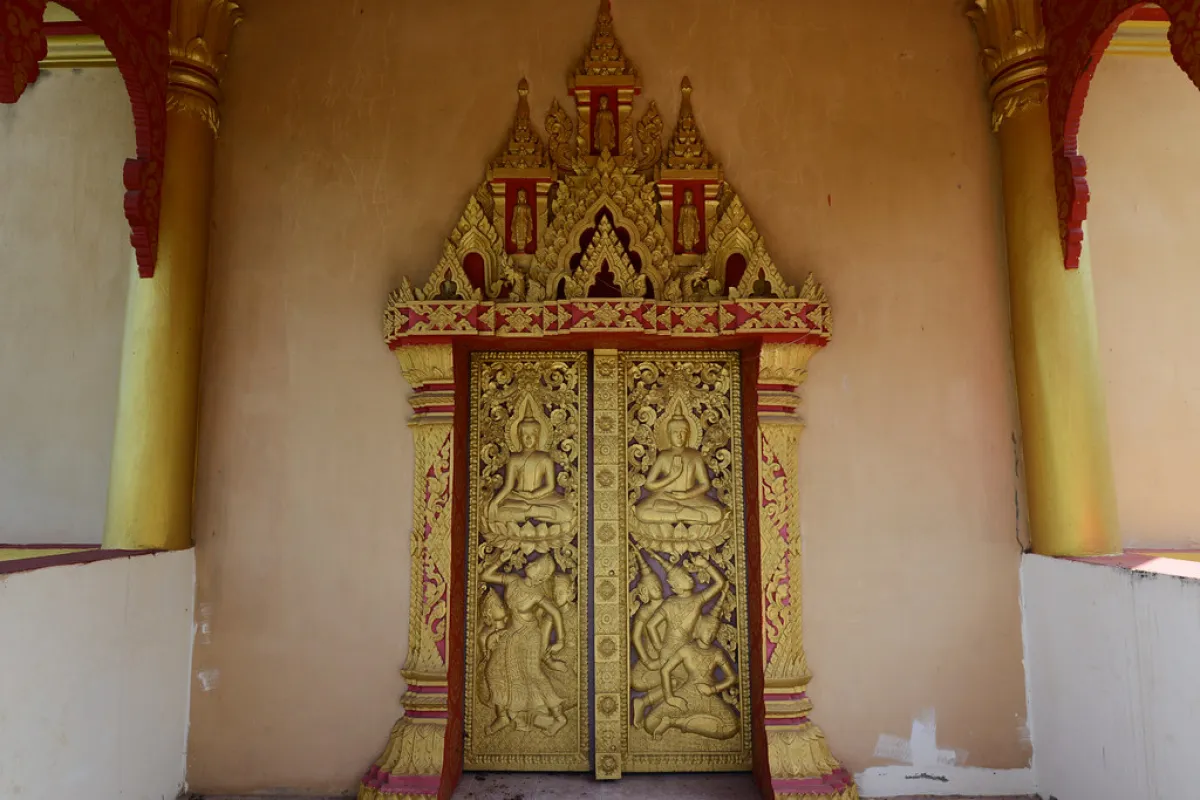
Wat Pa Phon Phao, also Wat Phon Phao, Wat Phonphao, or Wat Phol Phao, meaning "Peacefulness Temple", is a Buddhist temple situated on a hill in the southeast of Luang Prabang, Laos, across the Nam Khan River from Luang Prabang Airport. The temple, a golden stupa, is used as a forest meditation retreat, and was once headed by the abbot Ajahn Saisamut, a noted Lao Buddhist teacher. His funeral in 1992 was one of the largest funeral services Laos had ever seen. The temple has a fine collection of murals, some of them gruesome in nature.
-
Opening hours: Everyday, from 8AM - 10AM and 1:30PM - 4:30PM
---
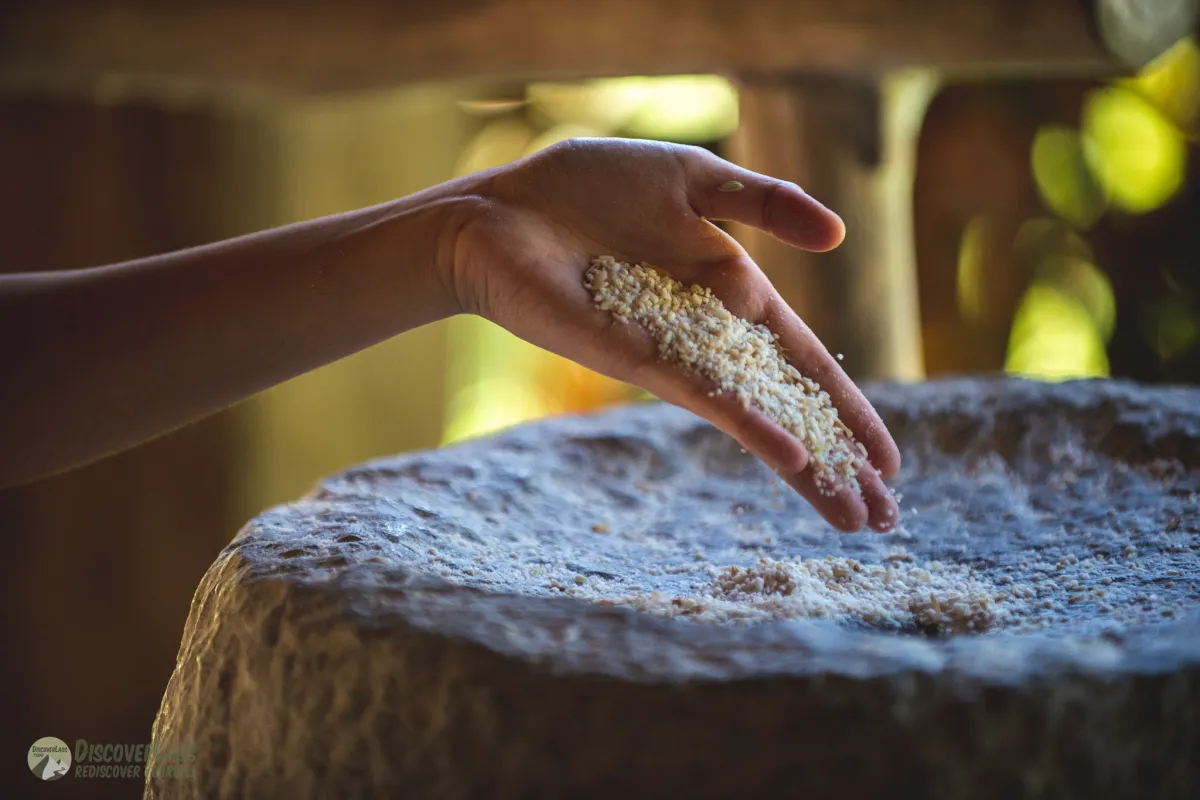
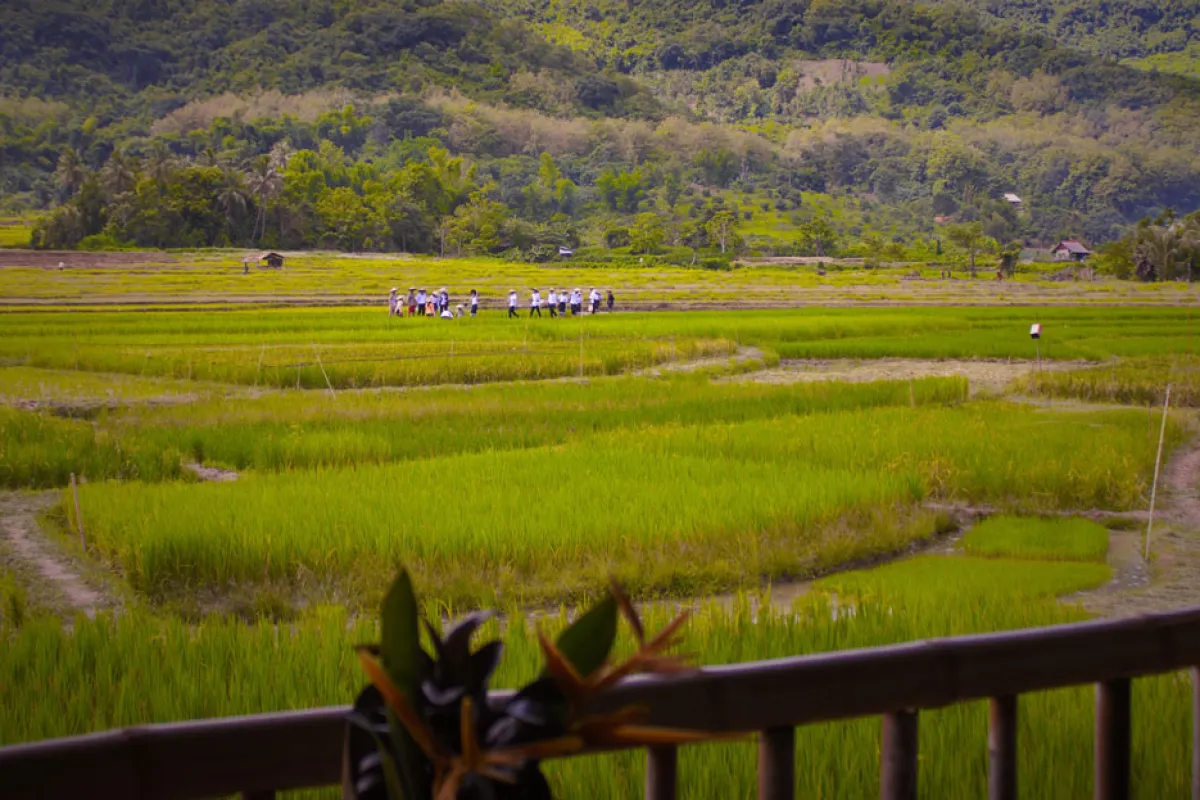
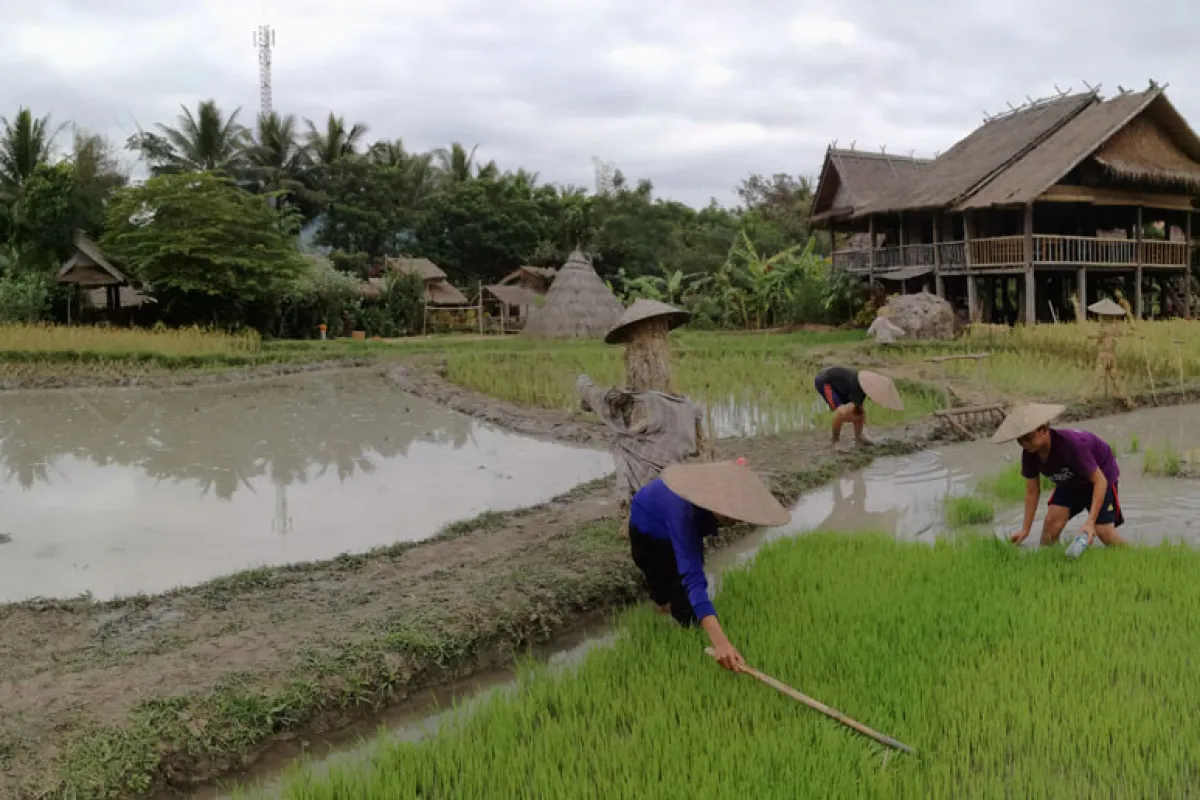
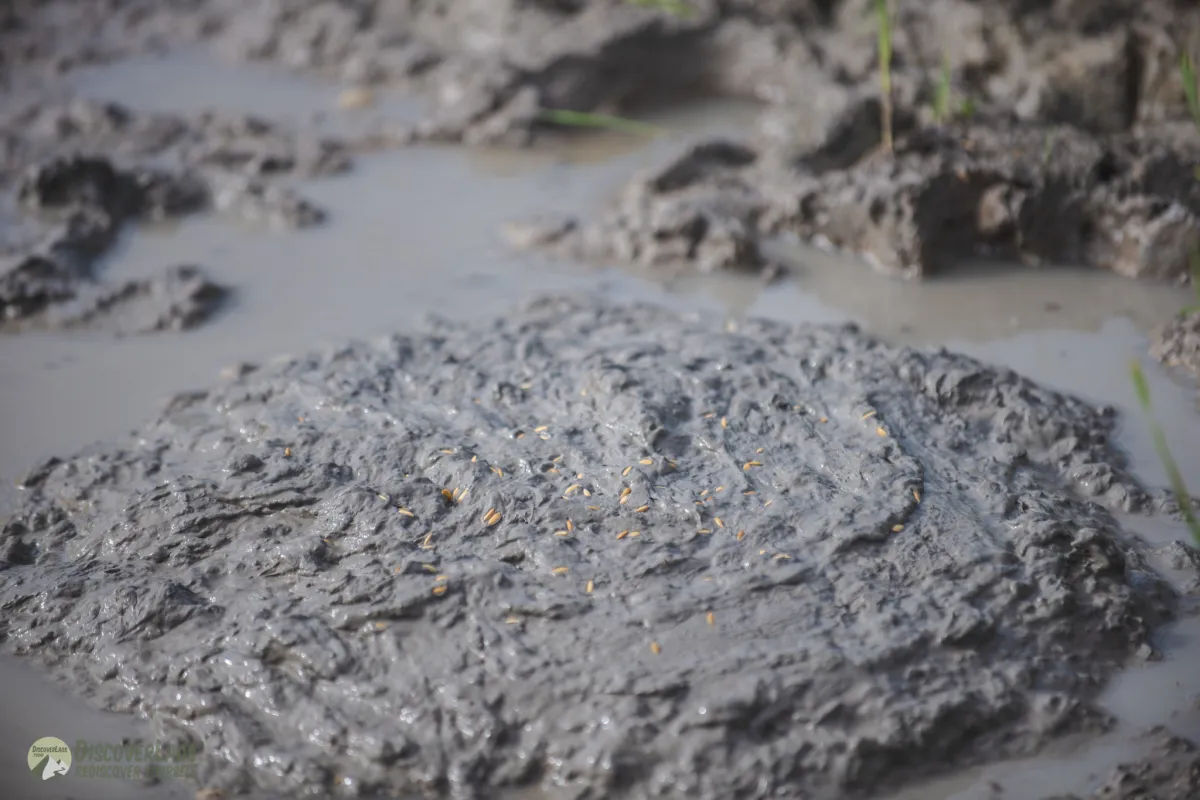
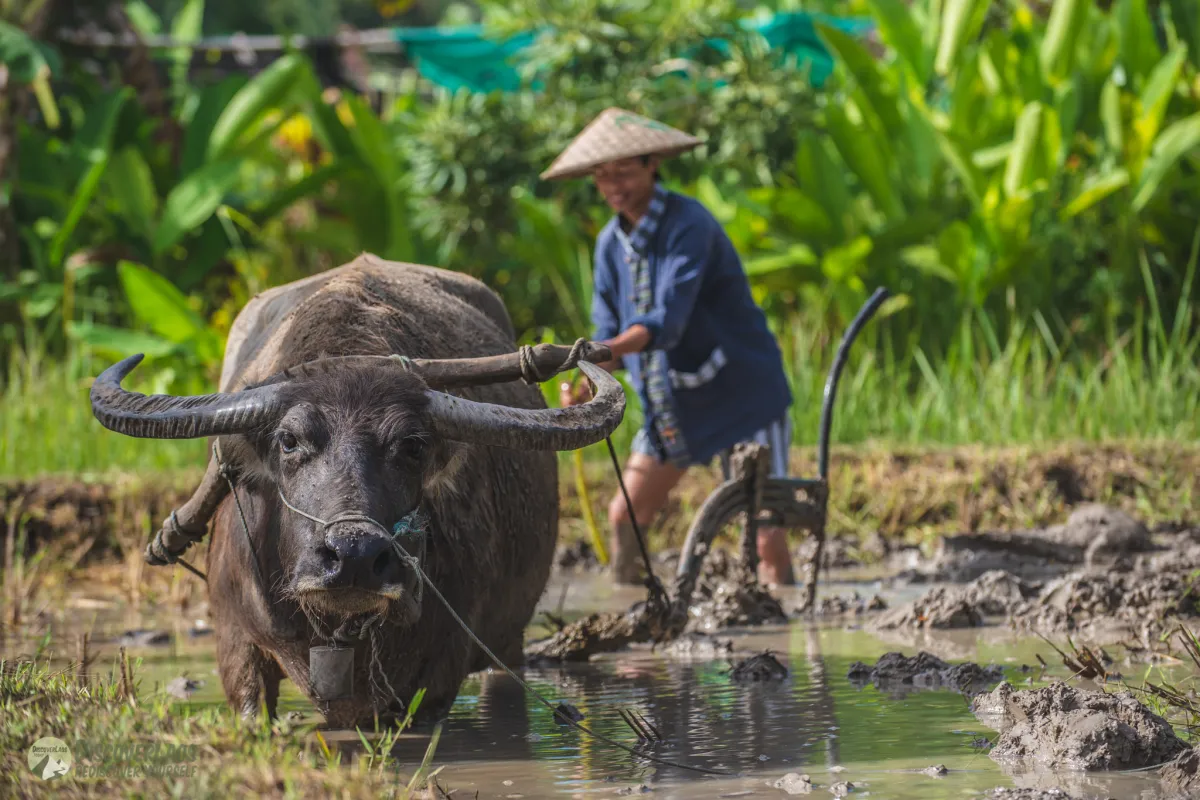
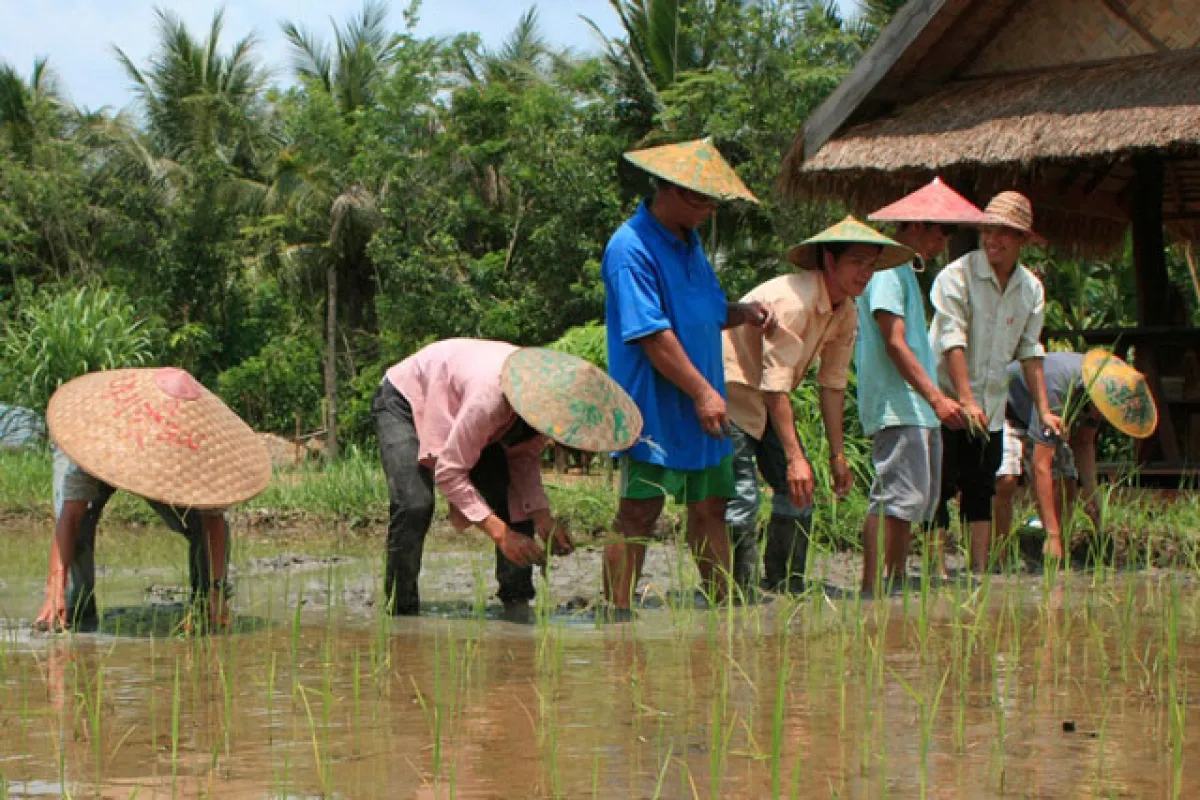
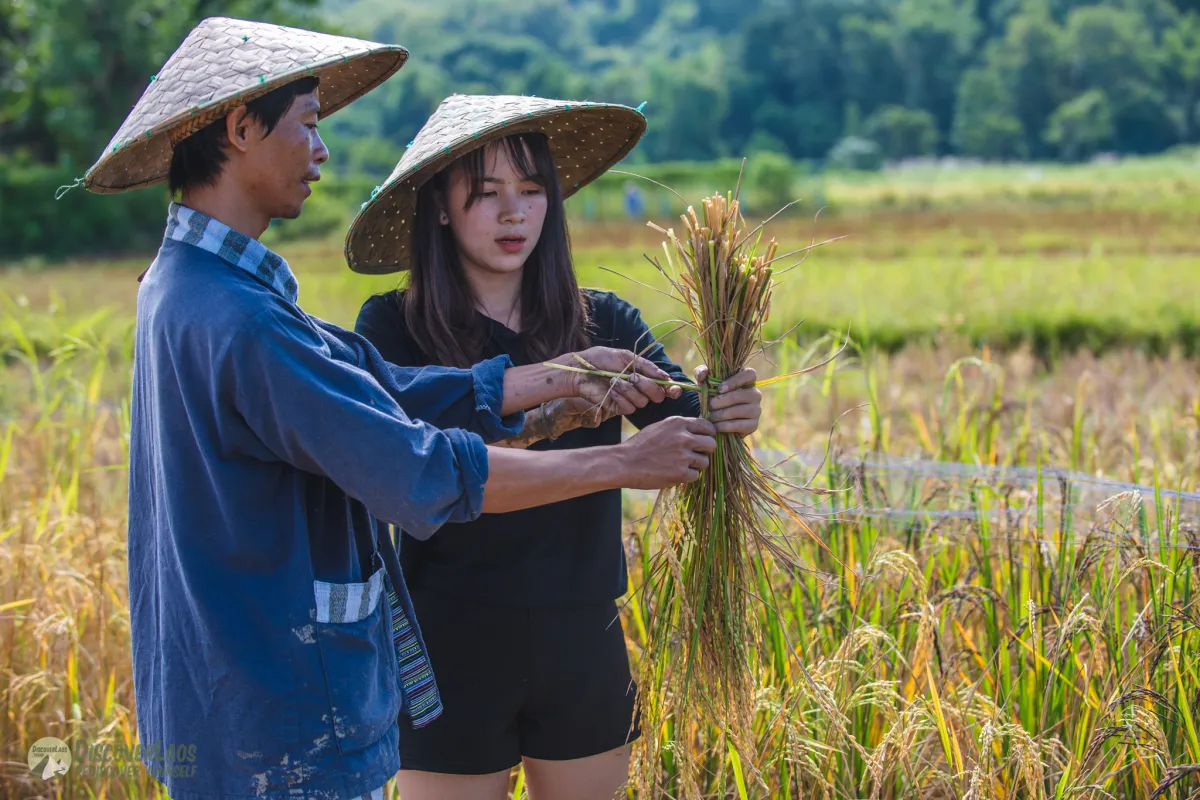
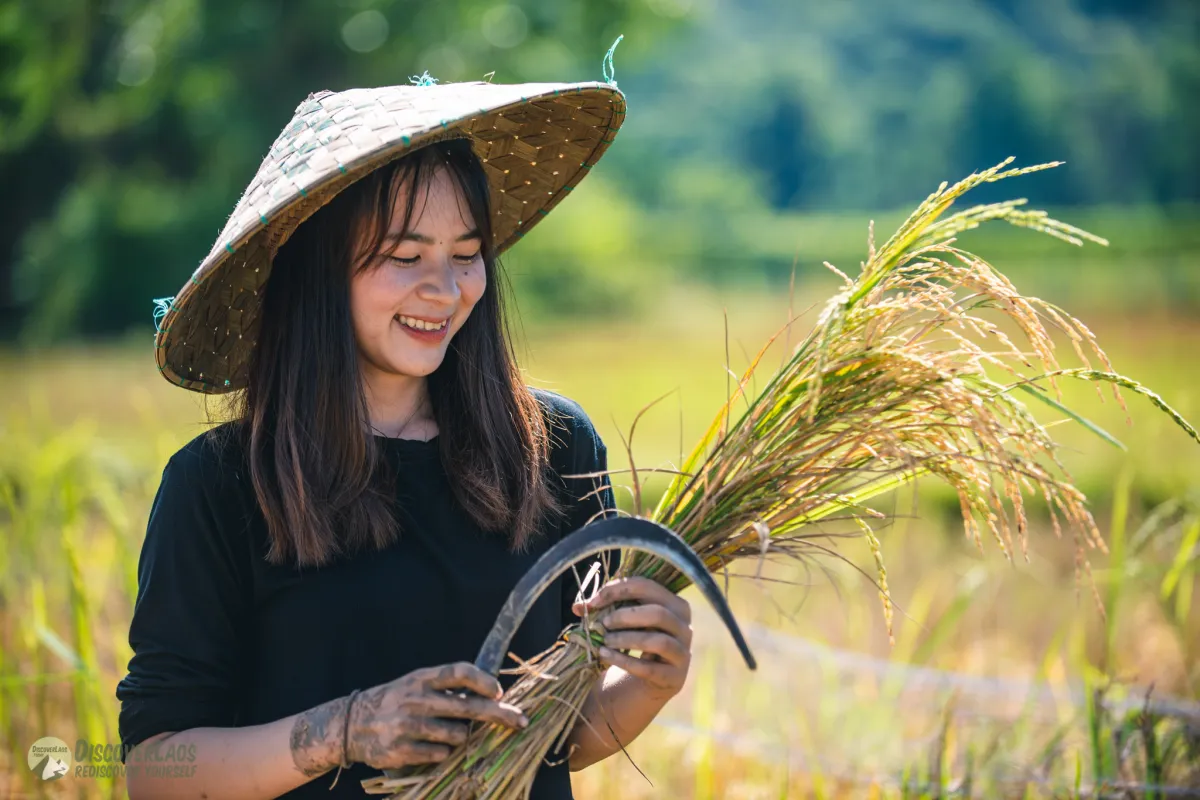
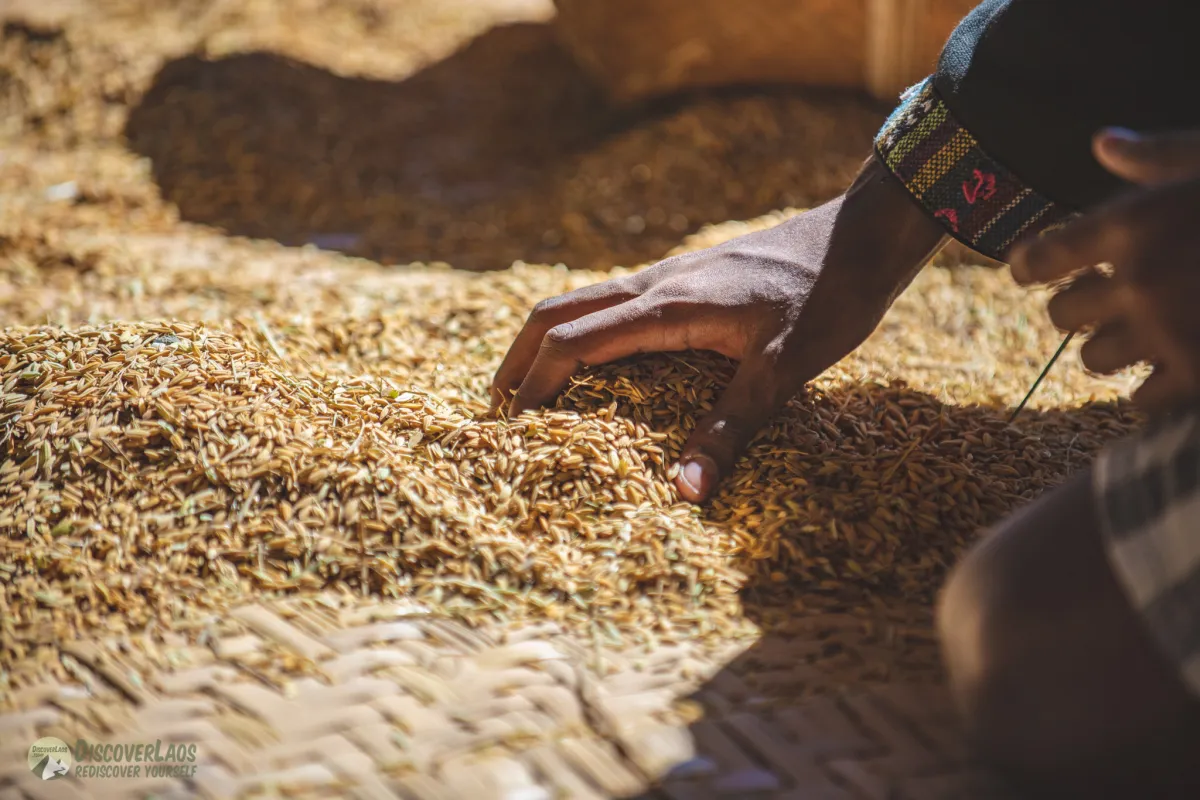
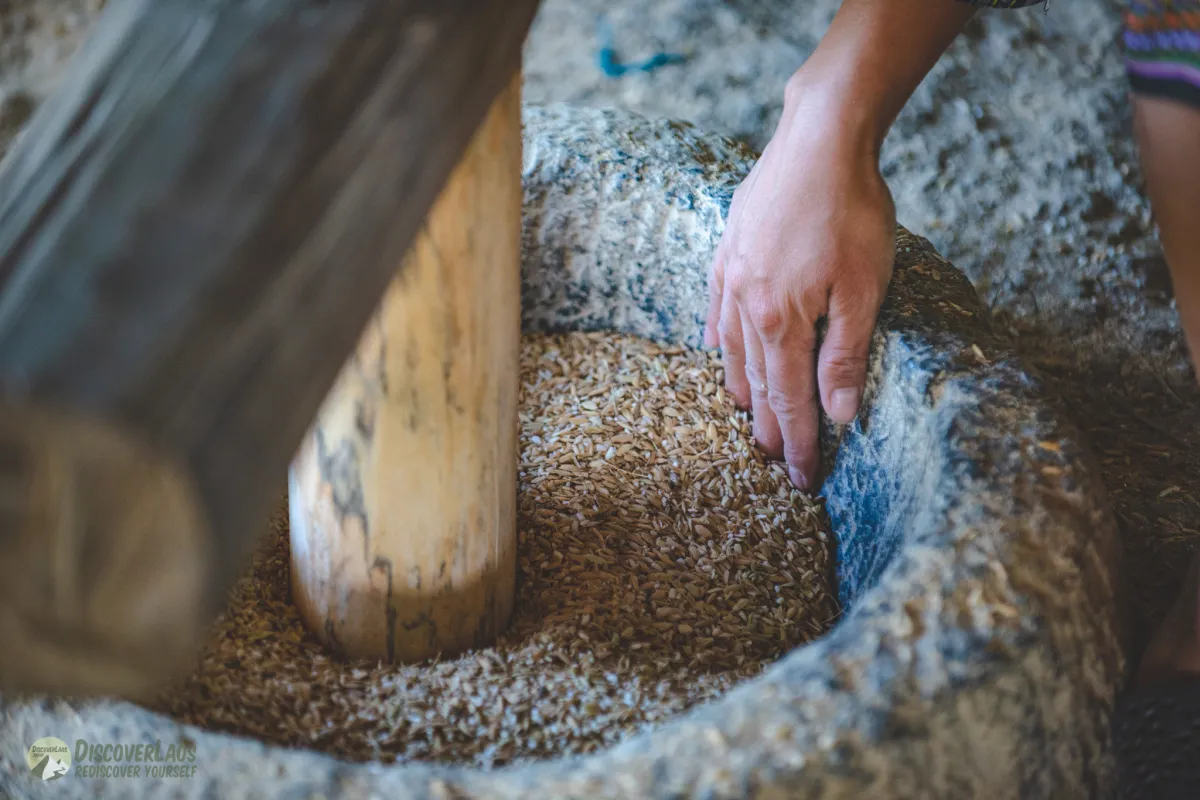
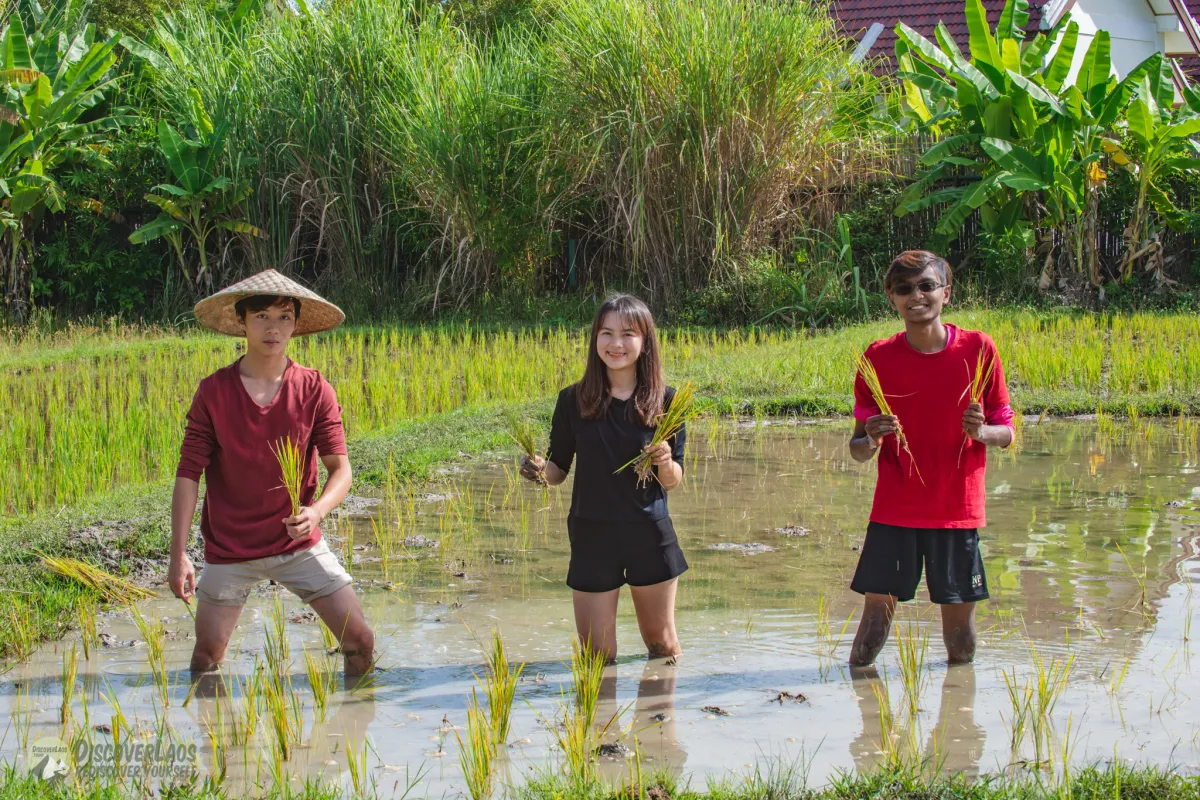
The Living Land Farm - Rice Farming Experience
The Living Land Company is a community-run organic farm supplying fresh vegetables, herbs, salads and rice to hotels and restaurants in Luang Prabang. You can take a day trip to the farm and experience the life of a Lao farmer.
There’s a beautiful Lao-style house overlooking 100,000 sq m of rice terraces and organic vegetable fields. The Living Land Company organic farm stretches over 20,000 hectares, cultivating all manner of herbs and vegetables including beetroot, mint, and mustard. The farm aims to offer an alternative to slash-and-burn farming methods, which result in unusable land following the harvest.
The Living Land Company lets you learn how to practise traditional Lao rice farming methods. A knowledgeable guide will teach you about ancient rice harvesting and planting methods, as well as threshing and winnowing rice.
You can also combine your time at the farm with a cooking lesson. Learn how to make claypot soup, curry paste, and sticky rice steamed in a woven basket. The class takes place at an open-air wooden pavilion, where you’ll be surrounded by vegetable fields with grazing buffalo and rolling hills close by.
---
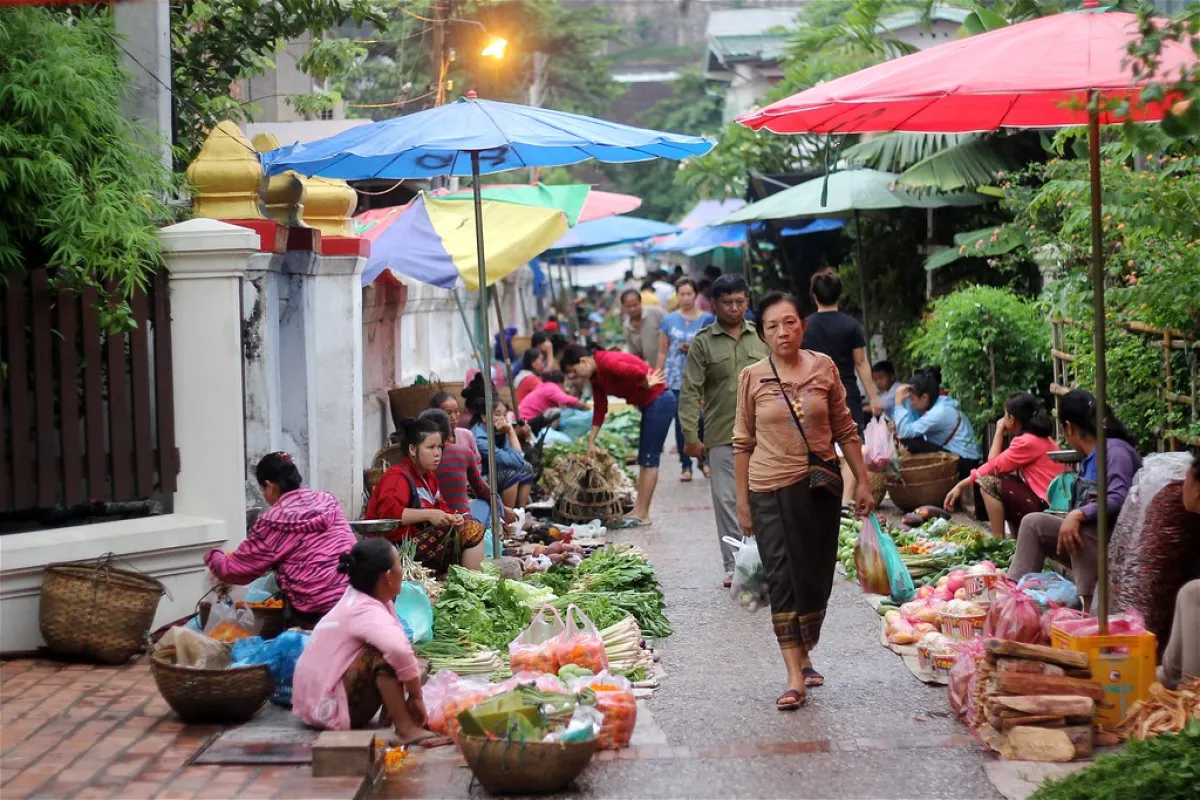
Morning Market (Fresh produce)
To discover fresh Lao ingredients, head to this market first thing in the morning where locals flock to buy fish, vegetables, bunches of herbs, pork, eggs, fruit, as well as a range of live animals including toads, chooks and critters. The Morning Market is an outdoor market, with most of the vendors selling their wares under large umbrellas. It’s a great place to buy packets of khaiphaen (riverweed), dried buffalo meat, banana chips and deep-fried bamboo shoots. Even if you are not interested in buying anything, it’s worth visiting to take photos of all the weird and wonderful things for sale.
Opening hours: 5 am-11 am.
Location: Just behind the Tourism Information Center.
UXO Visitor's Centre (Educational)
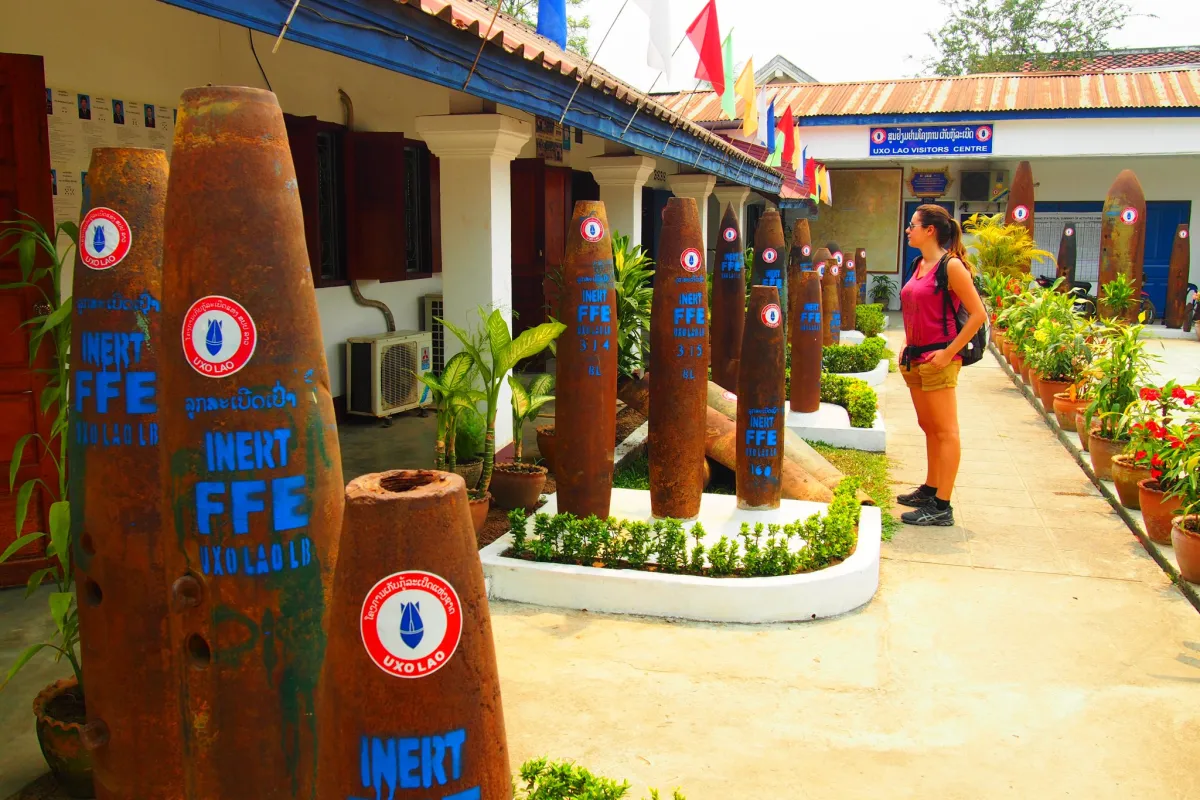
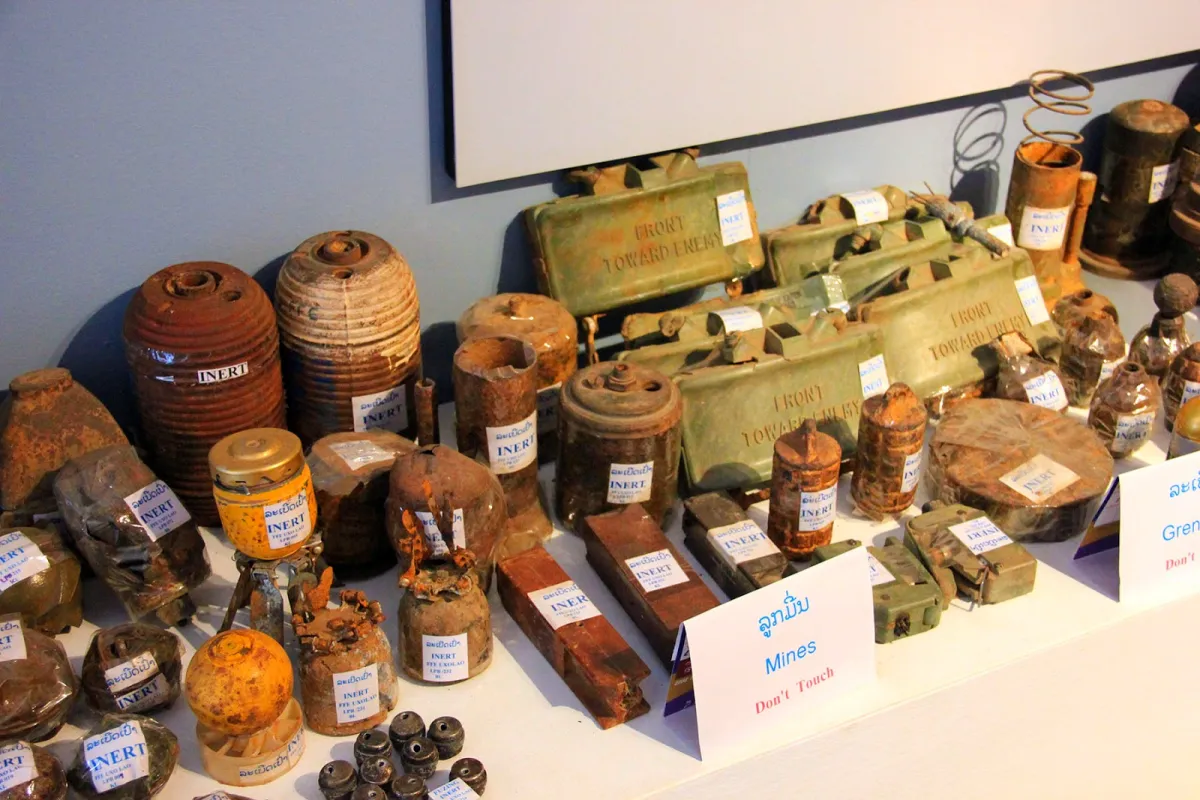
The UXO Visitors Centre is a ‘must see’ for those who travel to Luang Prabang with real-life bombies on display, survivor stories told on the walls of the centre and a moving documentary to view – you’ll have the chance to learn important and tragic facts about the Secret War.
Did you know that Laos is the most heavily bombed nation, per capita, in history? Between 1964-1973, Laos was hit by an average of one B-52 bomb-load every eight minutes. The US dropped more bombs on Laos during this period than those dropped during WWII. A large percentage of the ‘bombies’ that rained down on this country remain in the earth – unexploded – continuing to cause a devastating impact, with casualties and injuries a regular occurrence. The UXO Visitor’s Centre in Luang Prabang offers you the chance to learn more about the Secret War. There are displays of real-life bombies, compelling survivor stories, as well as a viewing room where you can watch a documentary about the dangerous work being done to clean up the bombies.
Highly Educational and suitable for students or families with young children.
Open from Monday to Friday 08:00am to 11:30am and 13:00pm to 17:00pm
Free entrance (donations encouraged)
Located in Wat Naviengkham village. On the road behind Souphanouvong Monument and it takes about 12 minutes walk from the city center.
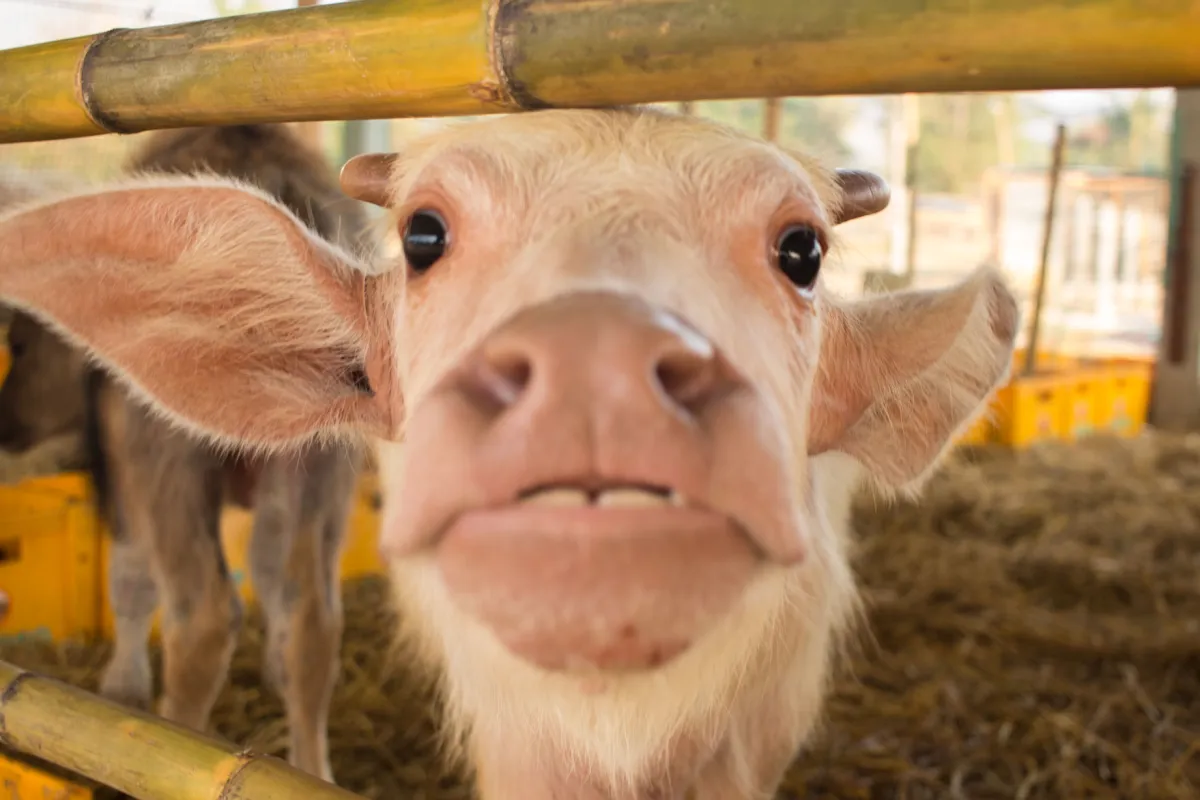
Laos Buffalo Dairy (One and only)
What is Laos Buffalo Dairy?
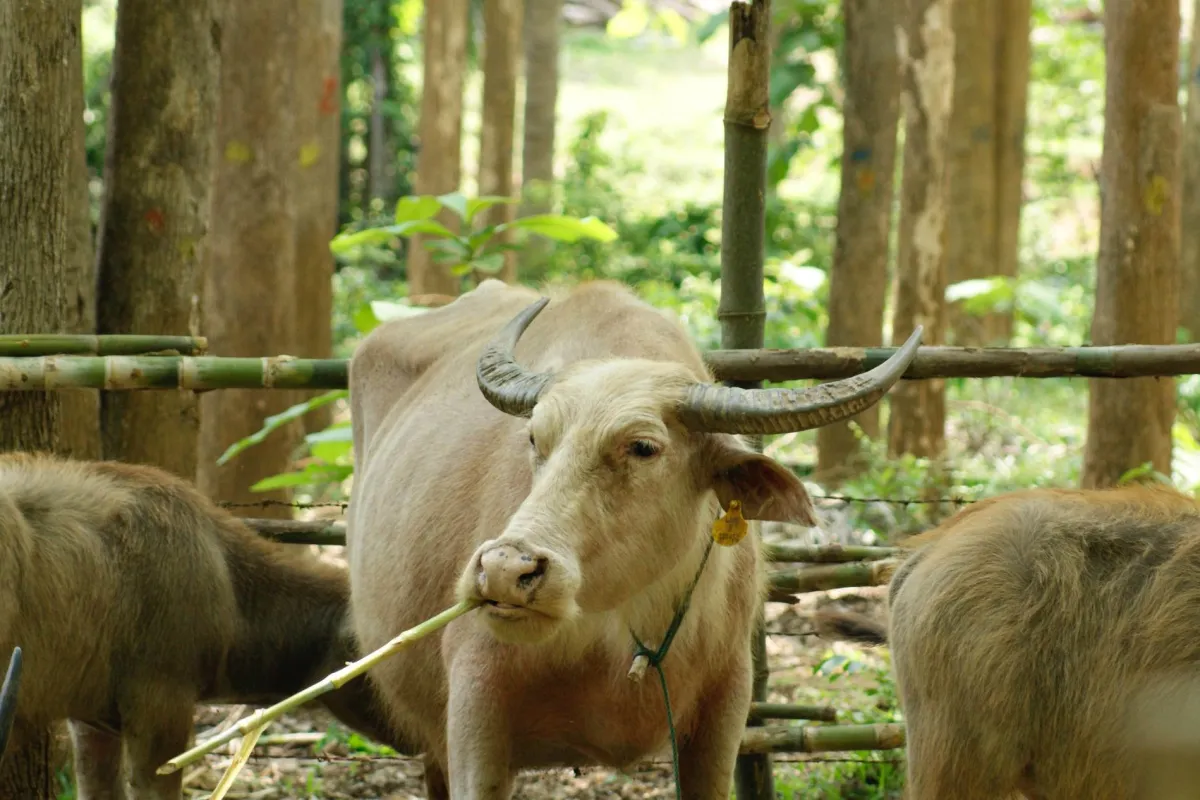
A social enterprise started by two families who decided to have a mid-life crisis with a “Purpose rather than a Porsche”! The first and only buffalo dairy in Laos, producing a wide array of artisanal cheeses & products; including mozzarella, blue cheese, feta and ice-cream to name but a few. Offering visitors to Luang Prabang a unique opportunity to try these delicious cheeses and “get up close and personal” with beautiful buffalo and other farm animals. Visitors to the Dairy are helping support the rental of buffalo providing local farmers an additional income stream, improved feeding, veterinary care and breeding program to revitalize the local buffalo genetics.
Visitors also help fund workshops for local farmers on animal care, organic methods for feed production and how to milk a buffalo, so they can improve the nutrition of children in rural villages.
Sustainable Cheese: A New Industry in Laos
A socially-responsible enterprise consisting of a commercial dairy and production facility to make products such as yogurt, cheese and ice cream for local and overseas customers.
BUSINESS OVERVIEW
By cooperating with people from villages in and around Luang Prabang by renting their buffalo, which provides the families with a regular income stream from an underutilised resource, namely female buffalo; male buffalo being sold for meat. We built a facility for milking their buffalo and keeping them well-fed, healthy and safe.
Using an IndieGoGo platform, we are launching a crowd funding campaign with a goal to raise $30,000 to purchase 20 pregnant female buffalo for underprivileged farmers who cannot afford to buy their own, with the purpose of offering 20 pairs of calves to farmers in need. The farmers will also receive training and $500 cash to ensure these animals reach a healthy maturity. Calves will become buffaloes, and buffaloes will have calves, and a cycle of opportunity will begin. We will also be cross-breeding these buffalo with the Indian Murrah Buffalo which will improve the milk yield in future generations, ensure better calf survival rates and help the farmers make a higher profit from their larger and more productive buffalo. This breeding programme is being done in conjunction with the Lao Agricultural Institute.
The rest of the herd, approximately 200 buffalo, will be rented from various villages, milked daily for a period of approximately 6 months at a time, then returned to the village until they are ready to calve again and the process will start anew. During this time, we will care for, feed, and vaccinate all the buffalo and their calves. The villagers will retain ownership of their animals.
The daily running and operation of the dairy allowed us to create 30 full-time positions, which we offered to the farmers who have been helping us on the land since the beginning.
Our cheese-making production facility produced it's an inaugural ball of mozzarella in April 2017, created 5 full-time positions and is equipped to pasteurize, homogenize and store the milk collected from the buffalo on a daily basis.
We produce, package and store the goods until ready to ship. The product range currently includes yoghurt, mozzarella, ricotta, ice-cream and cheesecake. For full list click here.
Distribution channels are set up to local restaurants, hotels and supermarkets in Luang Prabang and throughout Laos. As production increases, we will export to markets in China & ASEAN.
Products may also be sold directly to the public and tourist groups that visit the dairy and production facility. An interactive mini-farm, training centre and café will be available for tourists visiting the farm.
This socially-responsible business is funded, owned and managed by foreign investors and 2 Lao nationals. We work in conjunction with local Lao villagers and provide the following benefits:
- Local farmers receive a new source of revenue by renting their buffalo to the dairy, totalling approximately $45,000 USD per annum.
- Improved care for buffalo and their calves and a breeding programme to improve calf survival rates.
- Rental income to villagers for land required for the dairy and production facility.
- New income and skills for the community members who will be employed by the business, in the dairy, production and administration.
- Workshops conducted at the dairy to provide more practical experience for teachers and students from the Northern Agricultural College.
- Internships in the production facility for local women in order to acquire skills and work experience to give them access to the tourism job market.
- In conjunction with Souphanouvong University an initiative to turn waste products into Bio-Gas and train local farmers on how to implement this in their own homes.
The company is featured as one of the best 10 adventures in the world by Forbes!
Click here to find out more!
Office Address:
Ban Muang Khay, Luang Prabang, Laos
See Tours in Lao Buffalo Diary
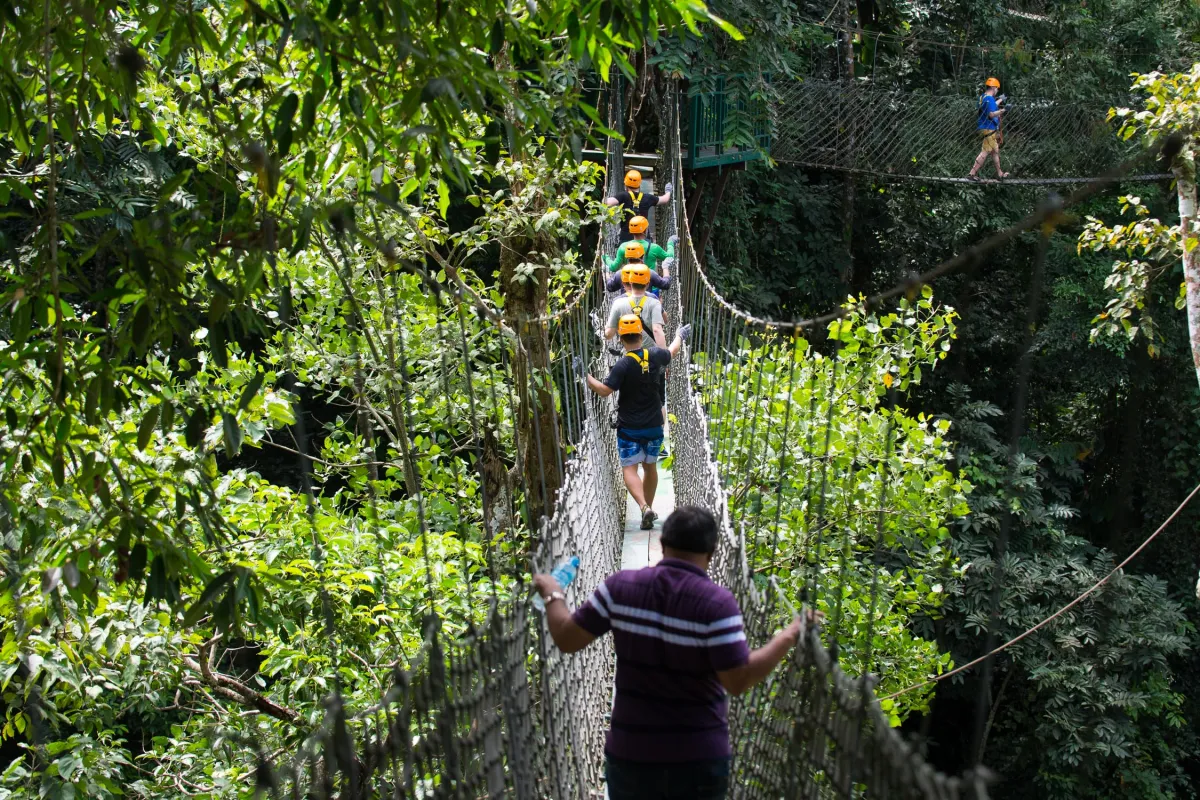
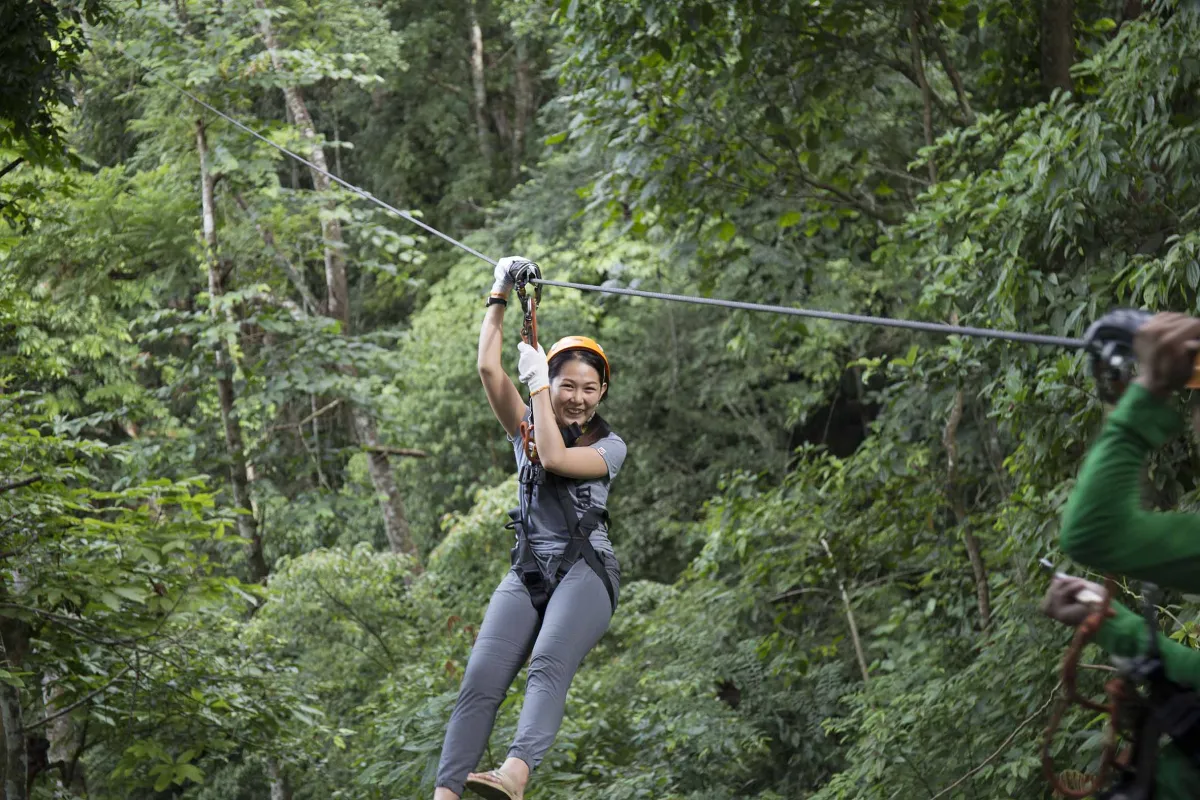
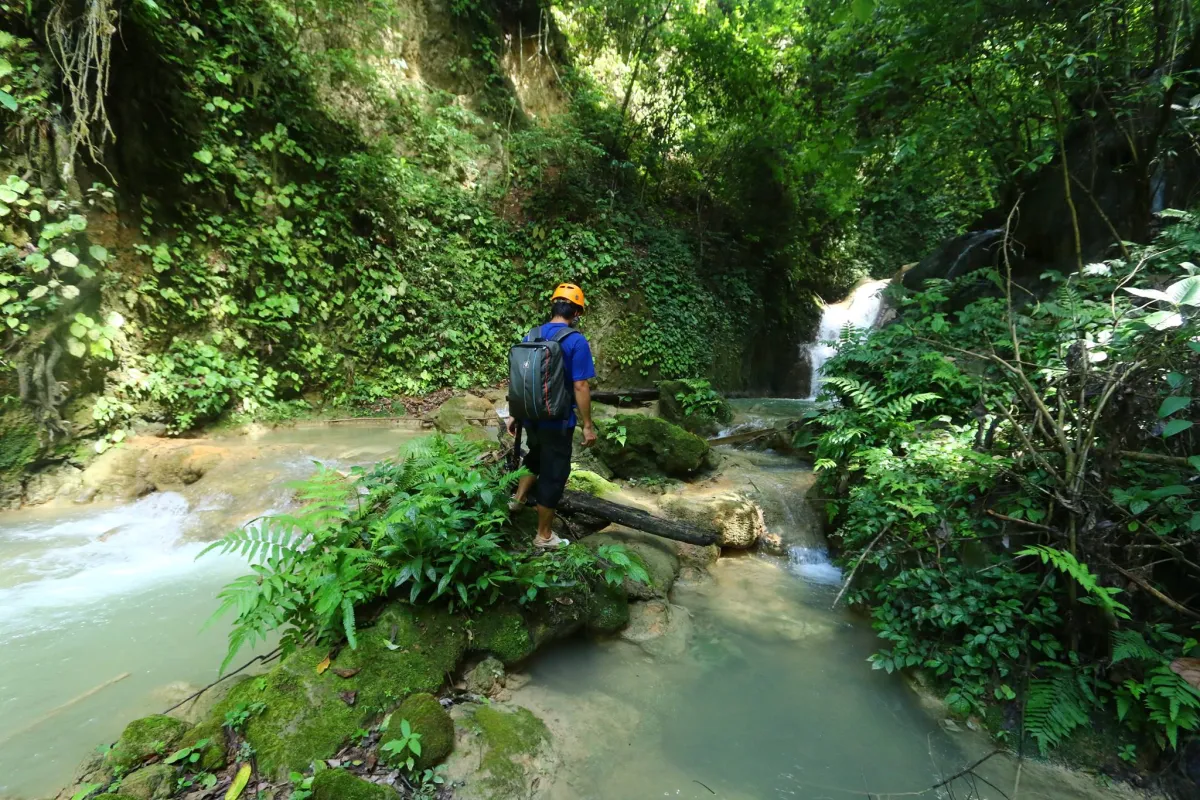
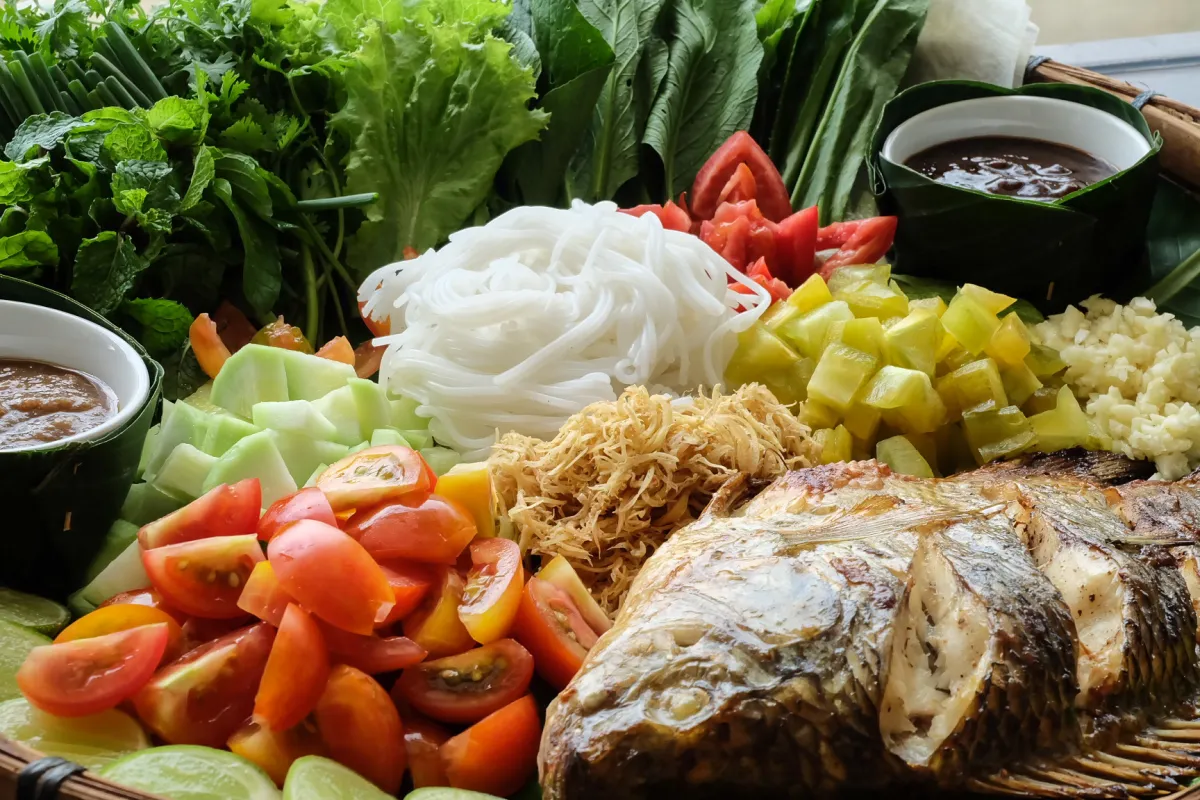
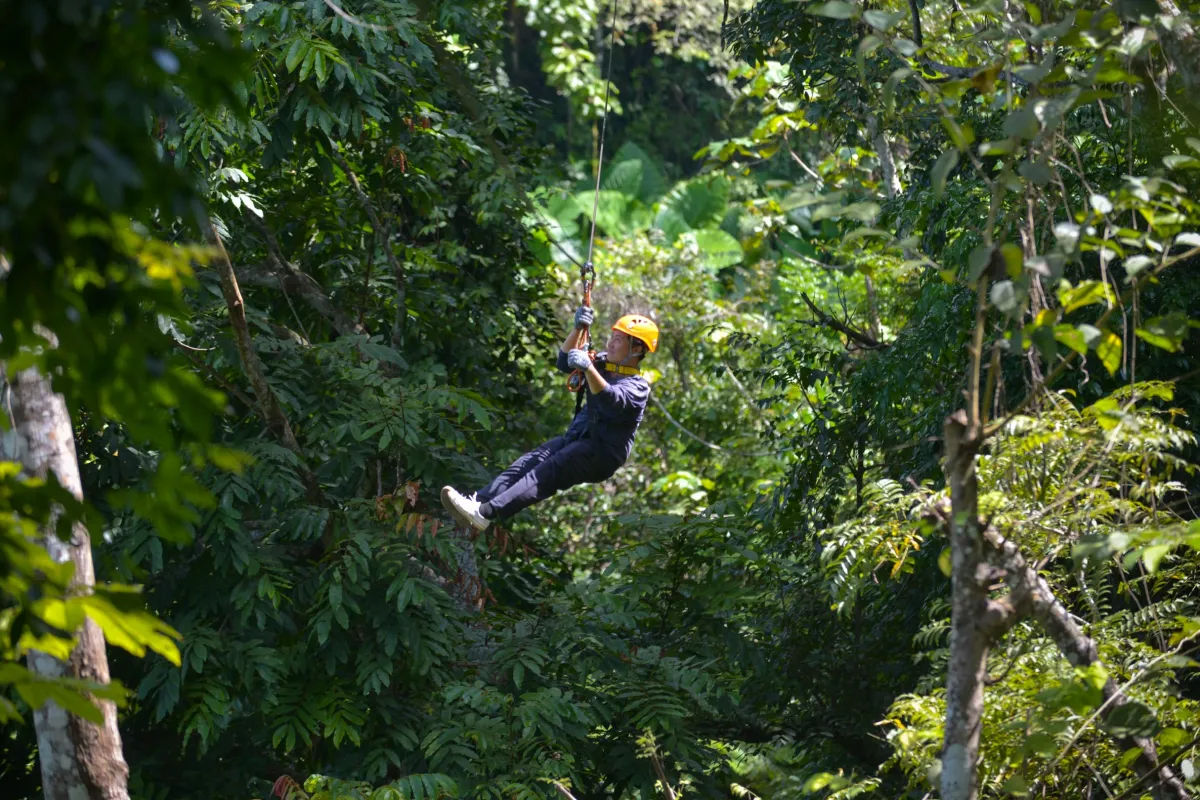
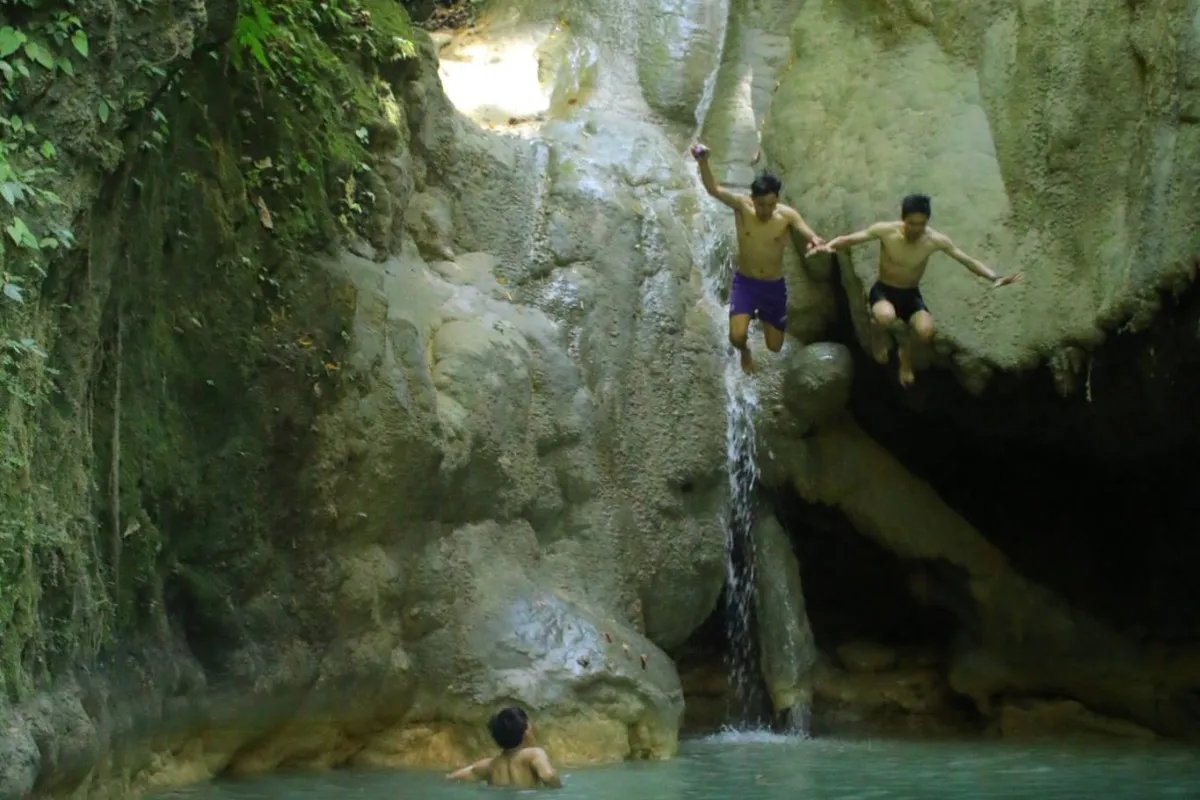
Nahm Dong Park
To reach the centerpiece of the park, Nam Dong Falls, you walk past a field of roses and an organic vegetable garden. There’s a wooden balcony over the gushing water where you can feast on Lao food from the nature park restaurant as you take in the inspiring scenery.
Ziplining through mountains and forest, Feel the adrenaline rush and excitement! Six stations of Zip-line - total length of over 800 meters. The longest 300 meters will take your breath away cable bridge treetop walk and treehouse are worth a visit.
A back to nature experience awaits you. You can definitely spend half a day here and families or a group of friends will have a blast.
Opening Times: 8am - 5pm
Entrance Fees: 20,000 KIP
SEE TOURS IN NAHM DONG PARK !
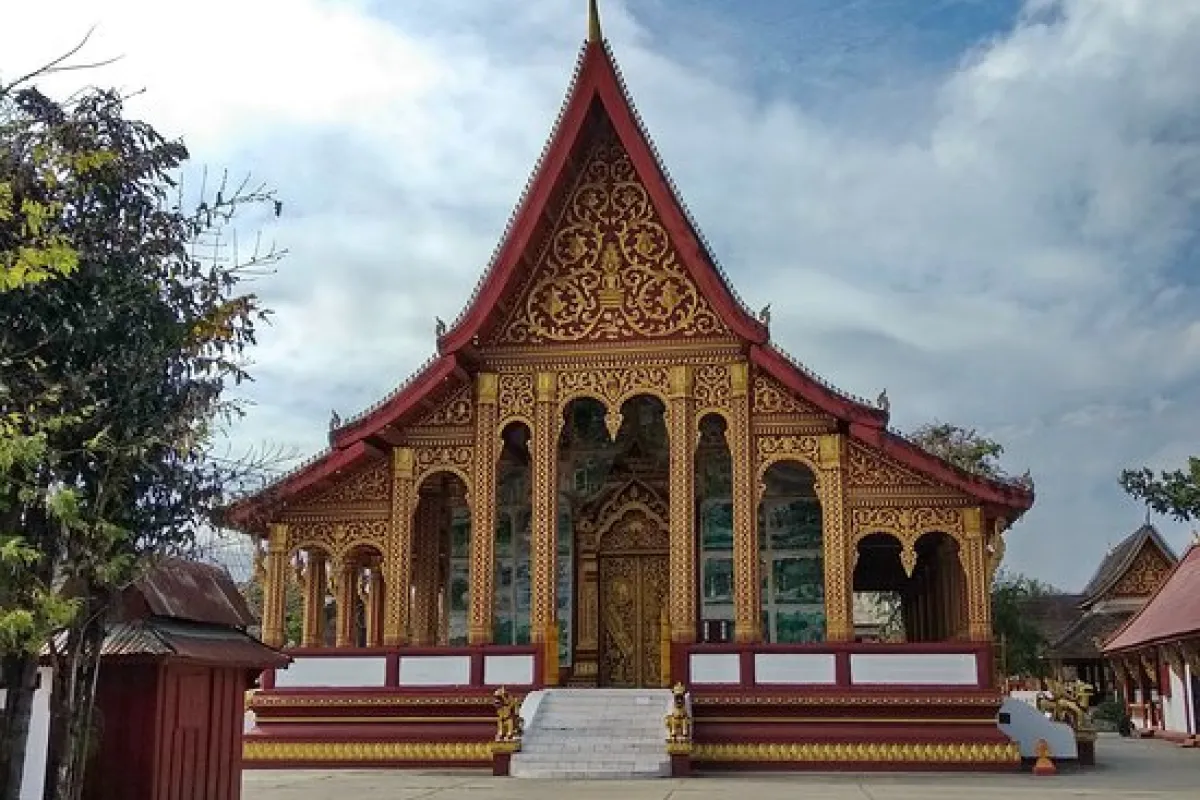

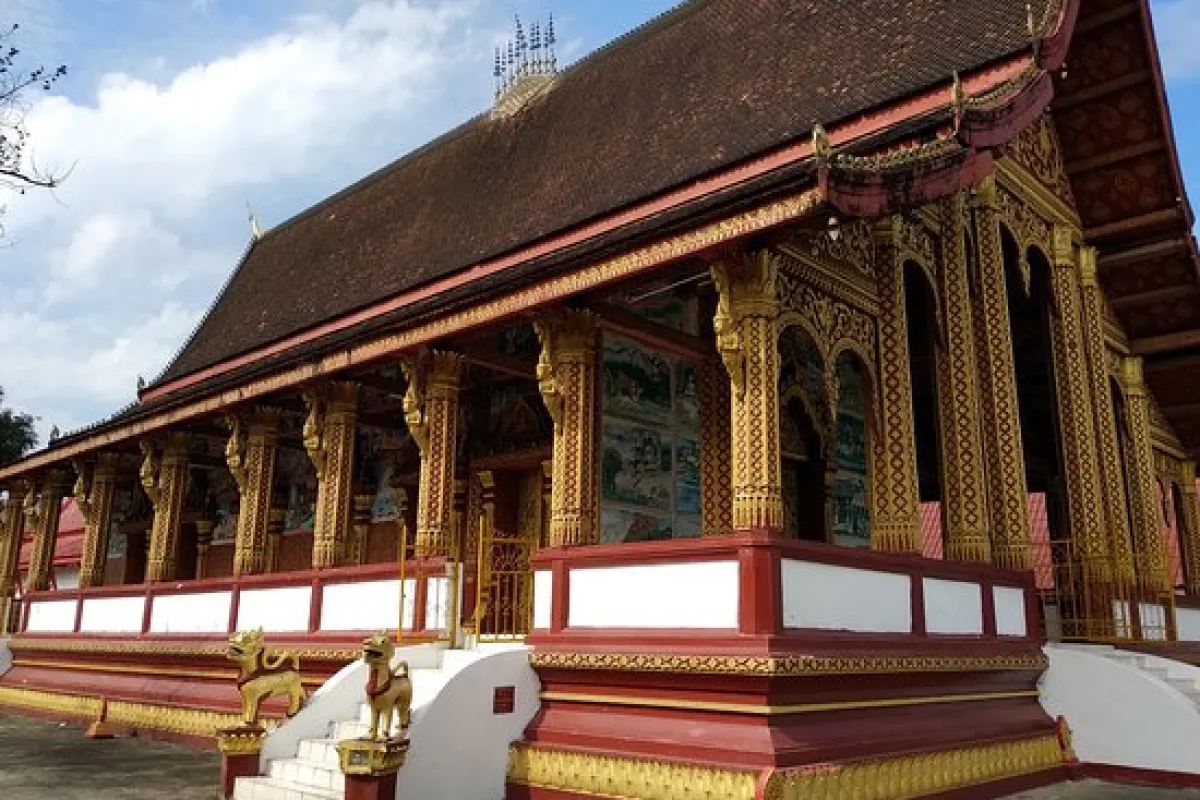
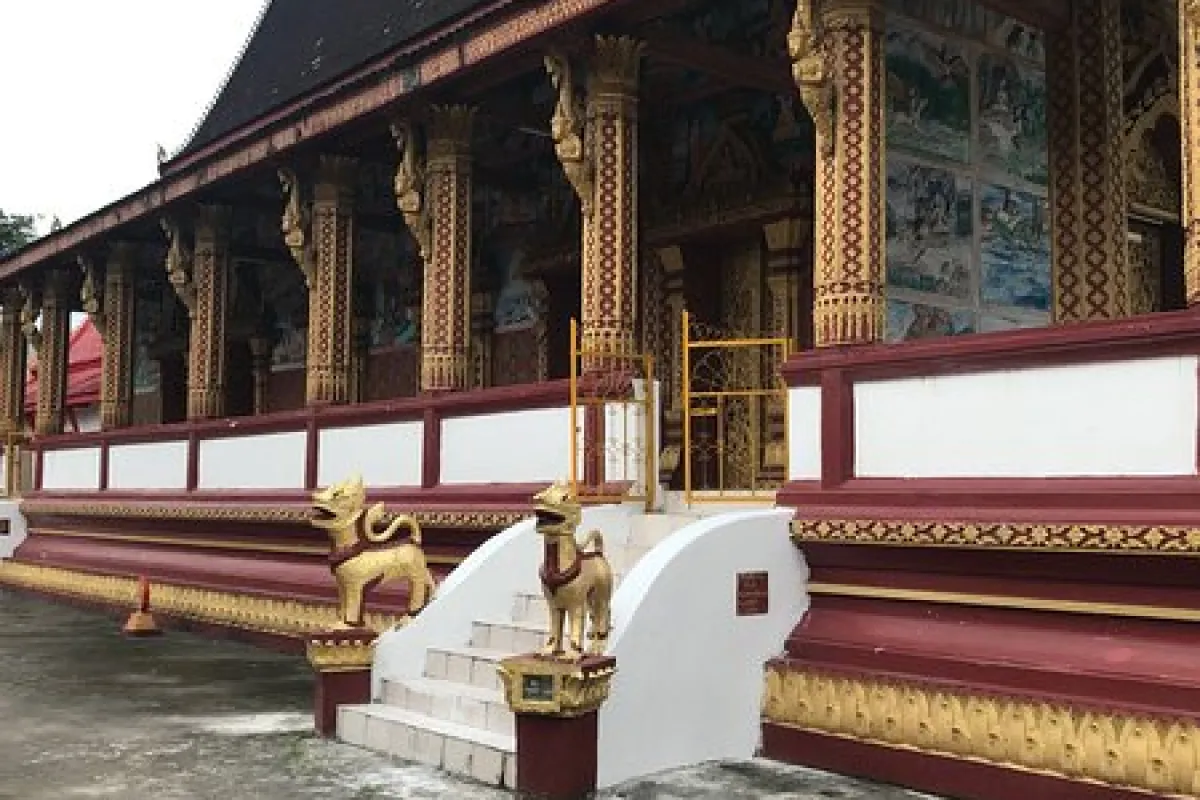
Wat Manorom
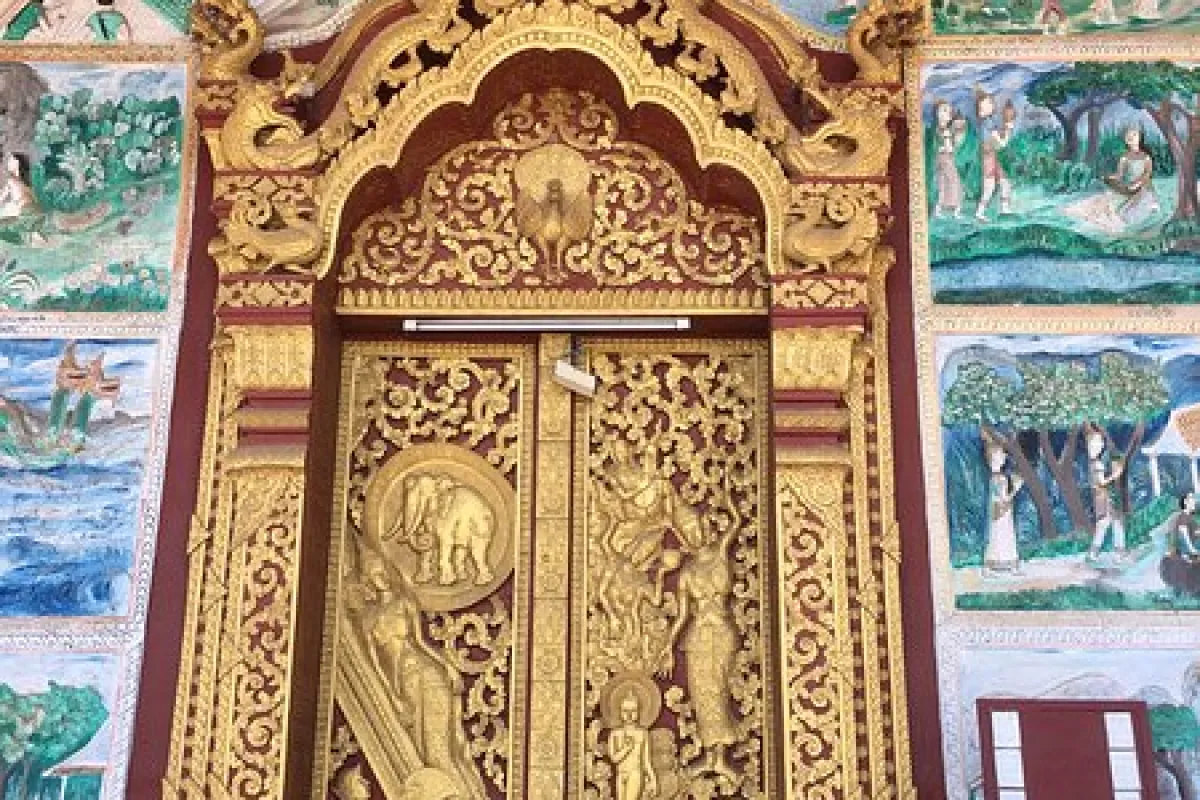
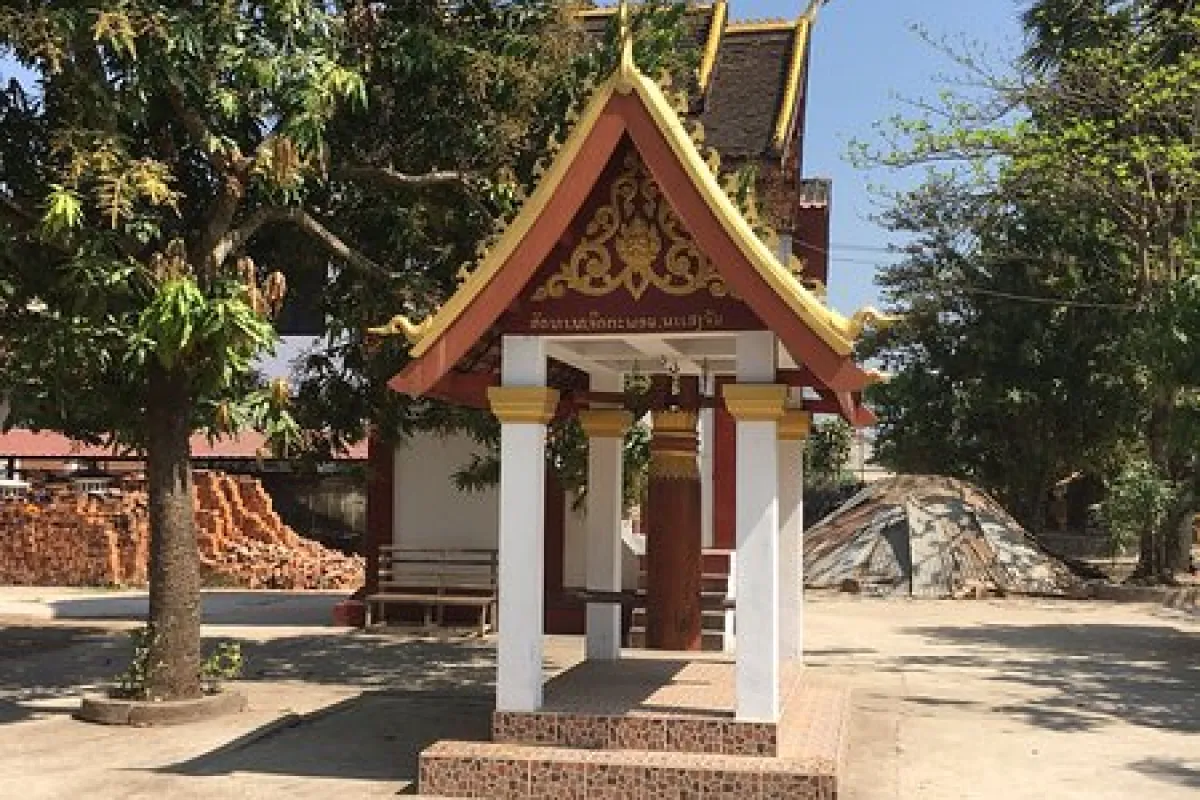
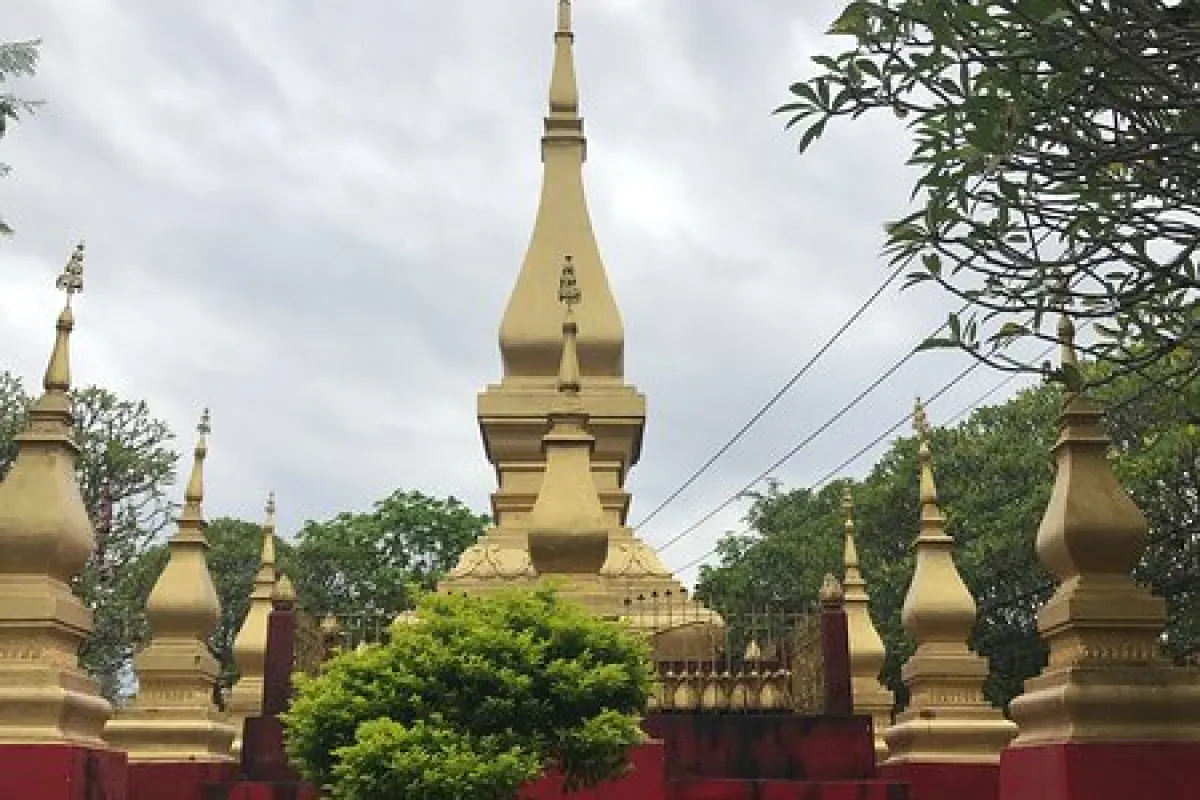
Wat Manorom, also known as Vat Manorom, is a Buddhist temple located outside the centre of Luang Prabang in Laos, beyond the walls which once enclosed the town. Wat Manorom is not the most famous temple in Luang Prabang but it has the largest number of resident monks making it one of the most important temples in the area.
The date upon which Wat Manorom was founded is open to debate. One theory is that the temple was established in the 1370s by King Samsenethai as a place to inter his ashes when he died. A competing theory is that Wat Manoram was established in the 1490s by King La Sen Thai Puvanart. One clue is the temple’s giant Buddha statue which was cast in 1370s although does not necessarily mean that the temple was created at the same time as lots of temples in Laos have Buddha statues from periods long before the temple housing it was established.
None of the original buildings at Wat Manorom remain intact today. Since the 15th Century Luang Prabang has been invaded numerous times with the temples and other buildings in the town having been destroyed by the invaders. The most notable incident to befall Luang Prabang was the invasion by a Chinese warlord and his ‘Black Flag’ army in 1887 which destroyed the temple virtually in its entirety.
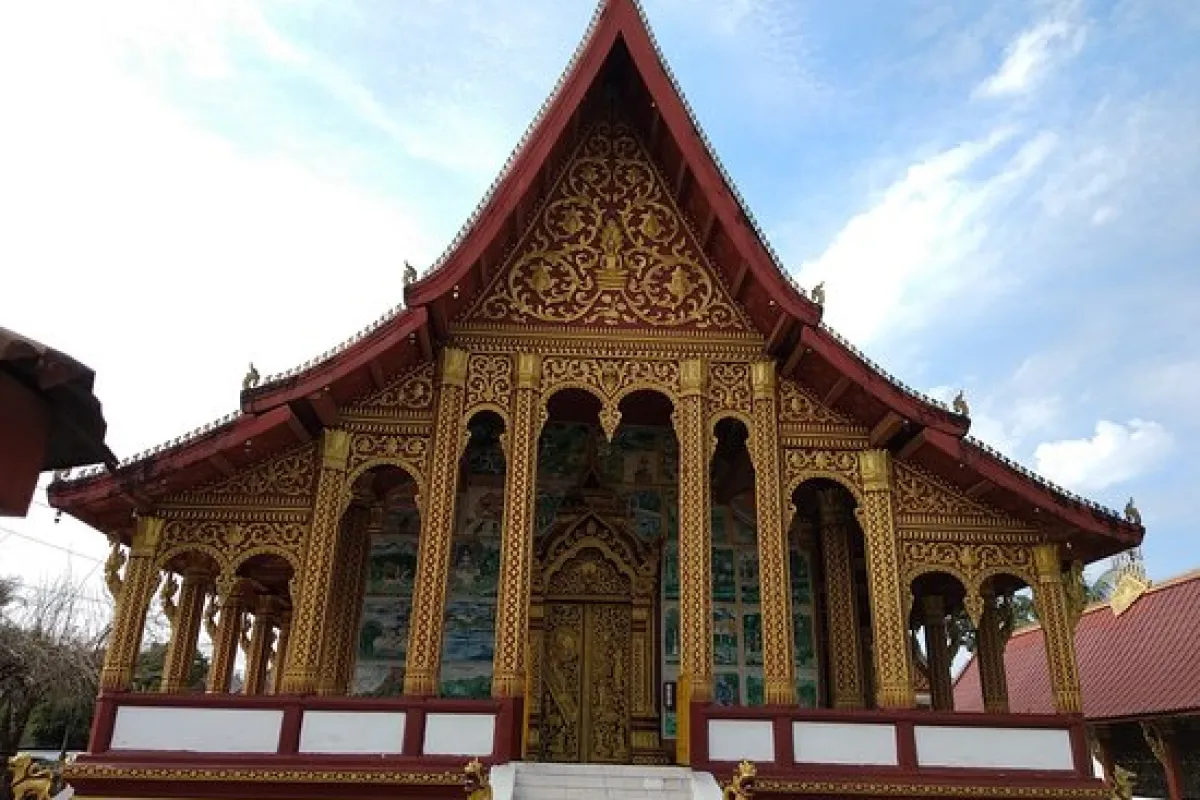
The magnificent congregation hall or sim which currently stands at Wat Manorom was constructed between 1971 and 1972. The sim at Wat Manorom is amongst the tallest of any in Luang Prabang.
The congregation hall at Wat Manorom is also noteworthy for its elaborate decoration. The main door features an exquisite gold relief and the outer walls of the temple are entirely covered with paintings relating to life of the Lord Buddha. The sim at Wat Manorom is a work of art as well as a religious building.
Inside the sim at Wat Manorom sits a 6 metre high bronze Buddha statue cast in the 14th Century in the Sukhothai style, rather than the Khmer style with was generally prevalent at the time. This Buddha statue, the oldest in Luang Prabang, was heavily damaged during the Franco-Thai War of the late 19th Century. The French armed forces attempted to steal the arms of this statue which were then lost when the boat carrying them away capsized. The arms of the statue have been replaced with cement covered with gold leaf rather than cast bronze.
There are many buildings at Wat Manorom most of which serve a functional purpose as living quarters for the monks. Wat Manorom also has a primary school on its grounds, making the temple one of the centres of ecclesiastical education in Luang Prabang. Local people from poorer backgrounds in the area often send their children into the monk hood at a very early age so that get fed and educated and Wat Manorom is an important part of this religious social welfare system.
-
Opening hours: Everyday, from 08:00 am to 05:00 pm.
---
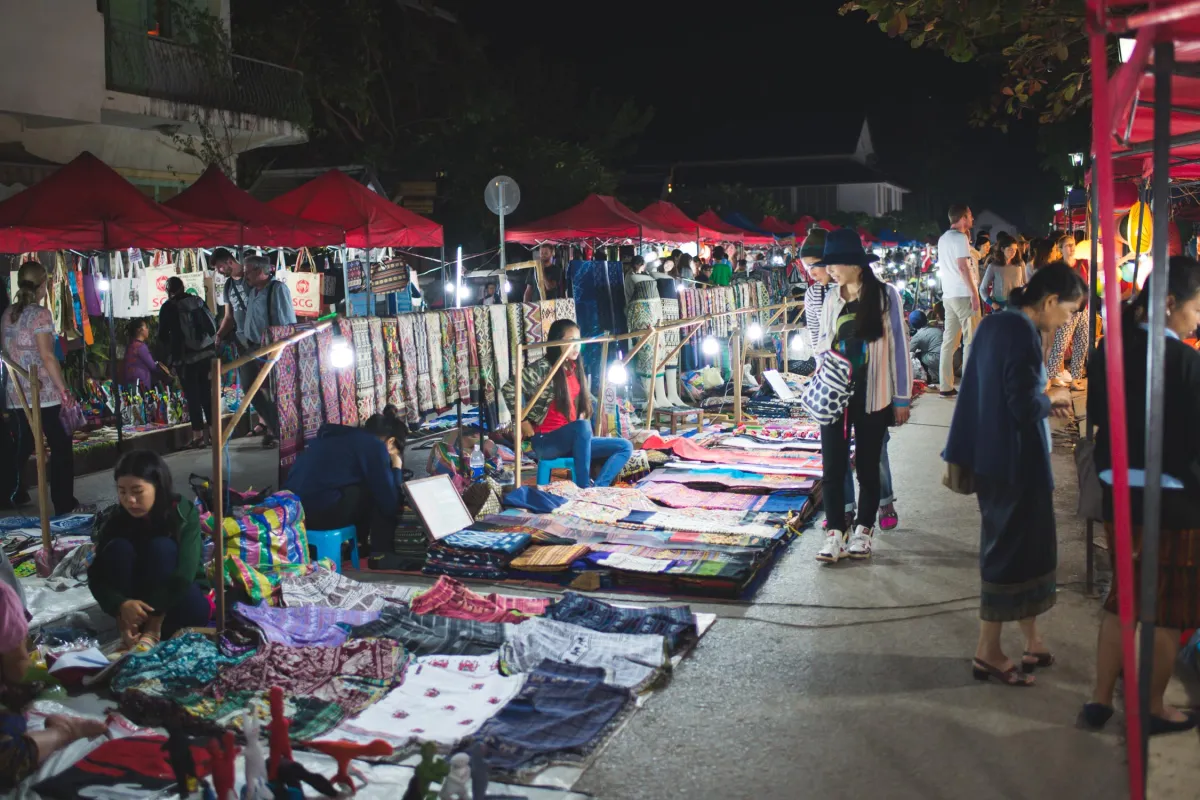
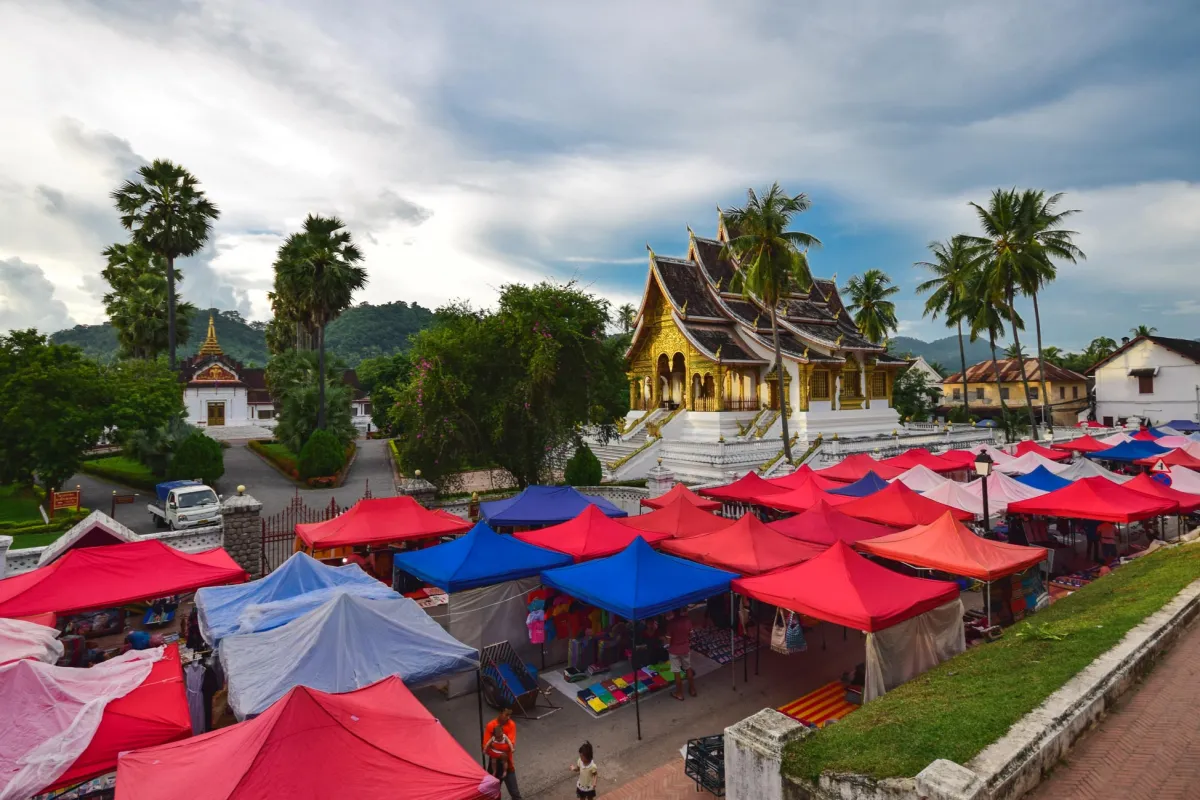
Handicraft Night Market
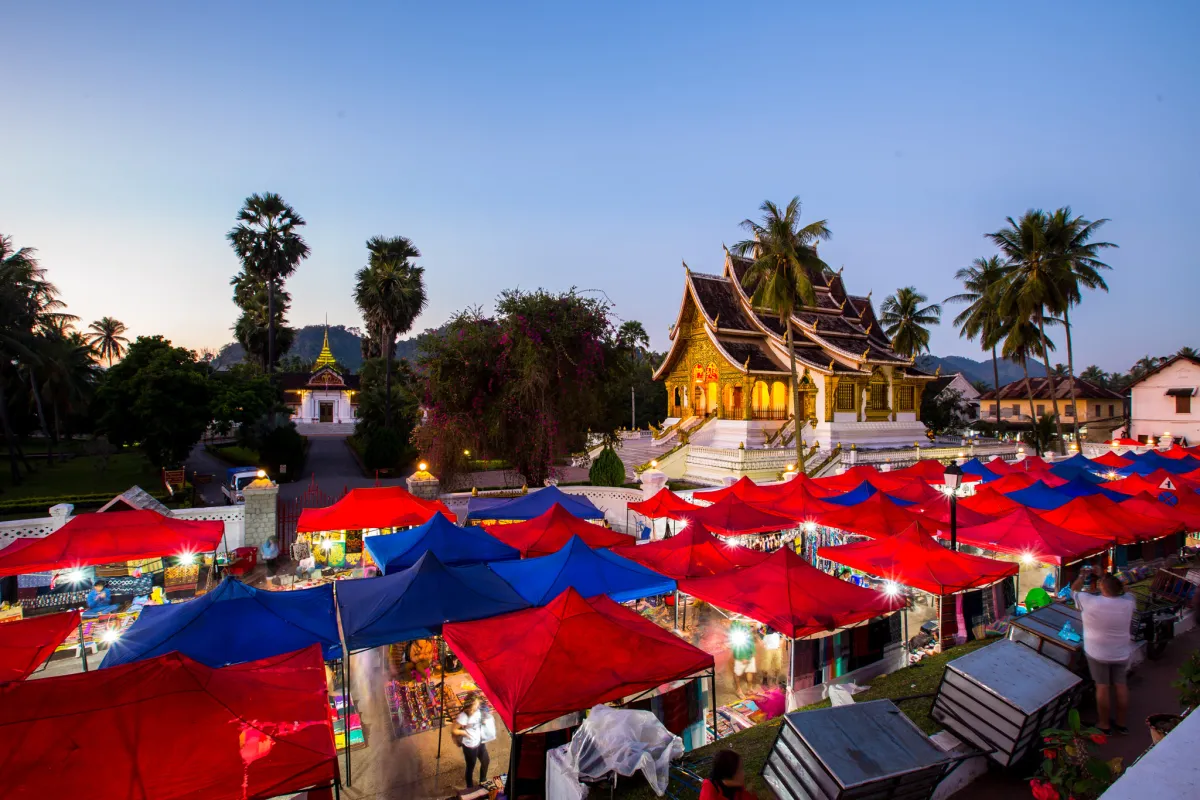
It’s the largest handicraft market in Laos and many tourists come to Luang Prabang specifically to do their shopping at this market which is located on the main road of the town. Items that you are likely to find include Lao textiles, Hmong embroidery, souvenir t-shirts, handbags, paper umbrellas, lamps, fridge magnets and a range of clothing featuring elephant prints. Look for the ‘Made In Luang Prabang’ signs if you want to support the local textile industry. You will be able to tell the difference in quality between these items and the cheaper products that have been imported from neighbouring countries. There are also delicious things to eat and drink surrounding the market including the Lao coconut pancakes, fresh fruit shakes, baguettes and beer.
Opening hours: 5 pm – 10 pm
Location map: on the main street start from Tourism Information Center to the National Museum.
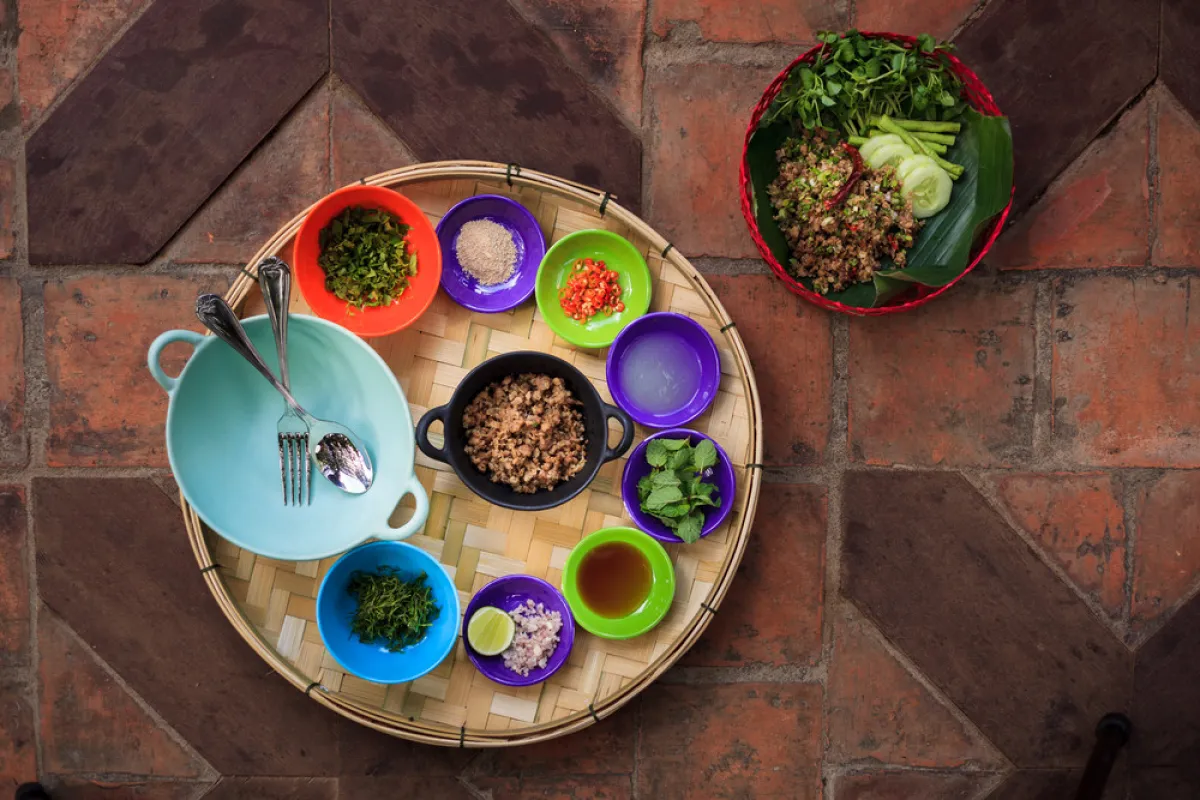
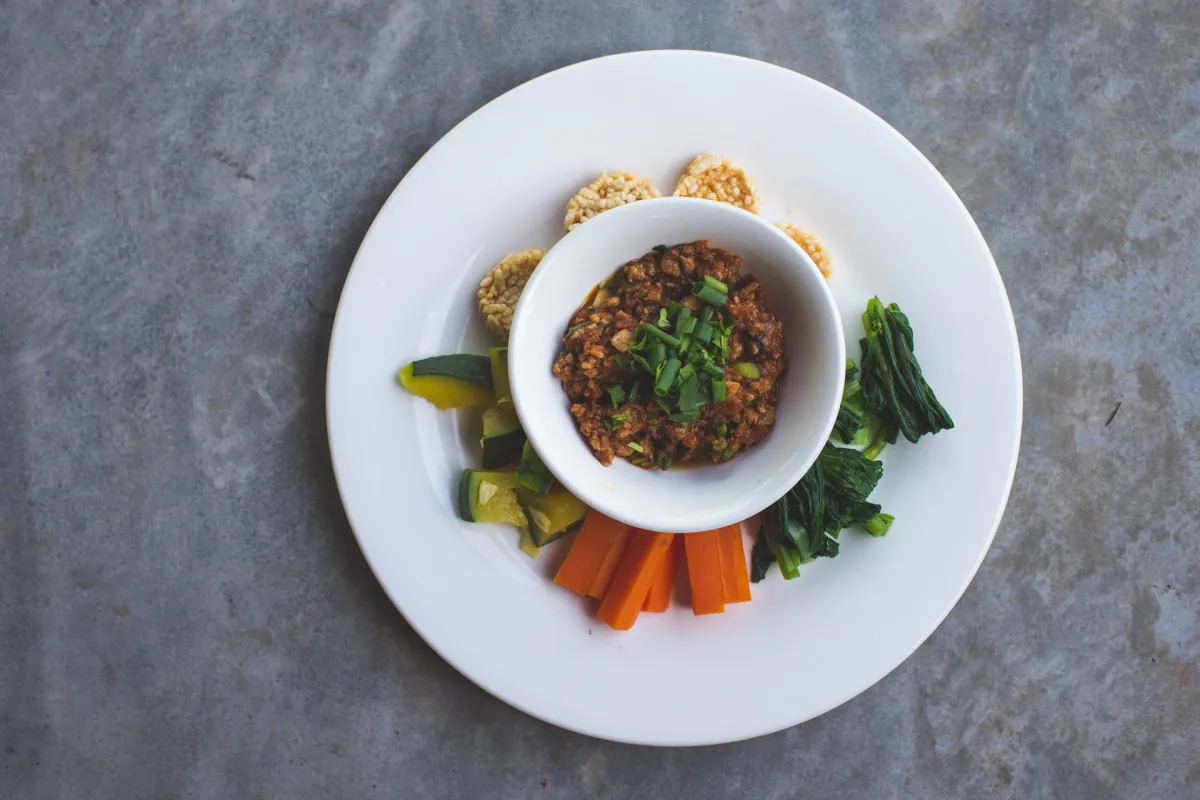
Laotian Gastronomy Experiences
Unpaved alleyways: 5 hidden restaurants in Luang Prabang by DEWI NURJUWITA
Nestled in a slim valley shaped by towering green mountains and surrounded by the Mekong and Nam Khan rivers, the mountain kingdom of Luang Prabang is Laos’ best-kept secret that is slowly being discovered by travellers. The peaceful backwater is a mere 45-minute flight from the nation’s capital city, Vientiane, yet feels like a whole other world.
While many visit this historical UNESCO heritage site for its magnificent temples that glisten under the sun, and strong Buddhist culture, the allure of Luang Prabang lies in its quiet alleyways. Although it looks like a sleepy town from the outside, wander into the city’s many unpaved areas, and you will discover beautiful hidden restaurants completely overlooked by unsuspecting tourists.
Find out more in the article below:
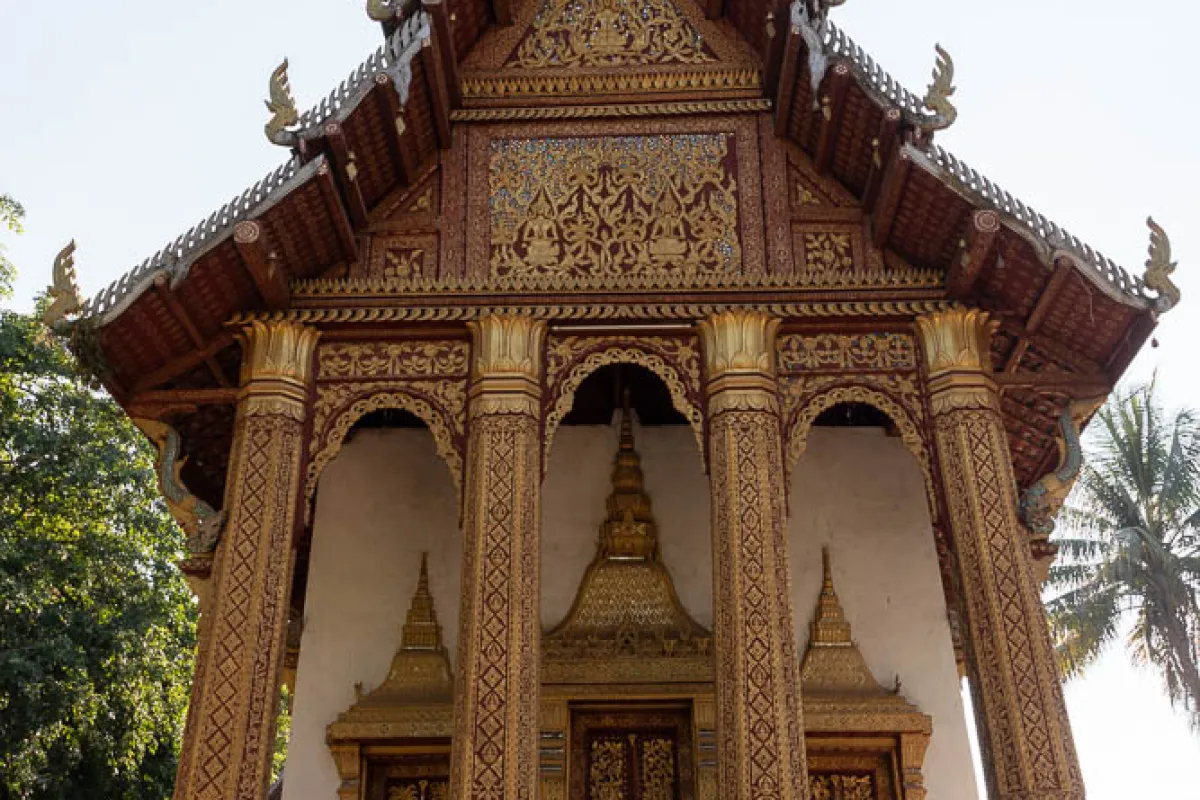
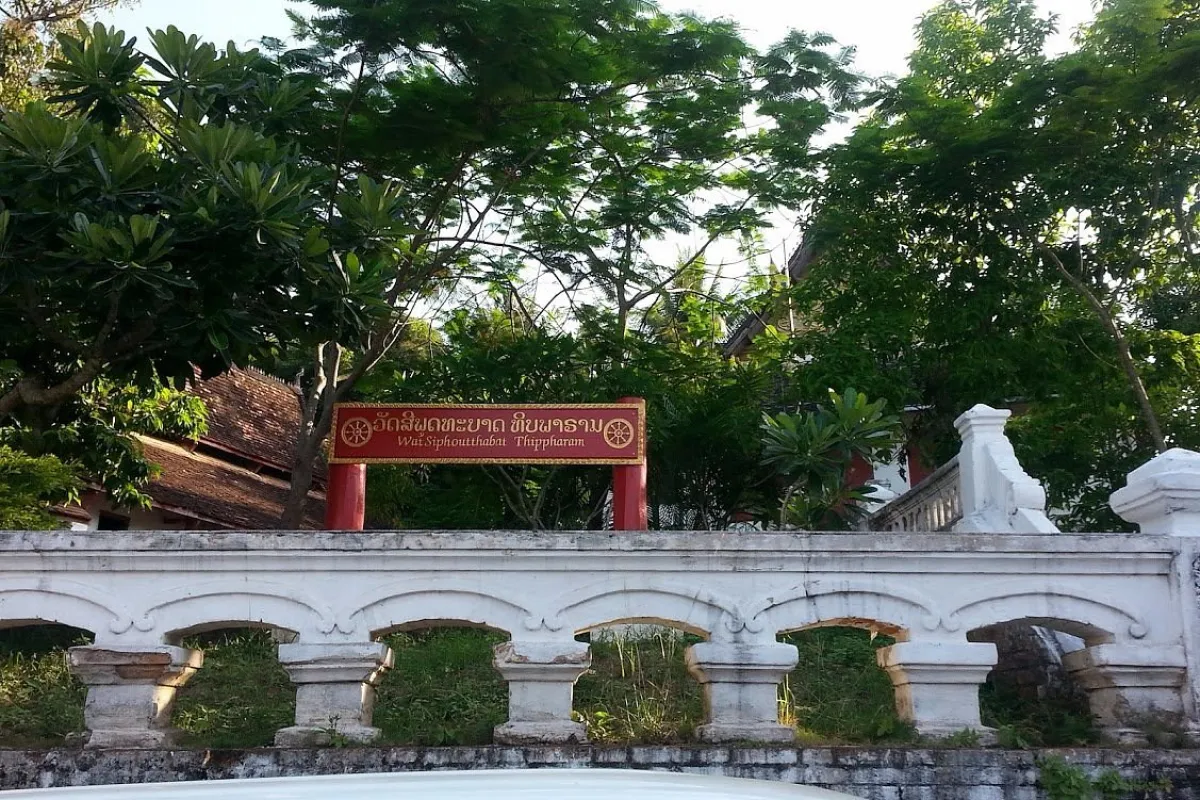
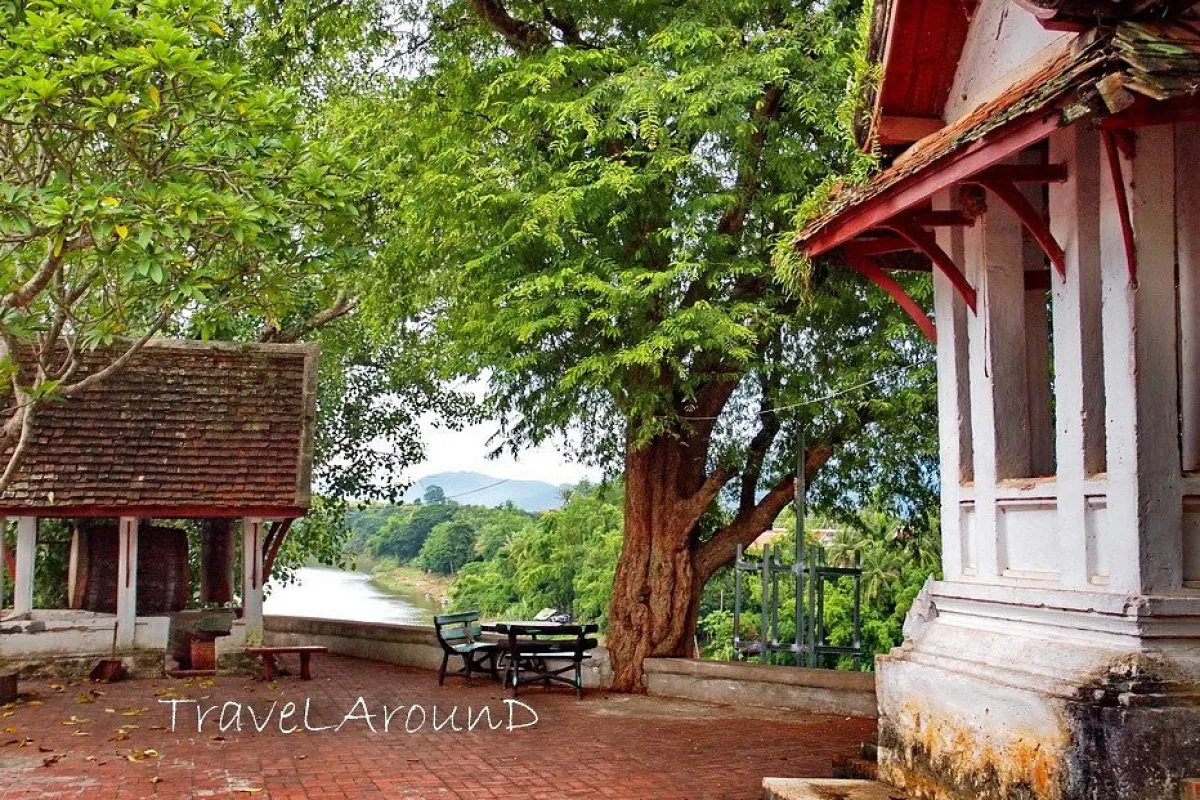
Wat Siphoutthabath Thippharam
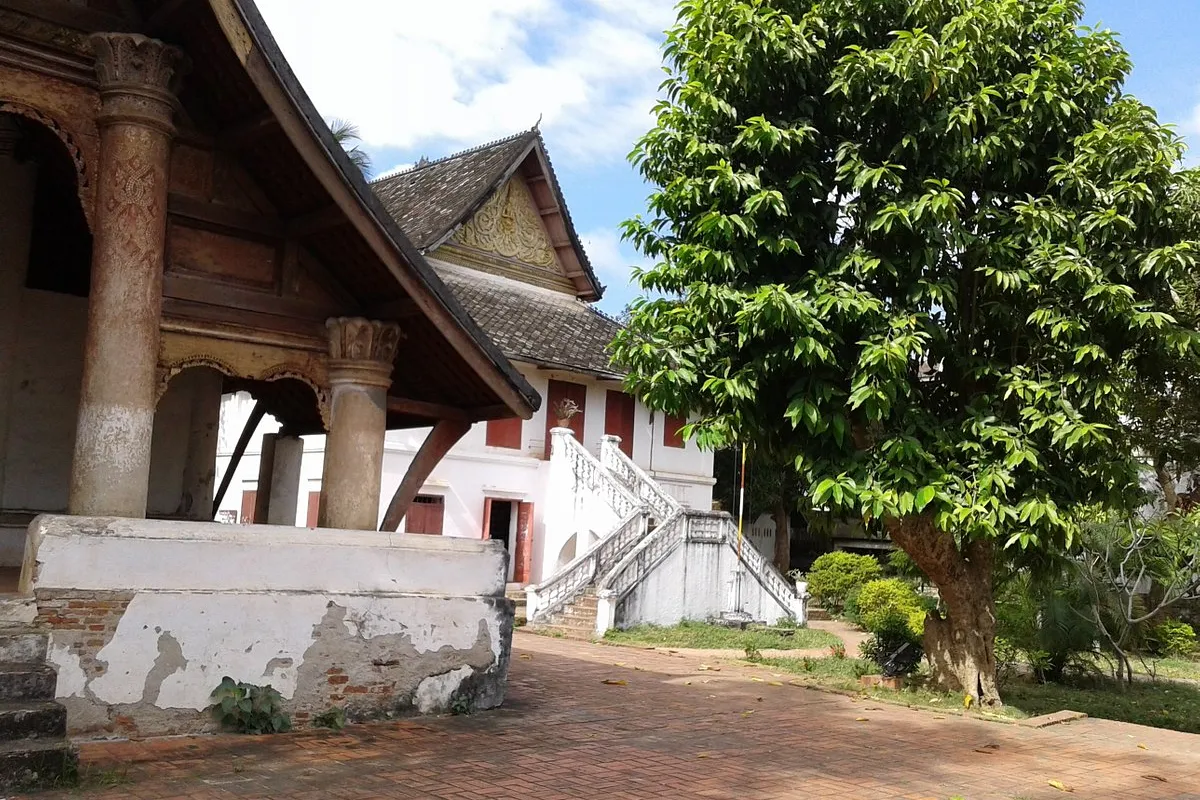
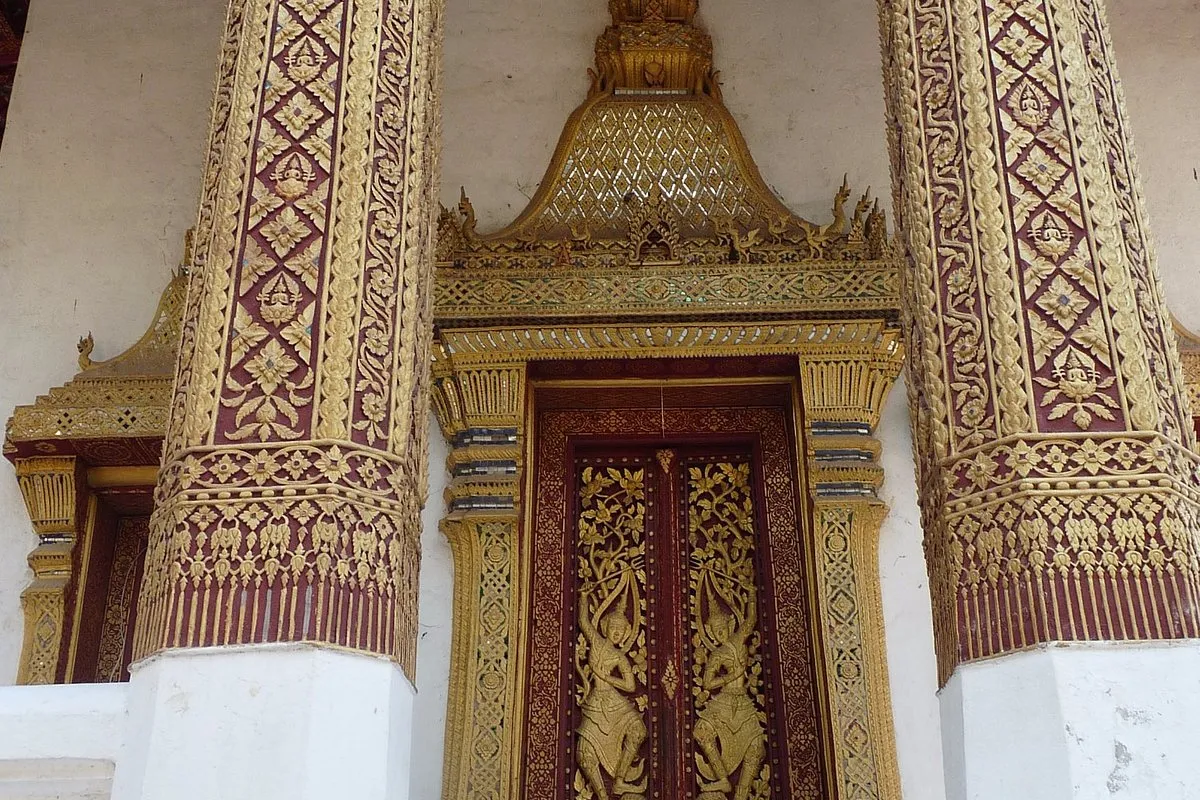
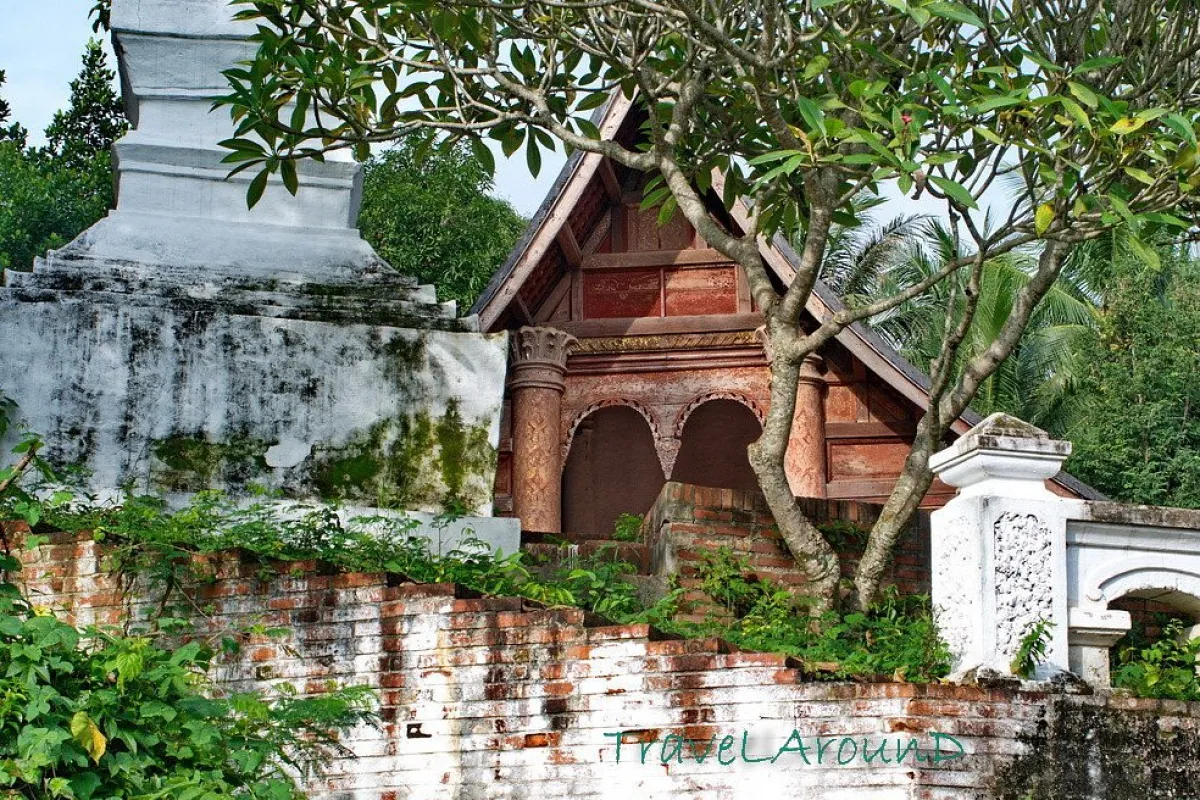
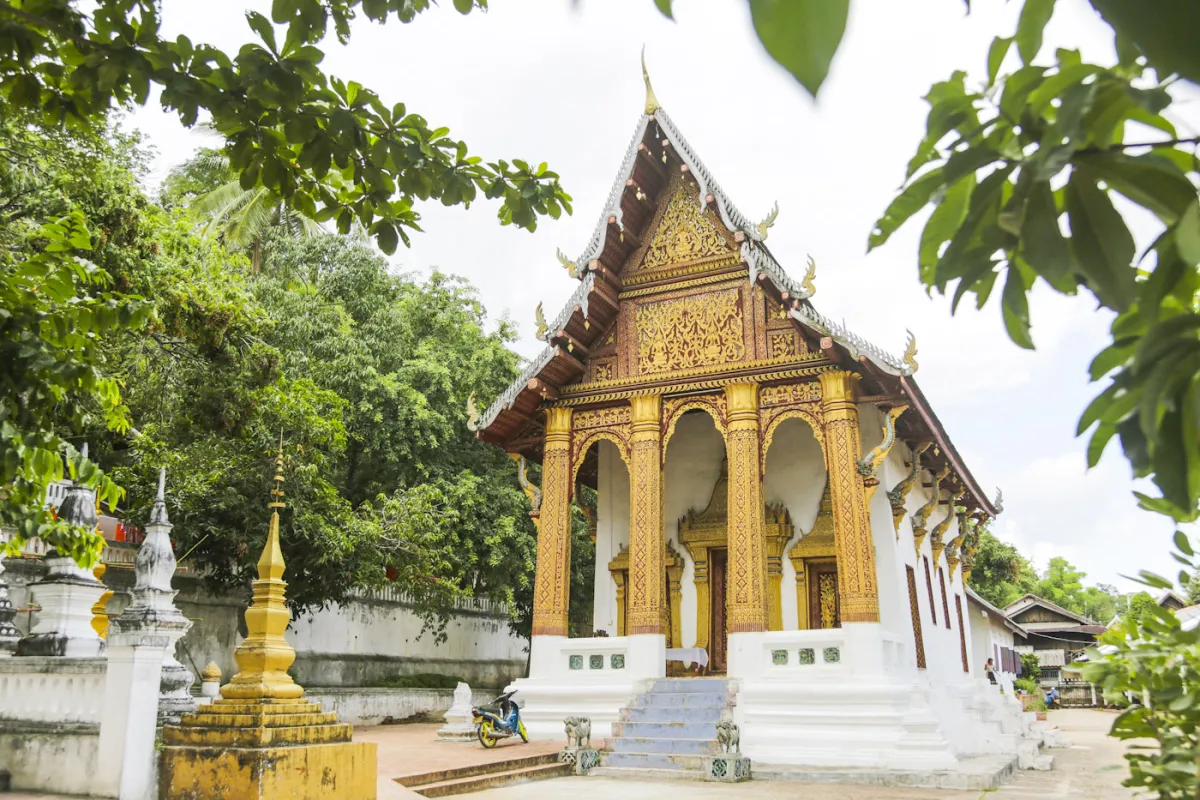
Wat Siphoutthabath is an impressive Buddhist temple located in the heart of the old town of Luang Prabang city in Laos. The name translates to the footprints of Buddha in the local language. The temple is known for beautiful murals on the outer walls of the ordination hall(sim) and the interior walls containing paintings depicting Buddha's teachings and the path to his enlightenment. There is a school for the monks, which is the centre for learning Buddhism in Luang Prabang.
-
Opening hours: Everyday, from 8AM - 5PM
---
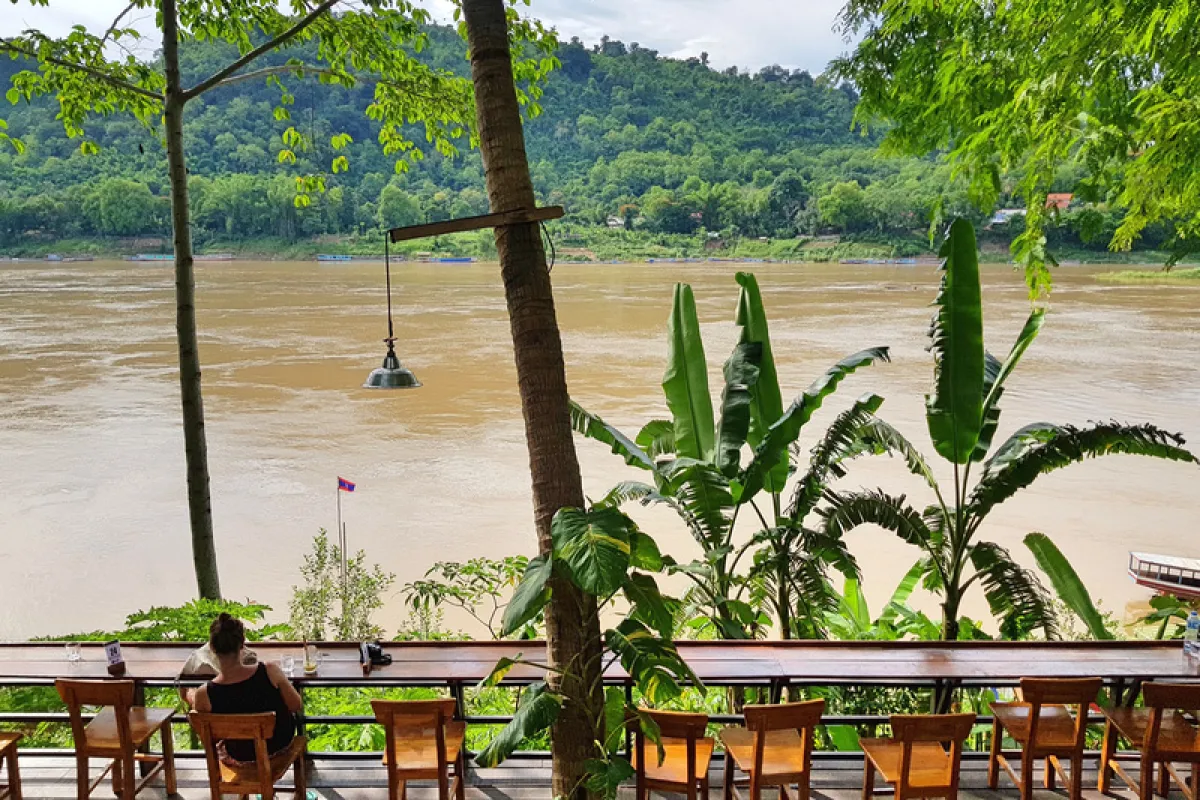
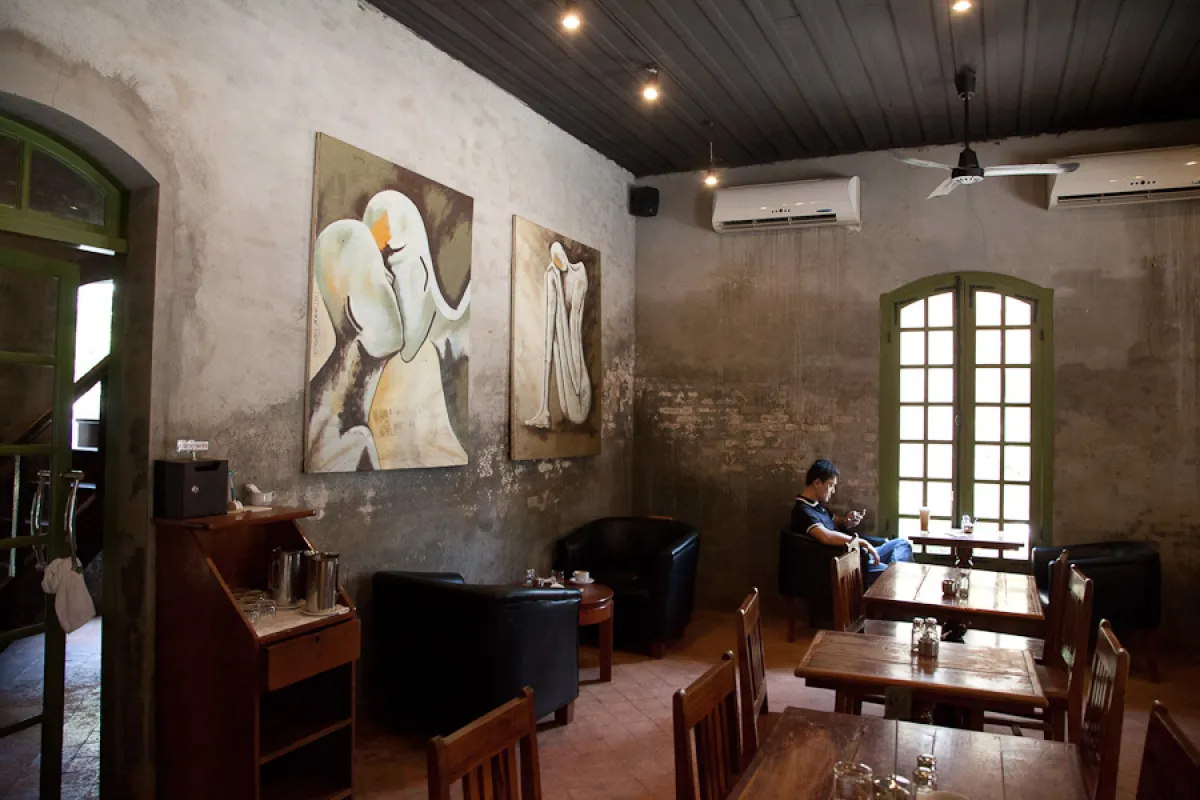
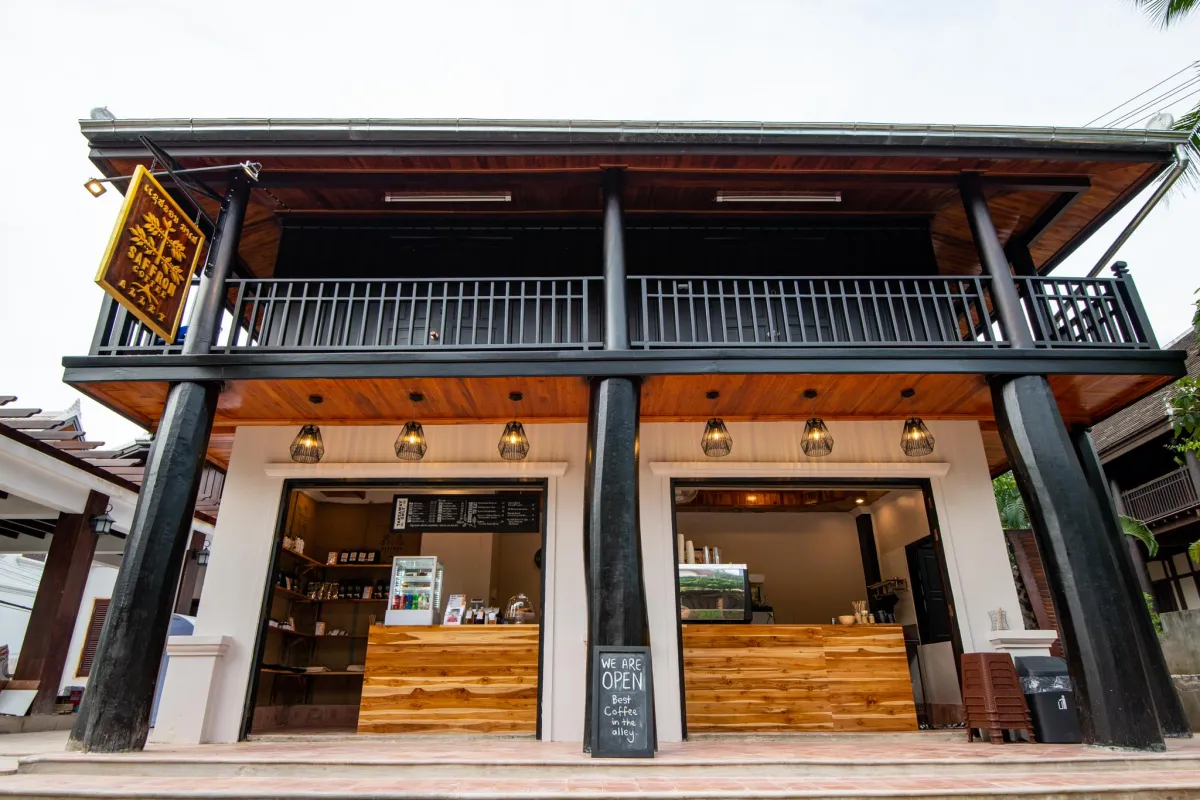
Cafe Hopping
A Local's café guide to Luang Prabang: Where to find the cutest cafés + the best coffee by Liz Hirschauer
Coffee Culture in Laos (Best Article Recommendation)
Laos’ neighbour, Vietnam, gets a lot of attention for its thriving coffee culture and the delicious roasts it produces— and rightfully so. But, no one should count Laos out of the coffee game. In fact, Laos produces some of the most exceptional coffee in the world, especially if you like it rich and strong.
A majority of the coffee produced in Laos is grown in southern Laos. This area of the country forms a relatively cool and damp microclimate, ideal for coffee plantations. There has been a recent surge in coffee production in northern Laos after agricultural researchers found the mountains great for growing coffee. Coffee up north has proven to be a valuable source of income for hill tribes who relied on opium production before the government banned it. Organic farming is increasingly popular, which has resulted in a wide variety of delicious organic coffee sold in major food and tourist shops around Laos.
Read more about this article below:
https://www.sillylittlekiwi.com/home/2018/9/9/a-locals-guide-to-cafes-in-luang-prabang-laos
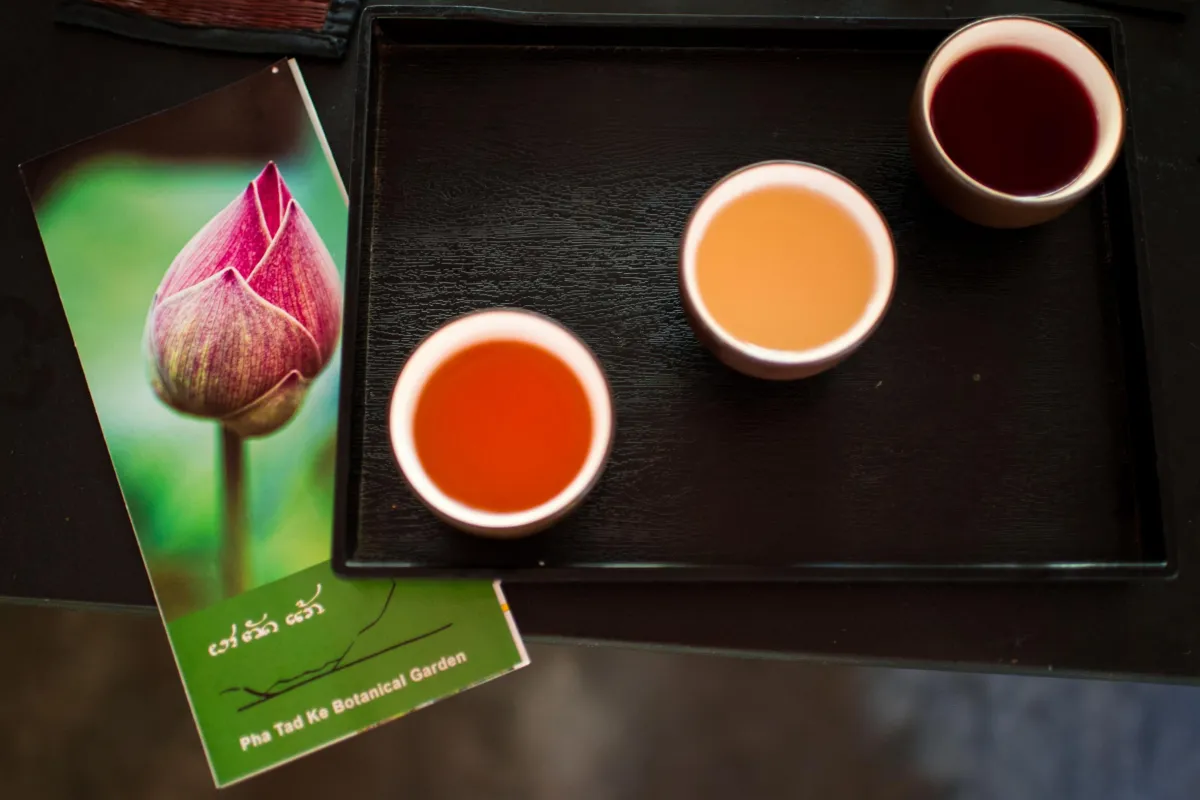
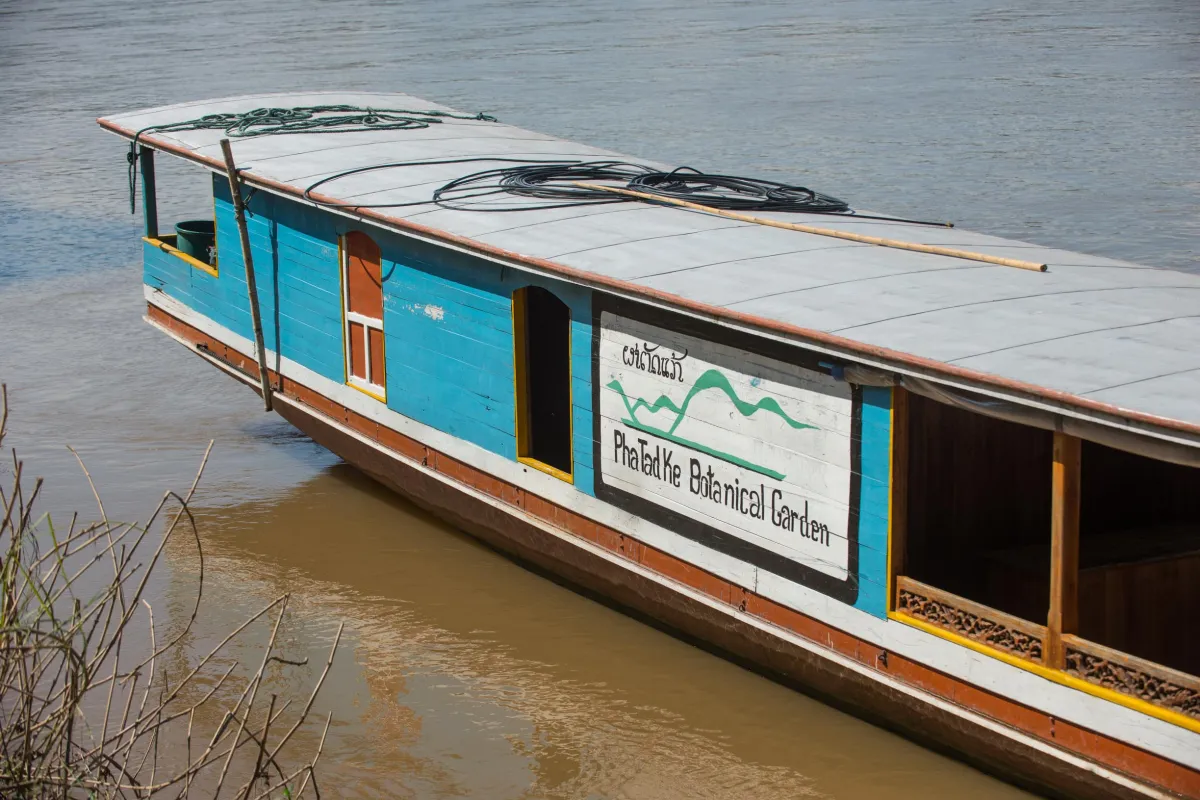
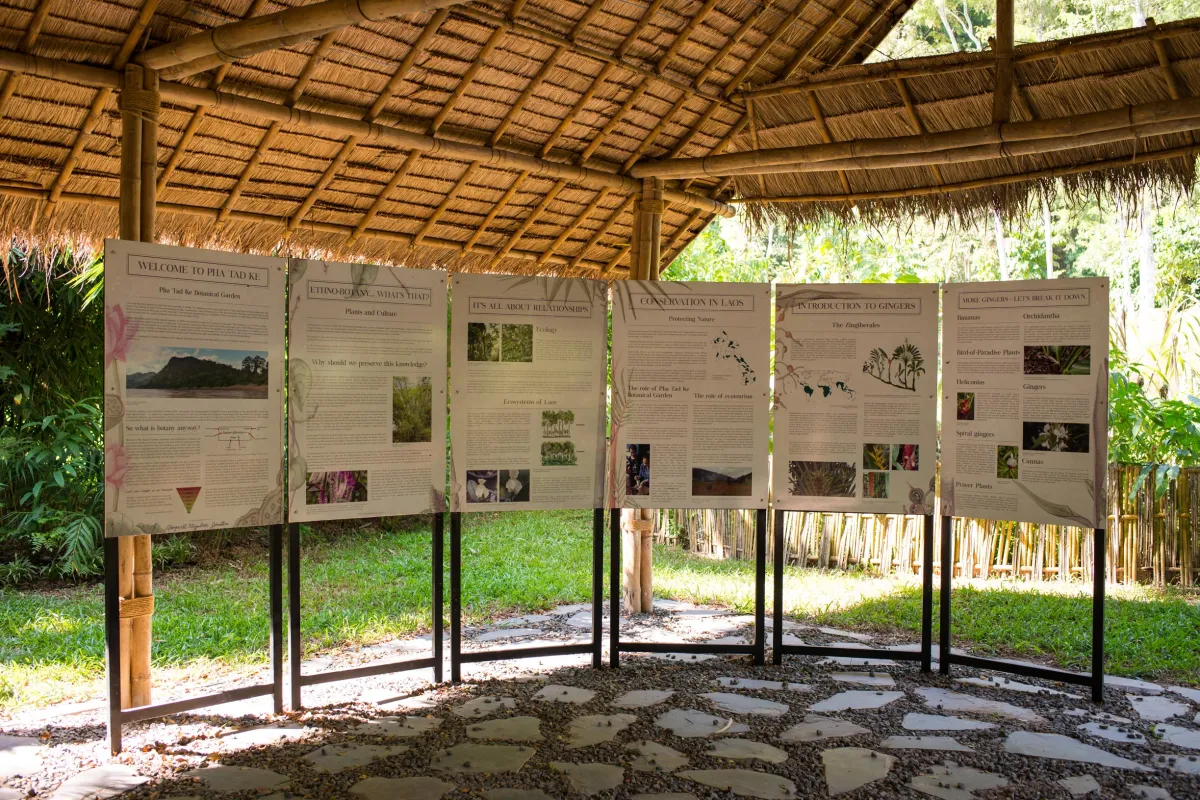
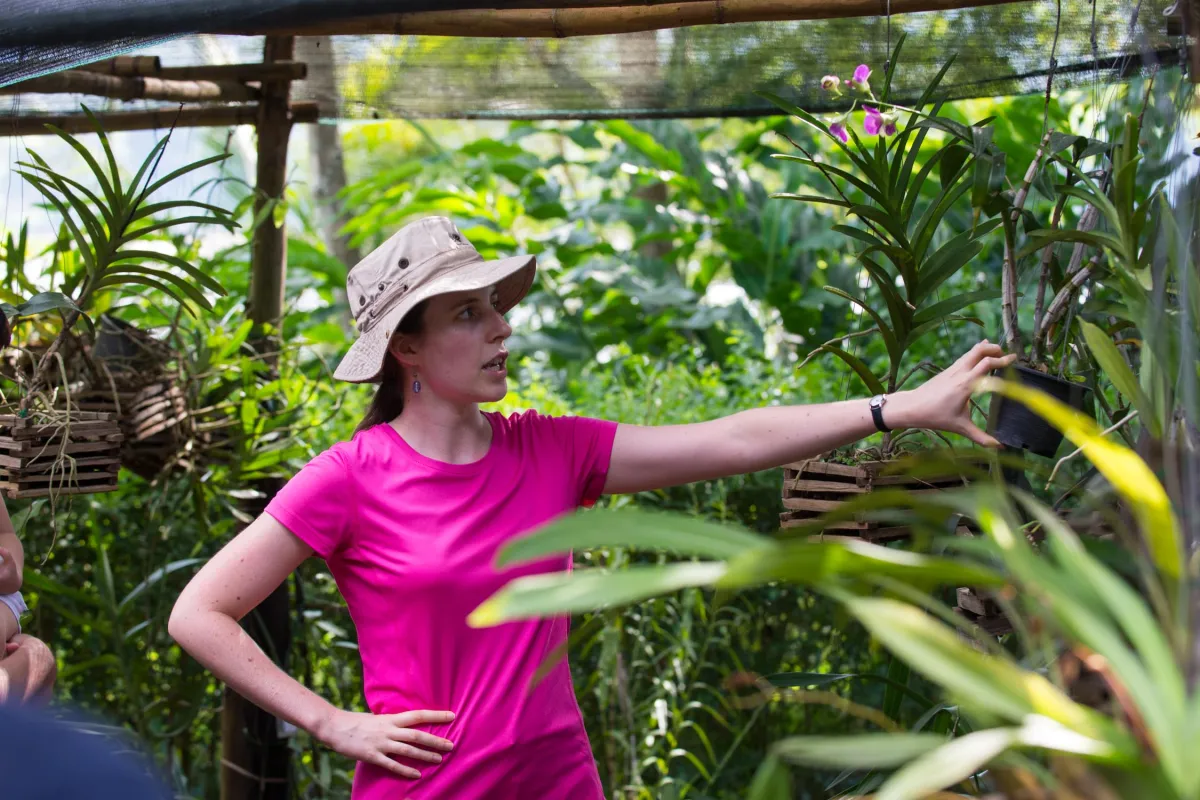
Pha Tad Ke Botanical Garden
The garden is built on land that was formerly the site of a hunting pavilion owned by the rulers of Luang Prabang - Laos put an end to the monarchy when the country became communist in 1975.
Discover the incredibly diverse flora of Laos and learn how local people have been using plants for medicine, food, and wellbeing for centuries. There is plenty to explore – from the 280 species of ginger plants in the Ginger Garden to the medicinal plants in the ethnic-botanic section which is divided into areas such as ‘plants for women’s health’ and ‘plants for skin conditions‘. There’s a lovely restaurant on site where you can grab some food and enjoy the greenery – as well as a pond full of water lilies.
How to get there
We are located 15 minutes, by boat, from Luang Prabang. To access the garden visitors can catch a boat from our downtown reception in Ban Wat That. Closed on Wednesdays.
SEE TOUR IN PHA TAD KE BOTANICAL GARDEN
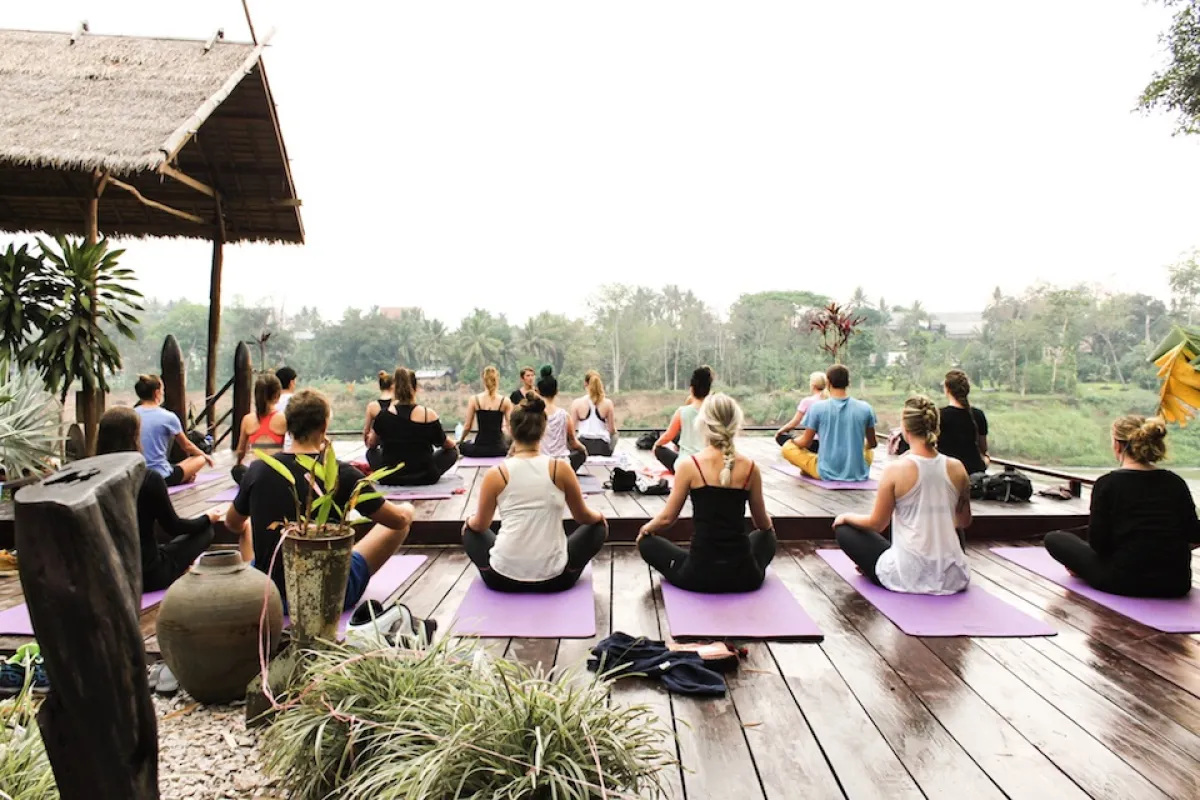
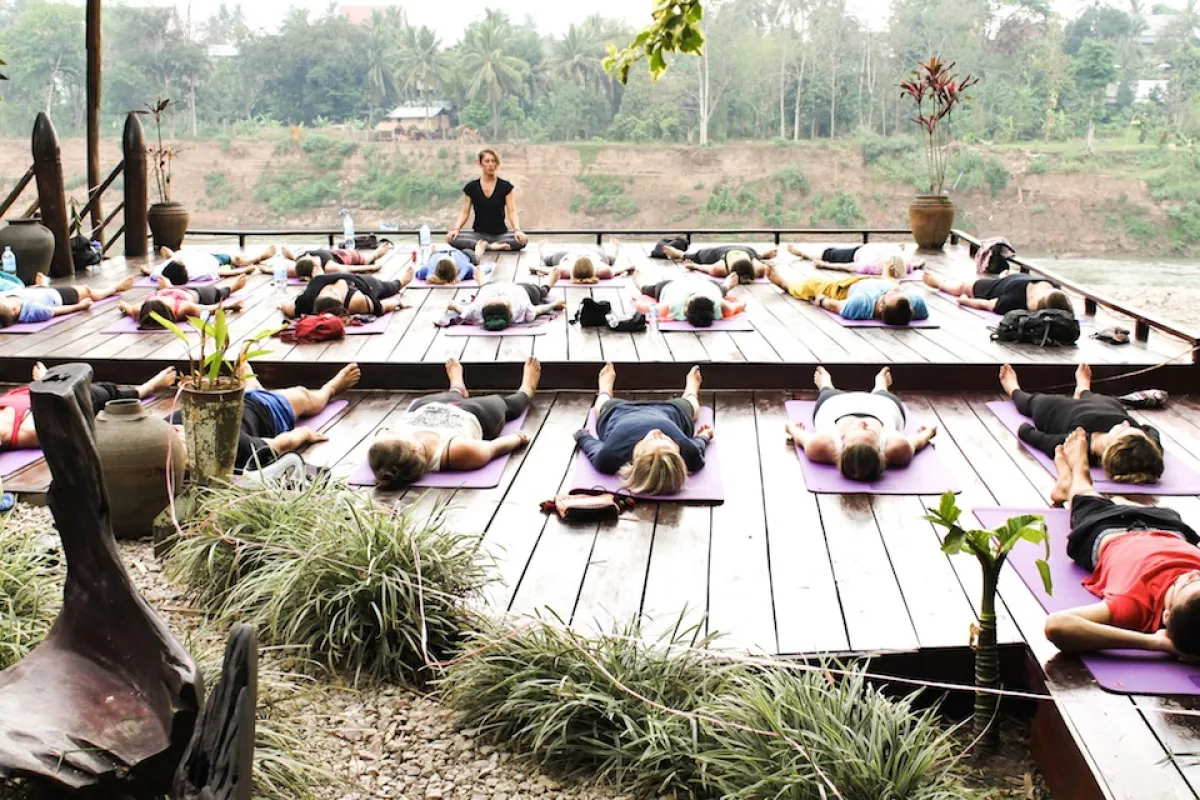
Yoga Haven in Luang Prabang
Luang Prabang Yoga, the Yoga Co-op in Luang Prabang, Offering Yoga Classes, Workshops, Retreats and More!
Luang Prabang Yoga is a cooperative of independent yoga teachers who offer yoga in Luang Prabang's most beautiful locations. Together with the students who live or have travelled here, we're a unique yoga community that believes in the connection between nature and yoga. We support various establishments and teachers by holding classes, retreats and workshops at different locations around town. As part of our model, we step outside of the yoga studio to practice in places we know you'll remember for a long time. Join us for a picture perfect view of the Nam Khan River or zen out in our cosy main street studio for an evening yoga session. Our community of teachers and students has grown beyond the borders of Laos and is now a truly global entity.
Highly Recommended
Chill by day. Groove by night. A multipurpose cafe/bar/lounge with a riverside yoga deck and a beach volleyball court.
DIRECTIONS:
Utopia is located along the Nam Khan River on the "other side" of the Phousi Temple hill. You can get around the hill from either side of the night market/main street. Do not cross the river at any point or you are definitely going in the wrong direction! The walk is less than 10 minutes unless you stop to enjoy the views. The streets and pathways are well-lit and you will be rewarded once you find Utopia!
Path #1
From the corner near The Sports Bar, walk down the hill about 50 meters and turn left down the alleyway next to the Silapa Restaurant and follow the signs.
Path #2
Same as #1 except if you go past Silapa Restaurant, continue 15 meters and take a left down the alleyway and turn right after the tiny bridge. If you are at the gas station, then you have missed the alleyway.
Path #3
Best if you're walking. Walking along the Nam Khan River, with the river to your left, you will pass by Red Bull Bar. Just behind Red Bull Bar is Coconut Luang Prabang, where there is an alleyway that leads to the temple ground (alleyway is to the right of Coconut Luang Prabang and leads to the temple grounds). Walk across the tempe grounds, down the stairs, and follow the signs to Utopia.
Find out more about the classes and schedule available below:
http://www.luangprabangyoga.org/class-schedule.html
Photos source : https://www.21moves.com/yoga-luang-prabang-laos-utopia/
Sansany Charity Yoga - Every Sunday, Sansany a native Lao Yoga trainer actively promote healthy living through giving Yoga lessons at Avani Hotel. The fee for expats is 40,000 KIPS and locals 30,000 KIPS. All collections are donated to support education center, The language project (@Mylibrary) in, Luang Prabang. Why not exercise to feel good and do good at the same time? Follow her facebook https://www.facebook.com/Sansany.keo/.
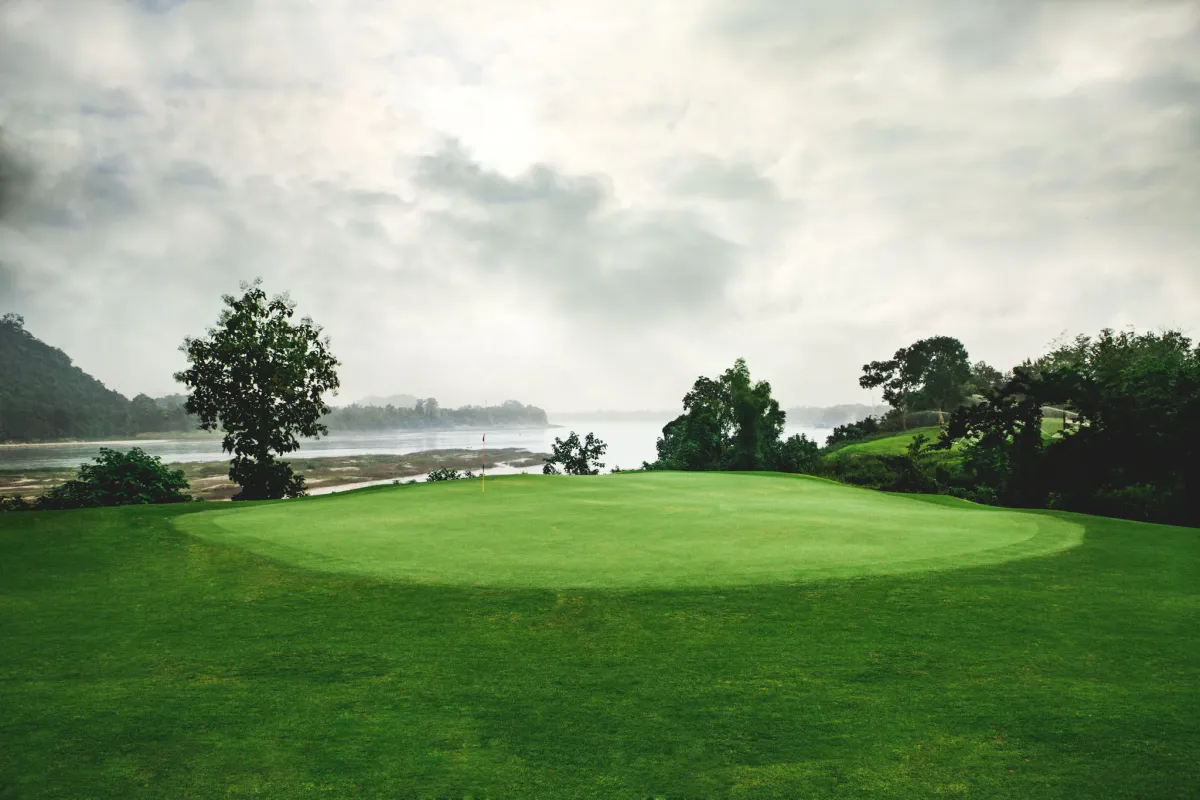
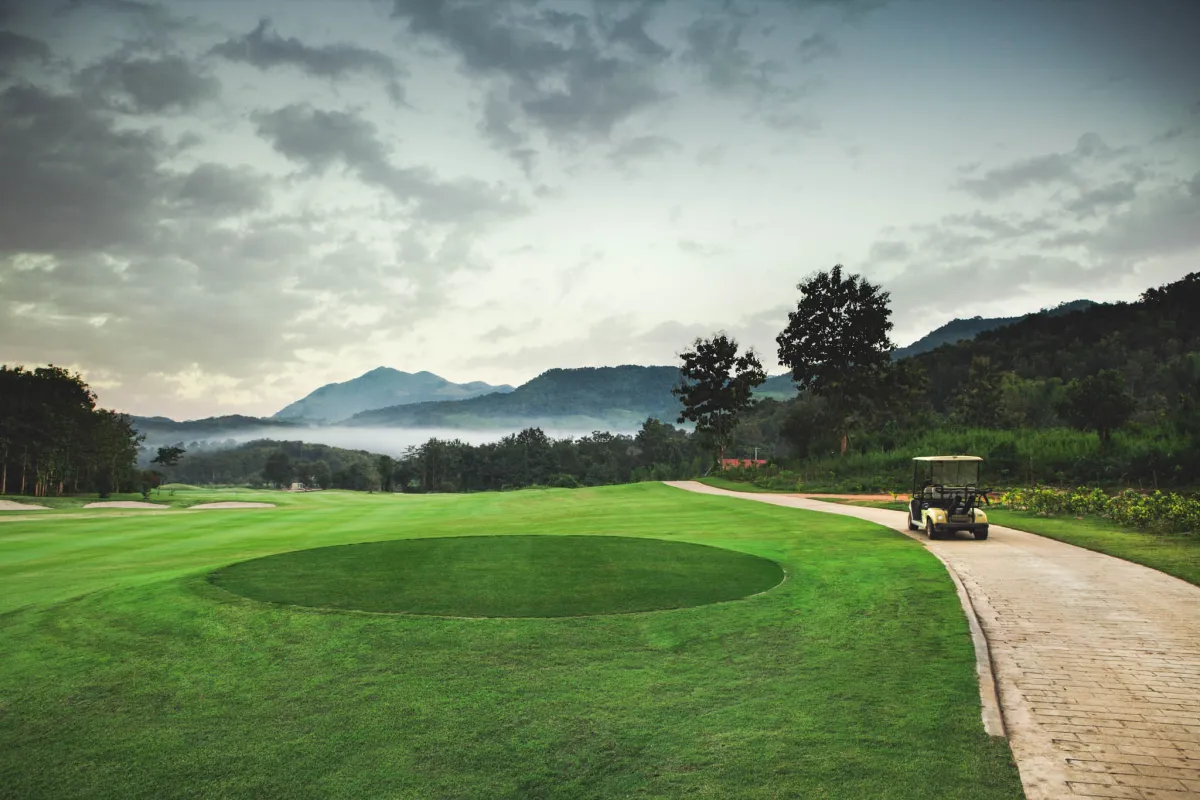
Golfing in the Winter
Luang Prabang Golf Club
As you play, there are splendid views of the Mountain and Mekong River on hole 16th and 17th. The weather between November to February is ideal and cool for a great game of golf, temperatures between 15-25 degrees combine with the challenging courses with natural landscapes of limestone mountain/forests.
Luang Prabang Golf Club sits about 6 km west from the centre of town, situated along the south bank of the Mekong River surrounded by forested tropical mountains. Holes 14 through 17 parallel the riverbank with the par three 17th playing right along the river’s edge. Water is evident on nine of the 18 holes but really only comes into play on holes 3, 5, 7, and 14. The par four 18th hole plays uphill 35’ over 375 yards from the tips to a medium-sized green that slopes 7’ right to left across 75 feet of putting surface. The greens, in general, tend to be medium to small. Elevation changes across the entire layout are mild with hole 18 being the only exception and walking is not difficult, consisting of the level to gently undulating terrain contours.
Like most memorable and classic venues, Luang Prabang takes you on a journey. There are no parallel fairways so you really enjoy the sense of going somewhere as you play out away from the River on the front nine. On the back you play in getting gradually closer to the majestic Mekong over four of the last five holes until you are beside it for the last 190 yards at the par three 17th before you turn up the 18th fairway toward the clubhouse.
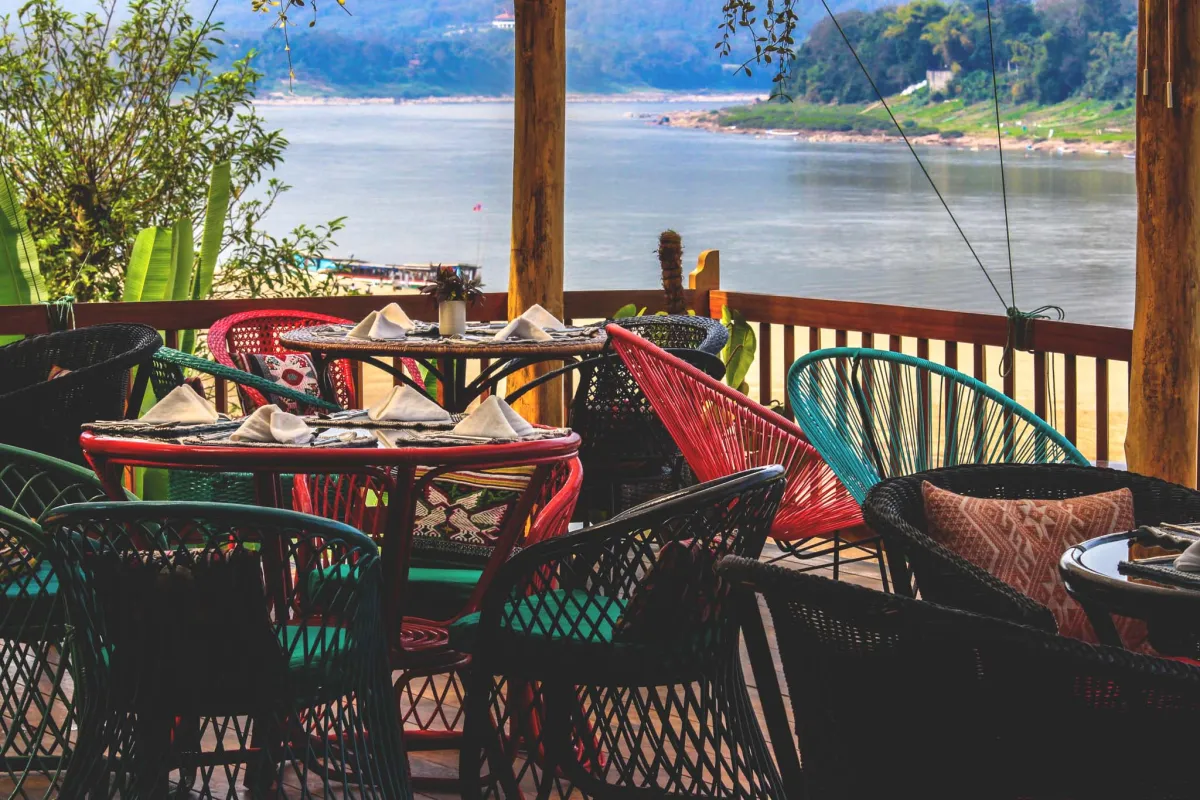
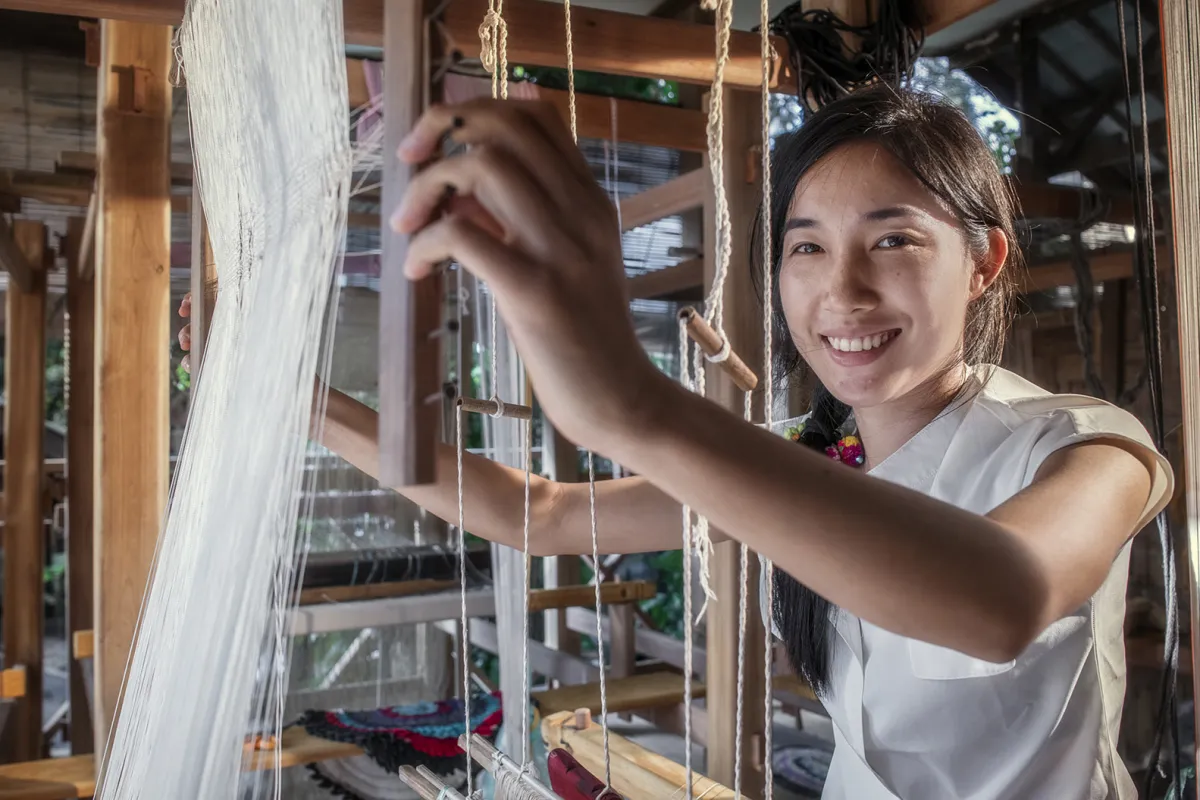
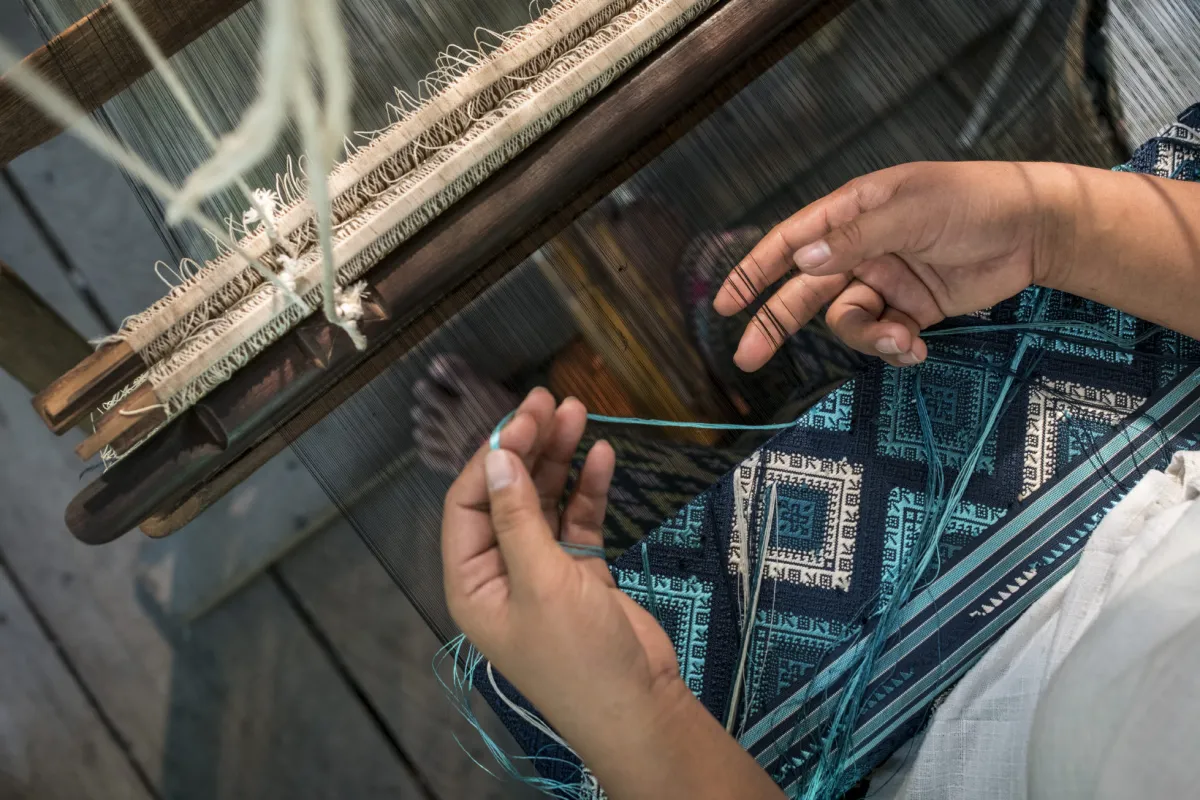
Ock Pop Tok (Silkroad Cafe)
Discover Laos Through Textiles
“East Meets West”
Founded in 2000 by Englishwoman Joanna (Jo) Smith and Laotian Veomanee (Veo) Douangdala, Ock Pop Tok or OPT to those ‘in the know’ has grown from a small shop selling only a few designs, to becoming one of the most important textile and artisanal institutions in all of Laos and South East Asia. Ock Pop Tok is now a team of over 78 employees. Meet the rest of the team here!
Ock Pop Tok (meaning “East Meets West” in Lao) was founded on the principles of fair trade and sustainable business practices. The company was pioneering social business and ethical fashion before these terms were even a part of our cultural lexicon.
Experience For Yourself
Whether you have 30 minutes, 36 hours, want to try a class or simply have lunch at the Silk Road Café, we have something unique for you to experience while in Luang Prabang! Take our free guided tour, stroll through our gardens (where you’ll find the natural materials for our dyes) or come to the Living Crafts Centre to watch the 28 master weavers on their looms.
Find more information below:
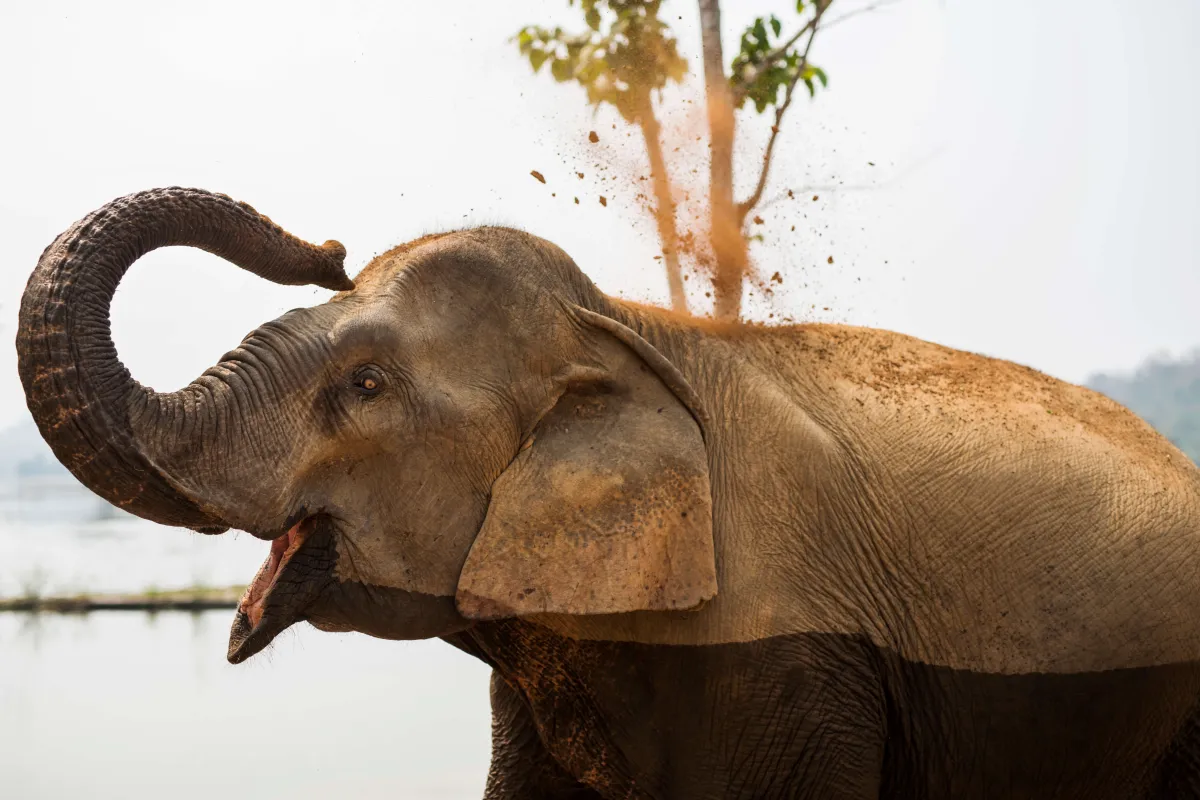
Elephant Sanctuary and Camps
Become a mahout for the day, bathe with an elephant, or ride one of these beautiful beasts through the jungle. There are many elephants camps, with different ethical approaches, to visit in Luang Prabang. But the country is home today to fewer than 1000 Asian elephants, and many traditional mahout families, once dependent upon the timber industry, can no longer afford to feed or care for the animals.
Elephant Sanctuaries and Centres provide veterinary care and a way for mahouts to earn money for their families and keep elephants alive and healthy. Many of the centres offer opportunities for you can bathe, watch, feed or ride these majestic animals; along the way, you’ll witness the intimate and incredible relationship between mahouts and elephants. There are many, many opportunities to experience Asian elephants during a visit to Luang Prabang.
Wat Long Khoun
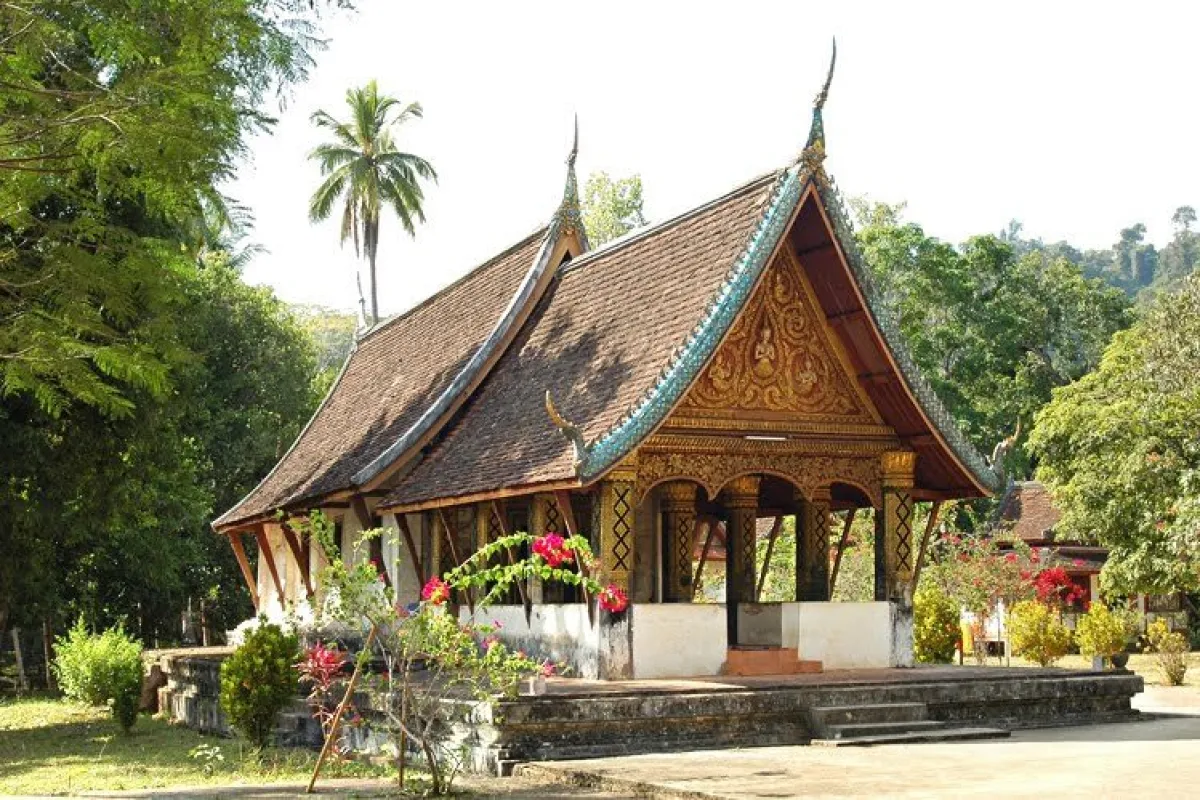
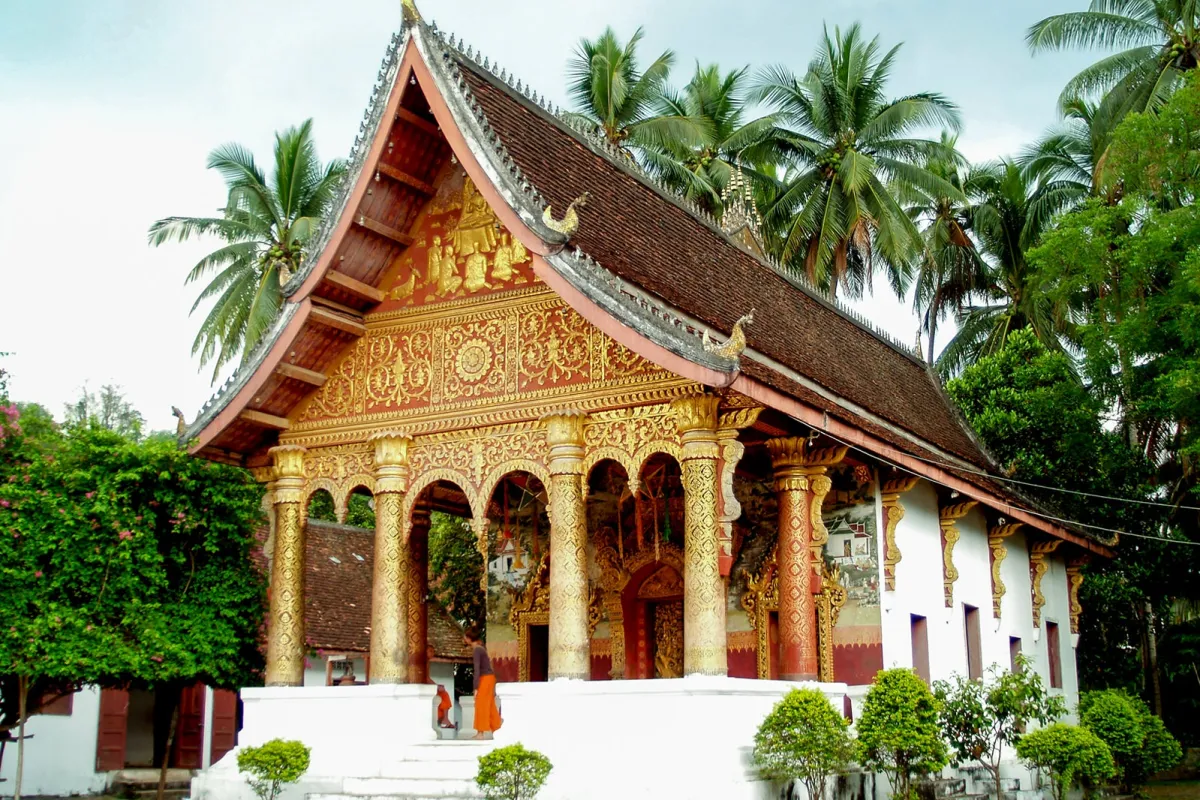
Wat Long Khoun once served as a sanctuary for those seeking spiritual rejuvenation. Before a king’s coronation, he would retreat to the temple for 3 days for cleansing and meditation. Also known as the ‘Monastery of the Happy’, Wat Long Khoun features 18th-century Lao architecture, with 2 single level sections: the front part features gilded columns and intricate wood carvings.
The older section of Wat Long Khoun contains Jataka murals, which still retain some of their original vibrancy telling the story of the 547 lives of Lord Buddha. The murals also depict local myths and legends that incorporate Buddhist morals of kindness and the importance of giving. Look up to find a red ceiling with stencilled dharma wheels, peacocks and mythical creatures.
The original meditation room once used by kings is still intact, along with the living quarters for monks. Entrance to the portico is guarded by 2 large statues with the entire porch supported by 8 elegant black-and-gold columns topped with lotus petal designs.
Wat Long Khoun is across the street from Wat Xieng Thong, so make sure you visit both temples during your holiday in Luang Prabang. The temple serves the local Buddhist community, so refrain from making loud noises out of respect for the monks and devotees. Wear modest clothing and remove your shoes and sunglasses before entering.
-
Entrance Fee: 10,000 KIP per person
-
Opening hours: Everyday, from 6AM - 6PM
---
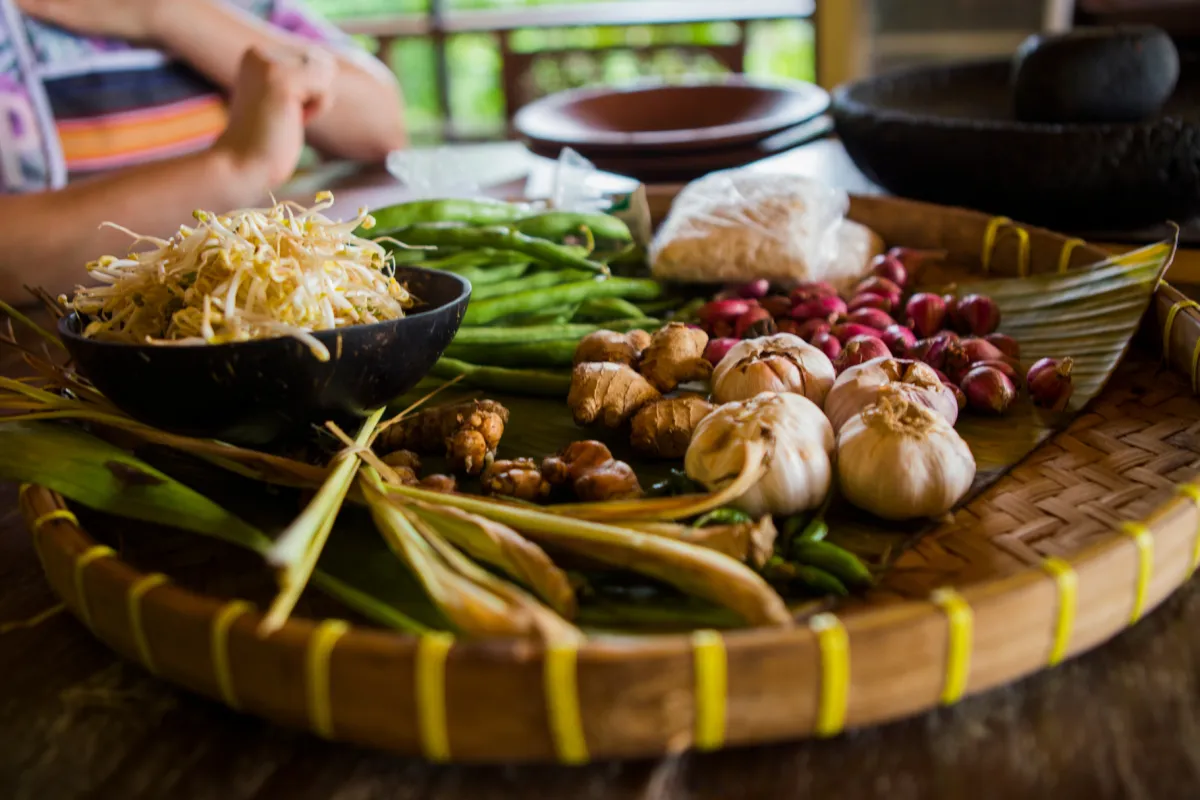
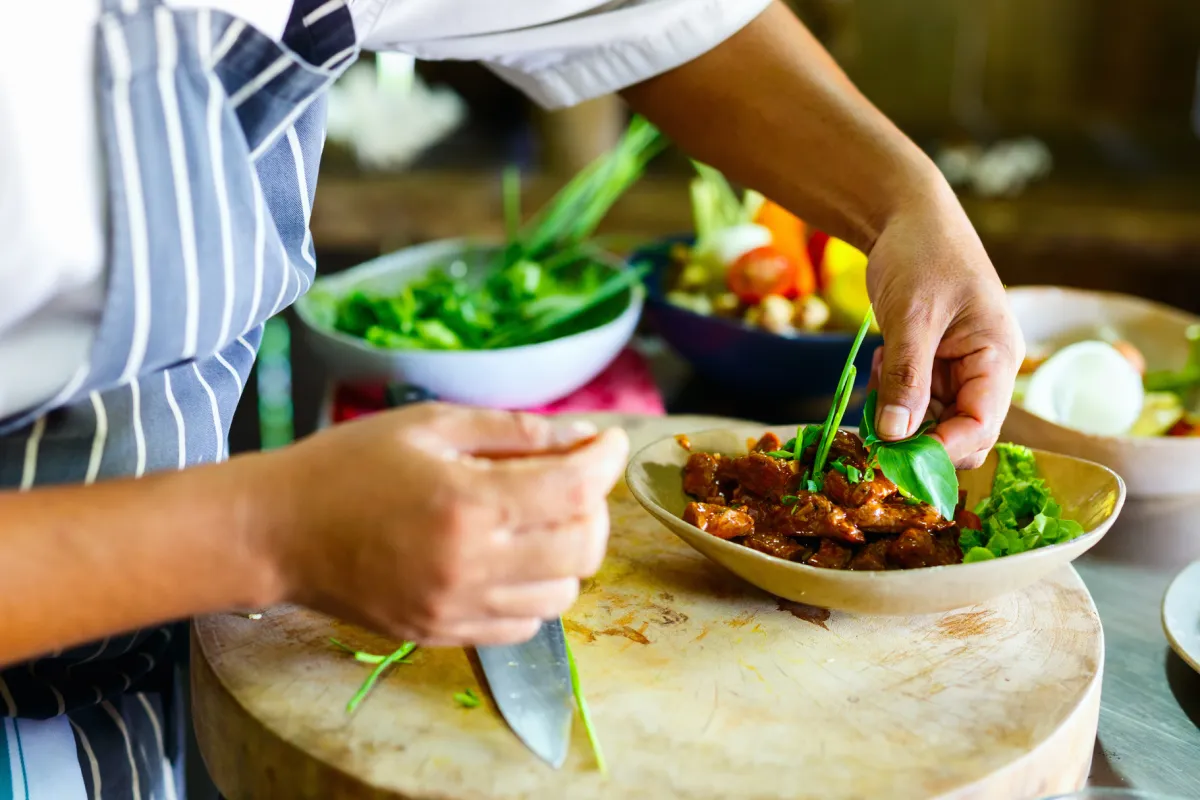
Join Lao Cooking Classes
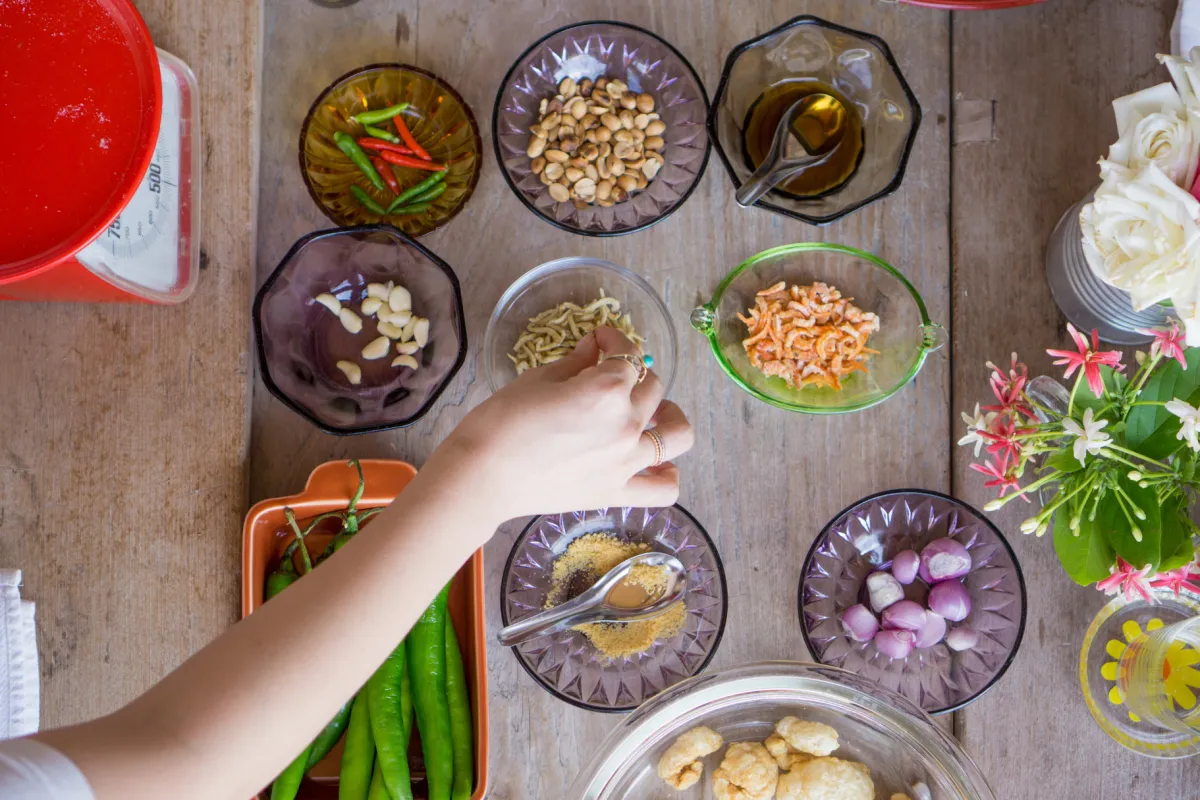
A wonderful way to gain insight into Lao culture is through the medium of the kitchen. You will not only gain knowledge about the components and dishes, but you will also learn about the significant relationship that Lao people have with food as well as the traditional manner in which they dine.
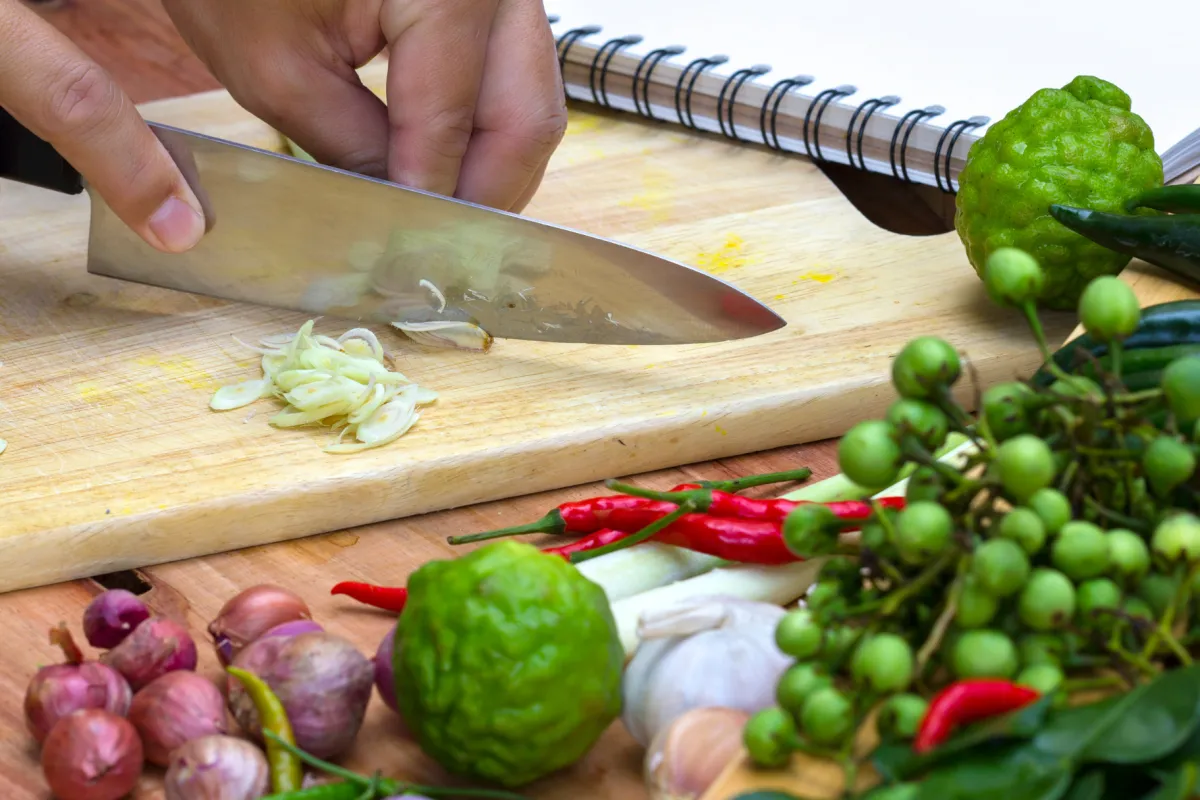
Garlic, lemongrass, chilies, and kafir lime are some of the classic Laotian ingredients that are used in Northern Lao cuisine. These ingredients are combined to create mouthwatering specialties. Take a cooking class in Luang Prabang to learn some of the most delicious dishes that Lao cuisine has to offer. Get information from the chefs in the area, and then use that knowledge to make your favorite recipes back at home.
Alms Giving Ceremony in Luang Prabang (Tak Bat)
A Responsible Traveller’s Guide To Alms Giving In Luang Prabang by wanderlust movement
A Brief History of the Alms Giving in Luang Prabang
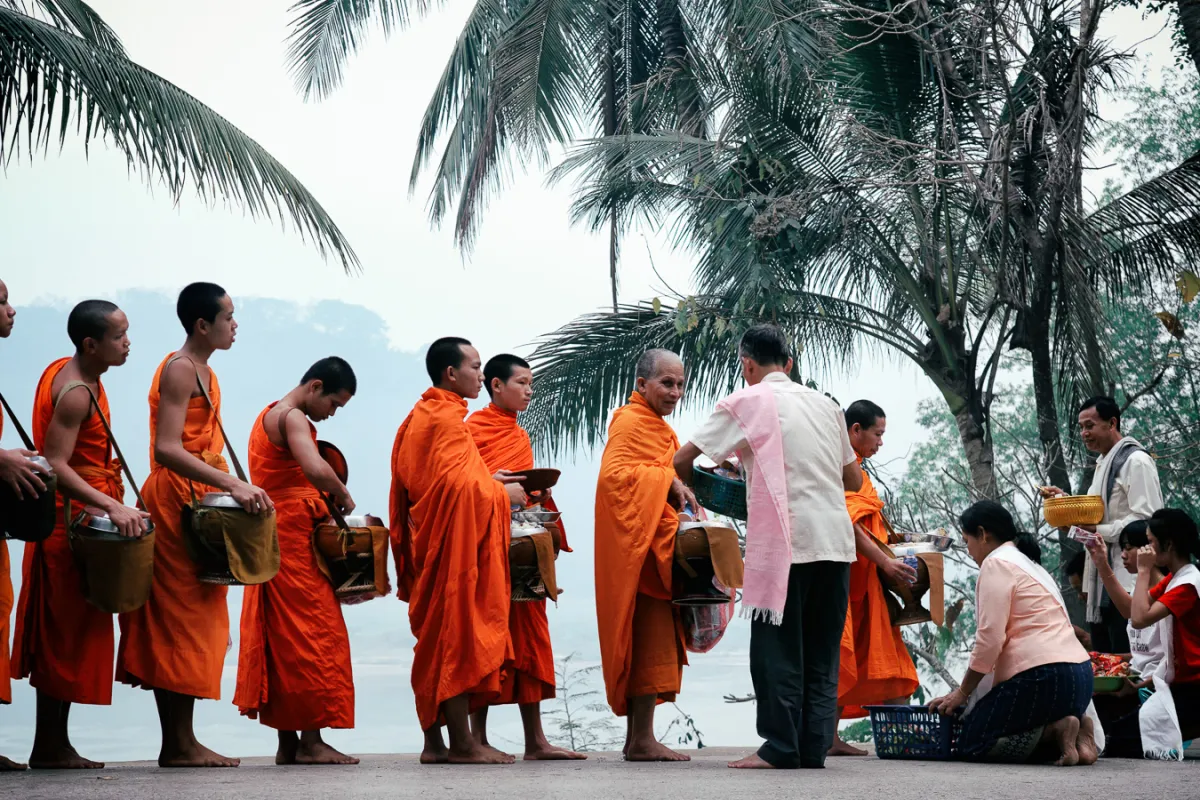
For over 600 years, locals of this UNESCO World Heritage City have been waking up before dawn to prepare for “Tak Bat”. As the sun rises, locals will take their spot on the sidewalk and wait for the procession of monks to start.
Hundreds of monks from the 35 temples of Luang Prabang walk in silence, meditating as they collect their daily alms from devotees. This is the Buddhist practice of making merit, a symbiotic relationship between the monks and almsgivers.
By feeding the monks the lay people generate good karma and the monks grant merit to the devotees that counts towards their future lives.
What Time Is Alms Giving in Luang Prabang?
During summer the almsgiving starts at 5:30, while in the winter months the sun doesn’t start rising until 6:30.
I recommend getting there a bit early to find a spot and spend some time watching the locals set up and prepare the food for the monks.
For me, it put in perspective how unproductive I am with my day. Can you imagine getting up before first light every day? I need four alarm clocks to get my ass out of bed for work.
Where Does The Alms Giving Ceremony Take Place?
The alms-giving ceremony takes place all over Luang Prabang. One of the most popular routes to witness the giving of alms is by Wat Mai temple on Sisavangvong Road. But, this means that the location is usually filled with tourists.
If you are looking for a quieter spot and a chance to experience a more authentic side to the ceremony, head to one of the side roads. I’d recommend attending an alms-giving in both locations to see for yourself how the ritual is being affected by tourism.
How to participate in the Alms Giving Ceremony
If you are planning on participating in Alms Giving in Luang Prabang, here are a few things to keep in mind to respect the ritual and the Laos people:
-
Only take part in the ceremony if it is means something to you.
-
Buy your rice in the morning market rather than at the street food vendors on the main road.
-
Remove your shoes during the ceremony.
-
Dress conservatively. Cover your shoulders, chest, and legs.
-
Do not make eye contact with the monks or touch them.
-
Be silent.
-
Keep your phone on silent
-
Women must keep their heads lower than the monks at all times.
-
Bow your head to show respect to the monks.
How to take photos respectfully at Alms Giving in Luang Prabang
Here is what you need to know about observing the procession and taking photos:
-
Turn off your camera’s flash
-
Take photos from across the road. Keep a respectful distance.
-
Dress conservatively. Cover your shoulders, chest and legs.
-
Don’t follow the procession. Plan your shots beforehand and pick a spot.
-
Keep your phone on silent.
-
Don’t try to talk to the alms givers or monks.
-
Don’t touch the monks or get in their way.
Read the full article here:
https://www.wanderlustmovement.org/blog/responsible-travellers-guide-alms-giving-luang-prabang
Heuan Chanh Heritage House
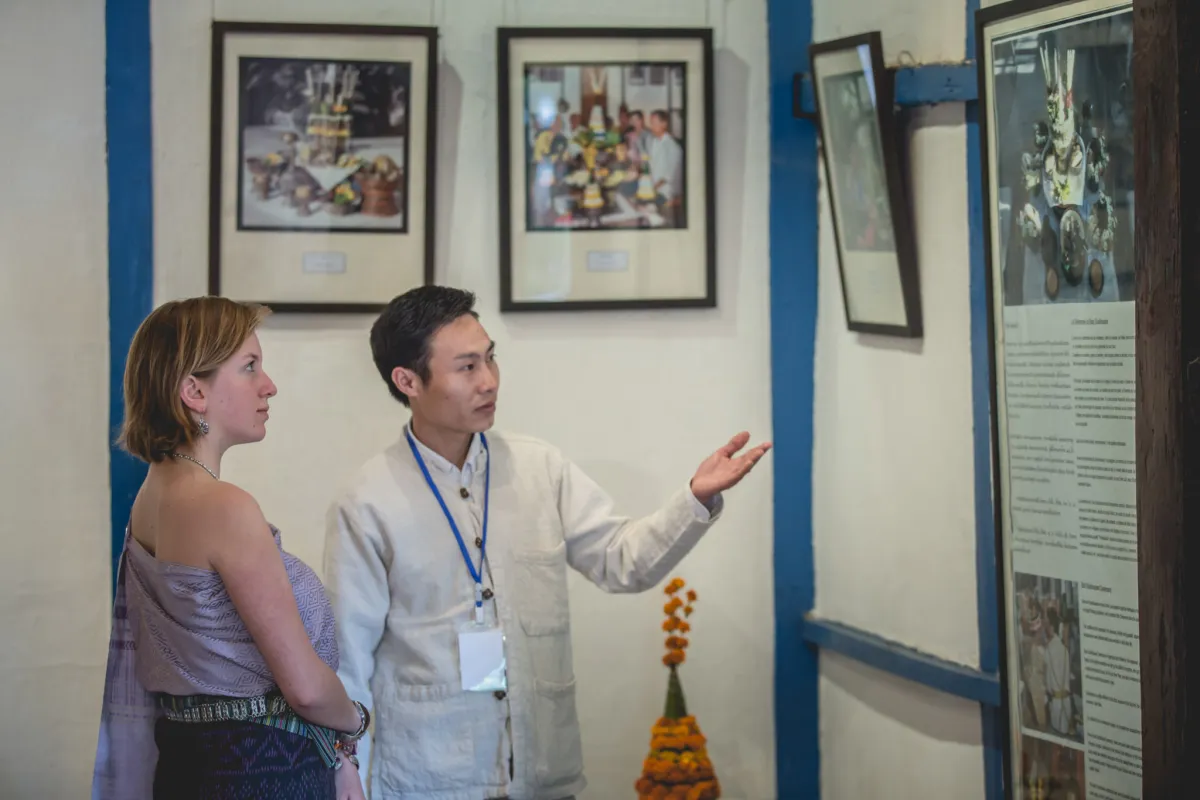
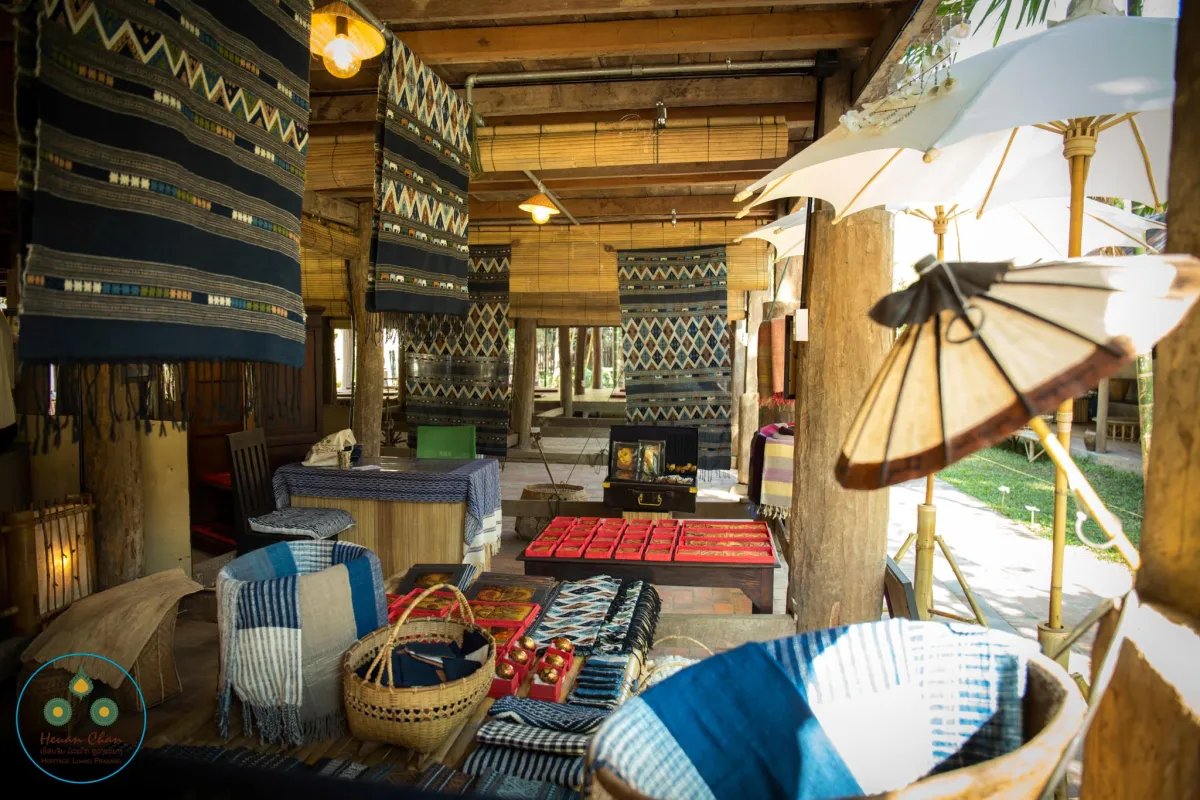
What is a baci ceremony? What is the significance of alms giving? How do Lao women carry their babies on their back while they work? These are some of the questions answered at Heritage House. Here you will be able to see samples of Lao textiles, learn about the country’s rich ethnic diversity, read information about Buddhism and family life - as well as view an informative documentary about the customs and culture of Laos.
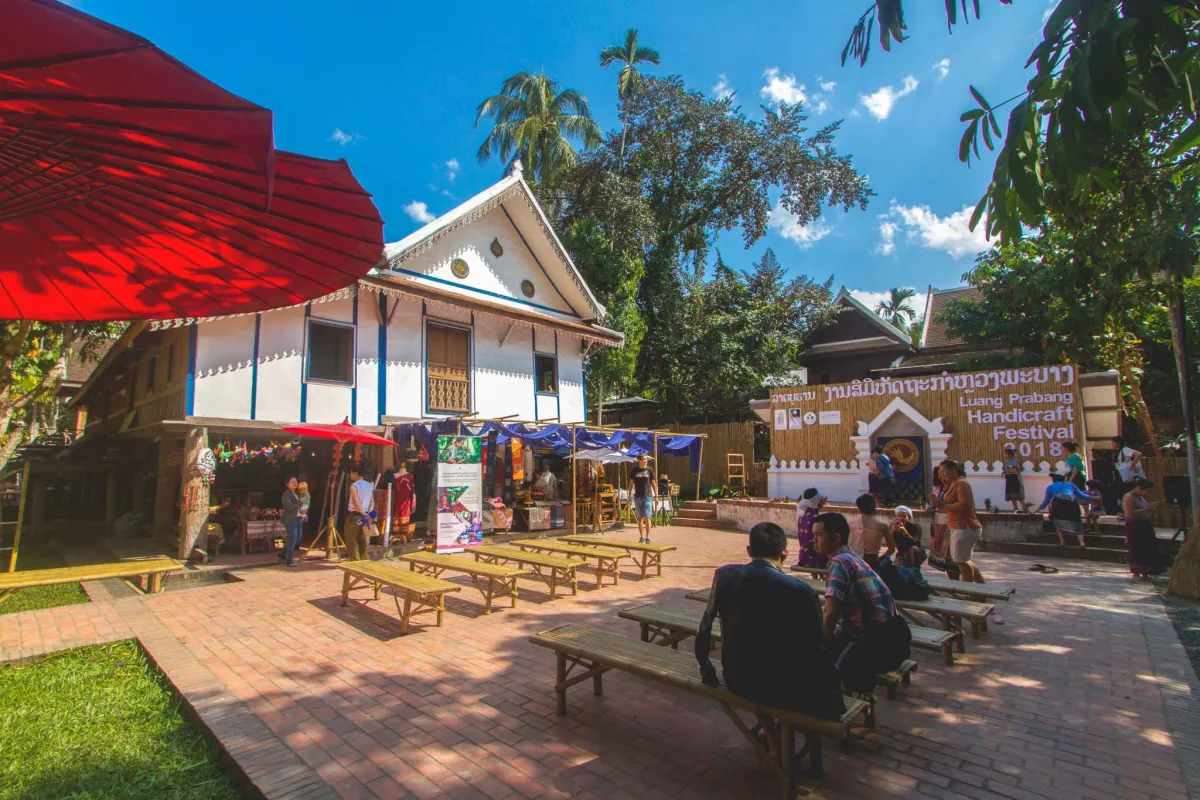
Heuan Chan is a traditional wooden house dated back to 19th century. In Lao language, Heuan means house and the owner of this house was Mrs. Chan - that is how the name derived from. In honour to the house owner, we still keep the name as it is today.
Situated in the heart of Luang Prabang peninsula, Heun Chan is a very rare surviving example of a pre-colonial Lao style aristocratic mansion - just only to see the house is already worth visiting. The house consists of a white and blue façade with the "Eyes of Gods" on top.
The house belonged to Thong Sayasith family, a palace high dignity, until mid 90's.
Heuan Chan went under the UNESCO World Heritage listing process between 1987 to 1995 and it is listed in Number 119.
After that, in 1996, the government rented the house and started the renovation. It was one of the first renovation buildings in town. So Heuan Chan was used as a case study to formalize the Town's Renovation Projects.
The second renovation undergone in 2006 including some additional structures to the house for opening as an information and exhibition center.
And it was in 2017, when Thansamay Family rented out the property for the third renovation and gave the Revival of the Place to the city of Luang Prabang and people who come to visit.
Open every day
From 08 to 17 o'clock
SEE TOURS IN HEUAN CHAN HERITAGE !
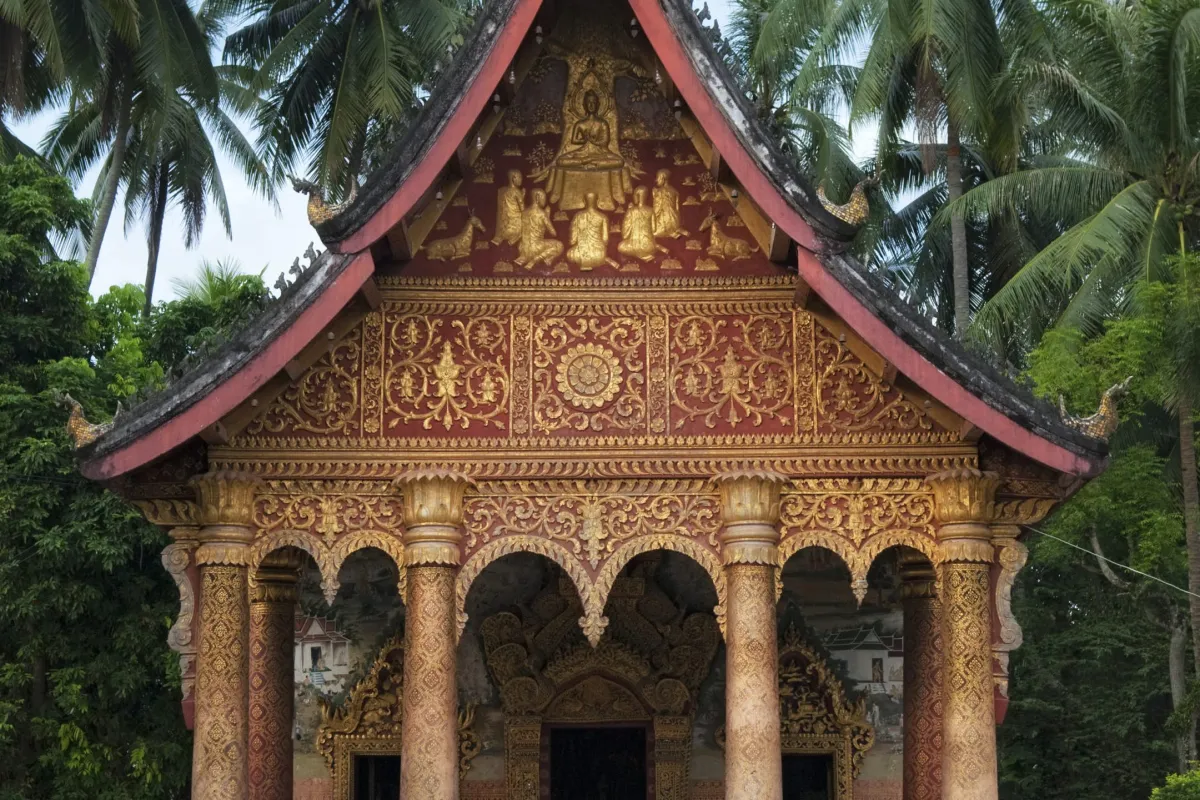
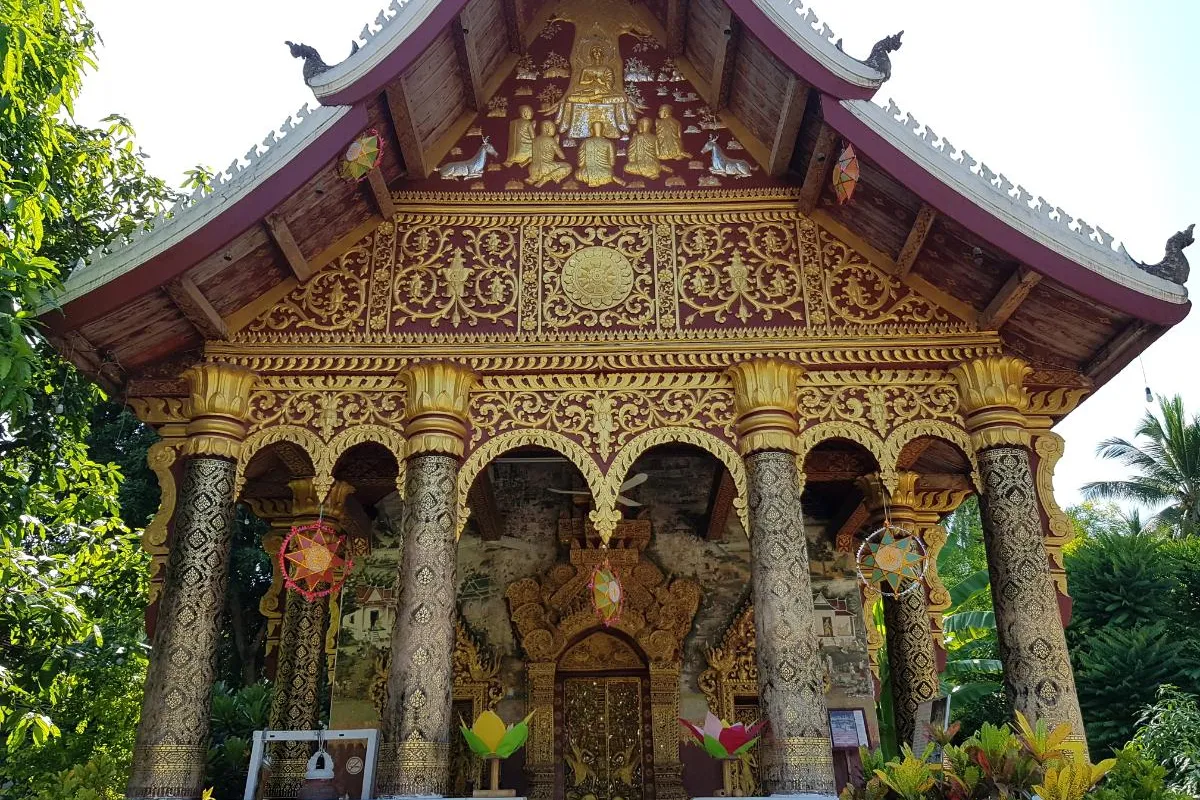
Wat Pa Phai
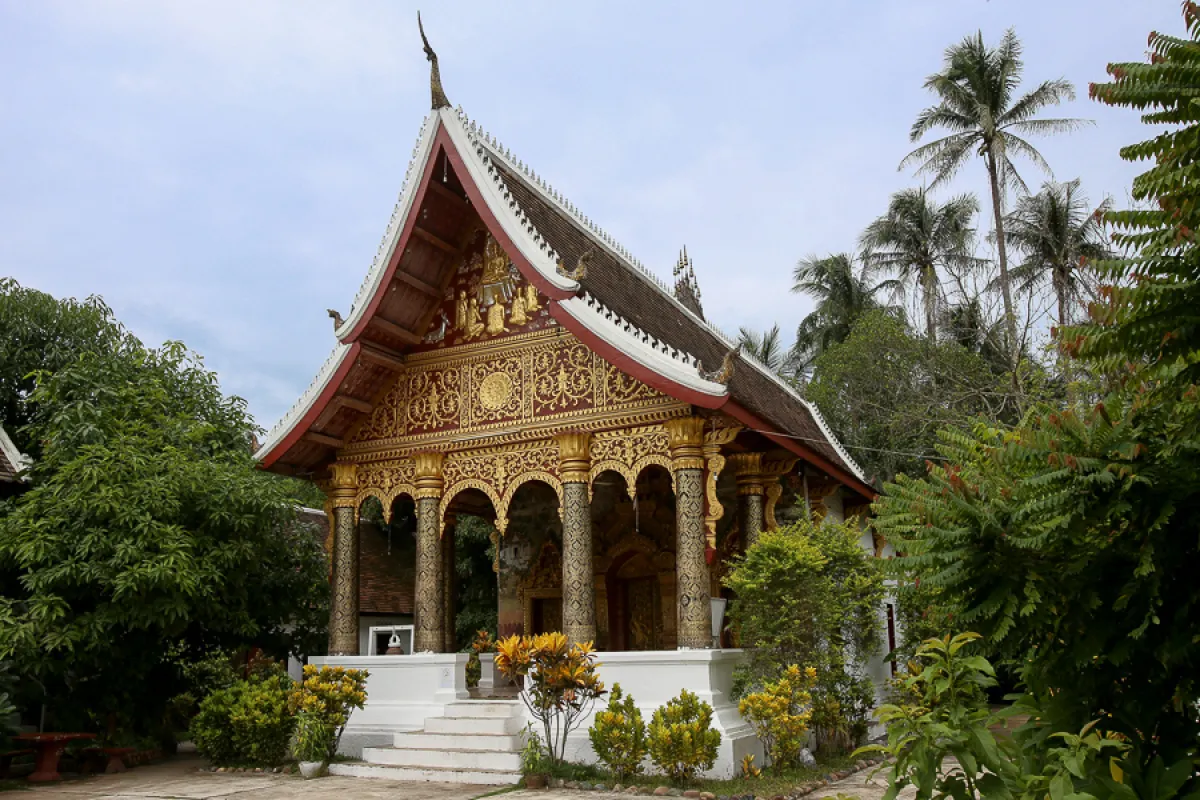
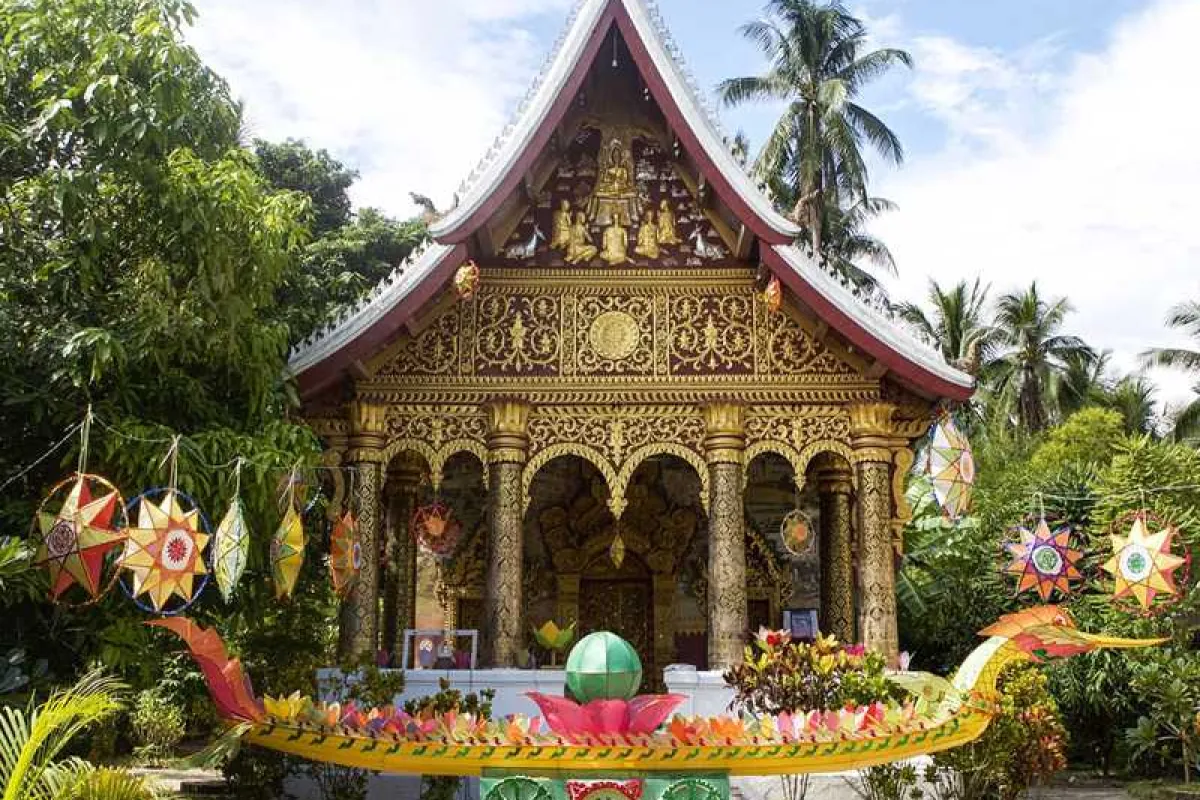
Wat Pa Phai, the 'Monastery of the Bamboo Forest', is located on a side street between Sisavangvong and Kounxoua Roads, about 100 meters northwest of Wat Paphane. The temple may have been founded as early as 1645 (per Parmentier) but 1815 is given as a more likely date by Luang Prabang historians.
The temple's sim (congregational hall) is one of a number of Luang Prabang temples built in the so-called Luang Prabang Style III, a UNESCO classification. Hallmarks of this style include the use of columns of the same height on the exterior of the building, a lack of internal columns, the inclusion of a veranda, and the positioning of the main Buddha image against the back wall with no gallery behind it.
The sim's decoration includes an elegant mural painting over the main entrance showing scenes from the life of the Buddha with details derived from 19th-century Lao rural life. The main entrnace to the sim is richly guilded with a prasat-like pediment gilded in gold leaf and studded with glass mosaic work, underneath which is a stunning tympanum featuring a trio of peacocks—two in profile and one with its body projecting from the frame. This may possibly be a reference to the zodiac birth year of the donor; this practice is common in Southeast Asia and also seen at temples in Chiang Mai such as Wat Phan Tao.
The grounds of the temple also include a Thai-style shrine and several recently restored stupas.
-
Opening hours: Everyday, from 8Am - 5PM
---
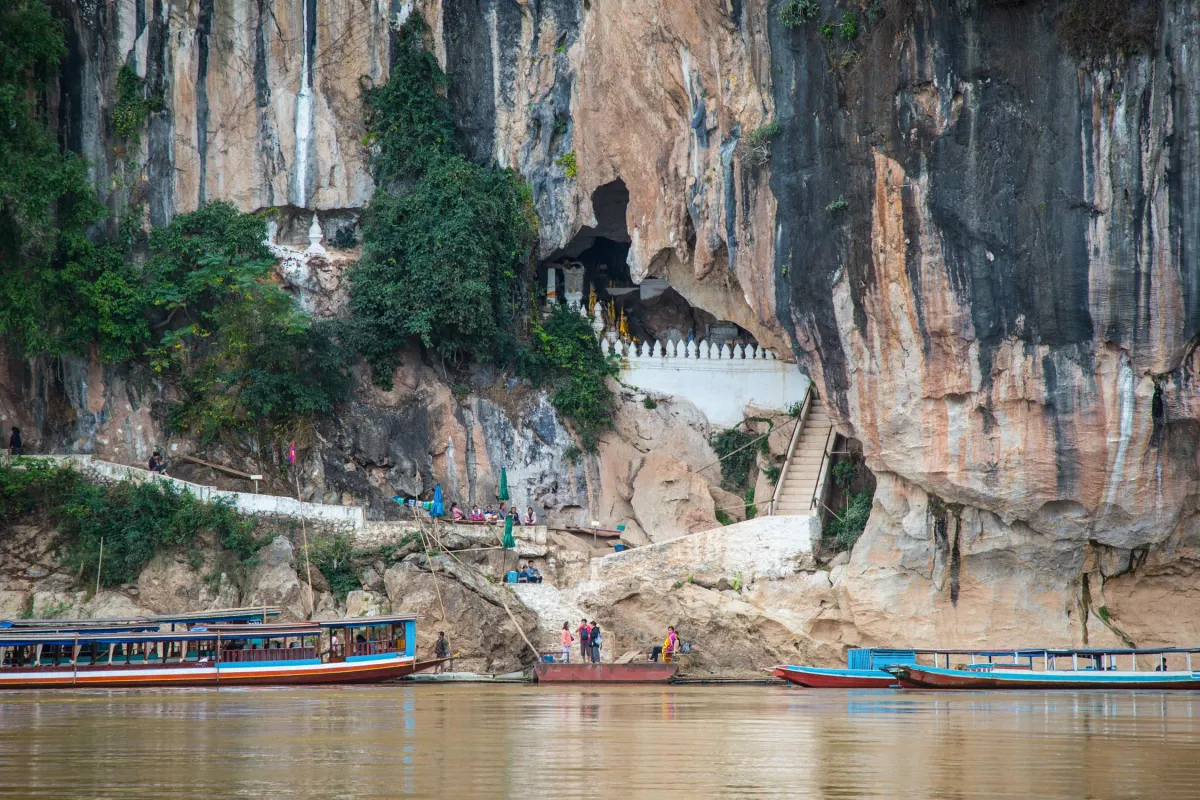
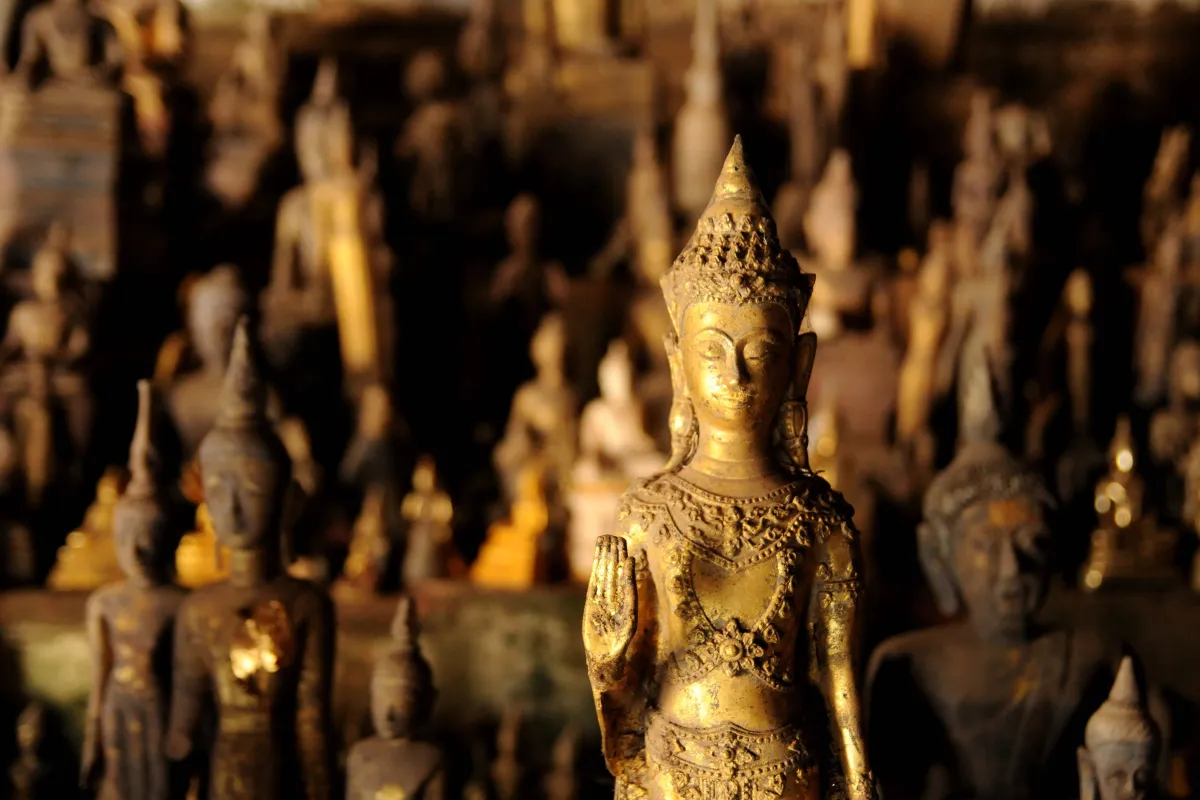
Pak Ou Cave
Situated on the Mekong River, just a short distance from Luang Prabang, Sacred Tham Ting Cave houses where there are thousands of Buddha statues. This underground sanctuary has been venerated for centuries. The number of Buddha images in the cave gradually increases as locals bring Buddhas to place in the cave when they visit. The cave can be reached either by boat trip to the point where the Nam Ou River meets the Mekong or by road to Xang Hai Village, where you can also witness the villagers making ‘Lao Lao’ (fermented rice liquor). Visitors can sample the drink and purchase locally made handicrafts.
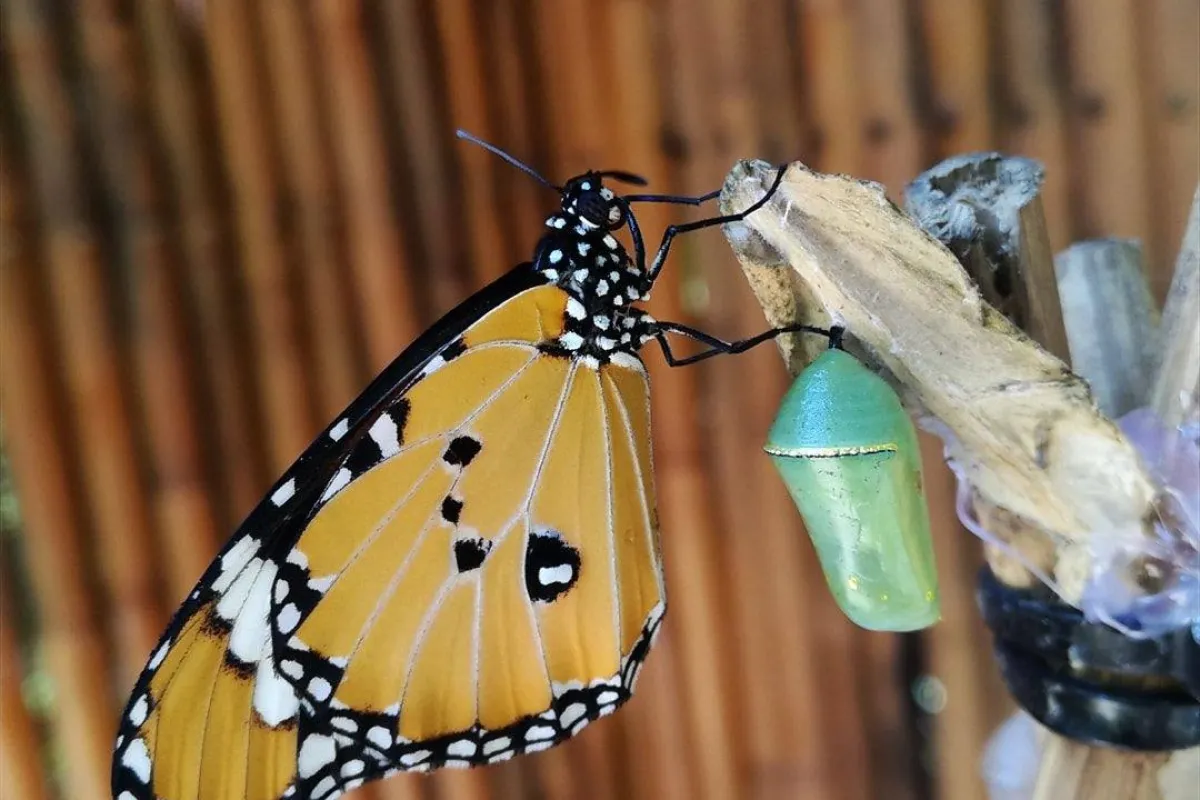
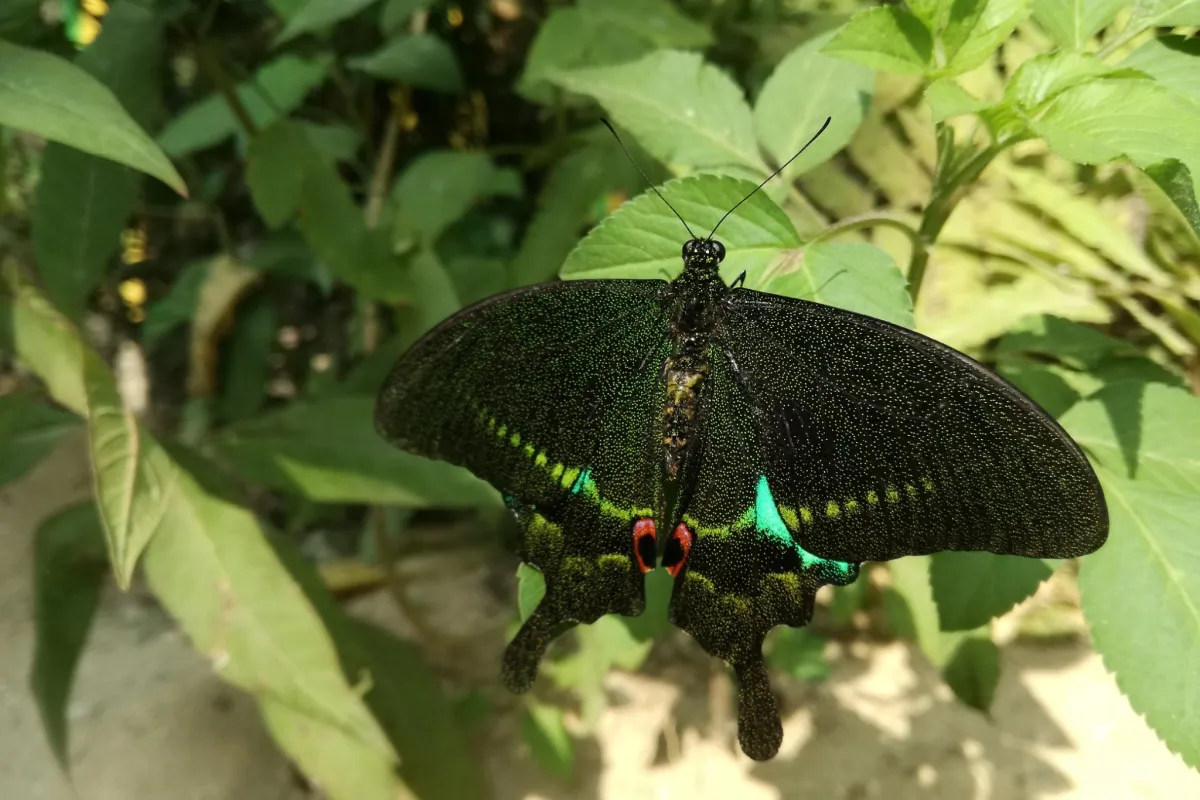
Kuang Si Falls Butterfly Park (Luang Prabang)
Situated 300m before the entry of the Kuang Si Waterfall, Kuang Si Butterfly Park is a project that was initiated in January 2014 from 2 Dutch passionate people from Holland. The mission is to create a research centre studying and publishing about Laos butterflies, host plants and preservation because of environmental issues in Laos.
The center is looking for entomologists and botanists to help and develop the center. The Butterfly Park is open for schools to raise awareness about the beautiful and vulnerable nature in Laos, will provide them with learning materials to educate and understand the importance to preserve their beautiful nature for their health, happiness and financial security in the future.
The Butterfly Park wants to create funding as well for local schools. So those children can come to learn about their local nature.
Although the center is still in its (promising) beginning, it still has a lot to do, according to two Dutch who initiate the project.
A nice little café on the pound can finish the visit, for having a good coffee, delicious baguette in a beautiful surrounding.
-
Entry of the farm : 5 USD or 10 USD including apple pie and coffee
-
Opening hours: Open 6 days, 11AM‒4PM. Thursday closed
---
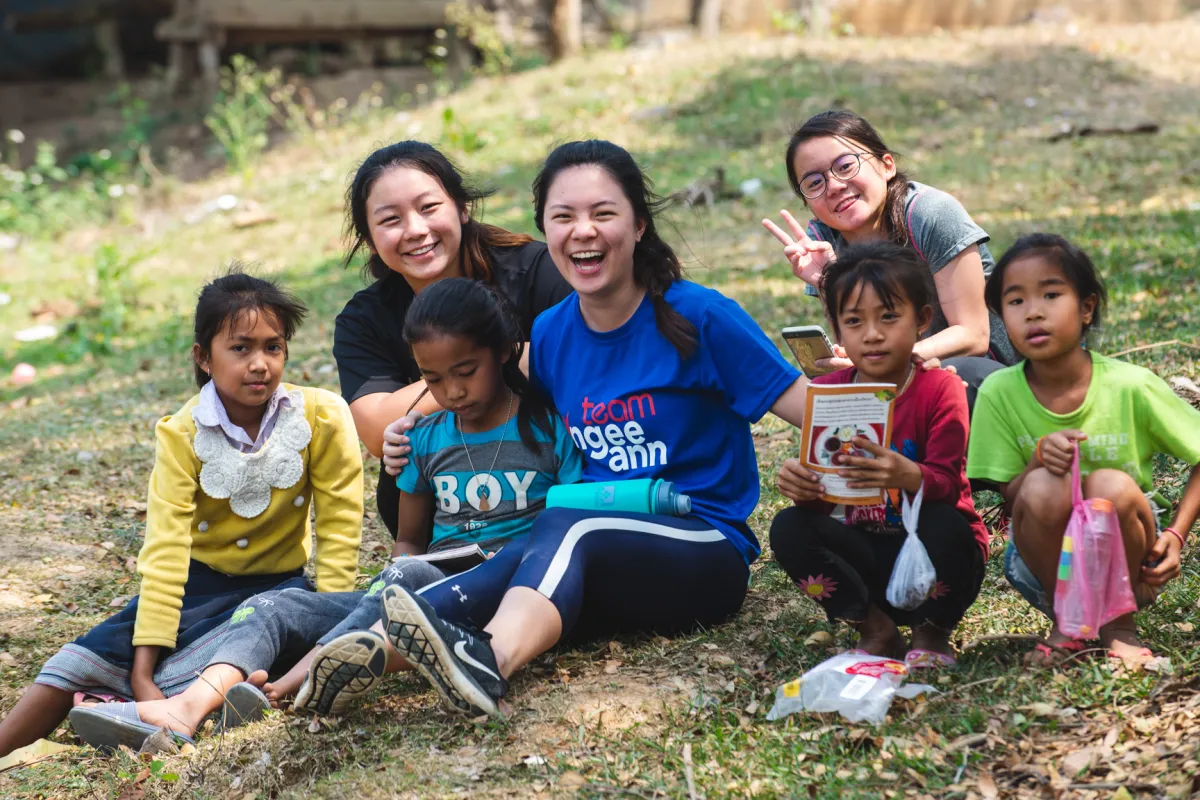
Volunteerism, Social Enterprises and Sustainable Tourism in Luang Prabang
Sustainable Tourism is a hot buzz word and if so, Luang Prabang should be hottest sustainable tourism experiences in Laos.
Other than award winning social entreprises such as Lao Buffalo Diary and Ock Pop Tok which are already mentioned previously.
Numerious Locals and Foreigners who are here found many causes that they are willing to champion and here are some of the organizations that have provided outstanding support to Laos.
Big Brother/Sister Mouse
Since 2006, They've been publishing books that make literacy fun for Lao children, as well as a growing number of books for older readers. They also do hands-on education. You can help, and also have an enriching travel exerience by volunteering your time to engage or practise with the locals students.
- Read a picture book with several first-graders
- Play a board game with third-graders.
- Have a 45-minute conversation with a young adult and more
They are located right in the heart of town behind 3 Nagas Restaurant. For more information check out http://www.bigbrothermouse.com/index.html
Luang Prabang Disabled School
Enjoy their handicrafts shop that supports the deaf community. A school for deaf&mute children has been created in 2008 to educate&re-insert the deaf children into the local community. The older ones learn one job. The girls have the opportunity yo weave&develop their skills. Here you can experience the local culture through sustainable tourism.
A unique place where you can buy local handicrafts of a training center & vocational school for deaf youths. Recently, they have also open their cafe at the school/dormitory located 100m behind the Luang Prabang Provincial Hospital.
Trash Idol
TRASH IDOL is a cleaning event held frequently in Luang Prabang where volunteers would come together and clean up the city after special events like Lao New Year, Boat Racing Festival.
Every last sunday of the month, volunteers from local communities groups such as schools, hotels, tour companies and individual gather to clean up an area of Luang Prabang Town
Mission statement: We are looking to raise awareness of environmental issues and educate our young and local citizens in order to change their behaviours. We hope to make Luang Prabang a “clean and green” place for all of us.
https://www.facebook.com/trashidolluangprabang/
Uplift Laos by DiscoverLaos Team
A series of community projects which we work with schools and corporations, we aim to “uplift” the lives of the Laotians, especially those living in the rural areas.
With our expertise, we have helped schools and corporations to plan their community service trips to Laos. Some of the previous projects include building bio-sand filtration system (Project MyLaoDrinkingWater) and solar panel to provide clean drinking water and electricity respectively. More than 20 Villages in Luang Prabang and Oudomxai uplifted. Find out more on through our success stories page.
More updates coming soon
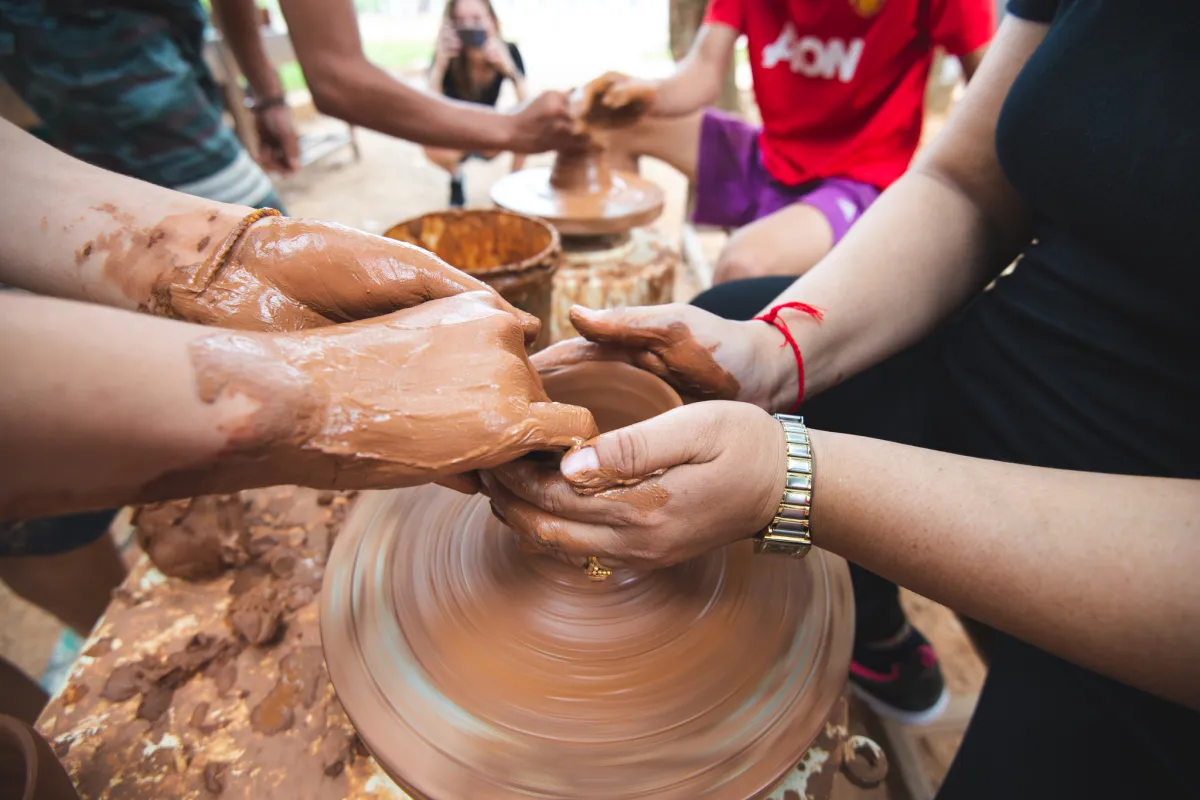
Pottery Village (Ban Chanh)
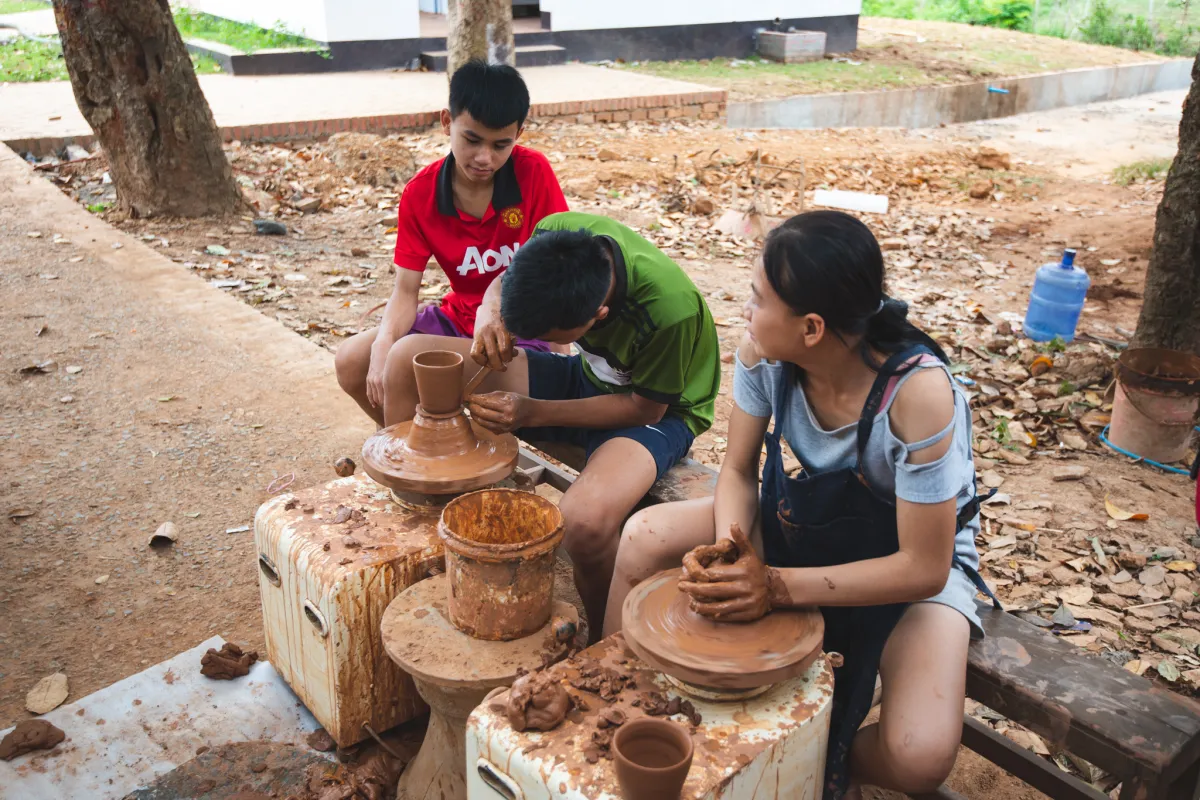
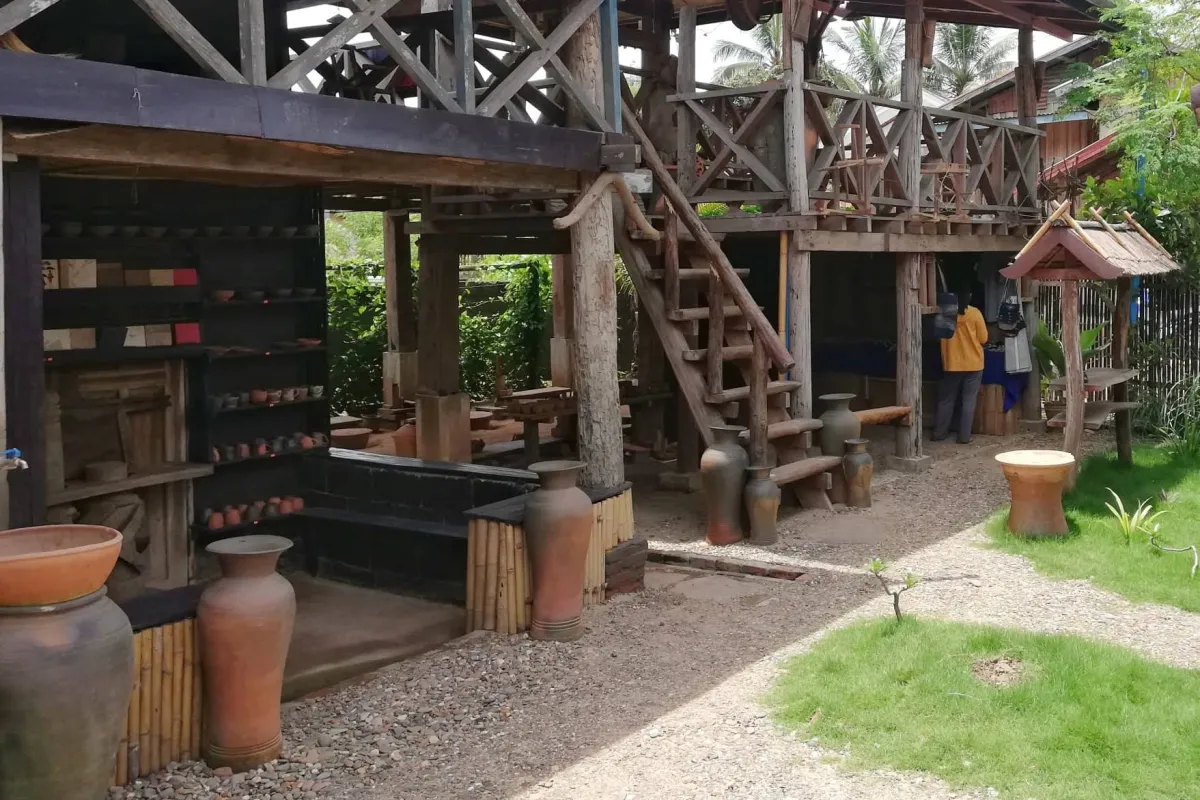
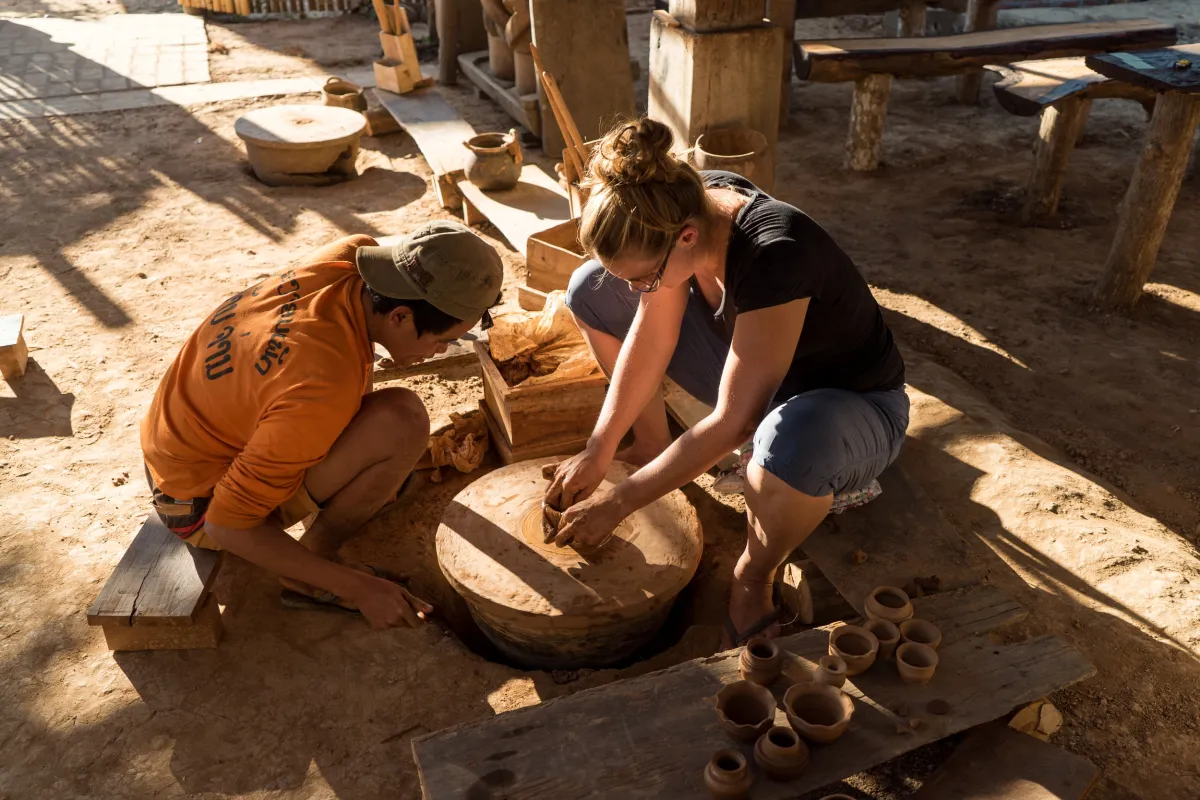
The people of Ban Chan (‘pottery village’) have been using traditional methods to make pottery for centuries. The story goes that the first king of Laos, back in the 16 th century, held a big celebration after winning a battle. He asked different villages to bring different things to the party. He requested the people of Ban Chan bring clay pots. Now, many, many generations later, the families of Ban Chan still carry on this tradition – pulling the clay from the earth on-site and using their hands to create beautiful vessels.
WHAT TO EXPERIENCE?
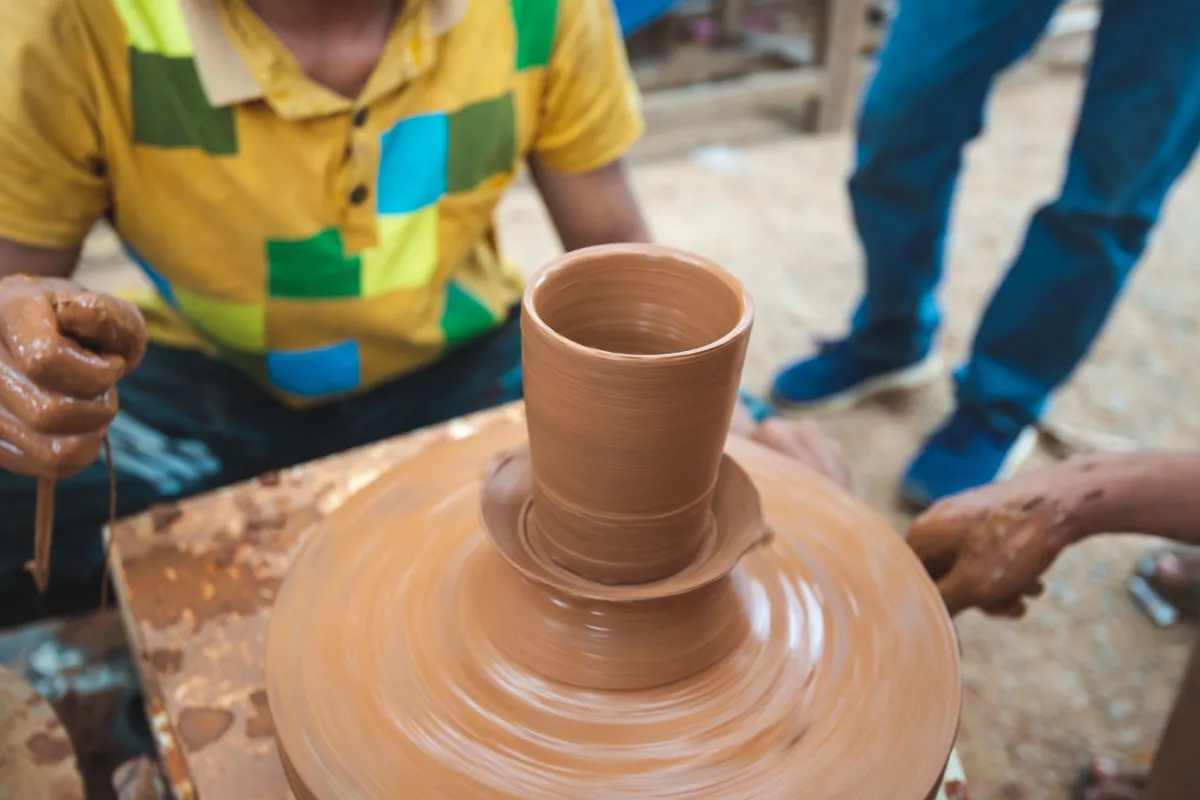
In ancient times, Laotian people used pottery for all kinds of purposes at home and in the fields. They needed strong, waterproof jars to store food, drinks such as rice alcohol or to keep rice dry and away from humidity and mice. By visiting this village you will learn the story of pottery in Laos, its role in daily life and how these jars are made, as well as the different shapes that the potter can transform the clay into. A short walk along the Mekong will allow you to visit Wat Chompet, a temple located 2km away, just in front of Wat Xieng Thong.
HOW DOES IT HELP ?
By going to this village you truly take part in responsible tourism, as you will first have to use the services of a local boatman to cross the Mekong River; the village being located on the opposite shore, far away from the mass tourism streets. Then you will walk through this small village to meet locals and you can buy their wares directly from them – a small jar, a clay bottle or a small pot usually used to crush ingredients added to the famous papaya salad. Don’t go only to watch them, leave a positive impact, not just tracks and footprints! You can also buy a big jar that you may wish to have shipped home ?
Access
You will find Ban Chan just 4 kilometres from the boat pier at Chomphet, which makes it an easy bike ride away. Once you enter the village, turn right at the T-intersection and you’ll find the pottery site 100 metres on the right hand side of the dirt road. There’s a boat pier at Ban Chan, which means that if you feel weary after walking or riding, you can always load yourself and your bike onto a boat and head back to Luang Prabang.
Why Ban Chant Pottery Village is special?
This village is famous for its traditional pottery-making, where you can watch pots being hand-thrown and fired in old ovens. The village's lamps and pots decorate the small streets of Luang Prabang's old town, and are known all over northern Laos.
In ancient times, Laotian people used pottery for all kinds of purposes at home and in the fields. They needed strong, waterproof jars to store food, drinks such as rice alcohol or to keep rice dry and away from humidity and mice. By visiting this village you will learn the story of pottery in Laos, its role in daily life and how these jars are made, as well as the different shapes that the potter can transform the clay into. A short walk along the Mekong will allow you to visit Wat Chompet, a temple located 2km away, just in front of Wat Xieng Thong.
The raw material is taken from the surrounding area, mixed, processed, handled, shaped and fired on the site. Everybody participates in this activity, even the children amuse themselves by creating small objects representing animals, vases and ash trays… Prices can easily be negotiated for these small items.
Selling points of Ban Chan Pottery experience
- A specialized ceramic village
- Good way to discover the countryside of Luang Prabang
- Interesting place to explore
SEE TOURS IN POTTERY VILLAGE !
Ban Phanom - Artisan Village in Luang Prabang
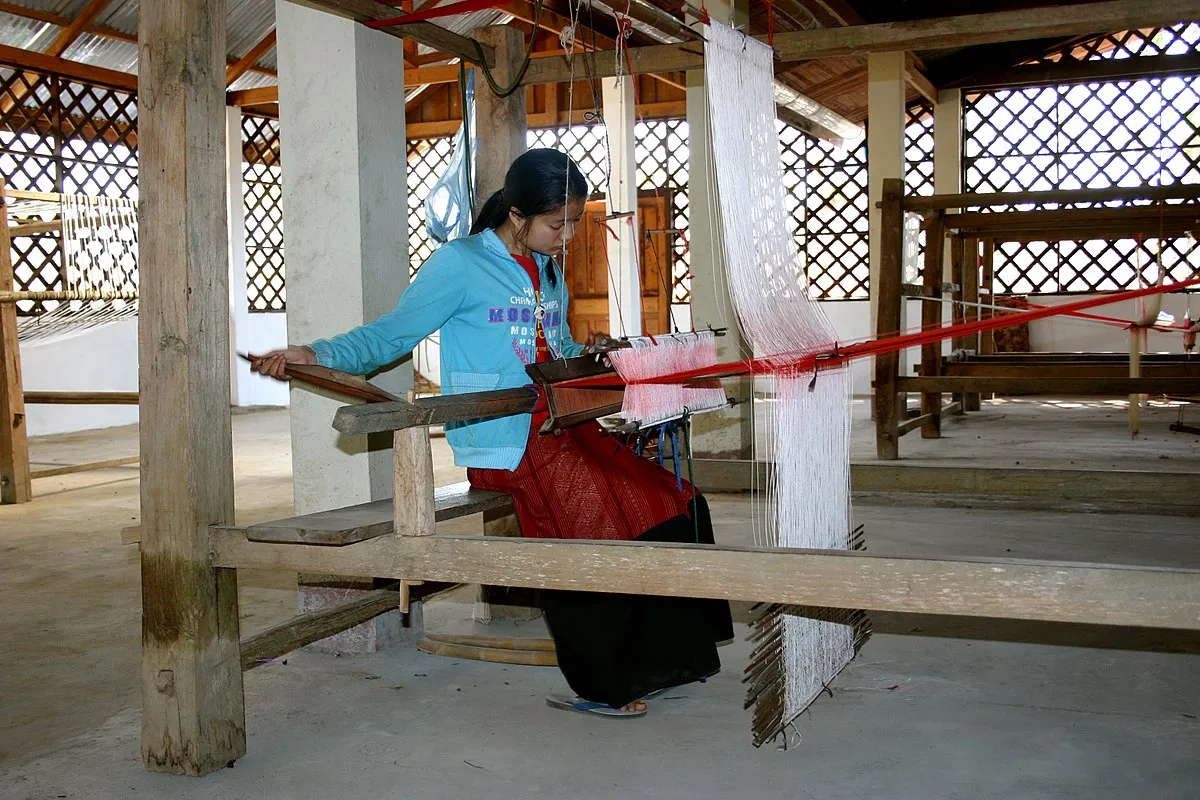
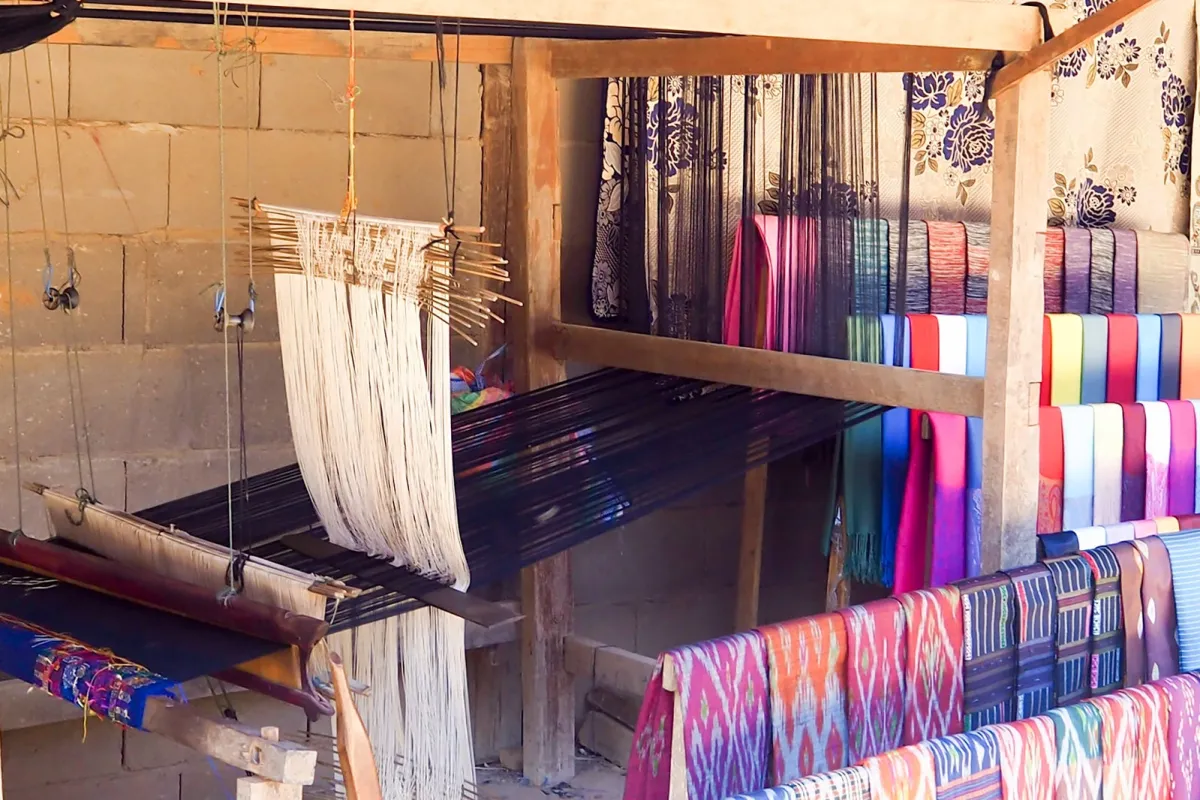
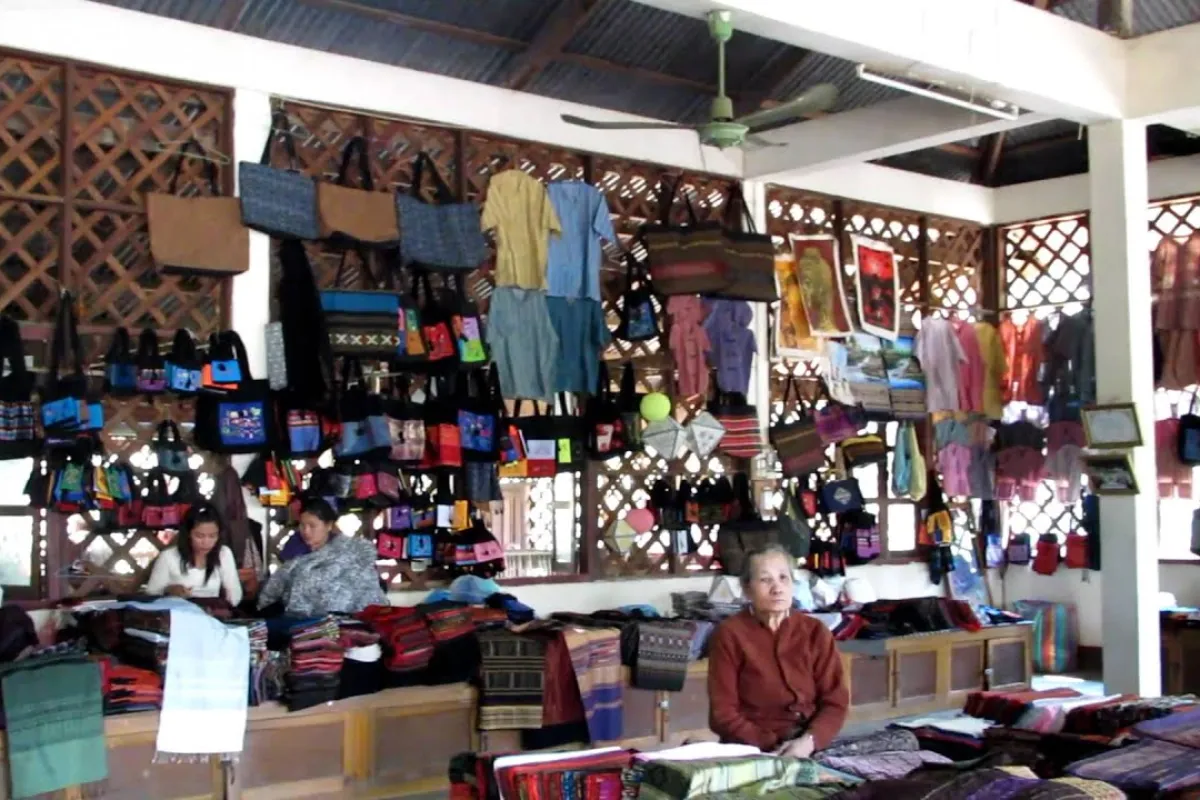
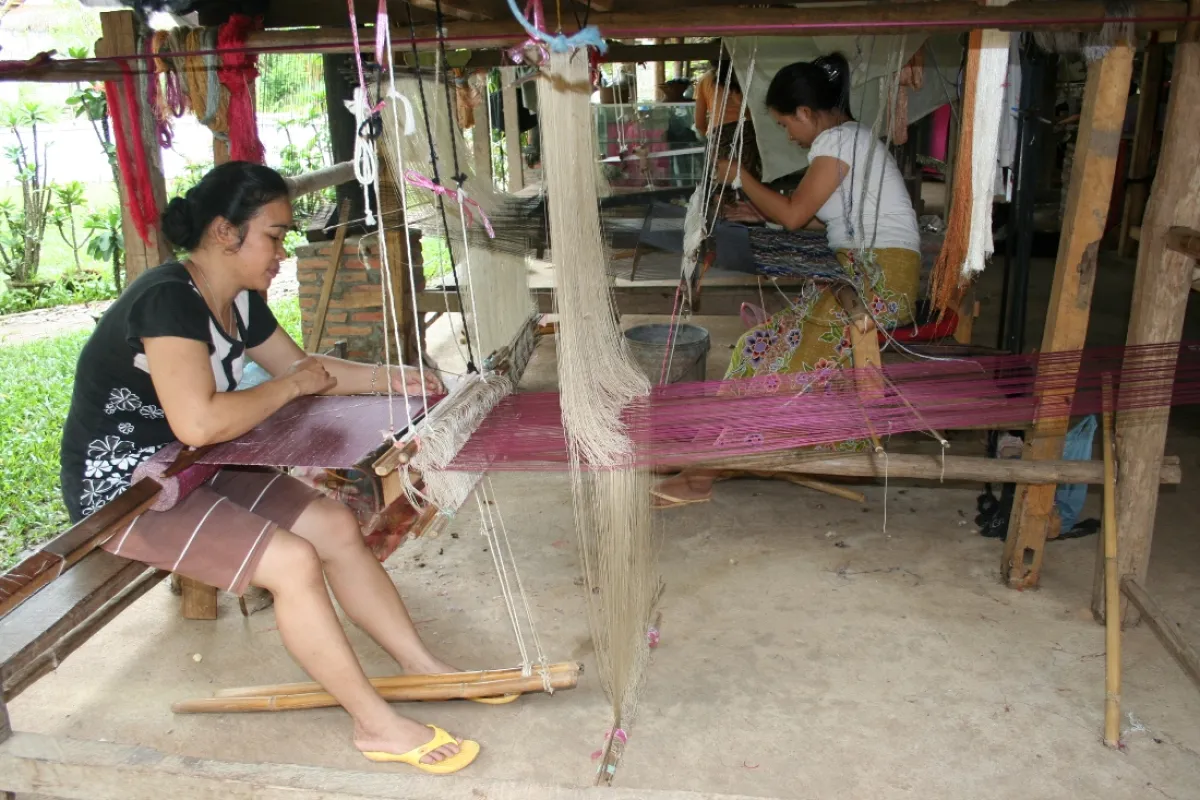
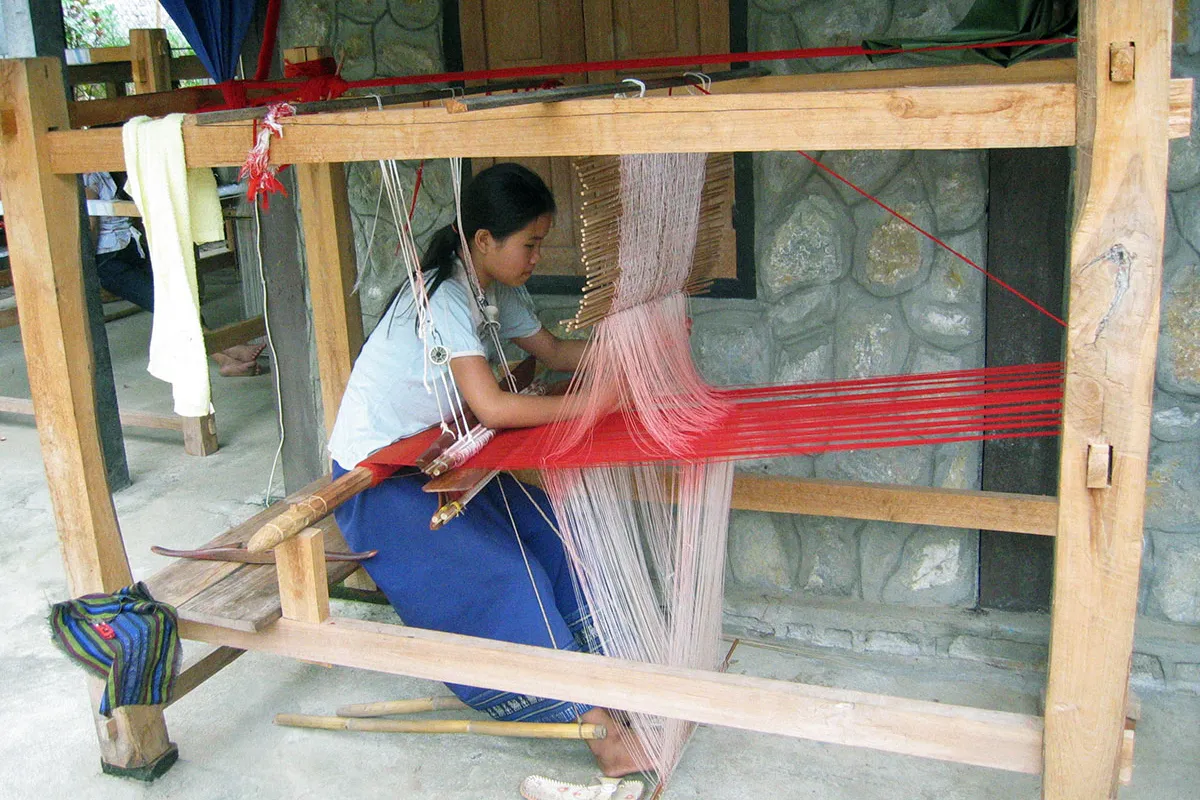
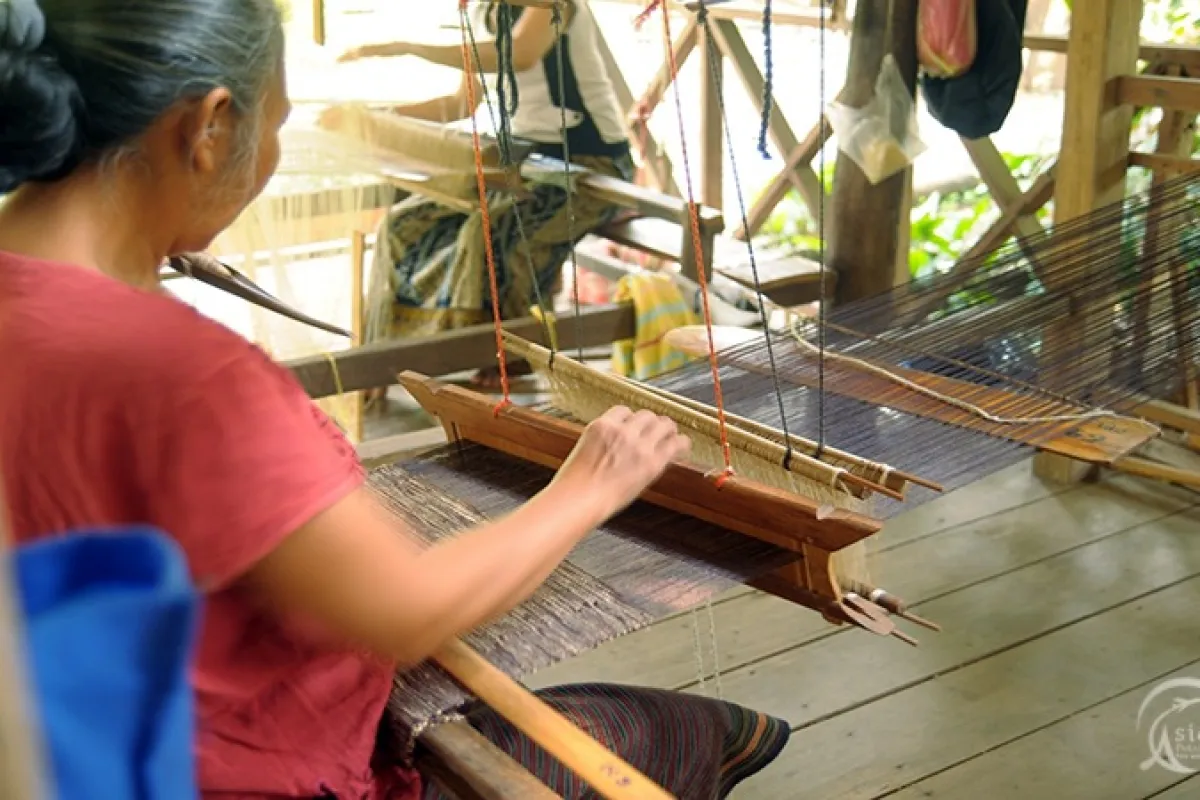
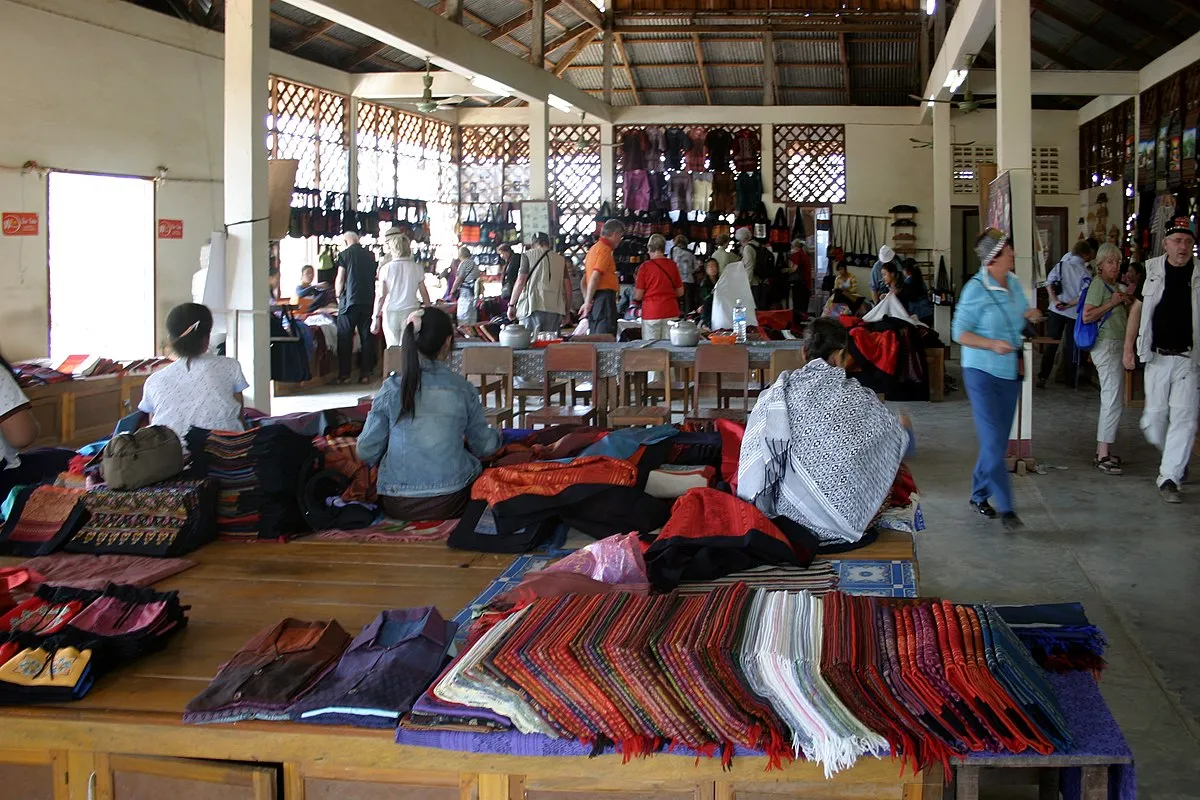
Ban Phanom is an artisan village near Phon Phau Temple in Luang Prabang. The villagers practise traditional textile making to provide goods for sale at Luang Prabang’s markets. The woven products are made with cotton and silk materials, together with intertwined threads to produce a shimmering effect.
Some of the families work from their own workshops, with the entire village operating as a co-operative supplying to manufacturers in town. Prices are open to negotiation and very affordable, though you can still bargain for a lower deal. The area around Ban Phanom Village makes for a good place for cycling and visiting ancient temples.
Ban Phanom Village highlights
Ban Phanom is similar to the villages of Luang Namtha and Sam Neua, as you can observe the (mostly female) artisans working on their looms, dyeing and then weaving the textiles with intricate patterns. Ban Phanom was the village of choice for royal textiles, with each reigning monarch continuing to use village weavers as their preferred suppliers.
The village itself is rich in history and offers a fantastic insight into an ancient art that’s still very much alive today. Many tourists visit the village year-round, so it can get quite busy, especially when tour buses arrive in the morning (usually 9am), so avoid these times if you prefer exploring the village without bumping into tourists.
---
Hoi Khua Waterfall | Green Jungle Park
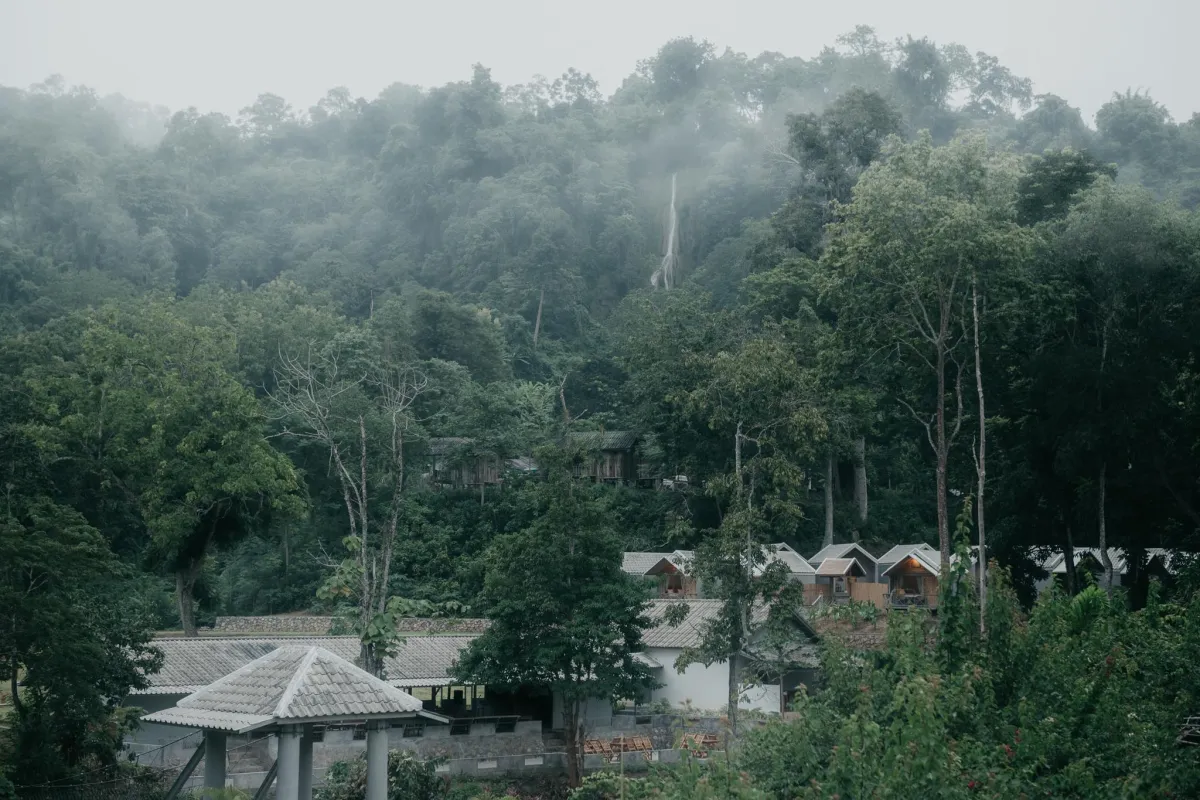
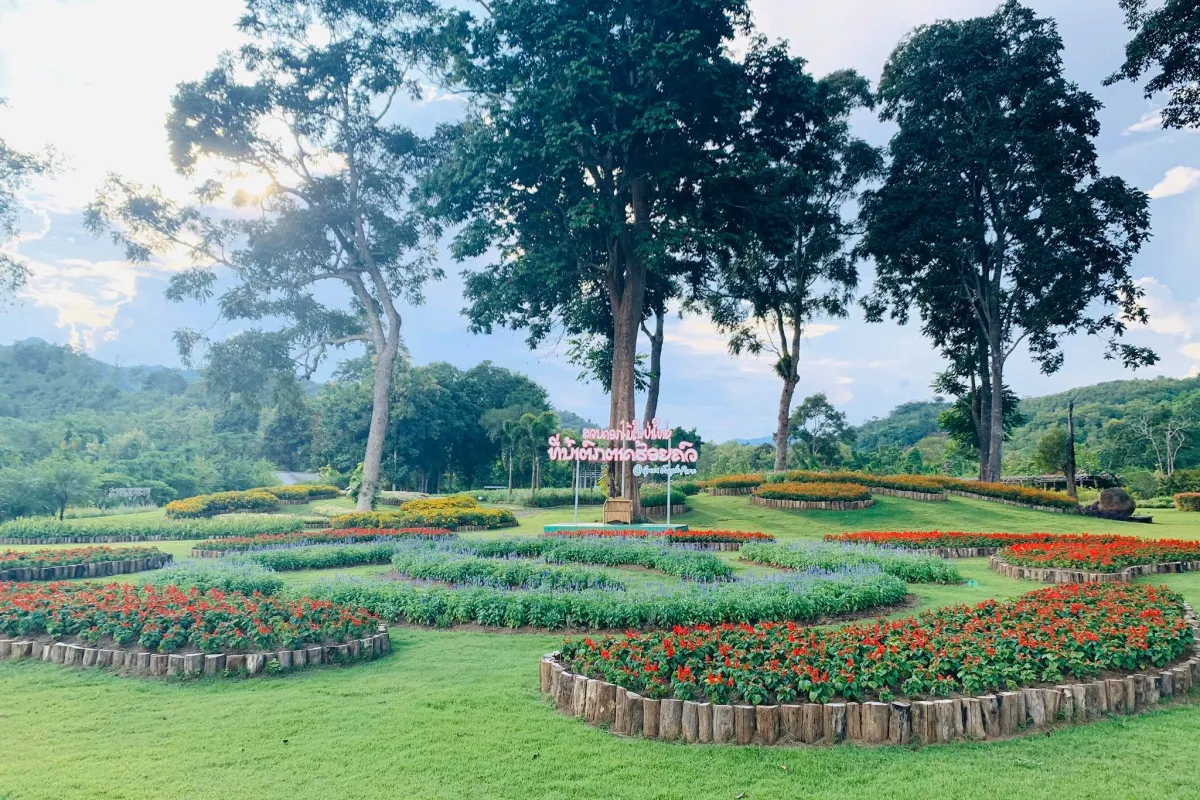
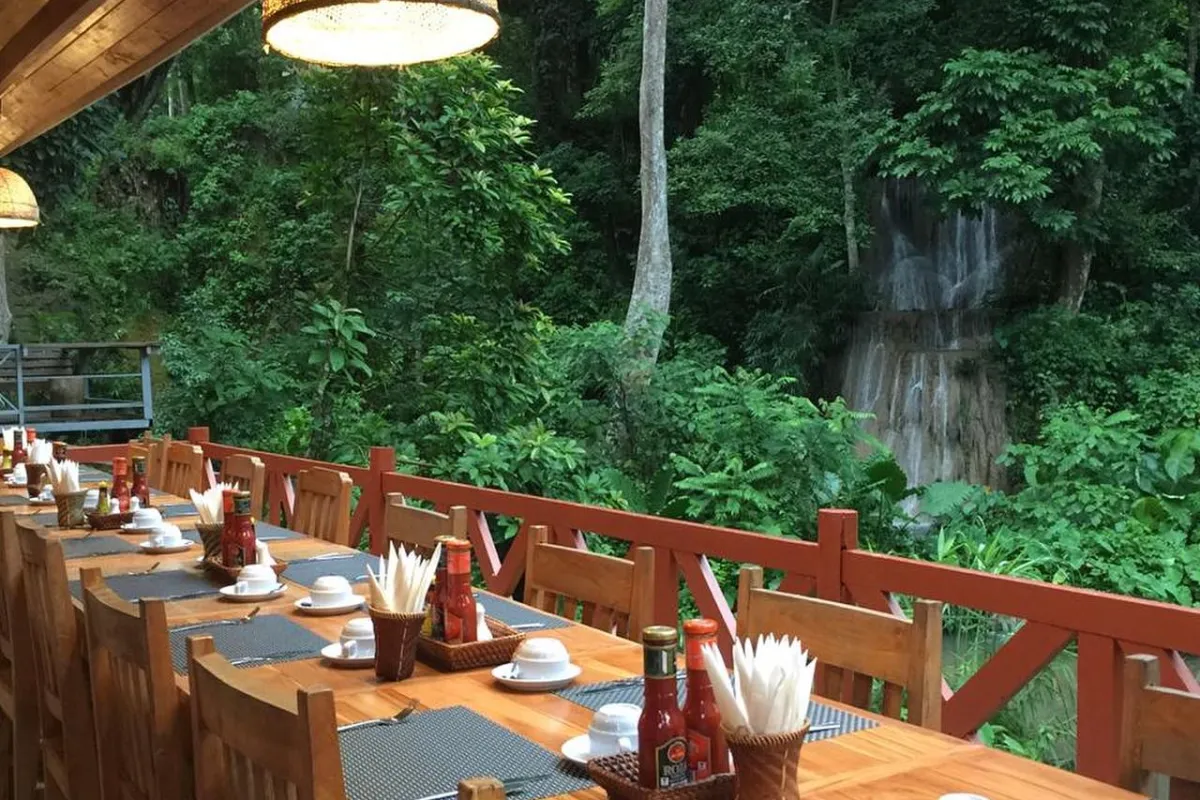
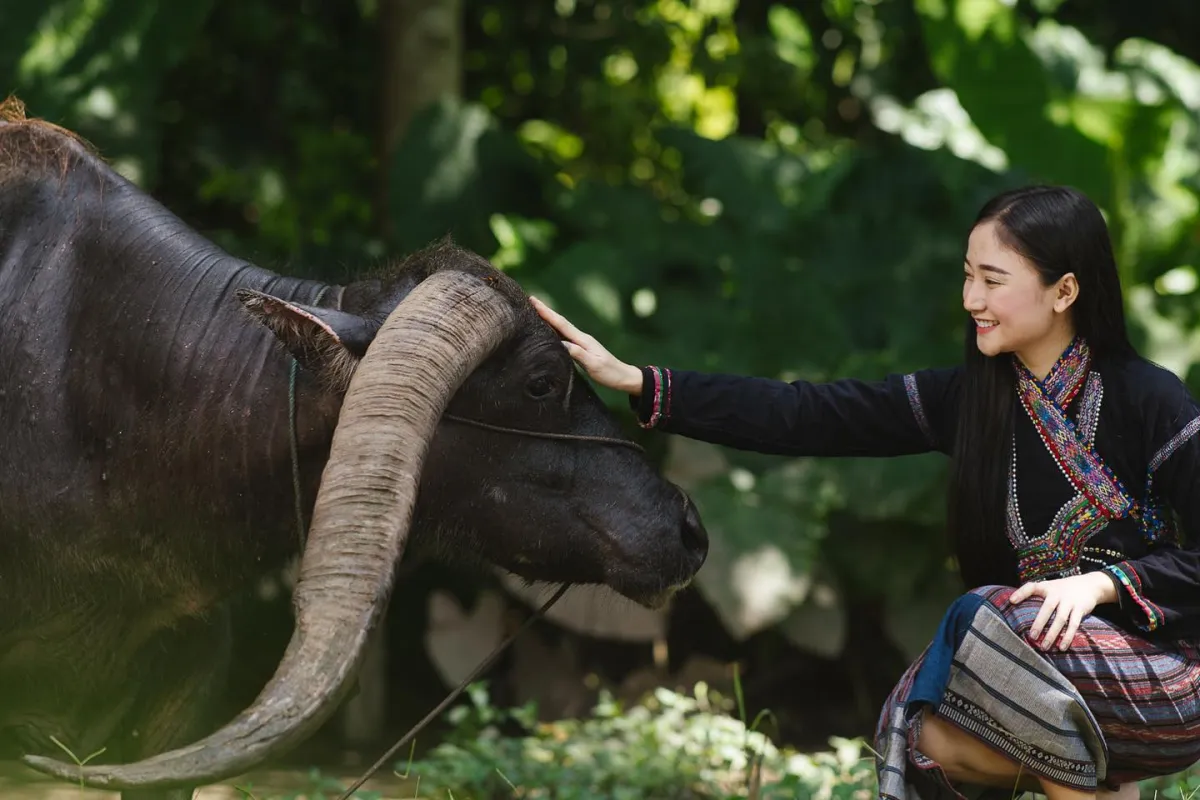
Luang Prabang is renowned for waterfalls like Kuang Si and Tad Sae, but over in Chomphet you’ll find a waterfall that is just as impressive but without the hoards of tourists. Hoi Khua Waterfall is 100 metres high and during the rainy season it is a truly awesome spectacle as it gushes down the cliff face and into the jungle below. Depending on the time of year, this waterfall is a great place to cool down on a hot day – with many safe pools to swim in. Lao Green has created a lovely picnic area next to the falls with small open-air huts where you can sit with your friends and enjoy the serenity. A short walk away you’ll find a beautiful flower park.
There is a local legend about this waterfall. A long time ago soldiers came to take over a village near Hoi Khua Waterfall. Fearing the soldiers, the local people went to hide inside the cave behind the flowing water. For many days they sought shelter inside the hollow but soon the soldiers started to hear voices in the cave so they got a very large boulder and blocked the entrance. According to the tale, 100 families died inside the cave and the location of their bodies and the entrance remains a mystery to this day.
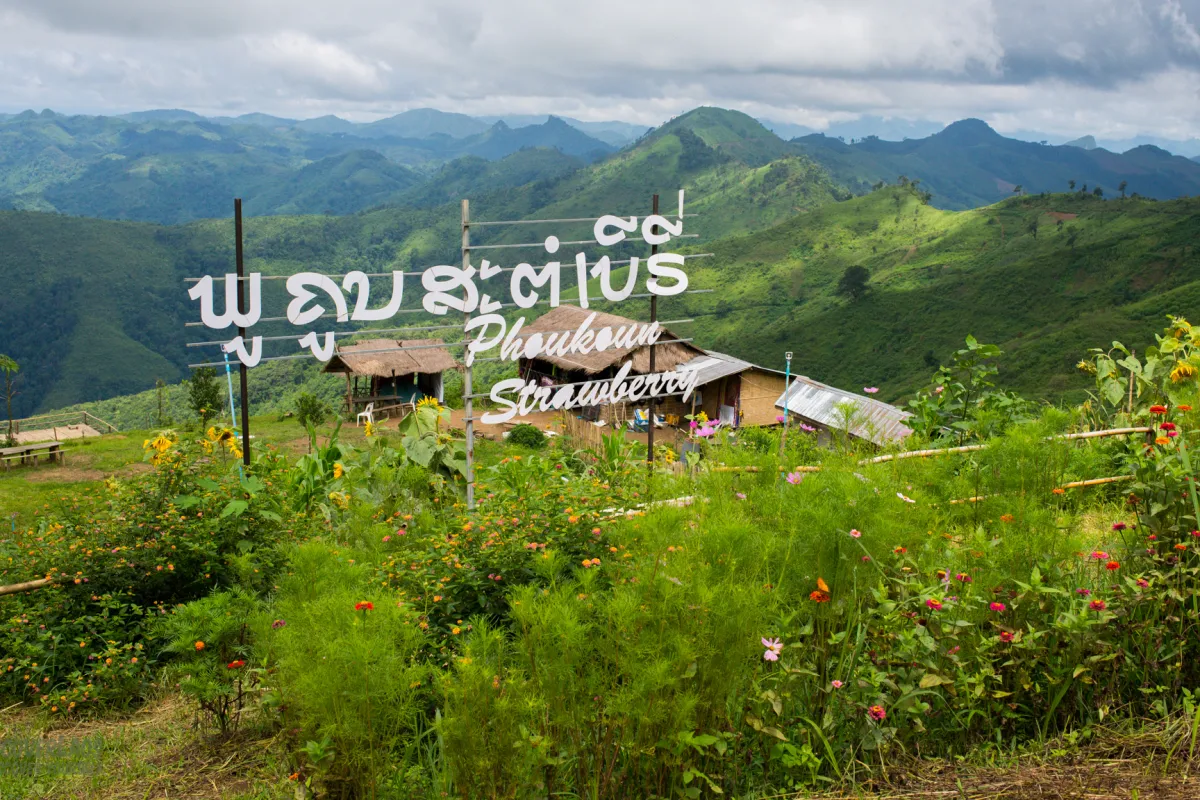

Phou Khoun Strawberry farm
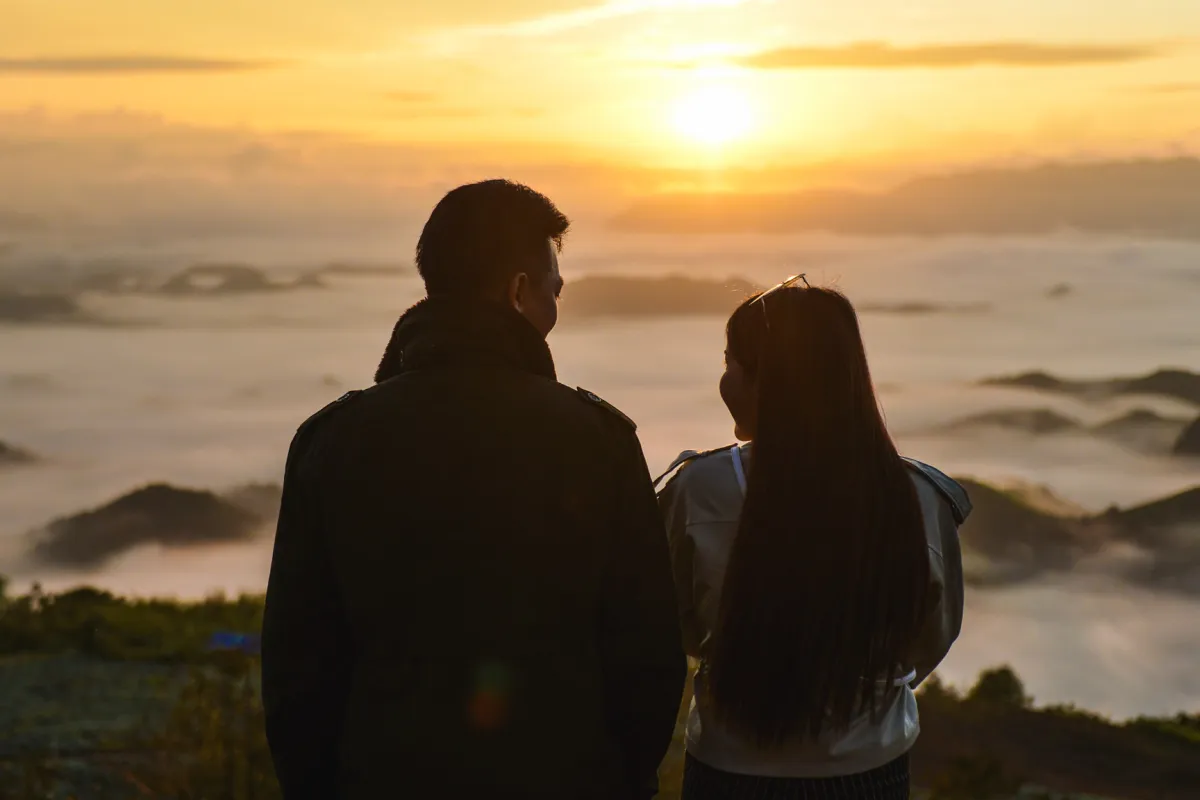
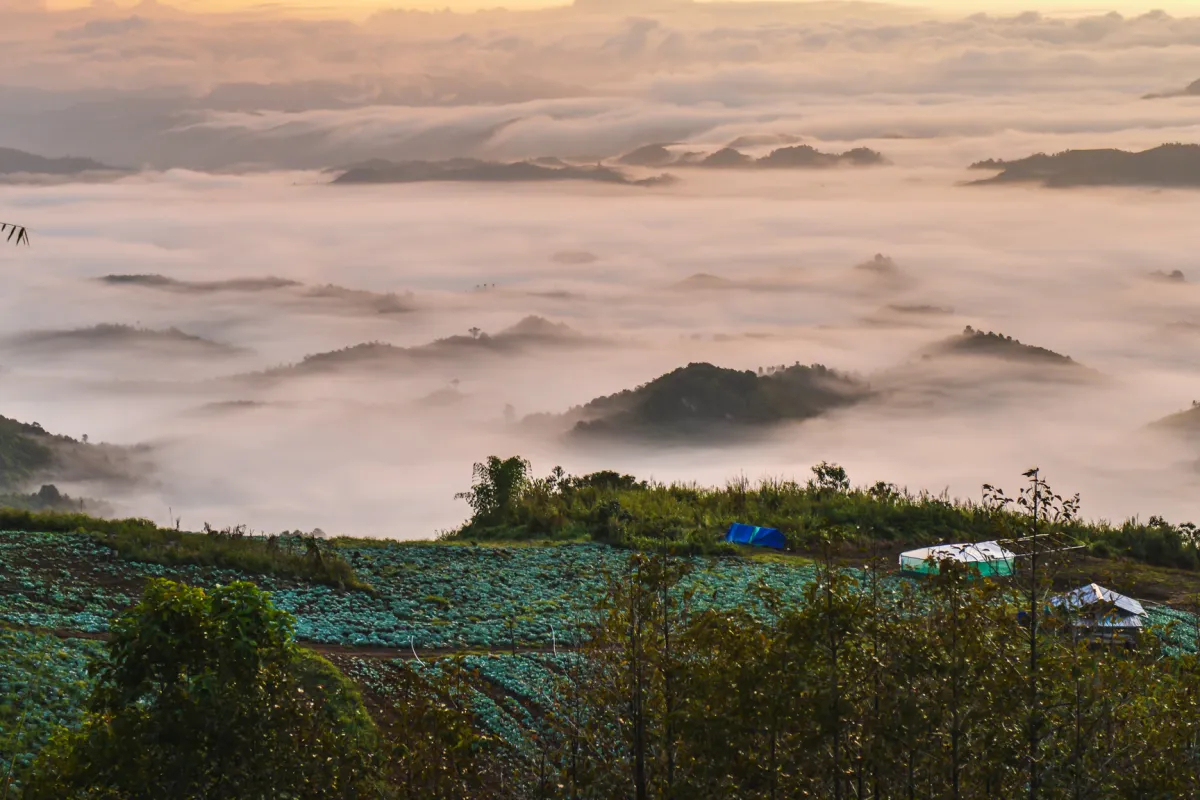
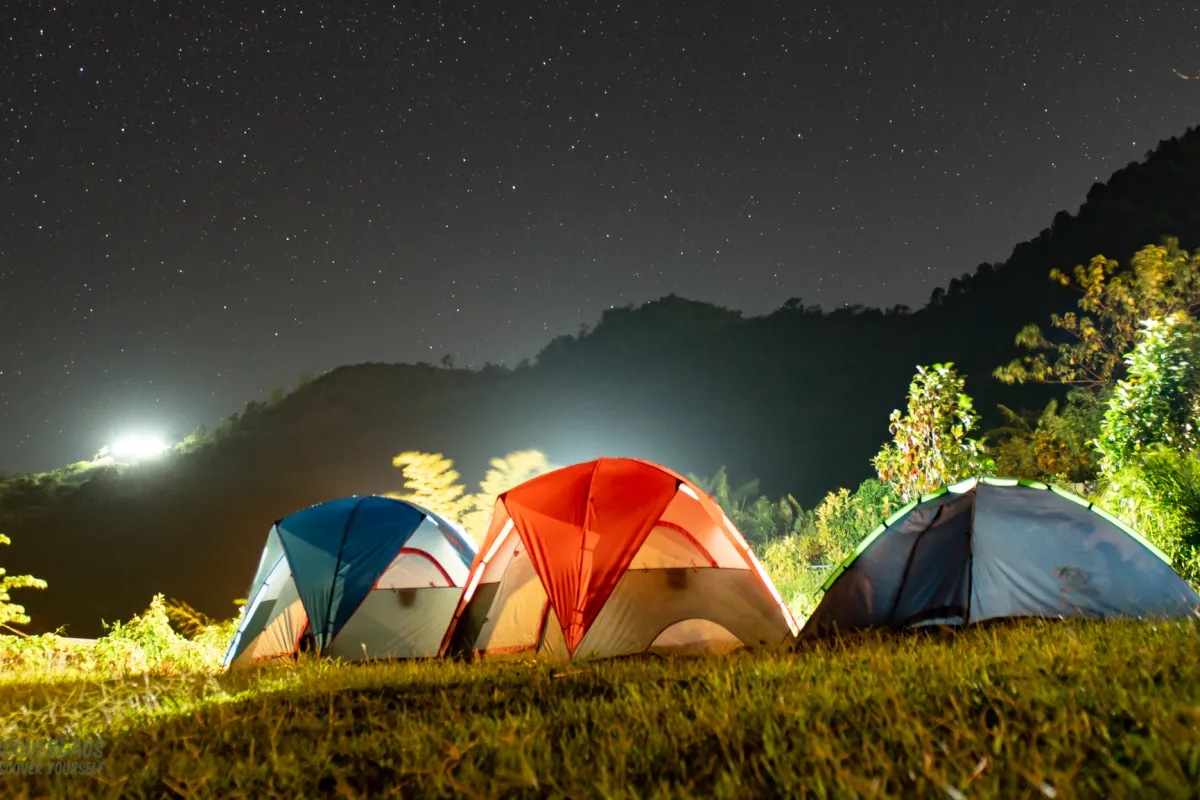
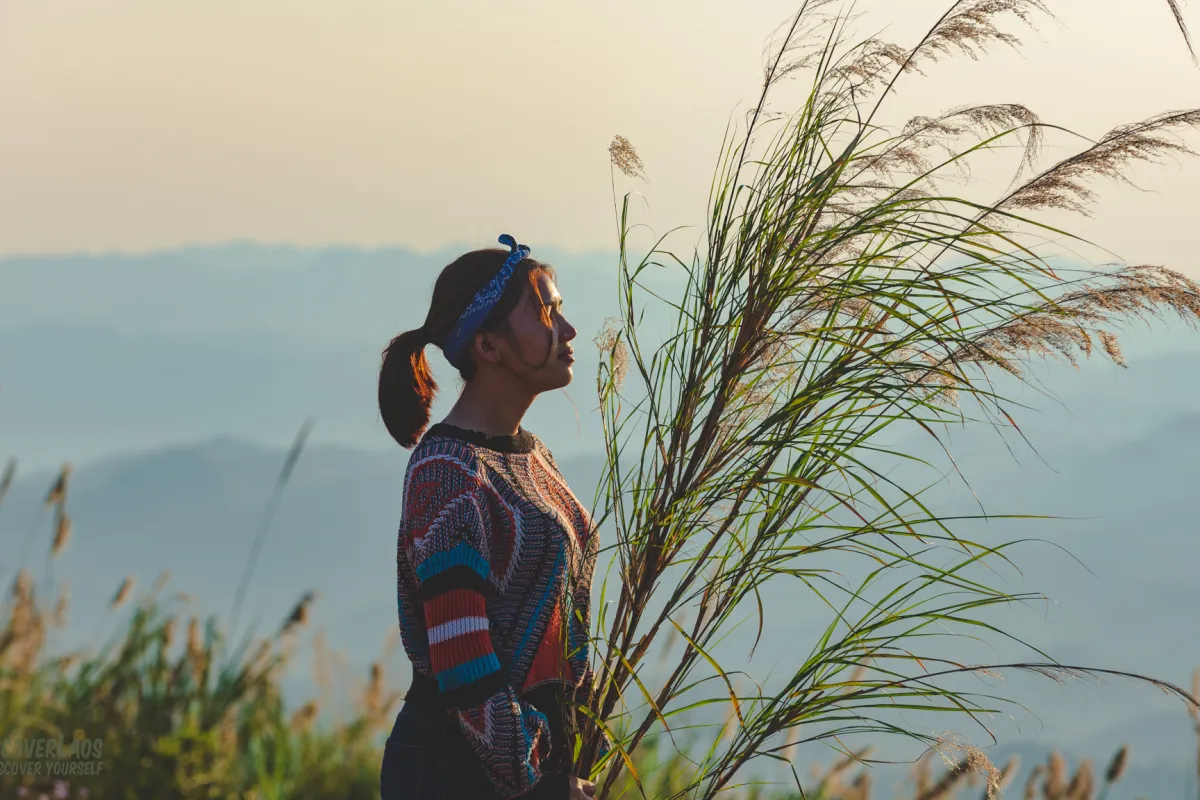
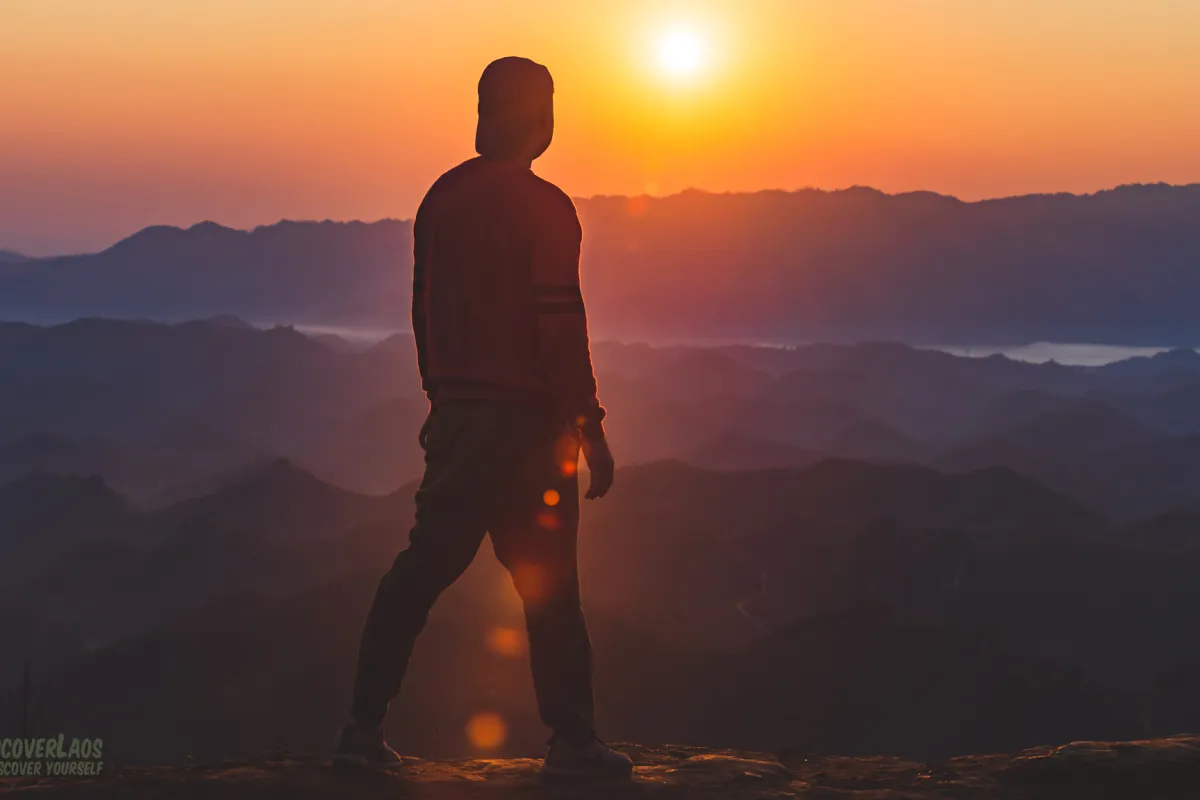
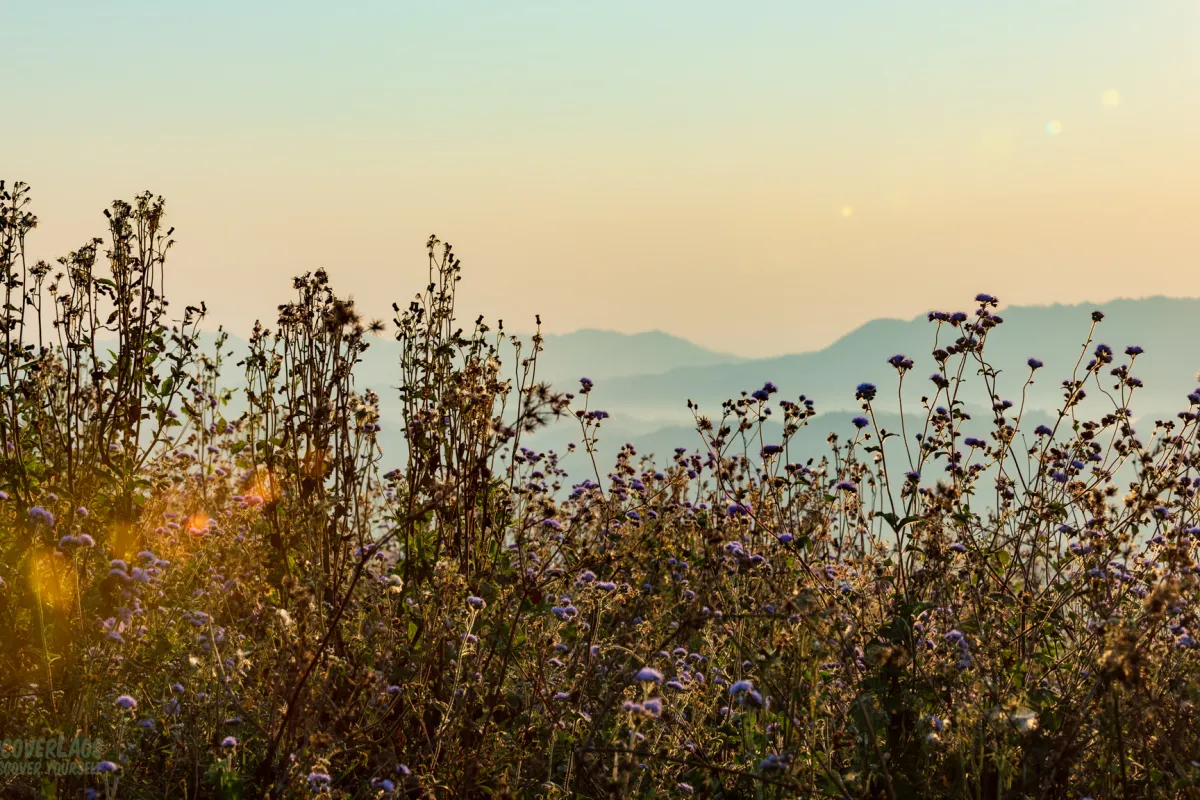
An increasingly popular destination with local and international visitors, Phoukhoun Strawberry Farm is a natural spectacle with a breathtaking view of the mountains. Located on the hillside in Samyaekphoukhoun Village, Luang Prabang Province, Laos, it’s a beautiful and stunning place for people who loves to enjoy the night gazing the stars.
Many people also go there to see the mist rise over the hills and enjoy the tasty strawberries that are grown on the farm. Camping is one of the favourite highlights of the farm to get the true taste of the natural world, especially during the winter season. It is also a fantastic way to learn the community’s way of life, interacting with the owners and locals at the farm.
Check out their Facebook Page here!
Namkhan EcoLodge
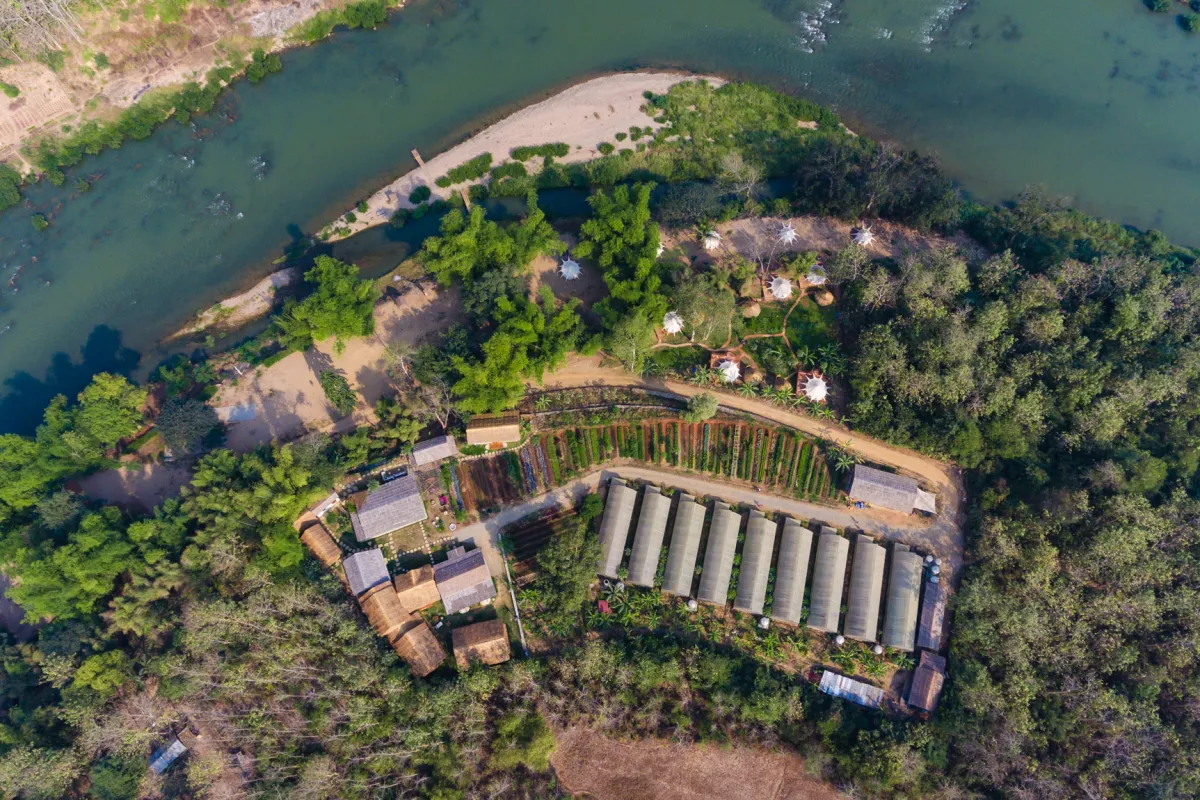
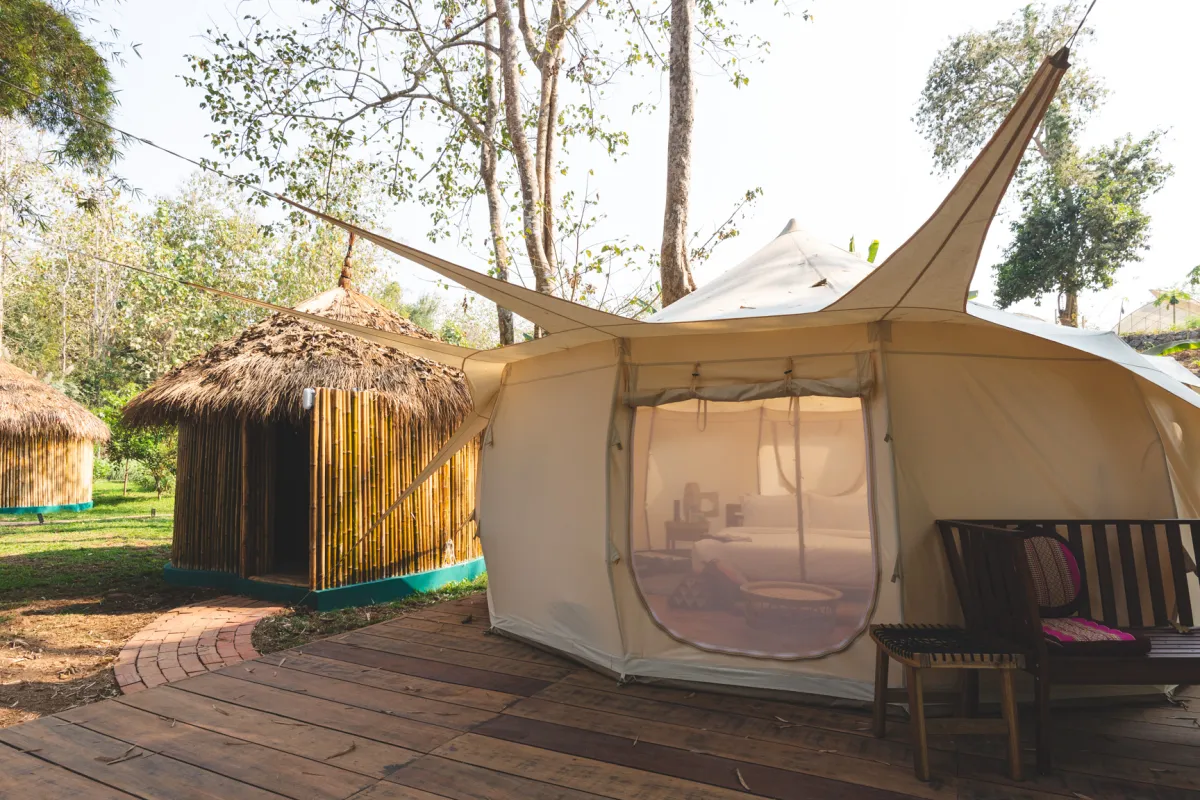
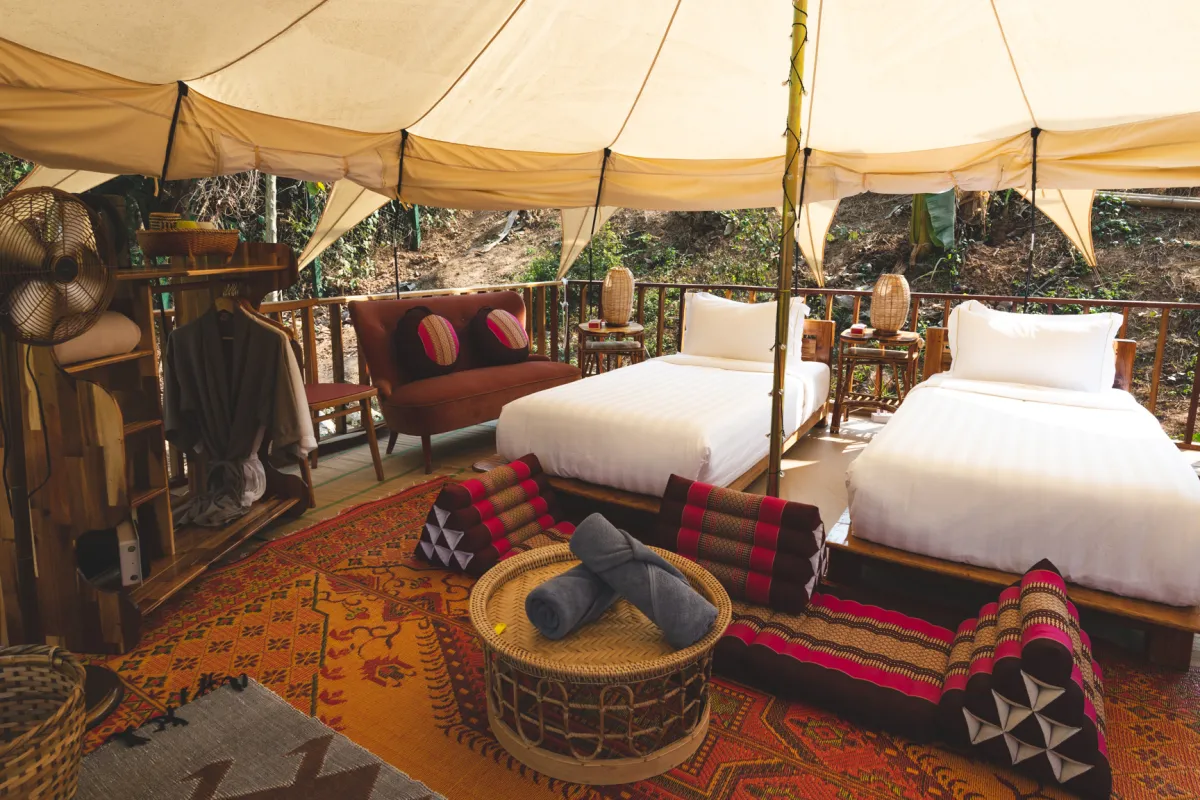
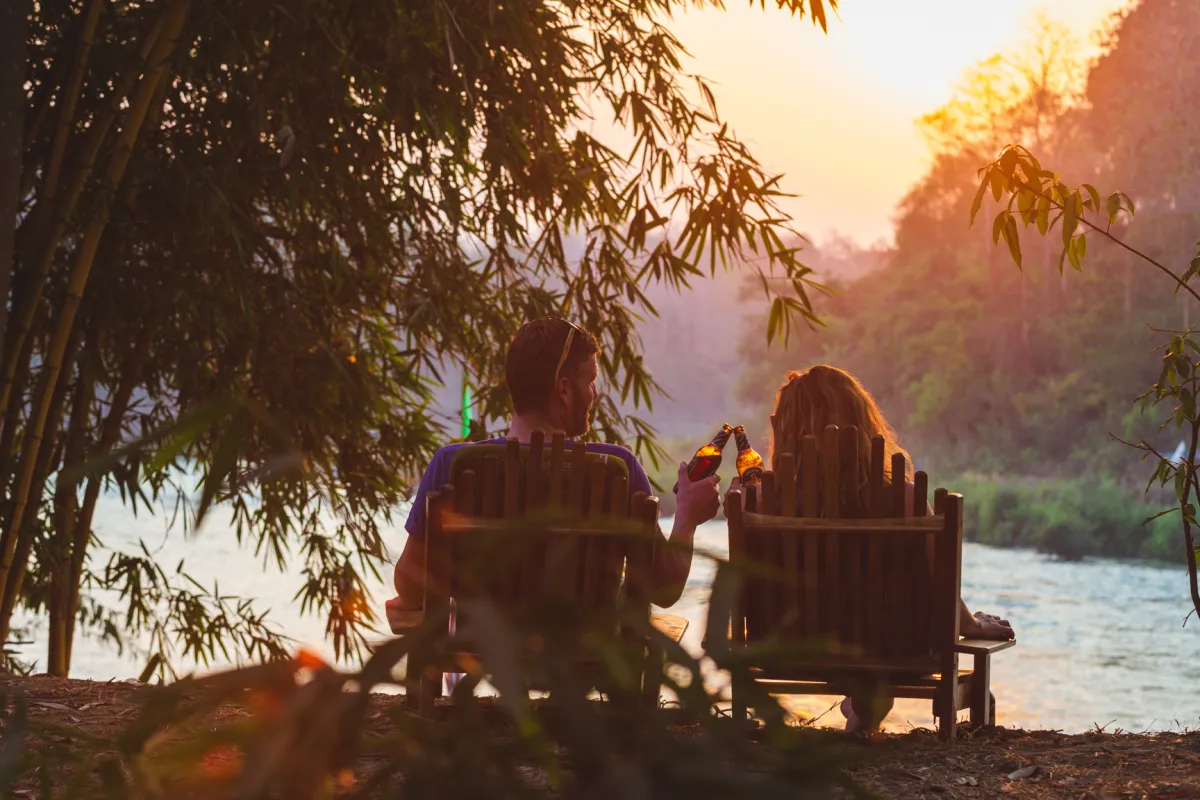
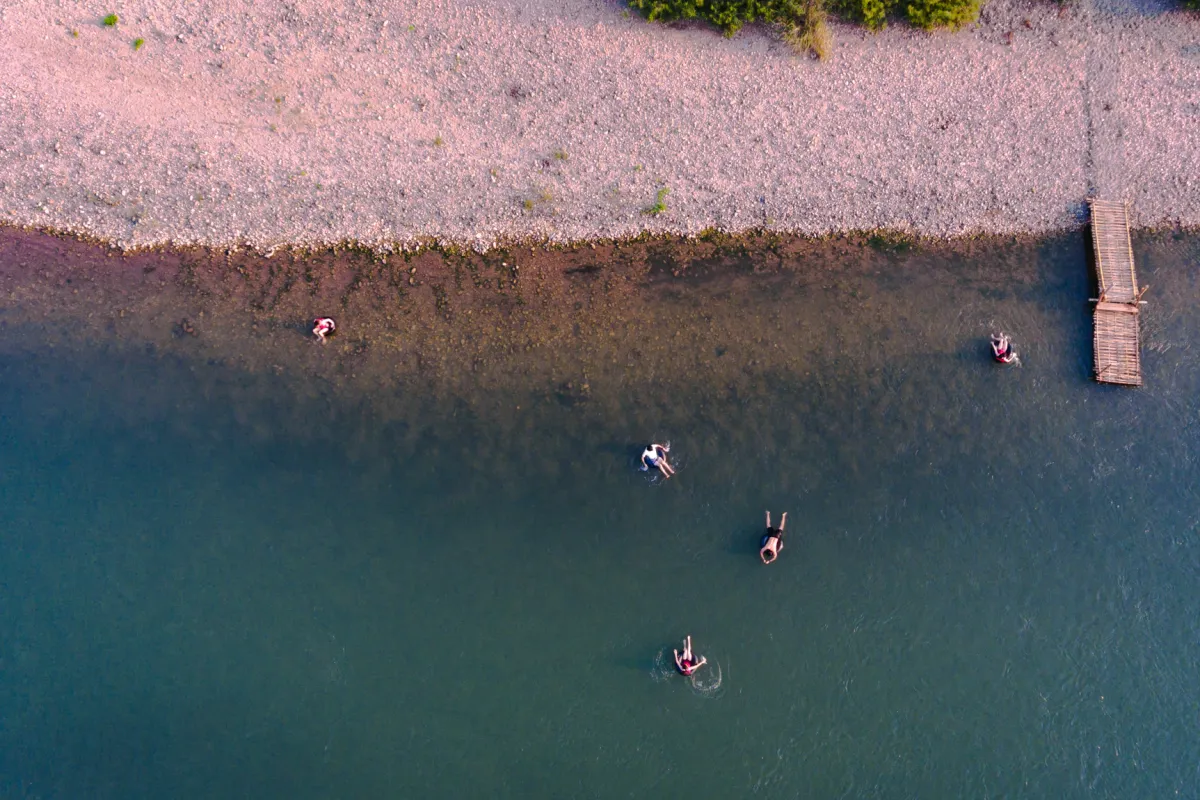
A natural Ecolodge, respectful of its environment and its local community. NamKhan Ecolodge is a green sanctuary along the Namkhan river located in Luang Prabang, Unesco World Heritage city, where travelers can reconnect with nature, discover the Lao traditional culture and immerse themselves in tropical food, forest, eco-farming and enjoy our animals stable as well as our outdoor activities.
Facilities at Namkhan Ecolodge
Facilitates Gallery
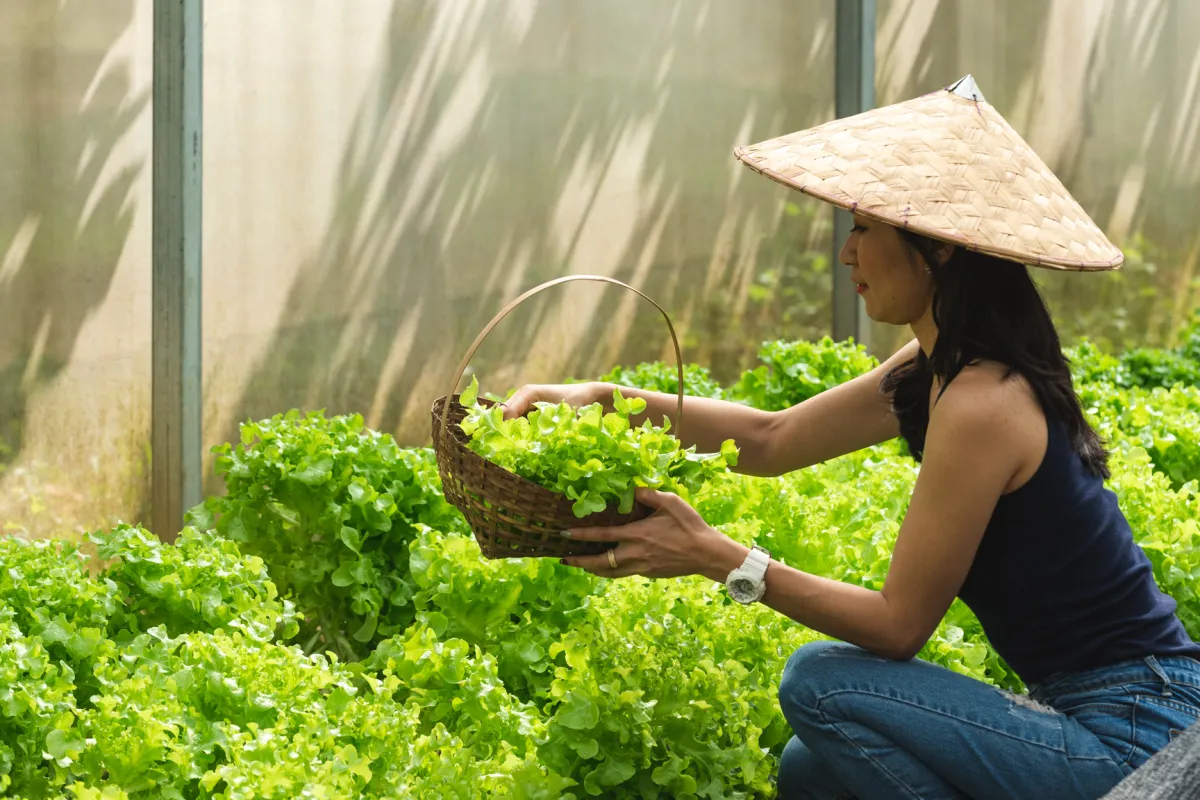
The property is located in front of the NamKhan river with beautiful gardens and magical surroundings to get lost a little and reconnect with nature. Traditional Lao bungalows besides our greenhouses and the fresh vegetables growing in front of your windows make your stay a perfect combination of living close to the Lao farmers' lifestyle but not missing out on your daily amenities and healthy activities for your body and mind.
Yoga & Meditation Center
The yoga and meditation pavilion is located in a tranquil area surrounded by beautiful nature with views of the gardens and river. Perfect atmosphere to practice yoga, Chi-Kung and meditation, to relieves stress, strengthen the body, opening up and gaining flexibility, it is the best way to connect to one’s self. We offer yoga, Chi-Kung or meditation class (practices accessible at all levels). It allows guest to recharge batteries in a natural setting ideally dedicated to their well-being. Discover millenary techniques inspired by yoga, Zen and Buddhism for the regeneration of the mind as well of the regeneration of the body.
The Farm Table
Local homemade fresh food and beverages. Just like your table at home, we strive to provide organic and healthy food we can be proud of. We offer health-conscious meals both Lao dishes as well as western food all day long. Most of our products are directly picked up from our eco-farm. NamKhan Restaurant: Situated on the top of the hill at NamKhan Ecolodge, our restaurant proposes both Lao dishes as well as western food for lunch and dinner.
The Library Café
Located at the entrance of the Namkhan Project with a panoramic view of the Namkhan river; it is the ideal place for an afternoon cocktail and snack. Homemade products directly picked up from our farm will be served.
Opening hours: from 9 am to 17:00 pm.
Eco-Farm
The NamKhan Eco Farm is an operational organic farm. As a working farm, we are constantly changing our activities to match the production of seasonal produce. The seasons dictate our produce and our activities on the farm. Our work involves research into organic best practices as well as preserving traditional Lao permaculture practices. The farm is situated on a 7 hectares property that fronts the NamKhan River, Luang Prabang City, Laos. The organic farm produces a large variety of vegetables, herbs, fruits, and seeds that are sold to visitors.
Stable & Equestrian Center
Dynamic mini farm and stables with a pedagogical panel on the basic equine care. Possibility to feed some animals, buckets filled with carrots for rabbits, corn seeds for goats and chickens, hard bread for ponies. Discover Lao countryside differently on horseback and enjoy discovering the traditional Hmong Horses at our stables. The pony rides are secure, supervised by a qualified instructor. Wearing a safety helmet is mandatory. Different rides are available upon request as well as a package with accommodation.
Massage Area
Perfectly situated nearby our swimming pool and waterfall, our massage area is a tranquil open space where guests can refresh their mind and body with our therapeutic treatments. Our experienced therapists will take the guest on a journey of blissful relaxation. Several treatments are available upon request.
Opening hours: From 1:00 pm to 9:00 pm.
Swimming Pool
Our outdoor swimming pool is a relaxing waterfall pool with saltwater. Hidden in the middle of a tropical garden. Enjoy a moment of refreshment in our natural swimming pool. No guards at the swimming pool, children must be under parents’ responsibility. Entrance fee 3.00$USD per person, Free of charge for our hotel guest. Sun-bed and towel included.
Opening hours: from 9:00a.m to 20:00pm.
Outdoor Playground Areas
Outdoor activities to satisfy the desire for adventure. Our playgrounds lie right beside the banks of the NamKhan River and is a green oasis. It is where we welcome our visitors and it is your entry point to the NamKhan Project. Namkhan playgrounds mean creativity, curiosity, charm, friendliness, cheer, and social life. A perfect word to describe this space. Playgrounds are our play and relax area of the project. If you have a few hours in the day or a whole day where you just want to take a break from travel and sightseeing. It is the perfect location for everyone to come and enjoy.
BBQ Huts
Our huts are located just by the Khan river come and enjoy a peaceful day surrounded by nature. A perfect day getaway from Luang Prabang city. A Lao barbecue is a taste sensation. Locally produced meat with great dipping sauces, spicy or herb-infused sausages, and fresh vegetables and fruits all cooked at our restaurant and served fresh. If you bring the family, we have the perfect mix of safe but fun places for younger children to explore which leaves you free to relax.
Trails/Outdoor Gym
For hiking and jogger lovers, nature trails and jogging trails have been marked out to allow you to hike around NamKhan Project. These paths are accessible to everyone, ask for the maps at the NamKhan Project reception desk.
Island and Gardens.
A tiny island and garden surrounded by the Namkhan River. You can stroll around and enjoy the breathtaking scenery!
SEE TOURS IN NAMKHAN ECOLODGE!
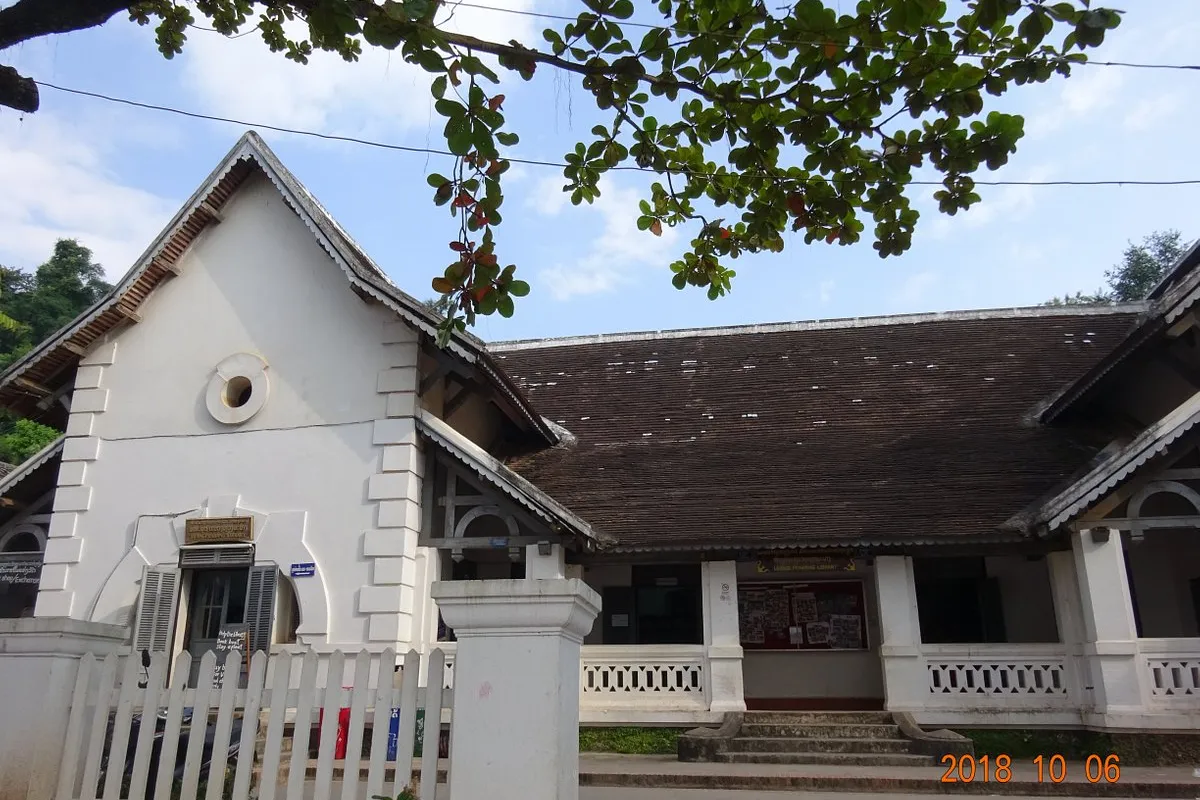
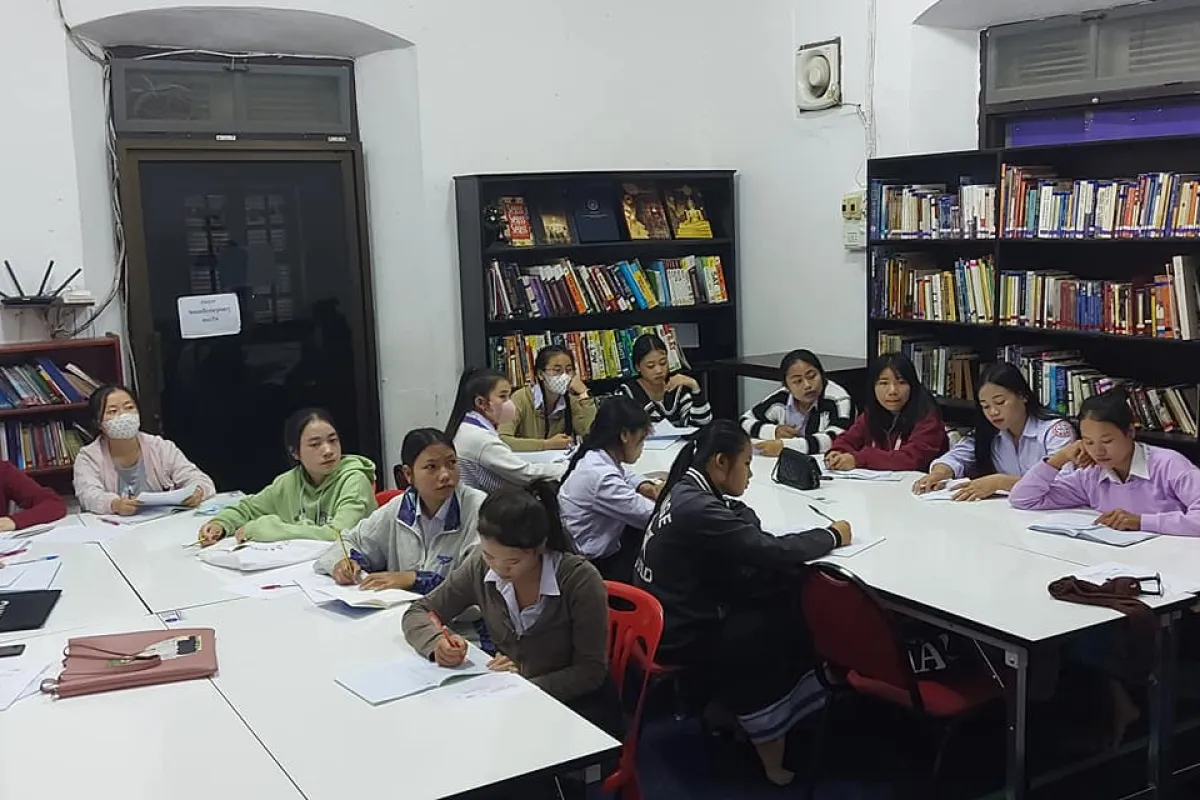
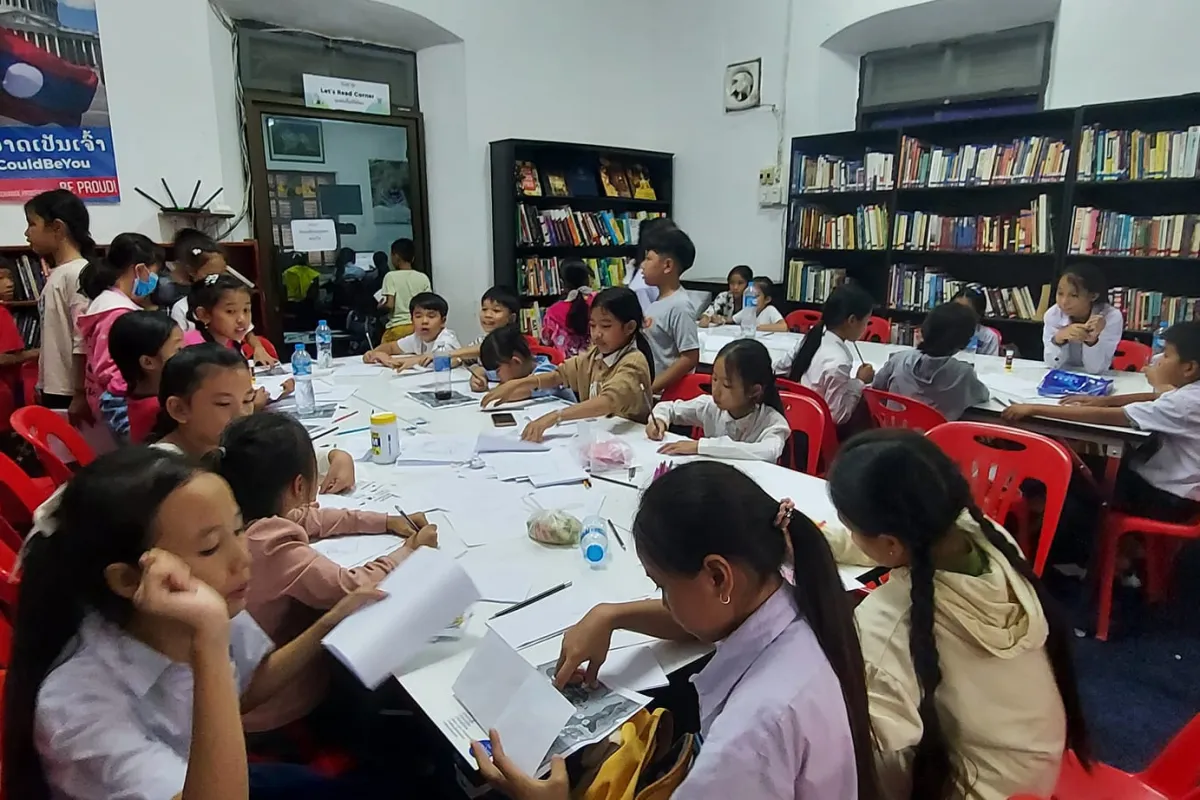
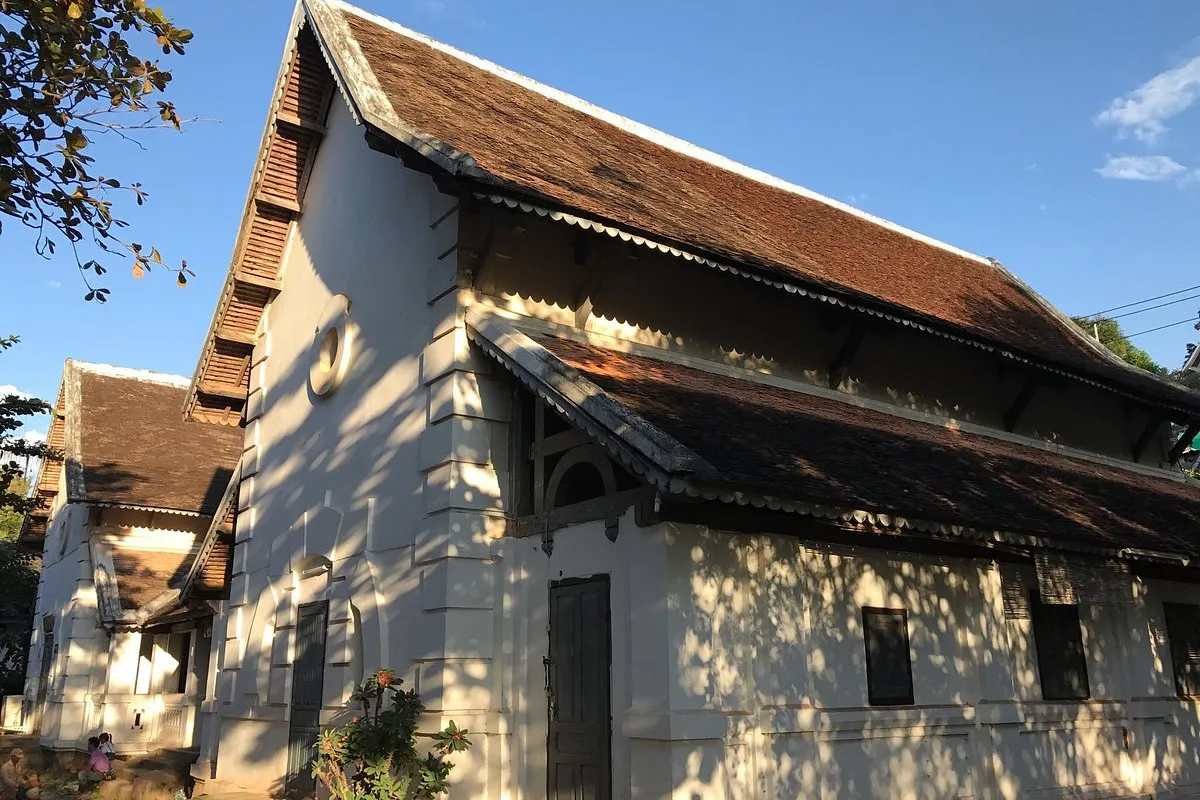
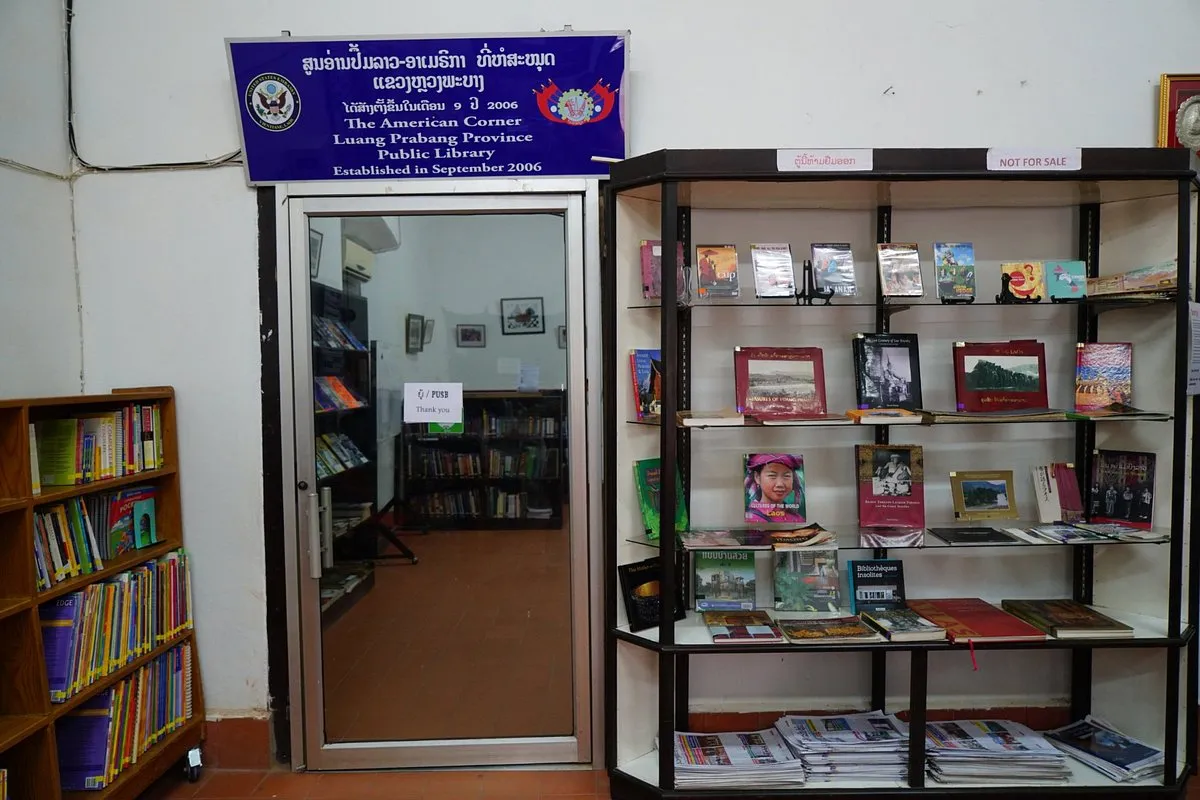
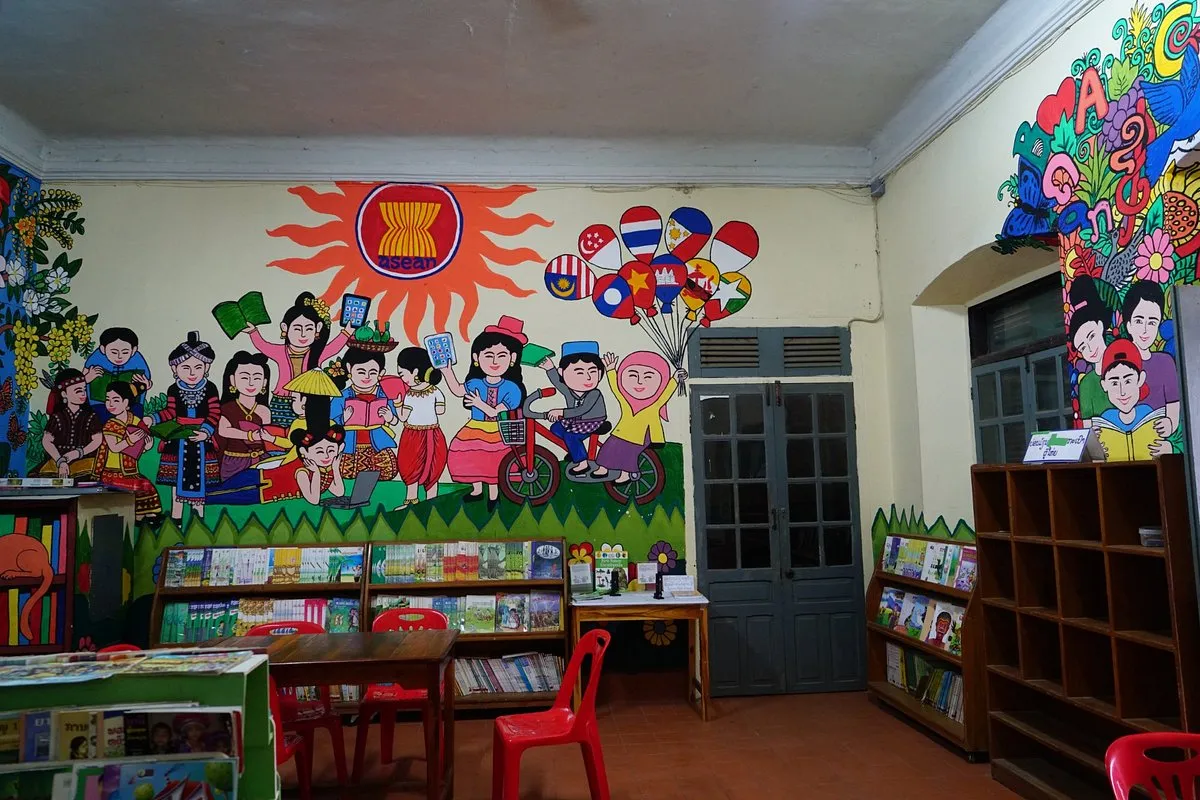
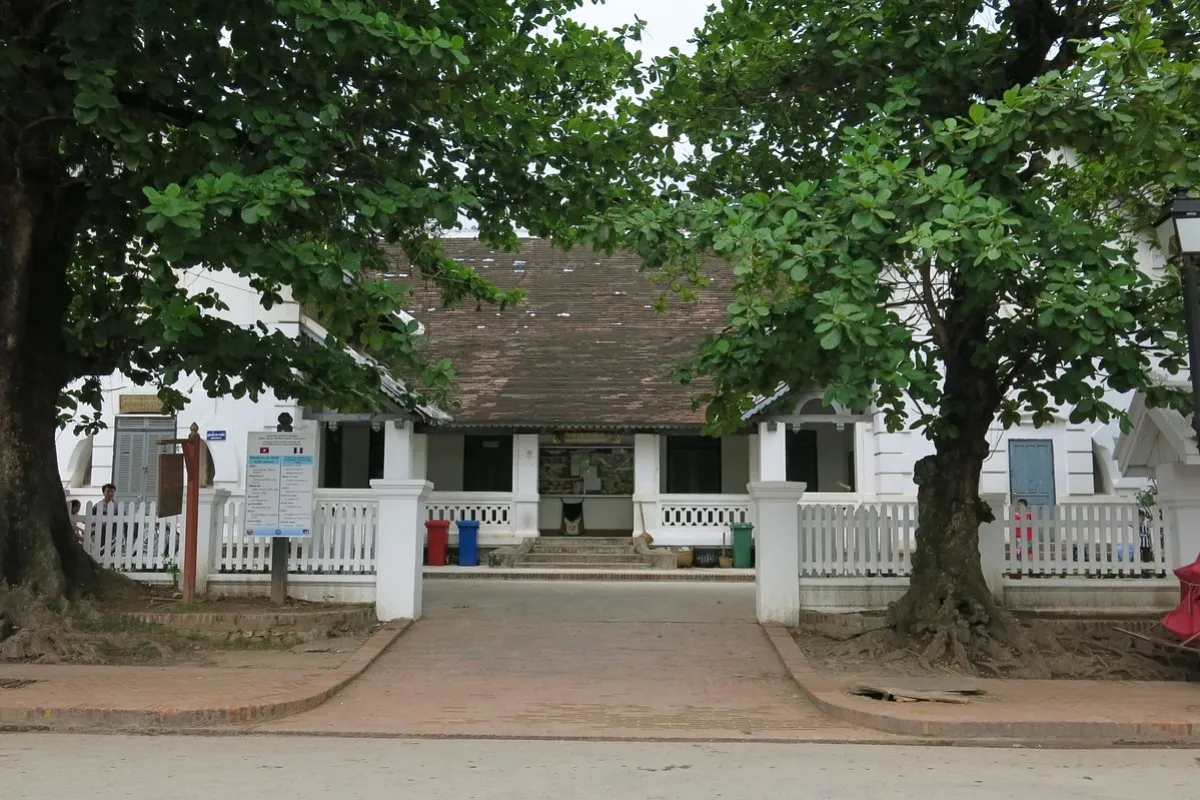
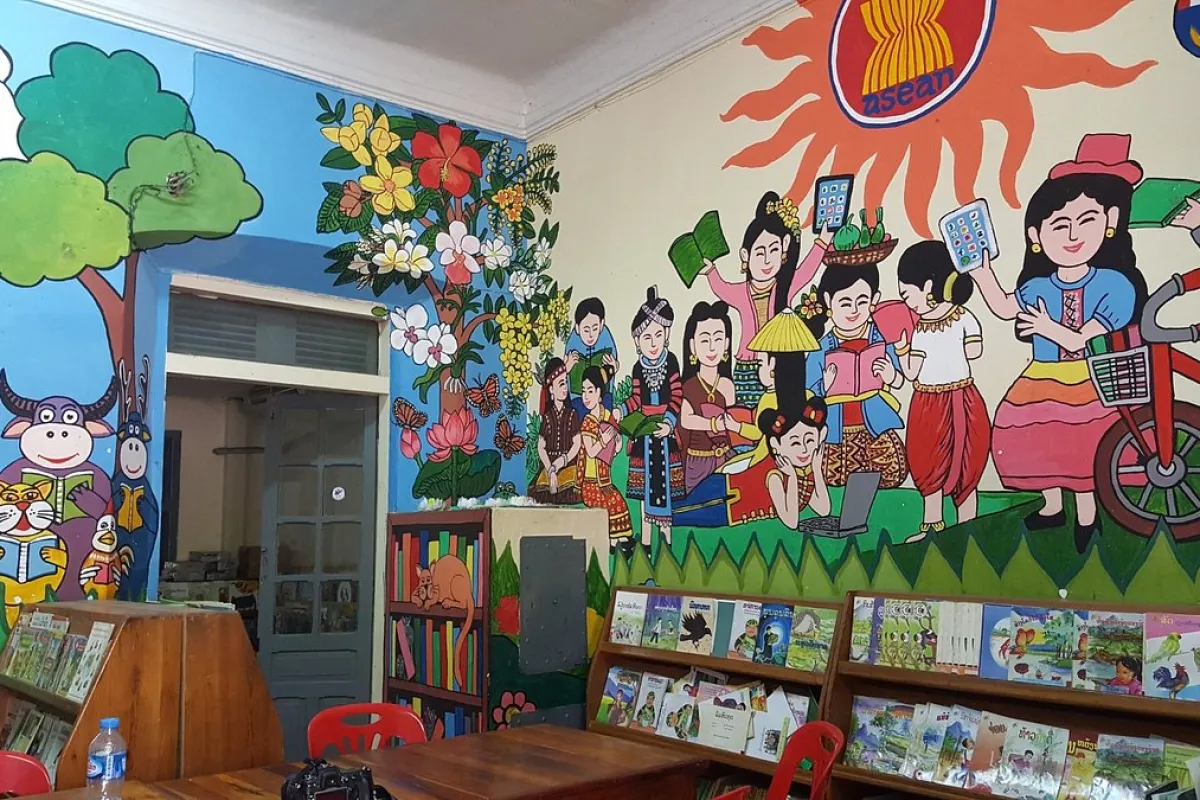
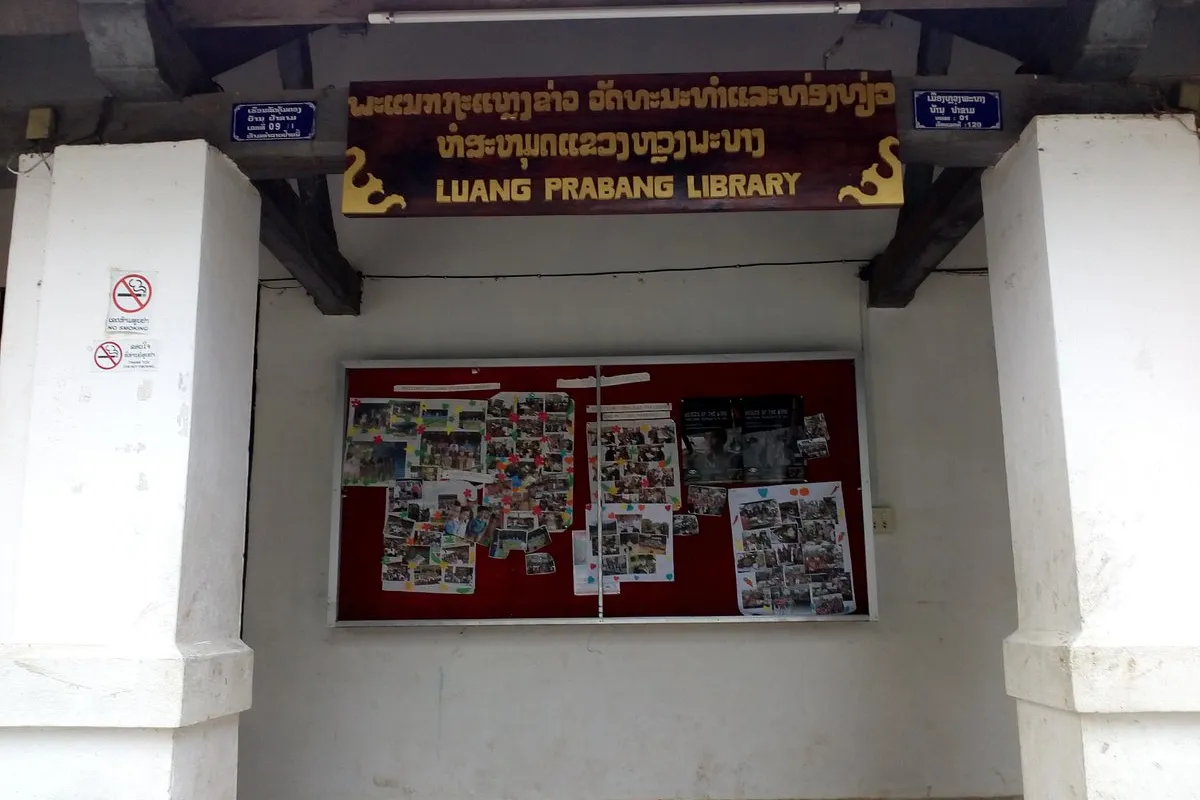
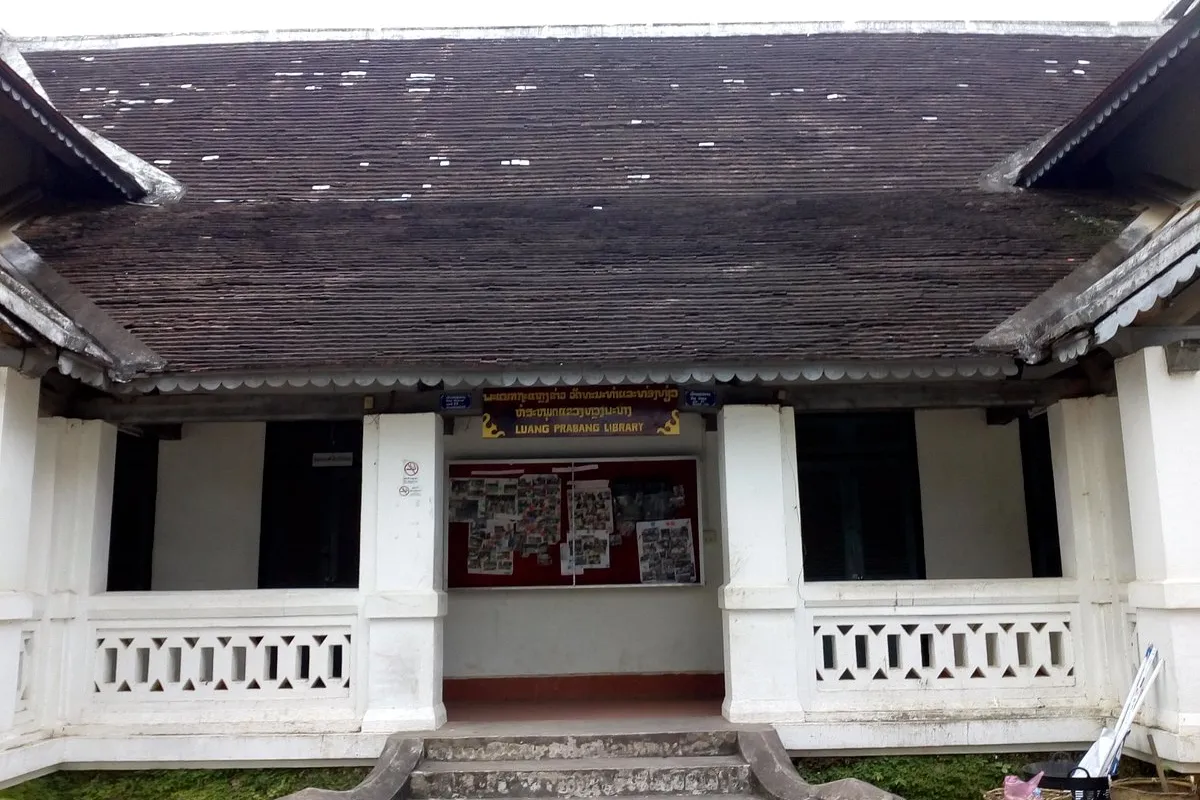
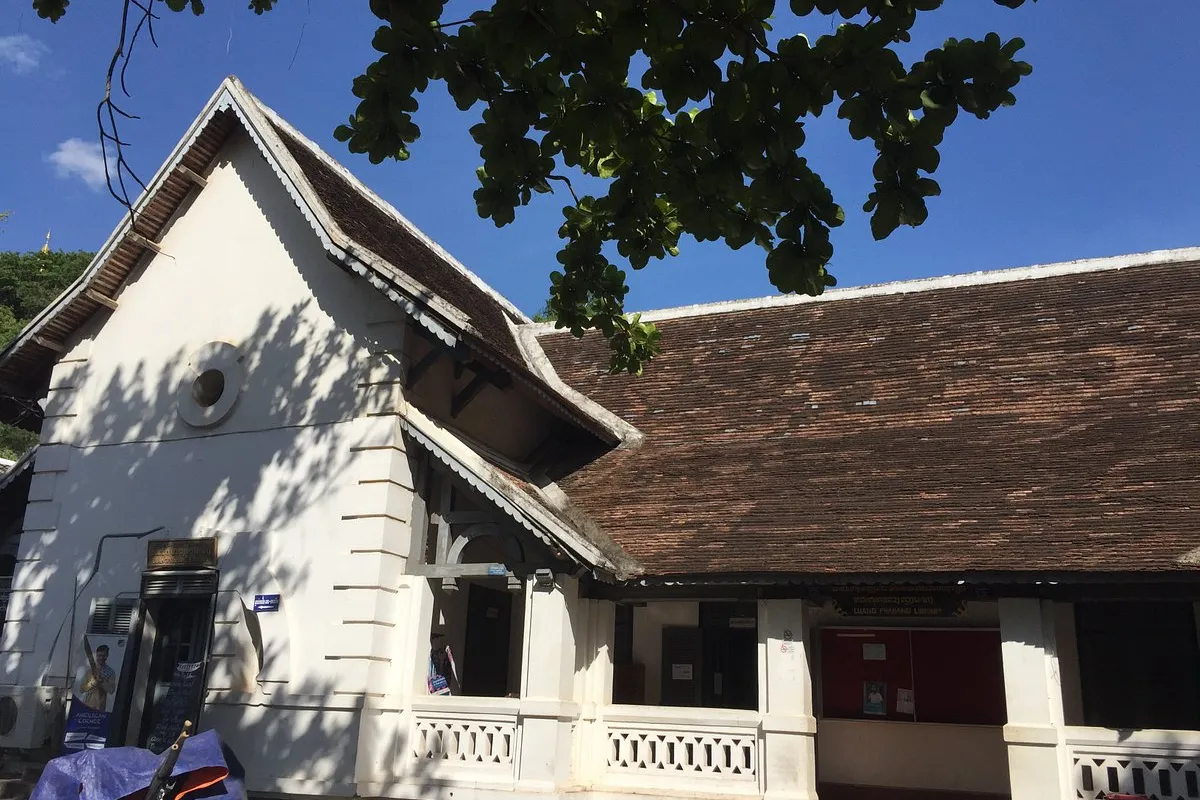
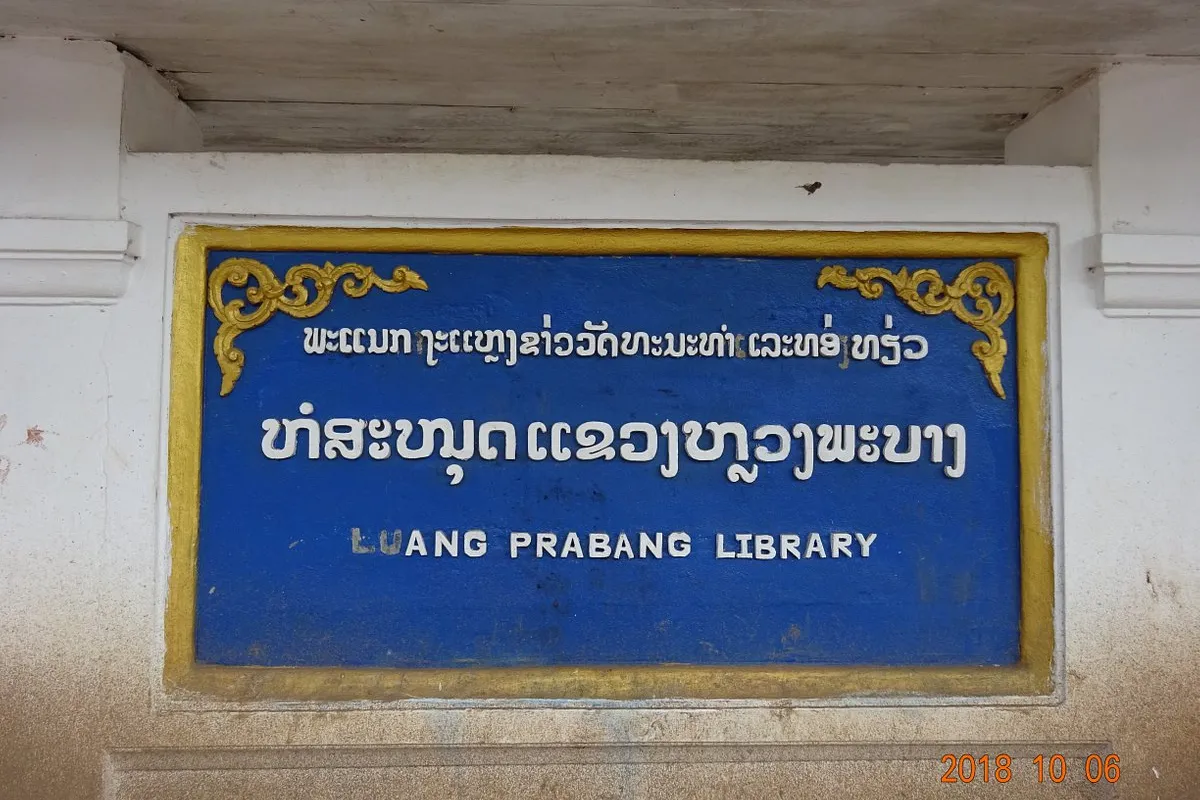
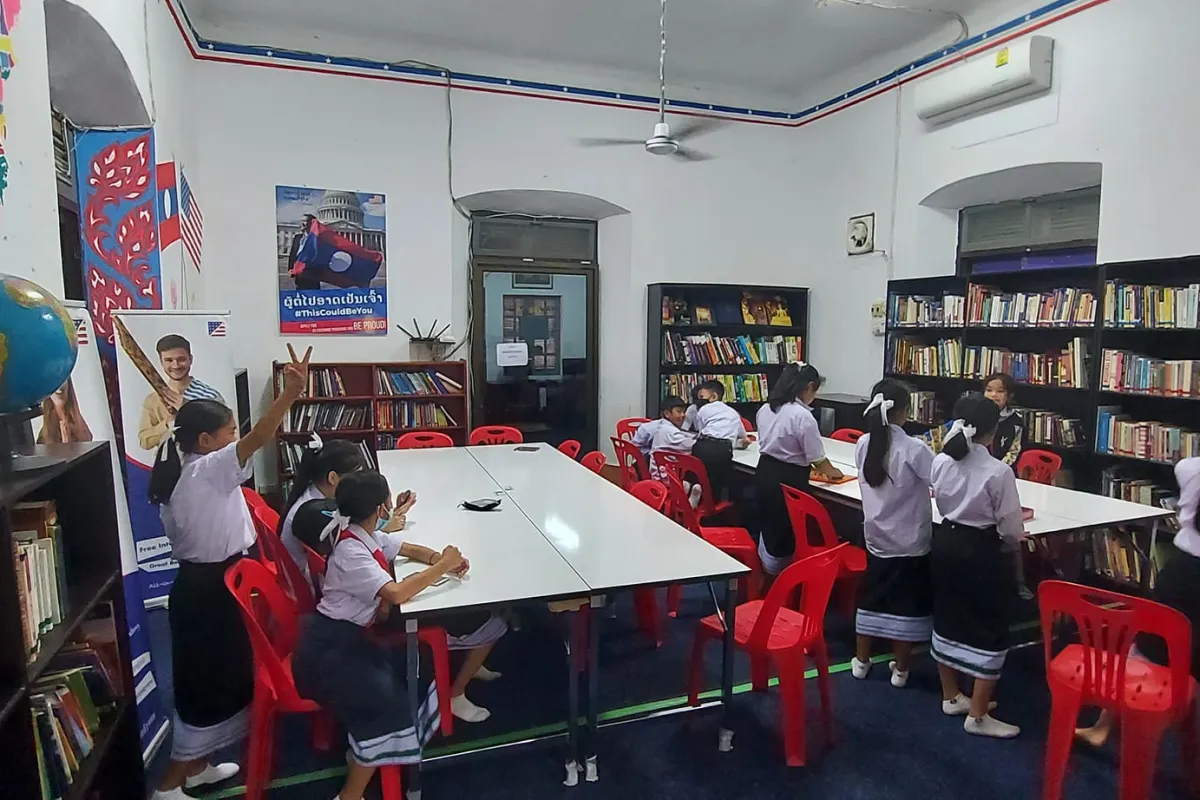
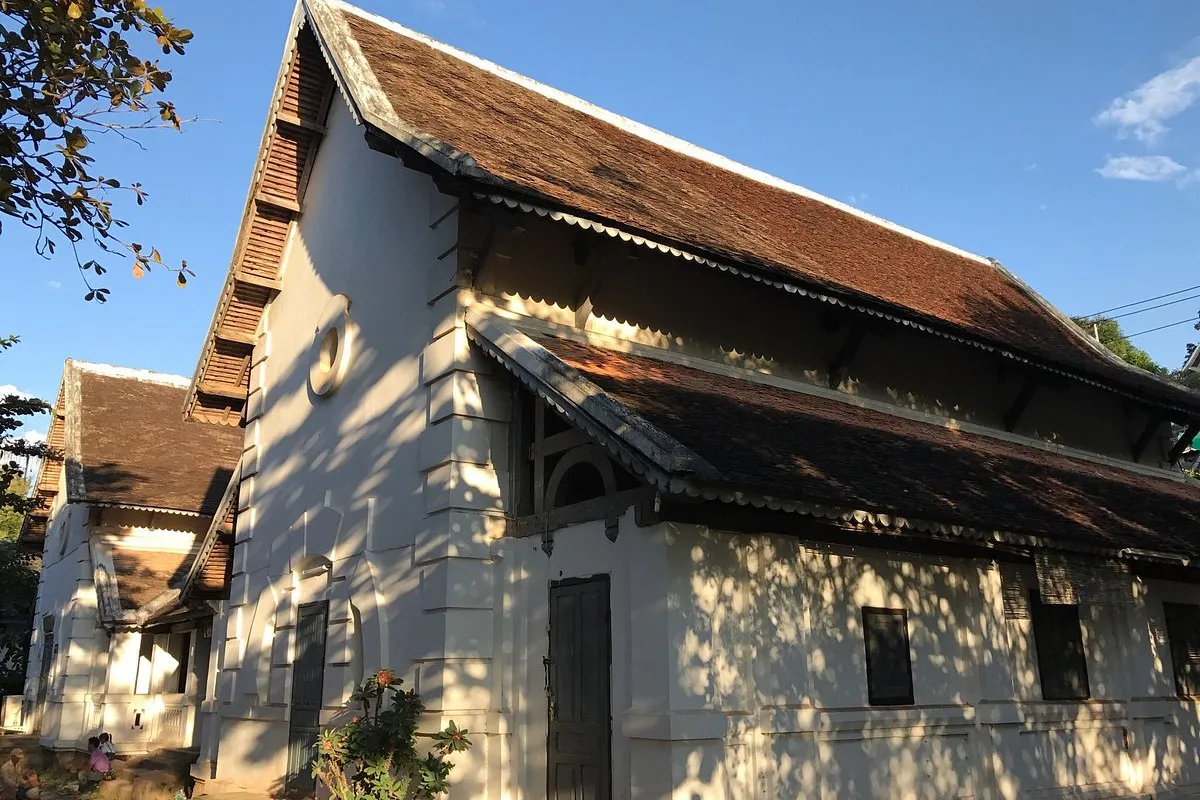
Luang Prabang Library
The Luang Prabang Library offers a chance for you to give something back to the children of Laos. Many of the local children have limited access to books – in fact, some villages in Laos don’t even have schools. The library works towards providing reading materials to kids in some of the more remote areas by operating 2 library boats that deliver books to 75 different villages along the Mekong.
These boats stay overnight at the villages, with staff organising active learning games during the day and operating as libraries for children to borrow books at night. Each boat carries 1,000 books, with about 100 titles are passed to primary schools.
Luang Prabang Library charity
You can participate by donating money through their website or buying souvenirs at the library. All proceeds go towards funding the boat fuel and buying books. Donating books to the library is also welcomed.
The library also receives government and foreign charity funding to help provide reading materials for indigenous Lao children.
---
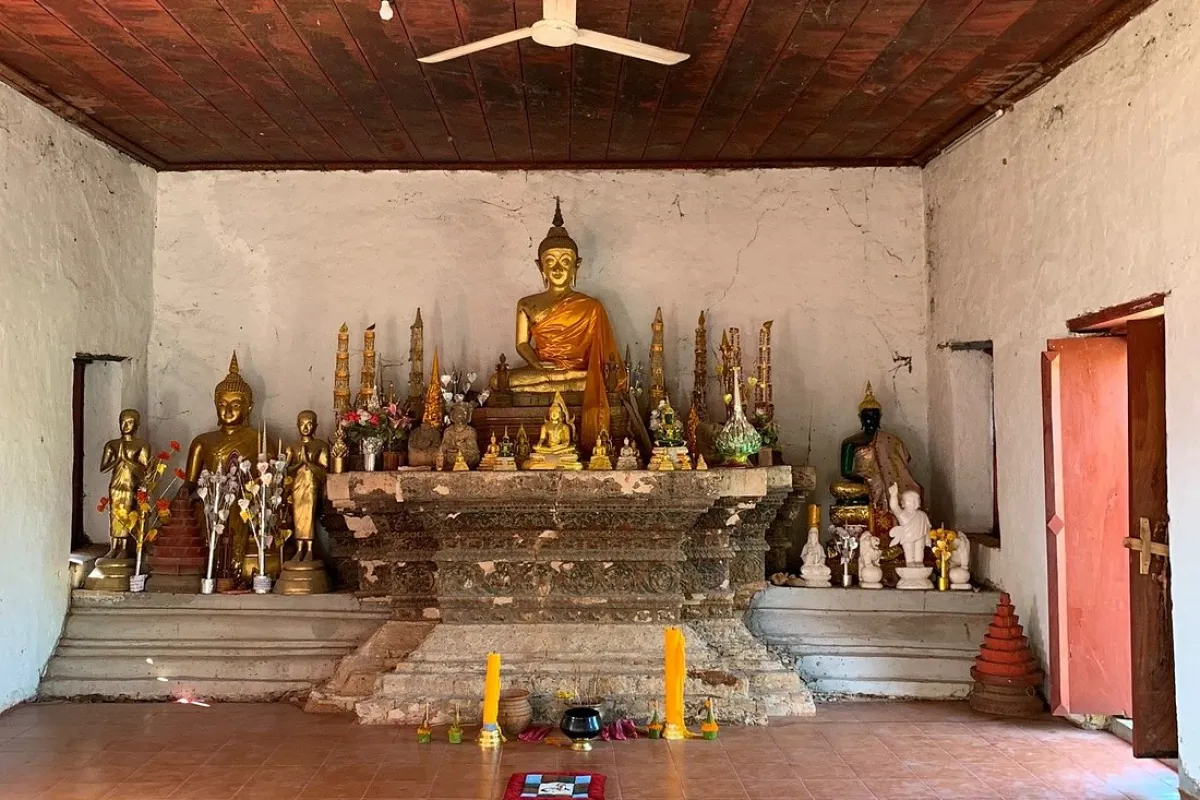
Chompet Pilgrim's Path
Just outside of Luang Prabang City and across the Mekong River, explorers can discover village life a world away from the colonial elegance of Luang Prabang. Chompet District is home to a cluster of small villages and traditional temples, waiting to be explored.
You will need to start your exploration with by taking the local ferry across the Mekong River, a fantastic immersion into local life far removed from the confines of luxurious hotels. Cars and motorbikes squeeze together on the barge that wheezes its way across the river, transporting you into the rural world of Laos.
Once in Chompet you can choose to visit the pottery village of Ban Chan. The people of Ban Chan have been making pottery for centuries, using clay dug out of the earth in their area. You can visit one of the workshops and expert potters will help you make your own creation. Local artisans will guide you through the process of making your own bowl or pot from start to finish. Even those with no experience will be impressed at their final creation. Your masterpiece will need to dry for about a week before it can go into the kiln, but the pottery workshop will be able to deliver it to anywhere in Laos once it is completed. Getting your hands dirty is a great way to spend a morning or afternoon in a traditional setting.
Chompet also offers a great pilgrimage road to explore on bike or in an electric car. From the ferry you follow a small road going north east, parallel to the Mekong River. This road first takes you through a small village still featuring a number traditional bamboo houses. After the village you ride along a small brick lined road, shaded from the sun by large trees.
This path is very special for Lao people as it was used by the former princes in the lead up to their coronation. In the week before becoming kings, the princes would walk this pilgrim’s path to visit each temple, spending time to meditate at each point. This is an important tradition in Lao culture, that before he can become the king he must spend time in the jungle and temple to clear his mind and spirit to take on his new duties.
Follow the route of their ancient pilgrimage today by visiting these temples on this path of discovery.
Your first stop on the pilgrim’s path is Chompet Temple. Climb the stairs from the path to the old temple sitting on the summit. Here you can take in sweeping views of the Mekong and Luang Prabang town from the grounds of this ancient temple. The temple structure here is somewhat rundown, having not been maintained for many years. However this is still the original structure from when it was built in 1888, giving its weathered façade a stronger sense of authenticity.
Continue along the pilgrim’s path to the next temple, Wat Long Khoun. This is one of the oldest temples along the pilgrim’s path and has many ancient legends associated with it. The temple is built near a spring which is said to contain magical water which has arousing properties. The temple was used by the royal princes of Laos who would come to this temple to meditate for a week before their coronation. It was also used as a base by invading Chinese soldiers who were unable to sleep at the temple because the spirits at the temple kept the invaders awake, until they painted large murals of menacing Chinese gods, which scared away the local spirits. Now the temple is used by monks as a place of quiet meditation.
Following the pilgrim’s path you will reach another small temple complex to Wat Tham Sakkarin, which is being restored to its former glory. Nearby to this temple you will find the cave containing the spring of Wat Long Khoun. This cave was also an important place for members of the royal family to come and meditate.
Continue along the pilgrim’s path to Wat Had Siaw, a large hall currently being restored. Nearby you will find two imposing statues guarding a pathway, leading up the hill. Despite their foreboding appearance the statues are there to protect travellers on the path and prevent evil spirits from following you up the hill. Walk up the hill to a small grove on the summit full of stupas and statues of Buddha. This is a very sacred place for Lao people as there are many lotus flower statues filled with the ashes of deceased loved ones. There is also a collection of many different types of stupas from across the Buddhist world. Monks from the nearby temples will often come into this sacred grove to meditate in the tranquil environment, only pausing to eat one meal a day, relying on the local villagers to cook and carry the meal for them.
Exploring the pilgrim’s path is a delightful experience for all explorers and is especially meaningful for Buddhist and spiritual travellers. With ancient temples, traditional artisans, and rural villages just a stone’s throw from Luang Prabang, Chompet District is a hidden gem waiting to be discovered. Combine this journey of discovery with an electric scooter or vintage electric car to make it a truly unique experience.
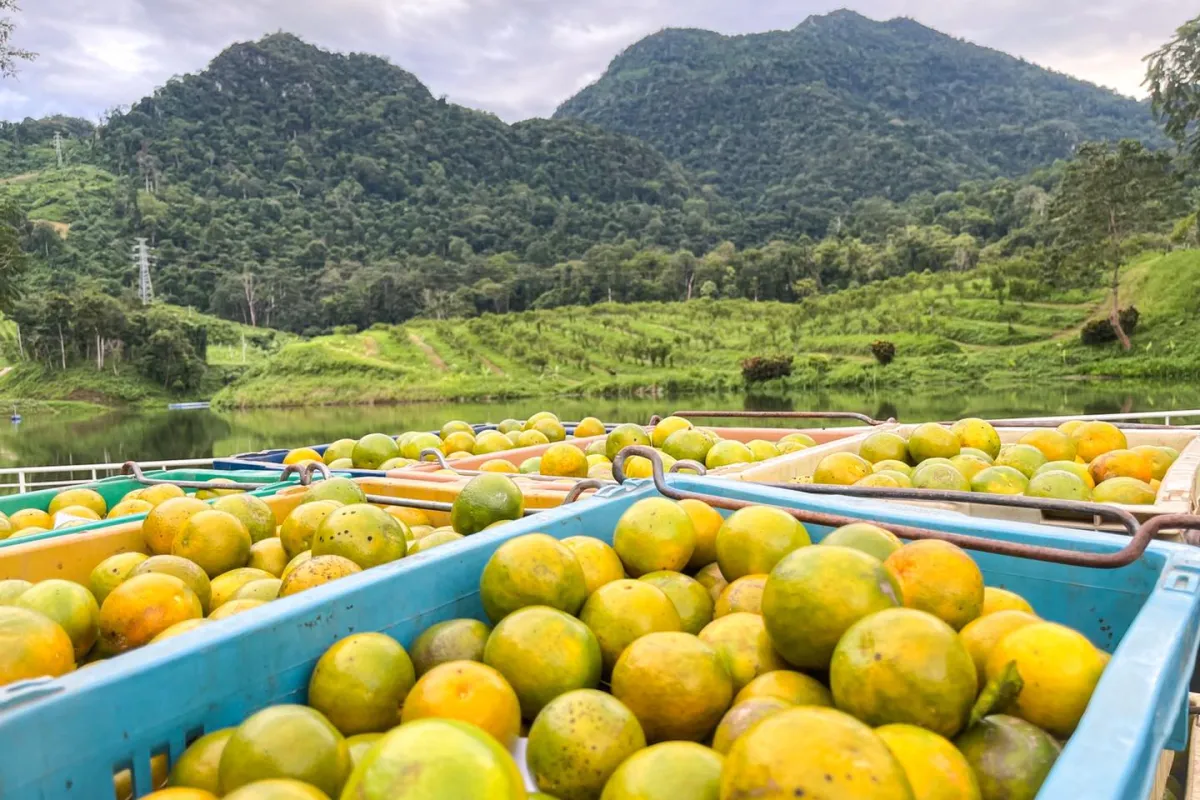
Mineral Freshy Farm
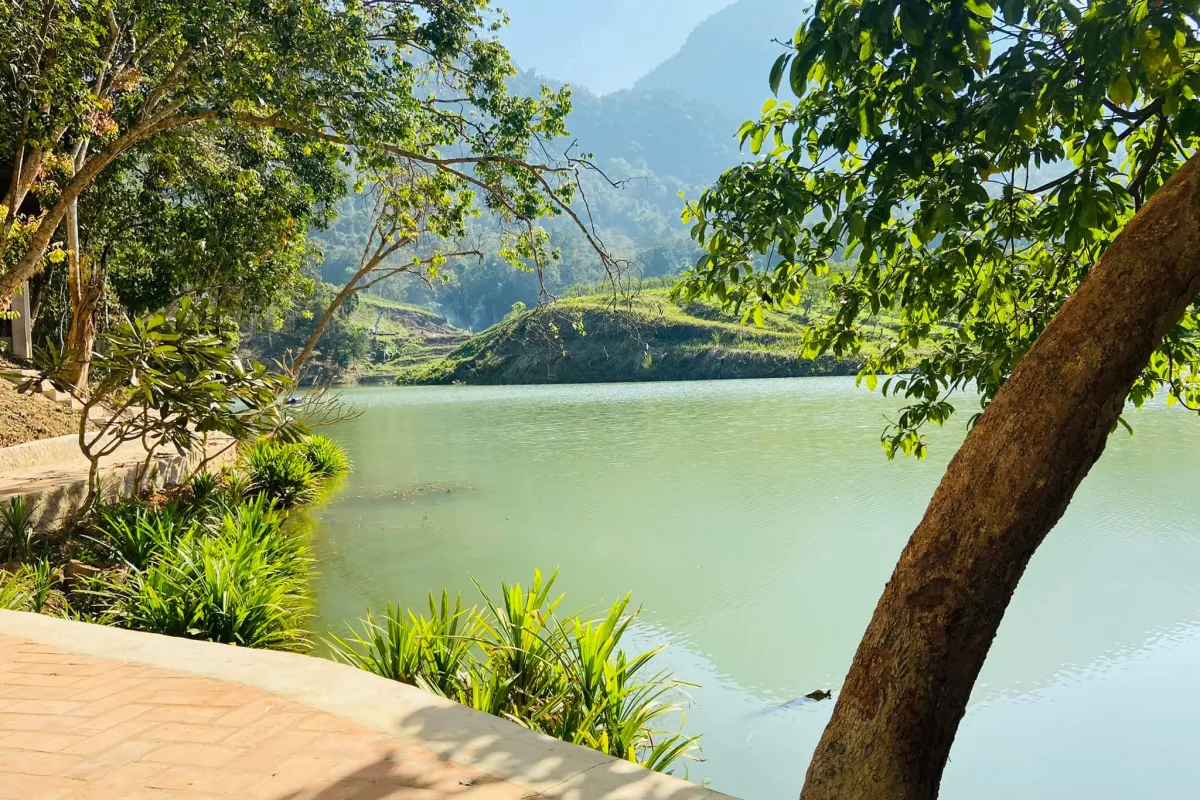
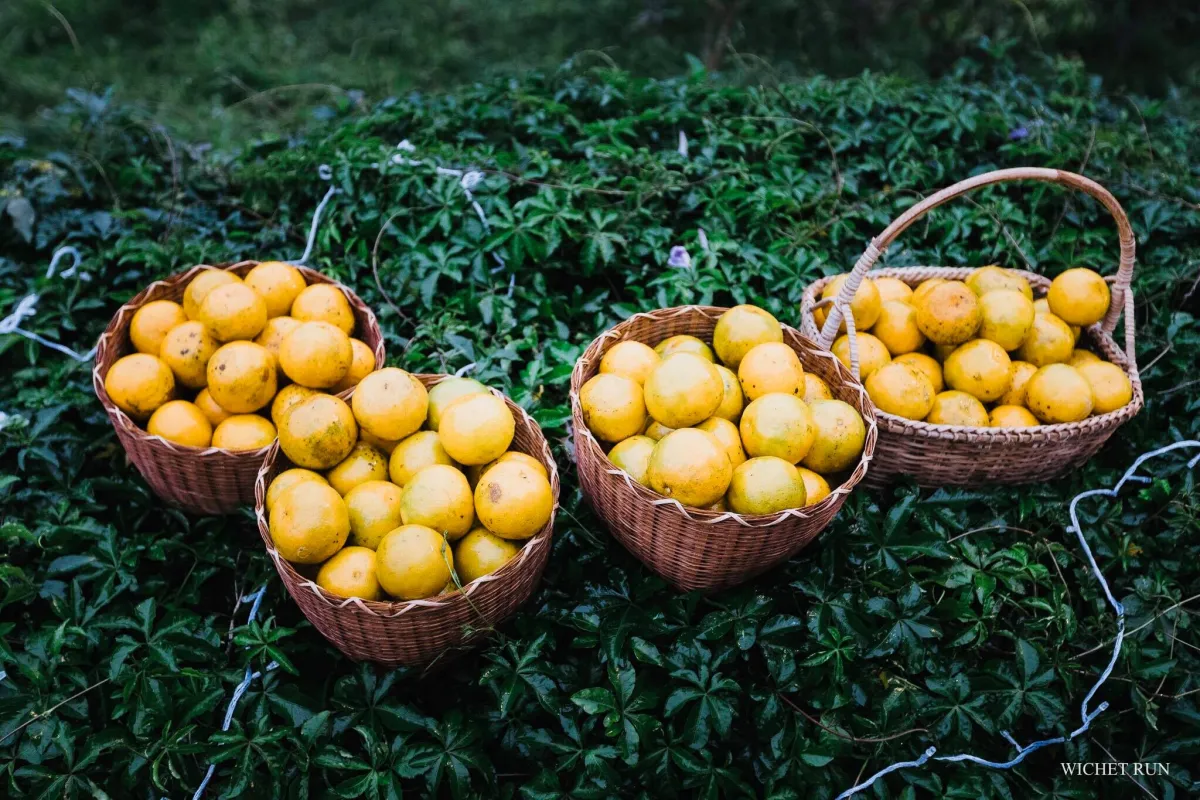
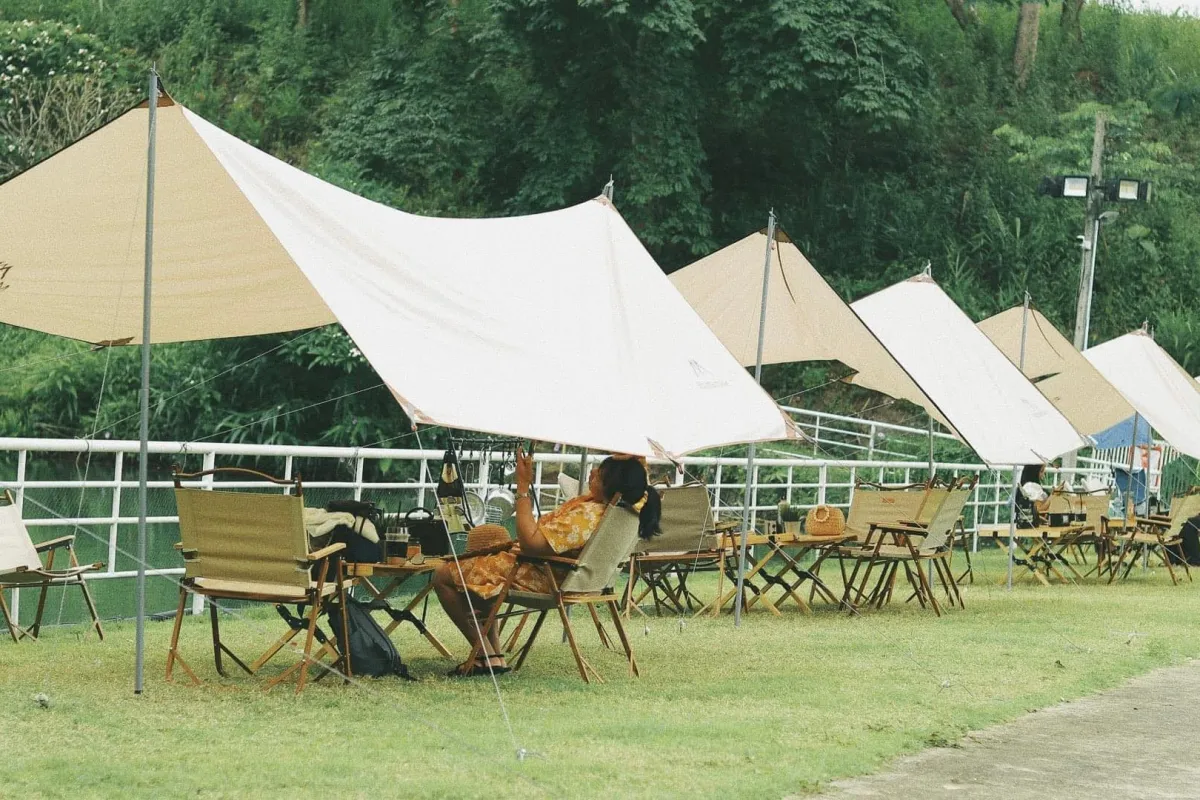
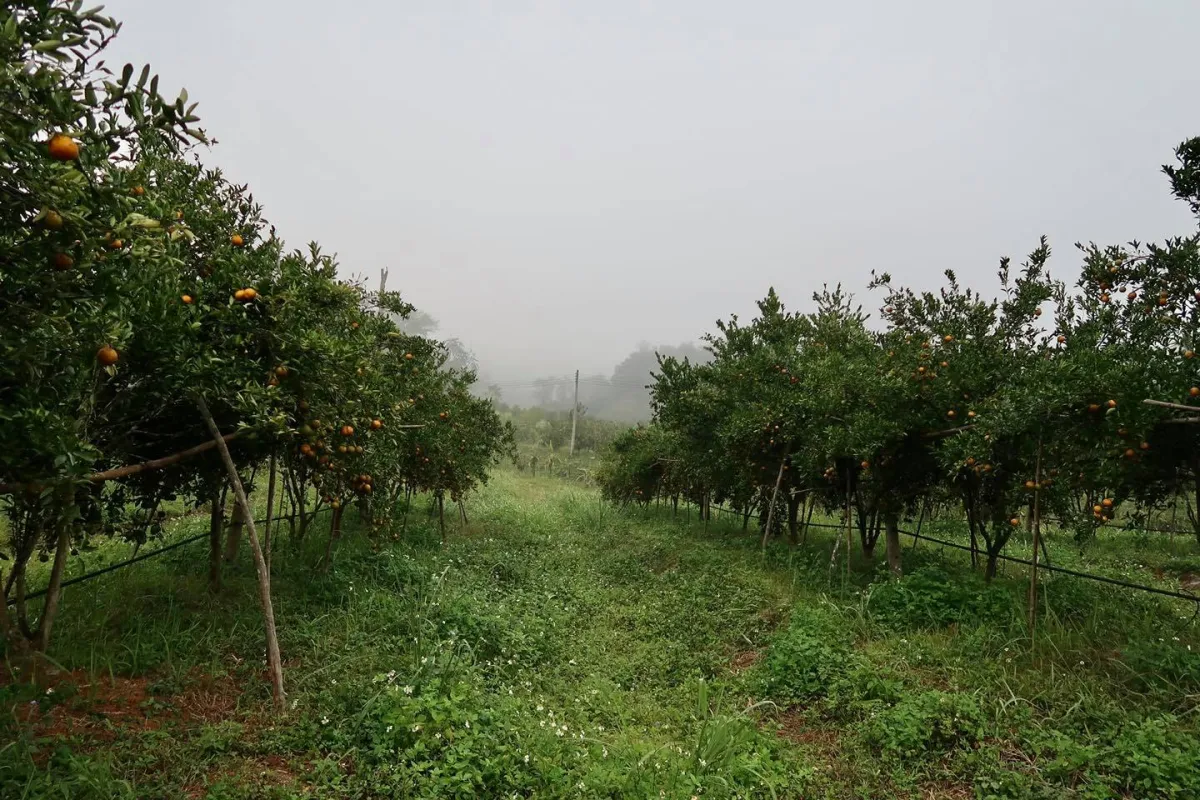
Organic Orange Farm, or what most people call Switzerland, Laos; with landscape views of lush nature and big mountains. The farm also offers photo props as picnic and camping kits.
There are also cute cafes and dessert shops for you to chill with friends, family, and even with yourself to relax and recharge after a long day at work.
Open only on Sat and Sun, 07:30am-17:00pm
FREE ENTRY
Freshy Farm Km10, Luang Prabang (Km 10, on the way to Tat Sae Waterfall or on Route 13 North)
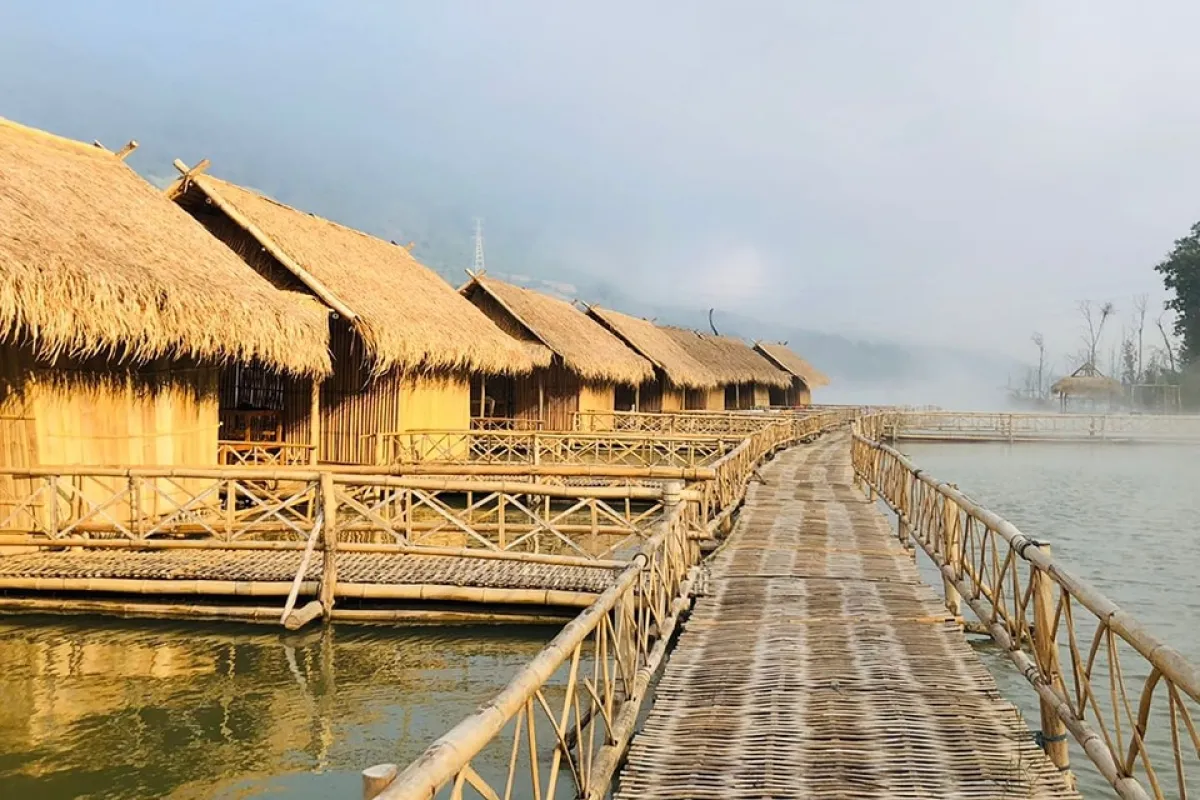
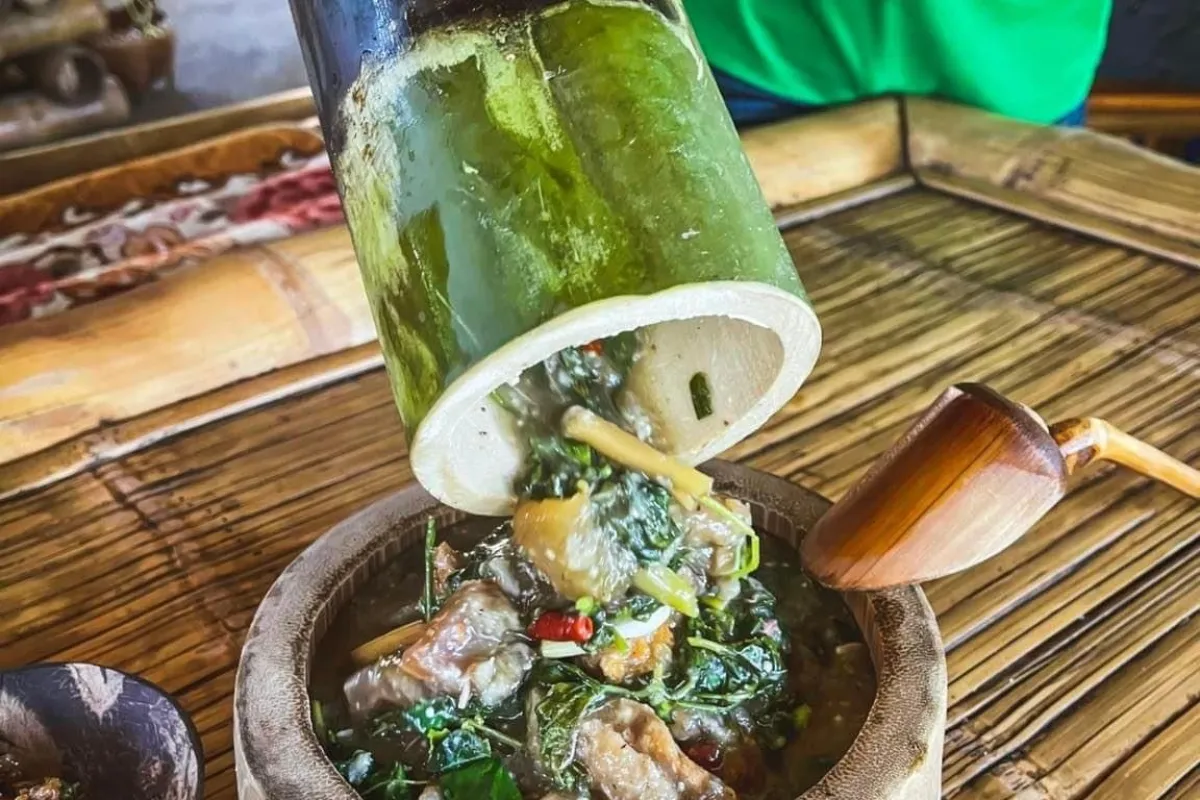
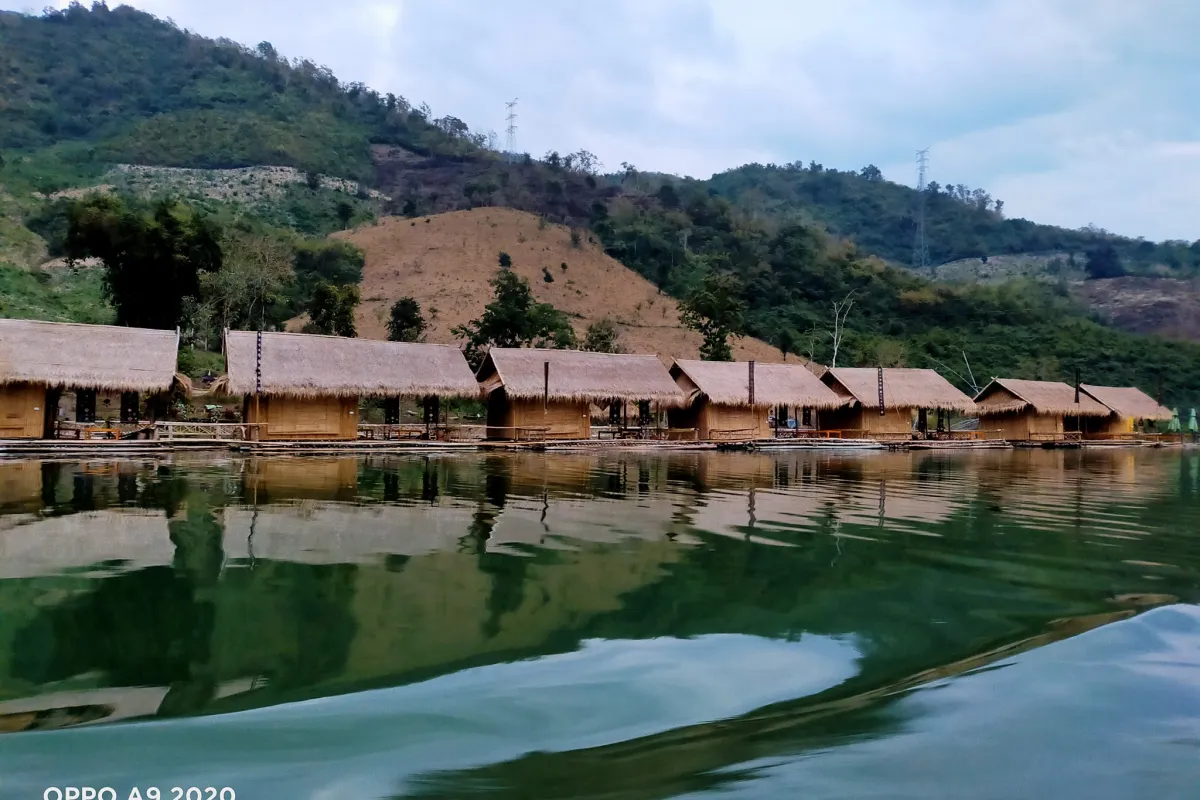
Bio Bamboo Hueanphae Nam Ou
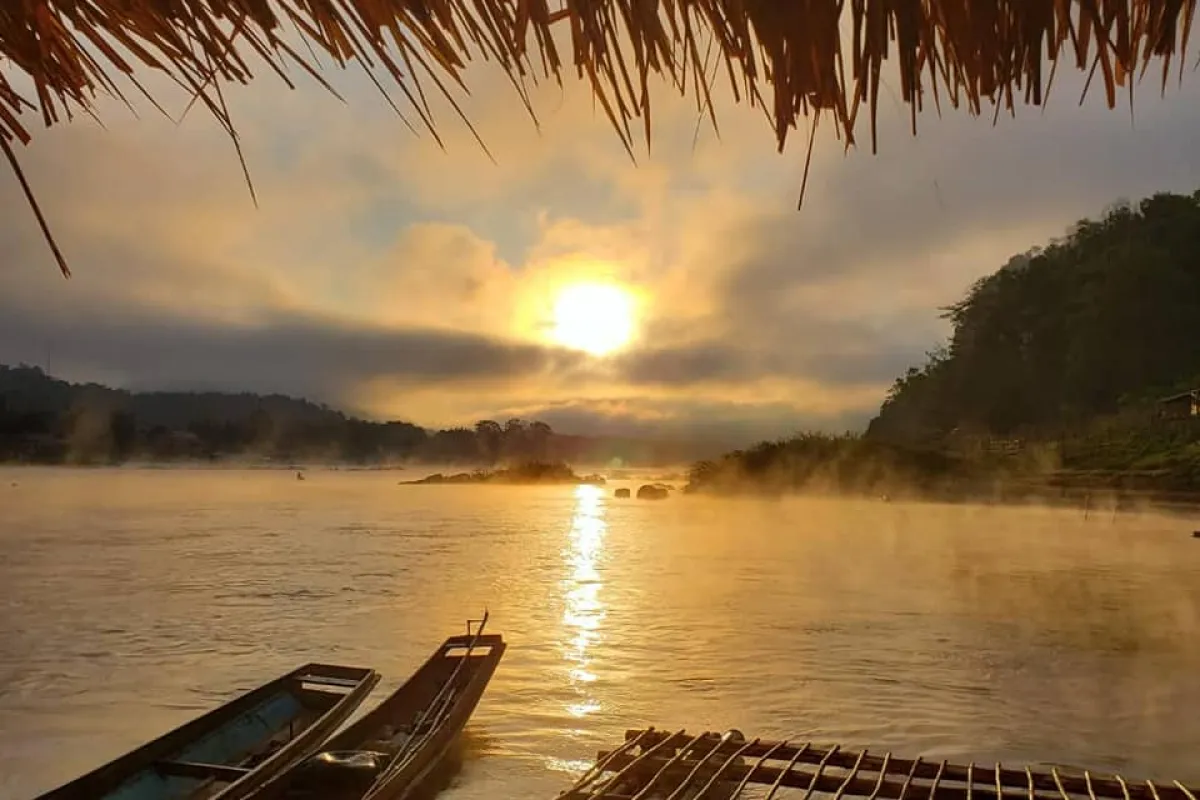
A Lao-style bamboo houseboat is a new relaxing place to stay along the Ou river which is surrounded by lush nature with big mountains all the way down the river.
There are a total of 7 bamboo houseboats along the side with private balconies for you to chill with the natural landscape views right before going to bed and after you wake up or you can even have a small BBQ party on your own on your balcony.
With Bio Bamboo Heuanphae Nam Ou you will be able to take a rest with a small budget of only 250,000kip/night including free breakfast for 2 persons.
Besides, if you don’t want to stay for a night, there is also a delicious restaurant for you to stop by and admire the surrounding nature with views of the Ou River to refresh and release your exhaustion after a long week before the start of the new week.
Located in Pak Chak Village, Pak U District, Luang Prabang, Road No. 13 is a convenient road not far from Luang Prabang and about 45 km, just 50 minutes drive.
For more information, call 020 23879655 or 020 23866866.
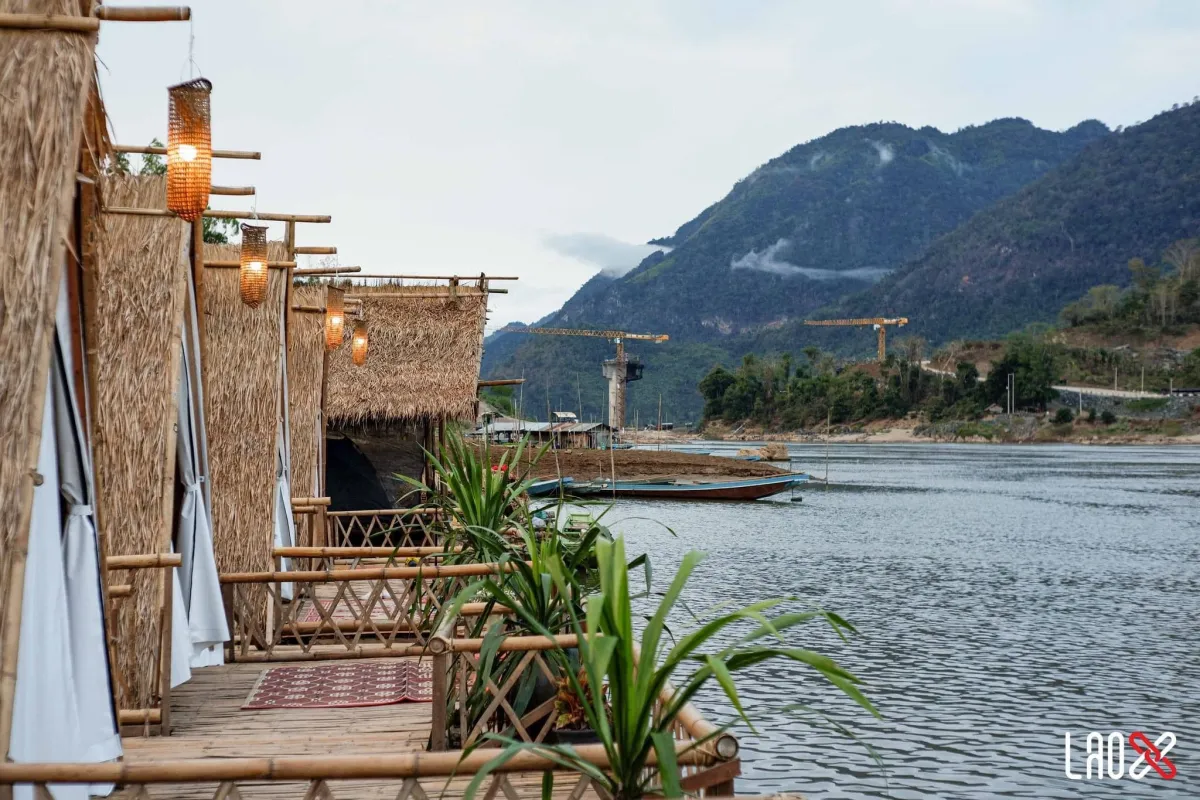
Huean Phae Mekong
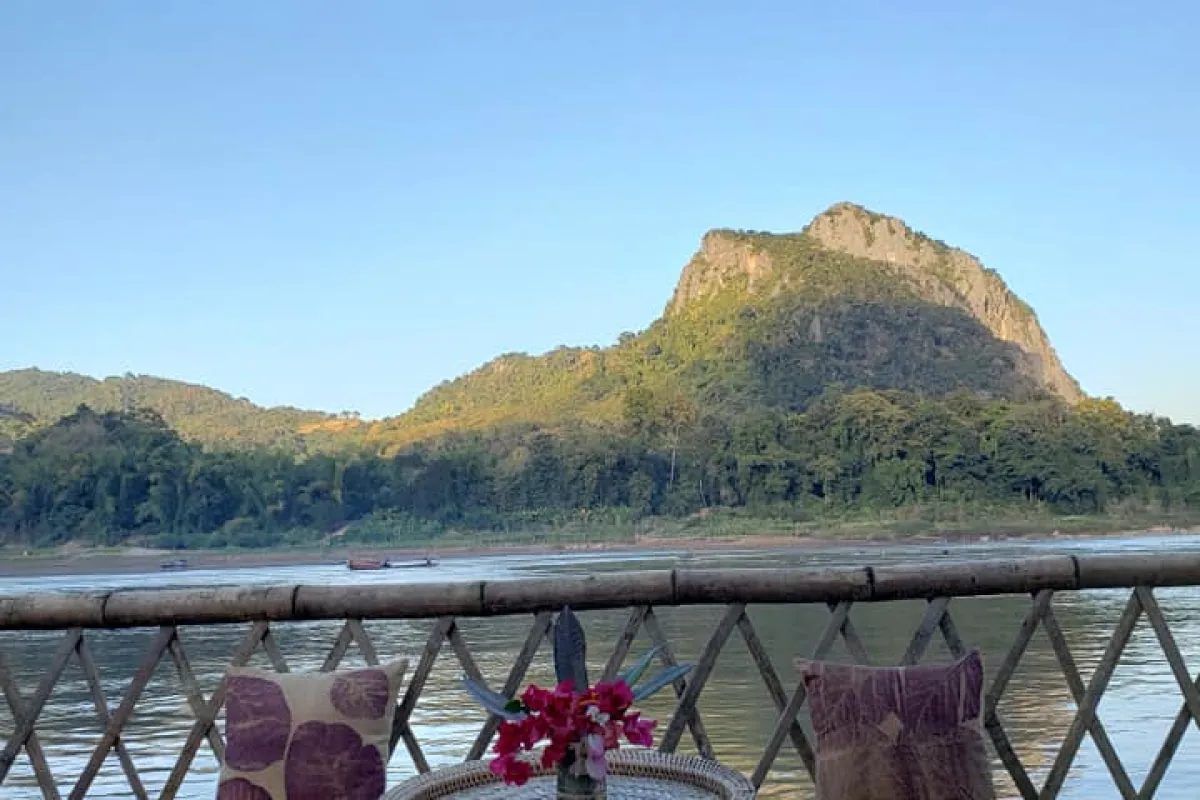
Take a break from a hassle city to relax at the houseboat nearby Pak Ou cave, driving 30 minutes from Luang Prabang town. To make it easier for customers to reach there, there is a boat transfer for free which will send you to the houseboat on the other side of the river and bring you back again.
At Heuan Phae Mekong, you can even have a small BBQ party on your balcony or order some food from their restaurant. Moreover, you can also do a Morning Alms (Sai Bat) along the Ou River in the morning from your balcony.
Get yourself some fresh air and boost your energy with sunrise and sunset views in front of your private balcony. Sipping beer and chilling with lush mountains and nature at Heuan Phae Mekong with only 300,000kip/night.
Contact for more information: 020 54 992 828
Phounsouk Garden
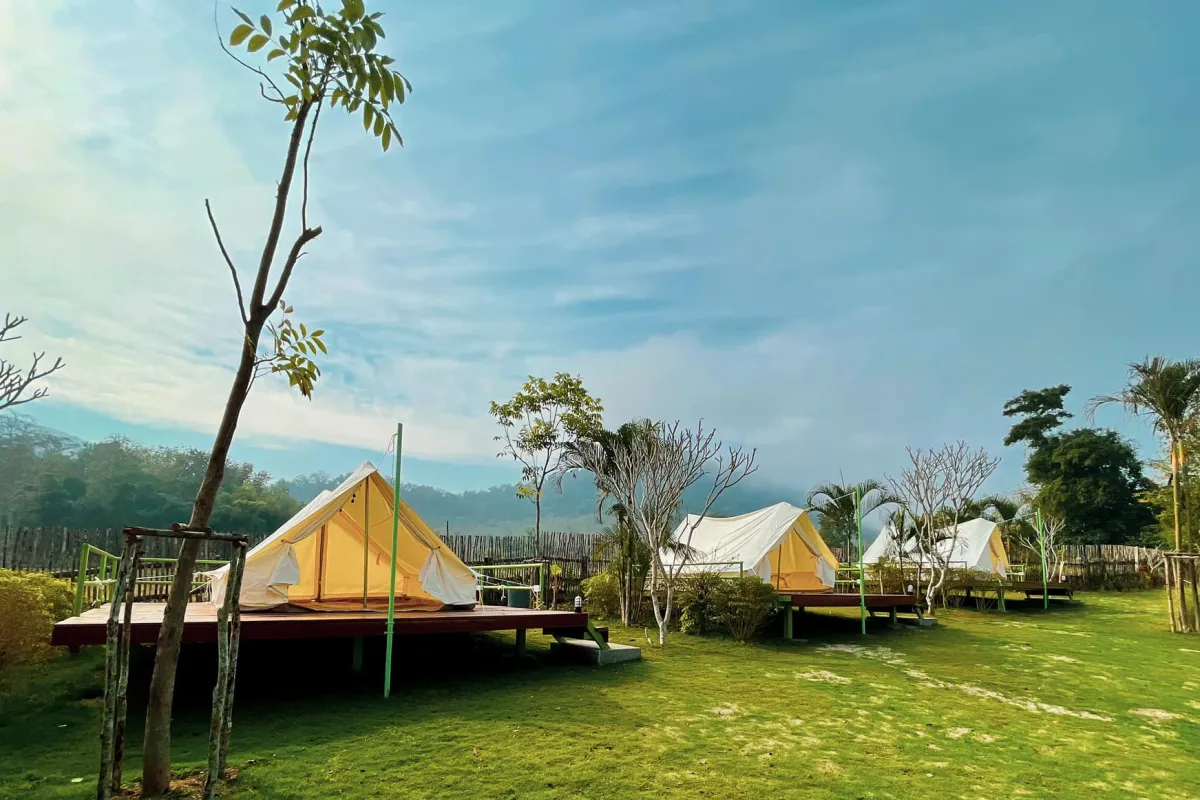
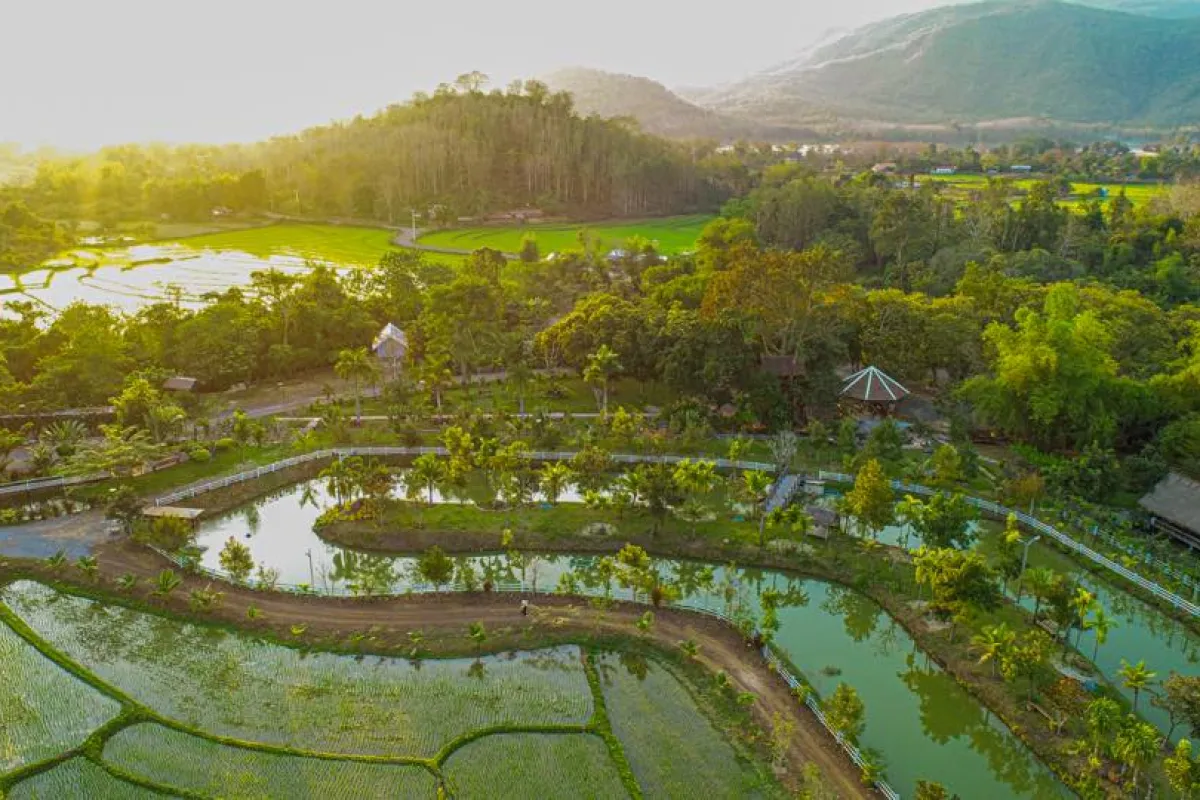
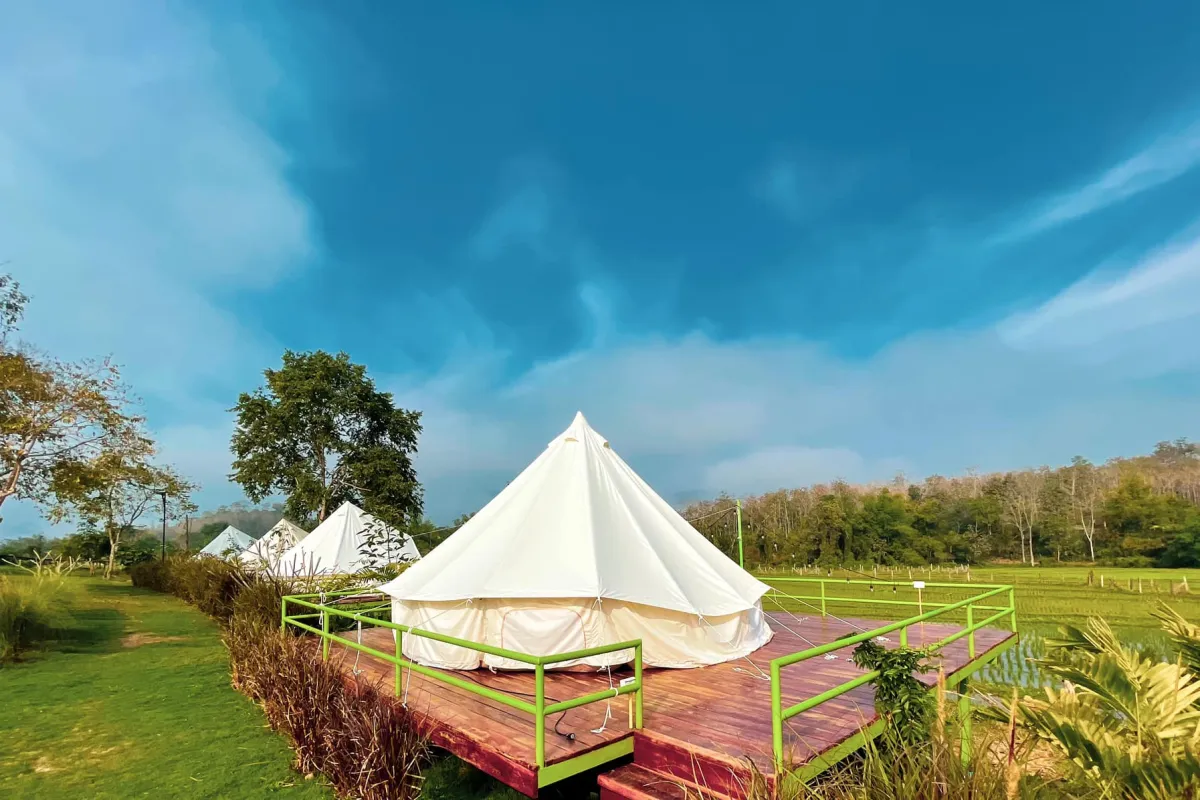
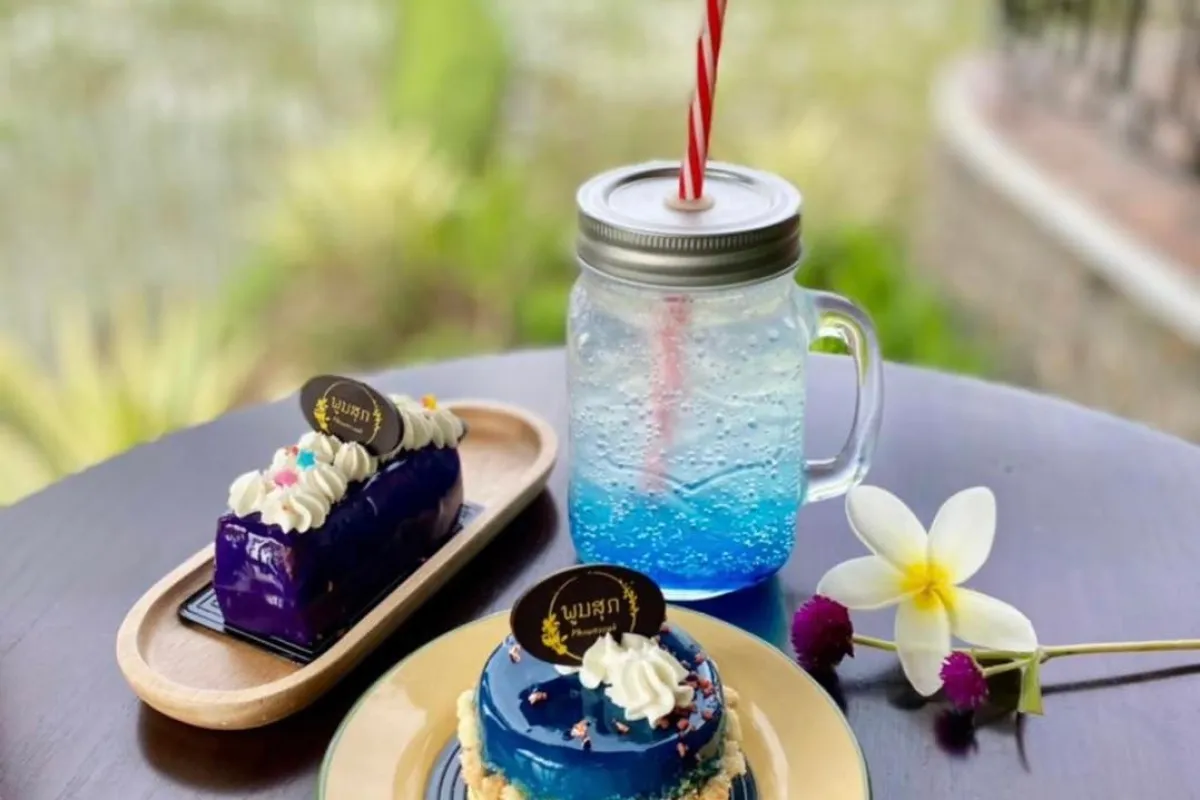
PhounSouk garden and restaurant is a new landmark for nature lovers to stop by before heading to Kuang Si waterfall. This place will allow you to reconnect with nature again as the restaurant faces lush rice fields and is surrounded by beautiful mountains, perfect for relaxing while waiting for your food to be served.
Besides the fact that it is a restaurant and chill garden that is perfect for fresh air and turning on your relaxing mode or even working mode; there is a small cafe inside the restaurant for you to get a fresh drink during the day as well.
PhounSouk garden is located in Ban Long before reaching Kuang Si waterfall around 10 minutes.



Discover Luang Prabang by Electric Vehicle
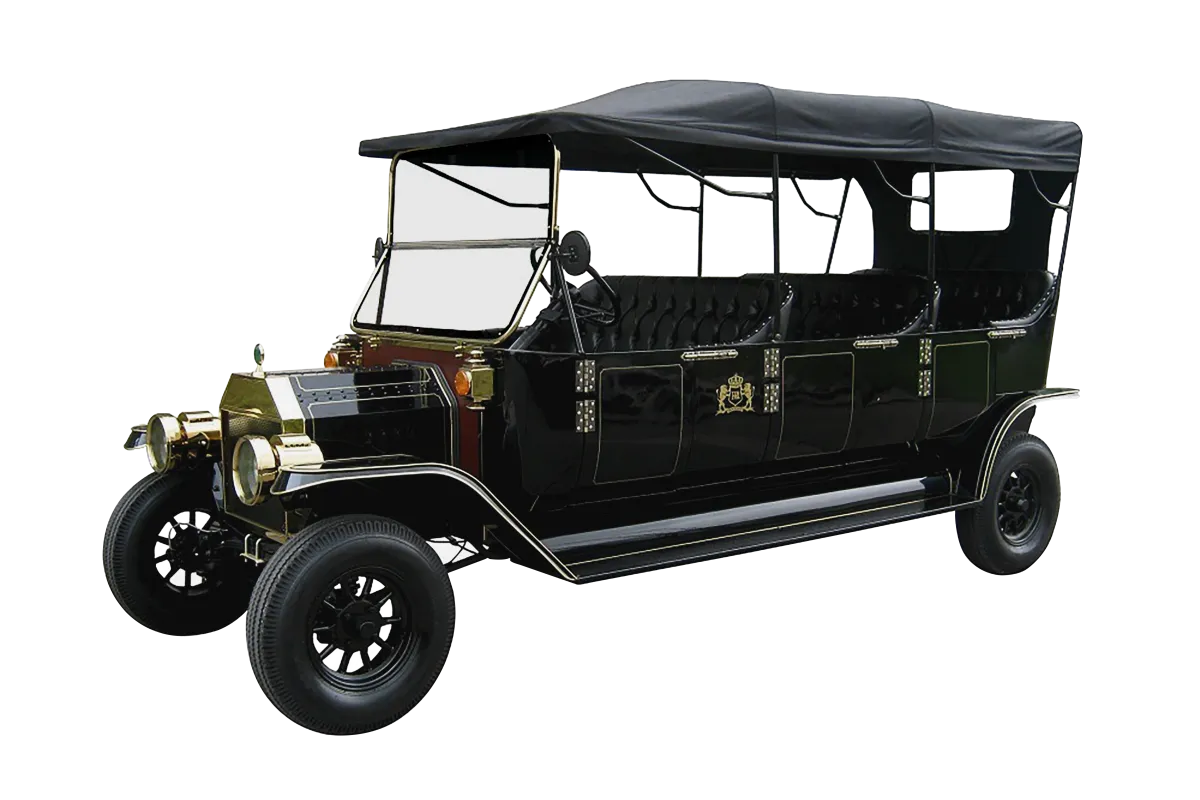
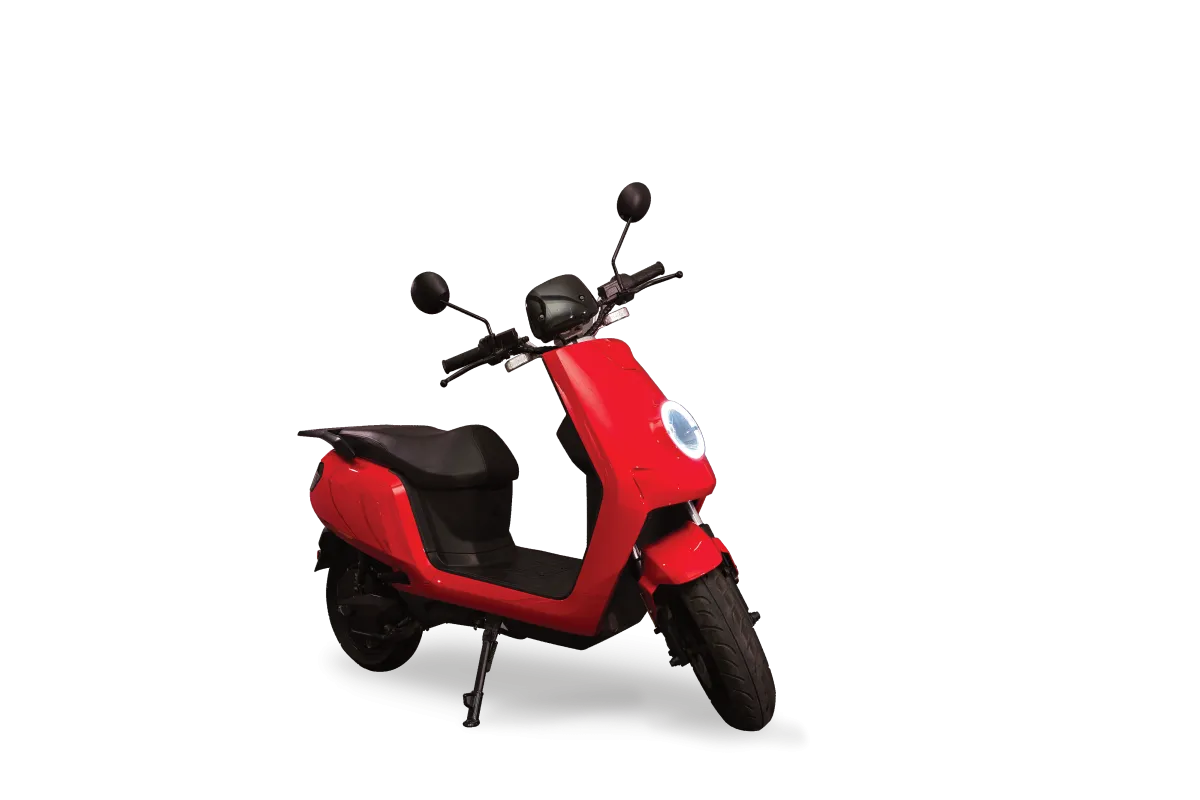
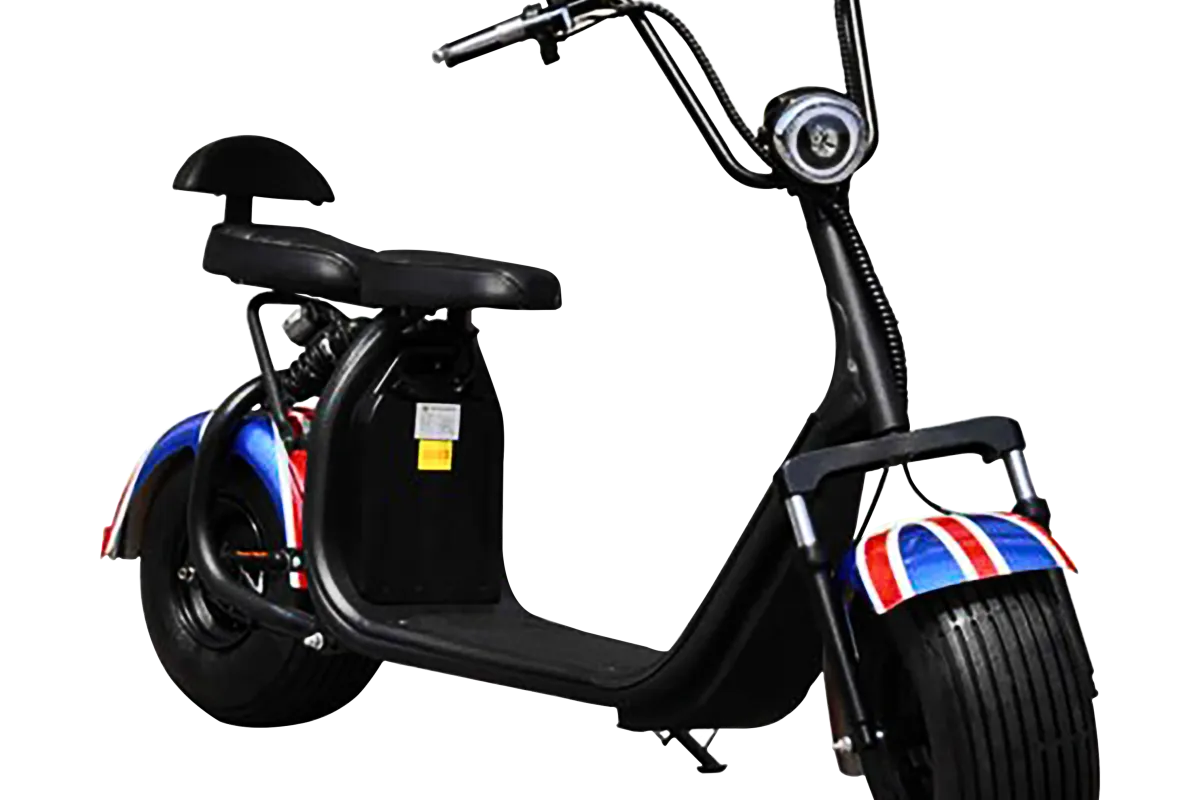
The best way to explore Luang Prabang World Heritage City is by traveling around using Electric Vehicle (EV) with zero pollution destroying our green environment.
There are multi EVs to choose from which suitable for different place and distances such as e-scooter, e-bike, e-buggy, e-vintage car and Mini Wuling that can be driving all the way to Kuang Si waterfall in one charge.
Moving forward to EVs industry to save our environment together with us.
Starting your trip renting EVs here: https://discoverlaos.today/tour?location%5B%5D=1&activity%5B%5D=38
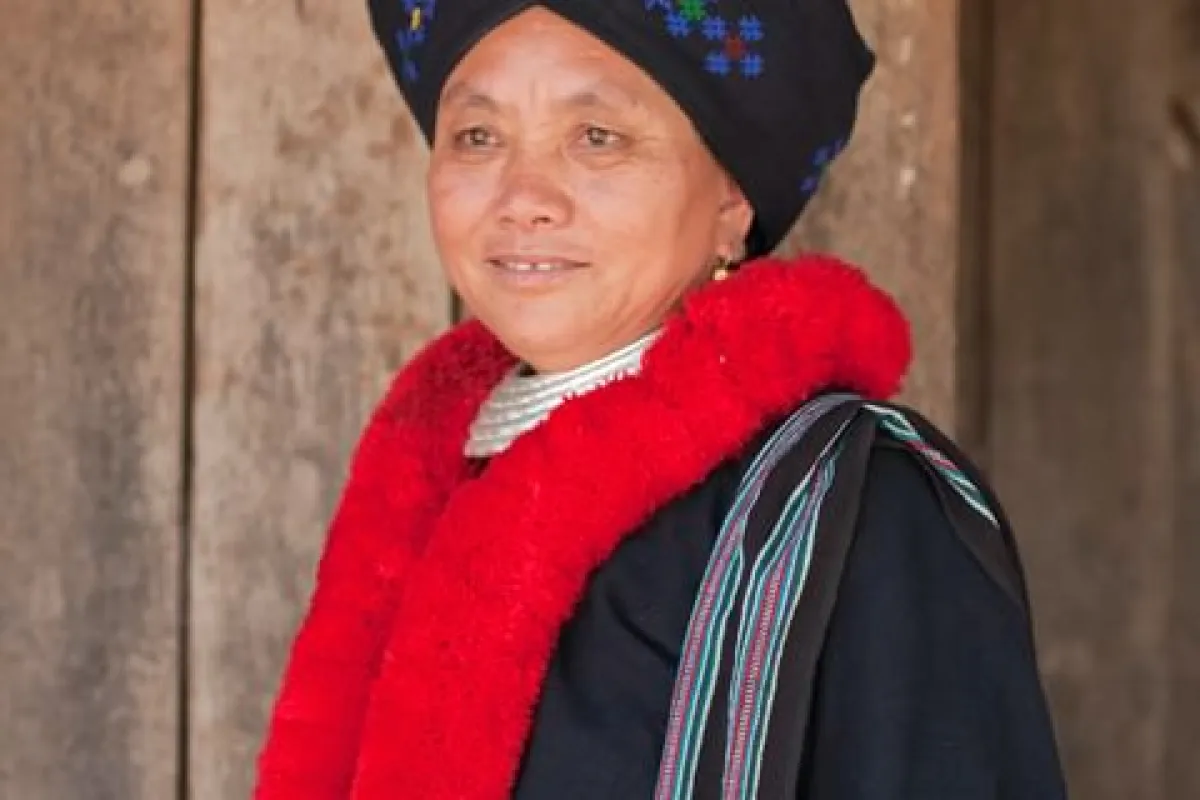
Traditional Arts and Ethnology Centre (TAEC)
The Traditional Arts and Ethnology Centre (TAEC) is a cultural institution located in Luang Prabang, Laos. It is dedicated to preserving and promoting the rich heritage of ethnic minority groups in Laos. TAEC showcases traditional arts, crafts, and customs through its exhibits, workshops, and educational programs.
The center houses a diverse collection of artifacts, textiles, and handicrafts, providing visitors with a glimpse into the unique cultural traditions of various ethnic communities. Through interactive displays and multimedia presentations, TAEC offers a comprehensive understanding of the social, economic, and spiritual aspects of these communities.
TAEC also plays a vital role in supporting local artisans and craftsmen by providing them with a platform to showcase their skills and sell their products. By promoting sustainable tourism and fair trade practices, the center contributes to the economic empowerment of ethnic minority groups.
Overall, the Traditional Arts and Ethnology Centre serves as a bridge between the past and the present, fostering appreciation and understanding of Laos' diverse cultural heritage.
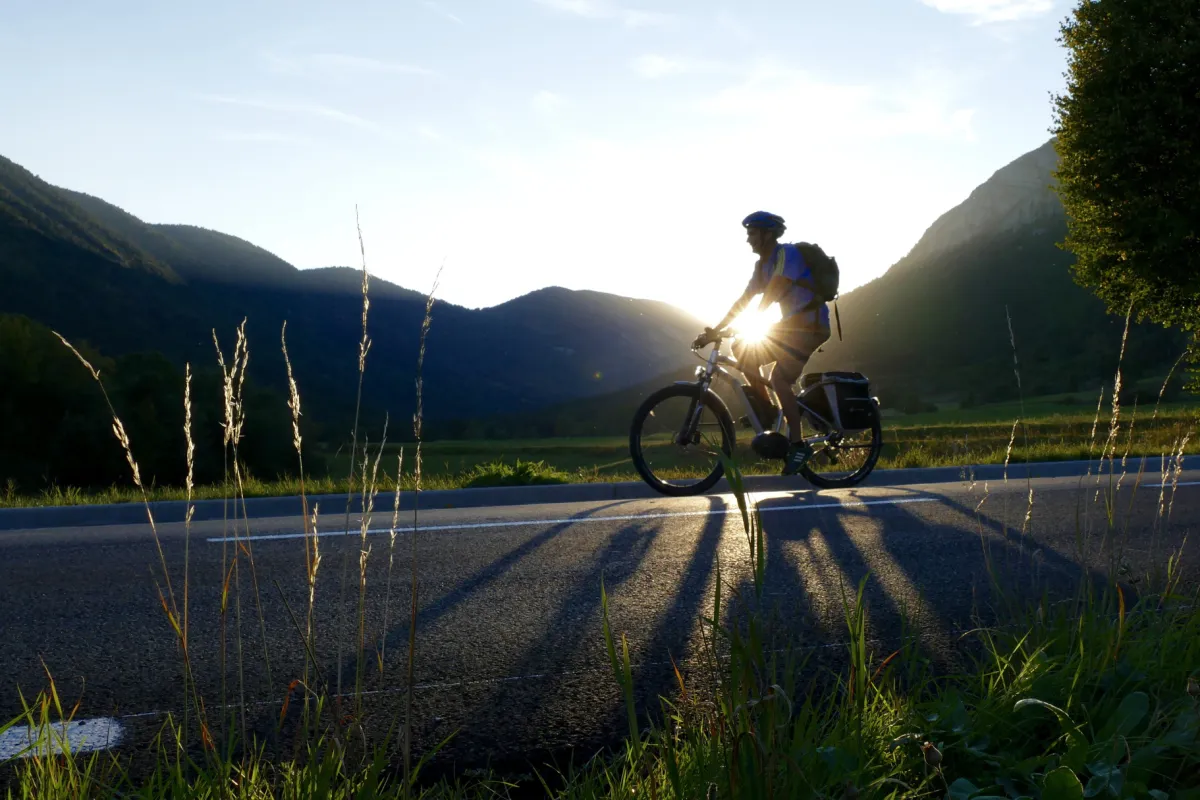
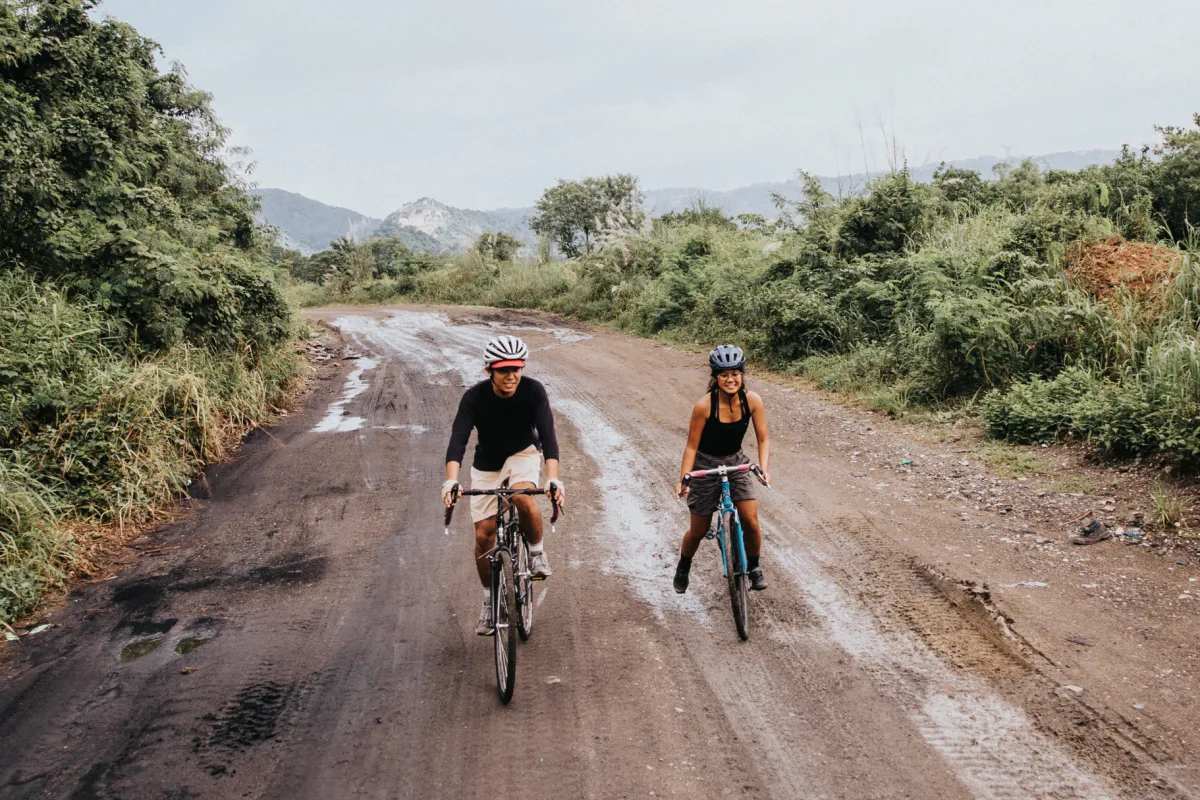
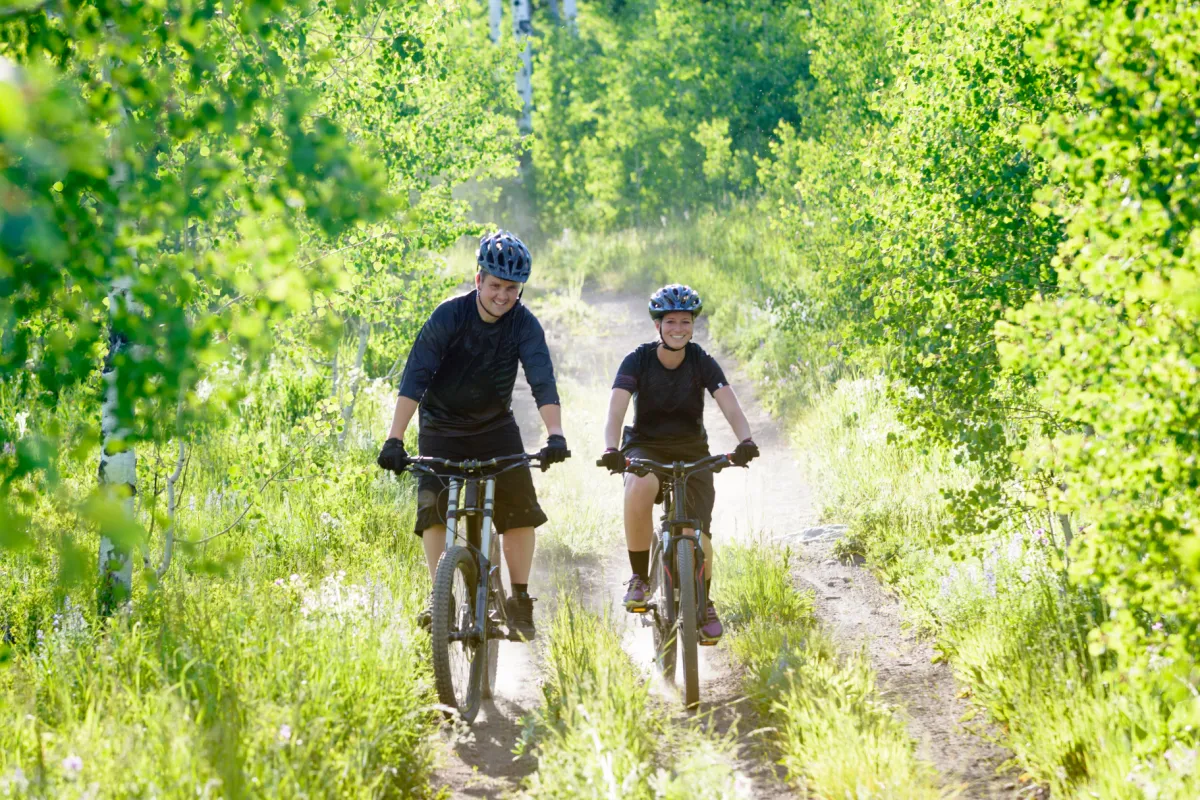
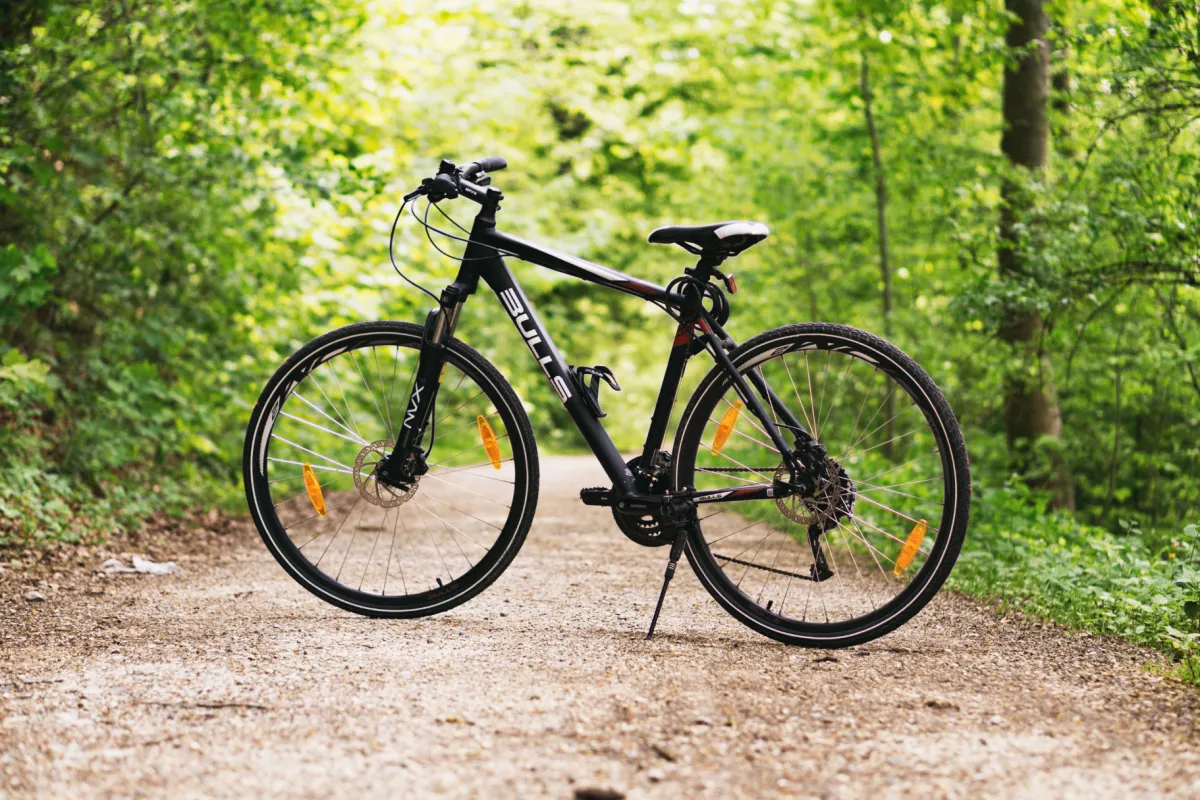
Biking Adventures in Luang Prabang
Explore the charming town of Luang Prabang on two wheels with a biking adventure. Discover the city's rich cultural heritage as you pedal through its ancient temples, bustling markets, and serene riverside paths. Feel the gentle breeze as you cycle through the lush countryside, passing by picturesque landscapes, traditional villages, and verdant rice paddies. Whether you're a leisurely rider or an avid cyclist, Luang Prabang offers biking routes suitable for all levels of experience. Immerse yourself in the natural beauty and local life of this UNESCO World Heritage site while enjoying the freedom and flexibility that biking provides. With its pleasant climate and breathtaking scenery, biking in Luang Prabang is an unforgettable way to experience the heart of Laos.
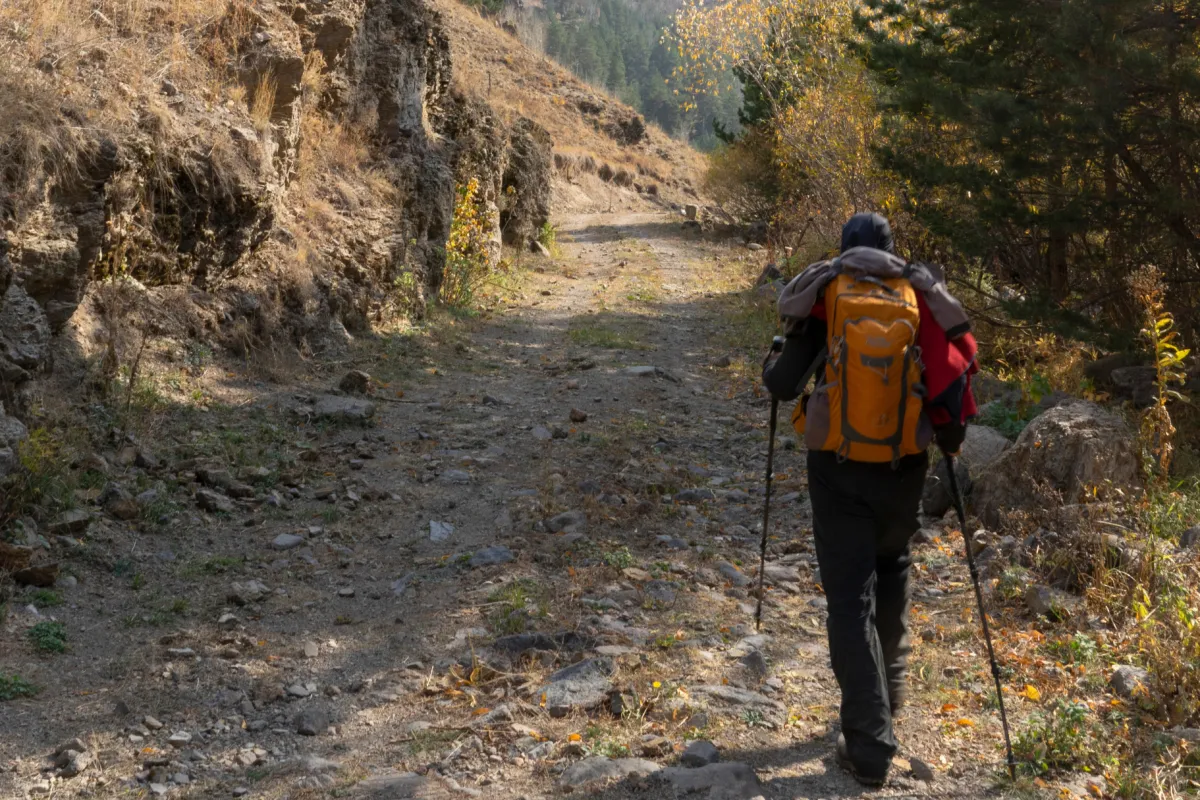

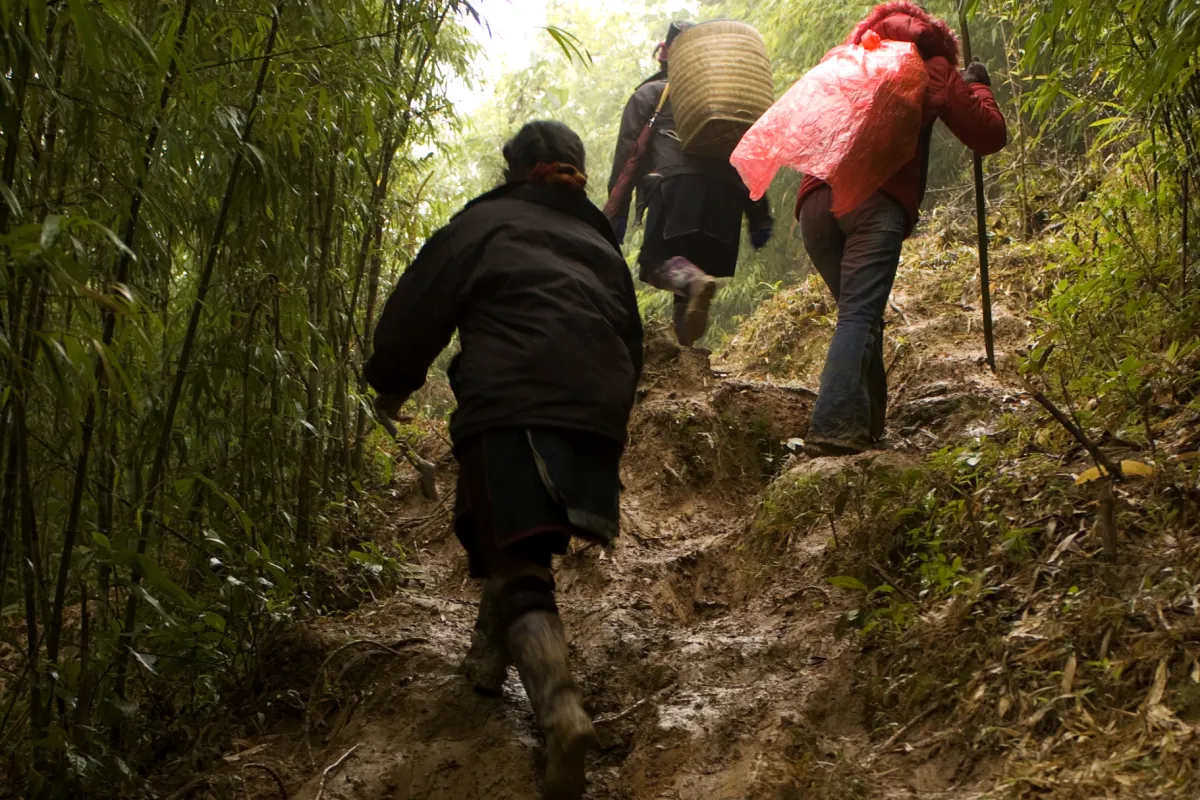
Trekking in Luang Prabang
Embark on an unforgettable journey through the breathtaking landscapes and rich cultural tapestry of Luang Prabang. Trekking and hiking in this enchanting region offer a unique opportunity to immerse yourself in the natural wonders and timeless traditions of Laos. From verdant jungles to cascading waterfalls, every step unveils a new facet of this captivating destination. Whether you're a seasoned hiker or a casual explorer, the trails of Luang Prabang promise an experience that will leave you spellbound.
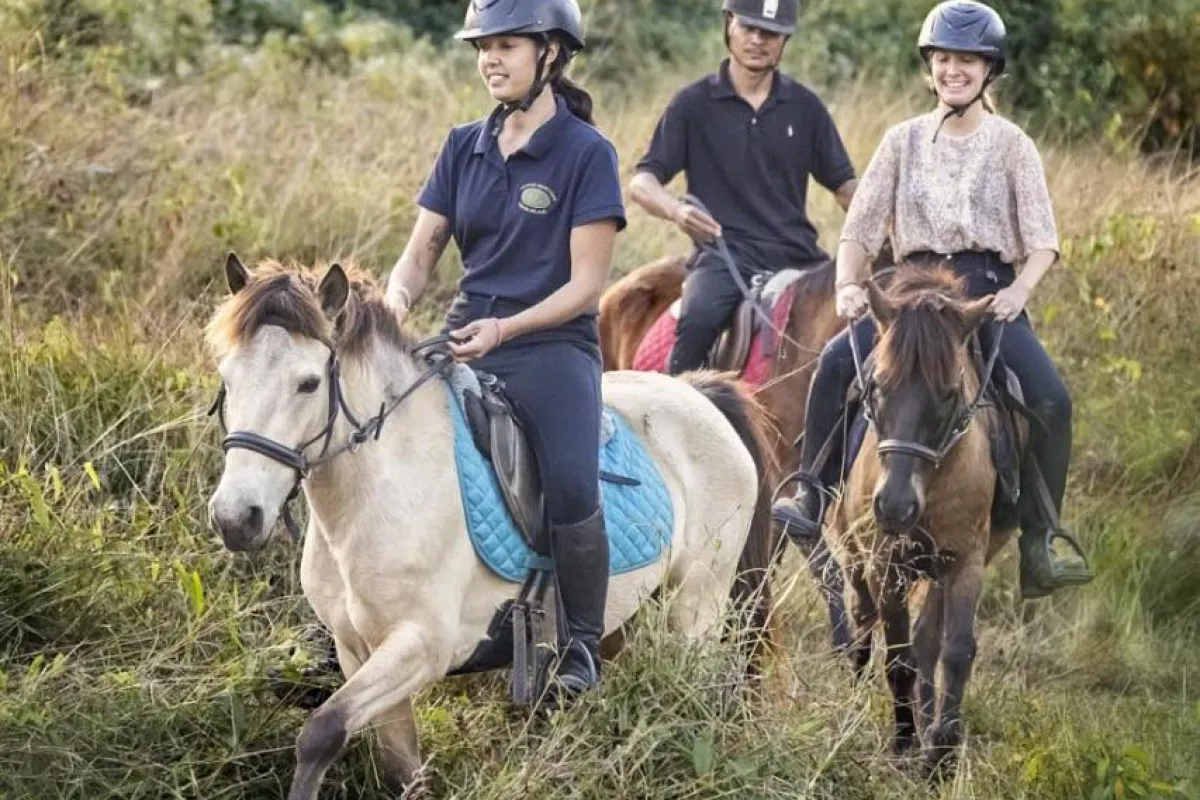
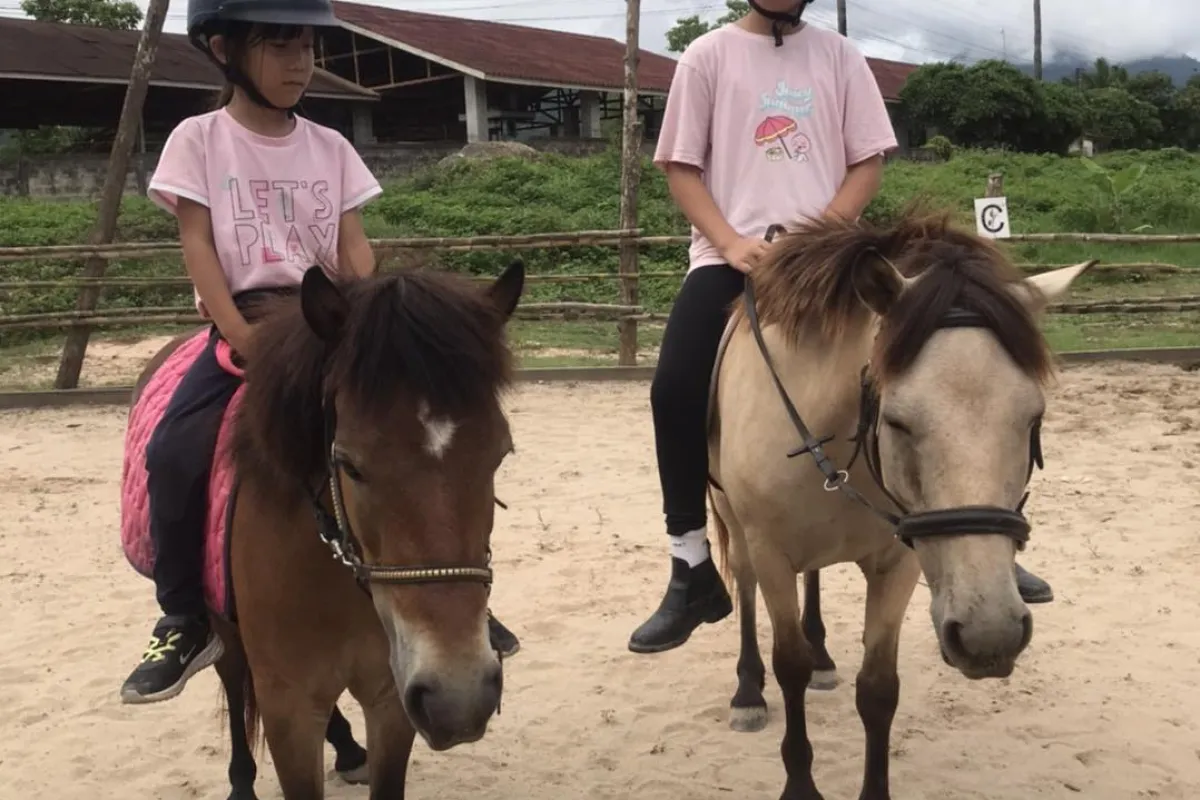
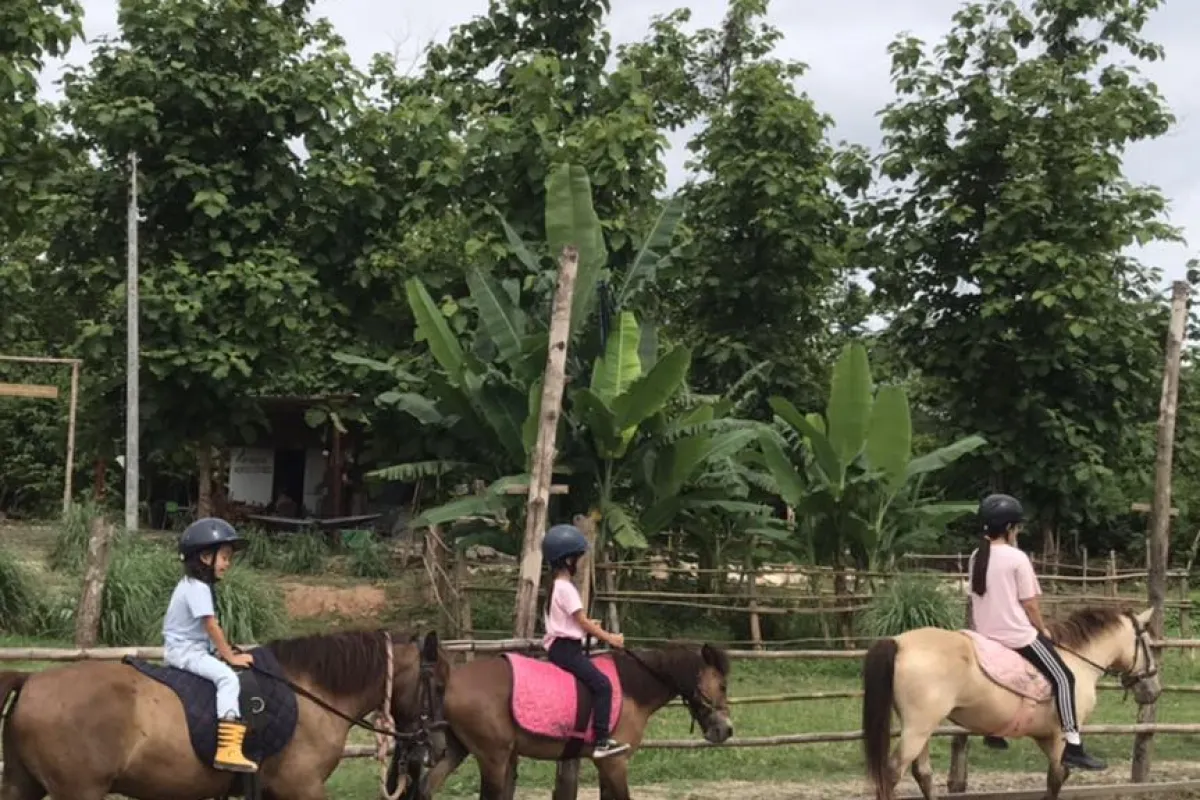
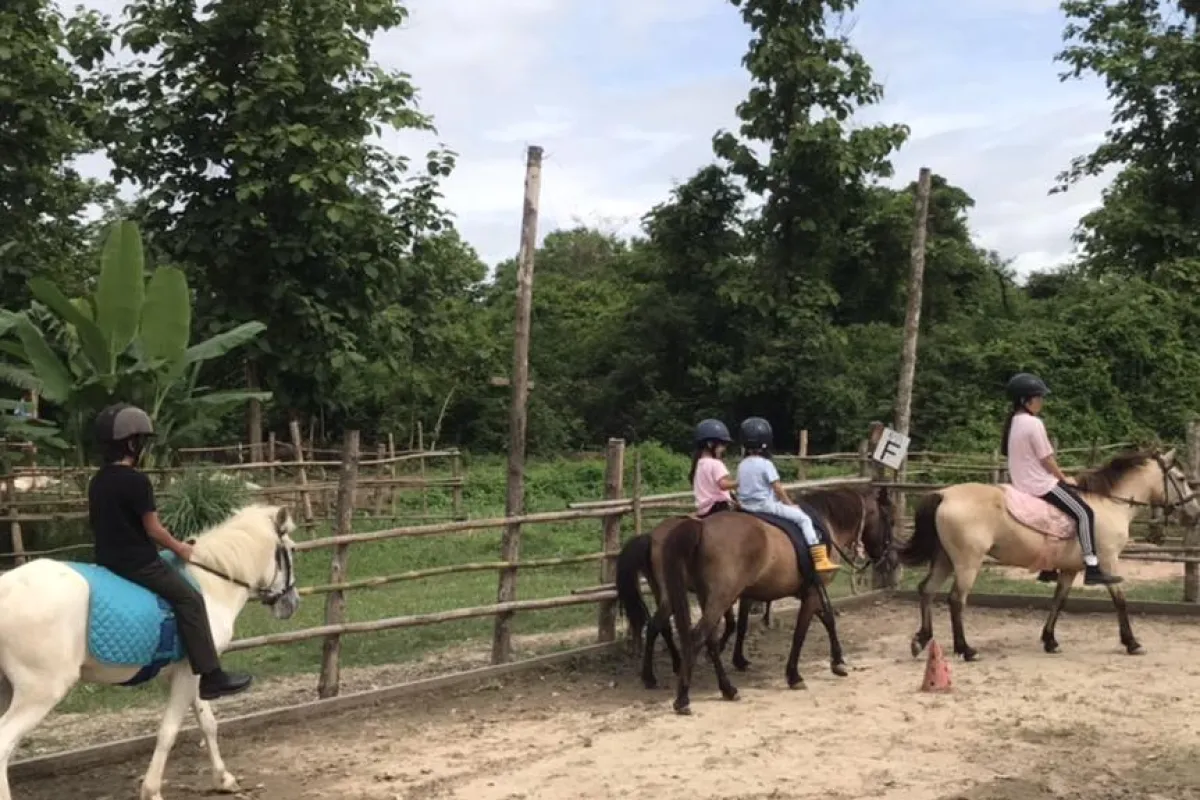
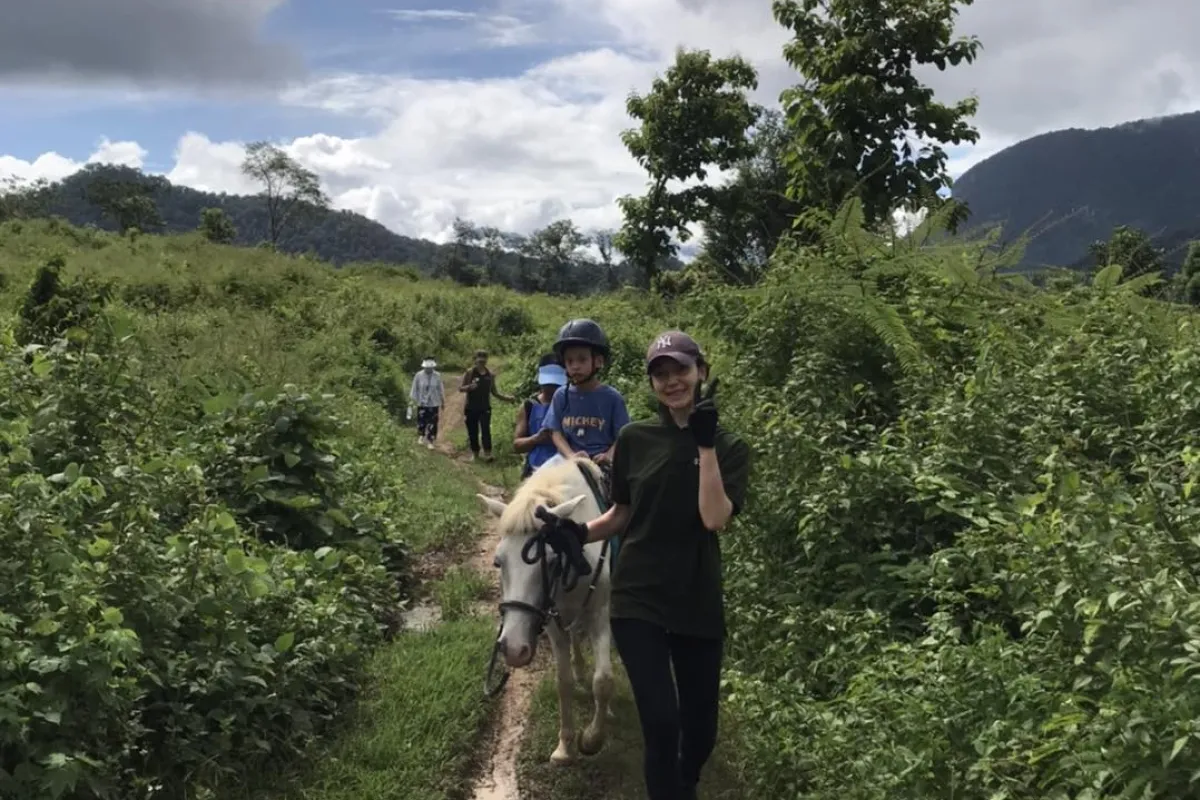
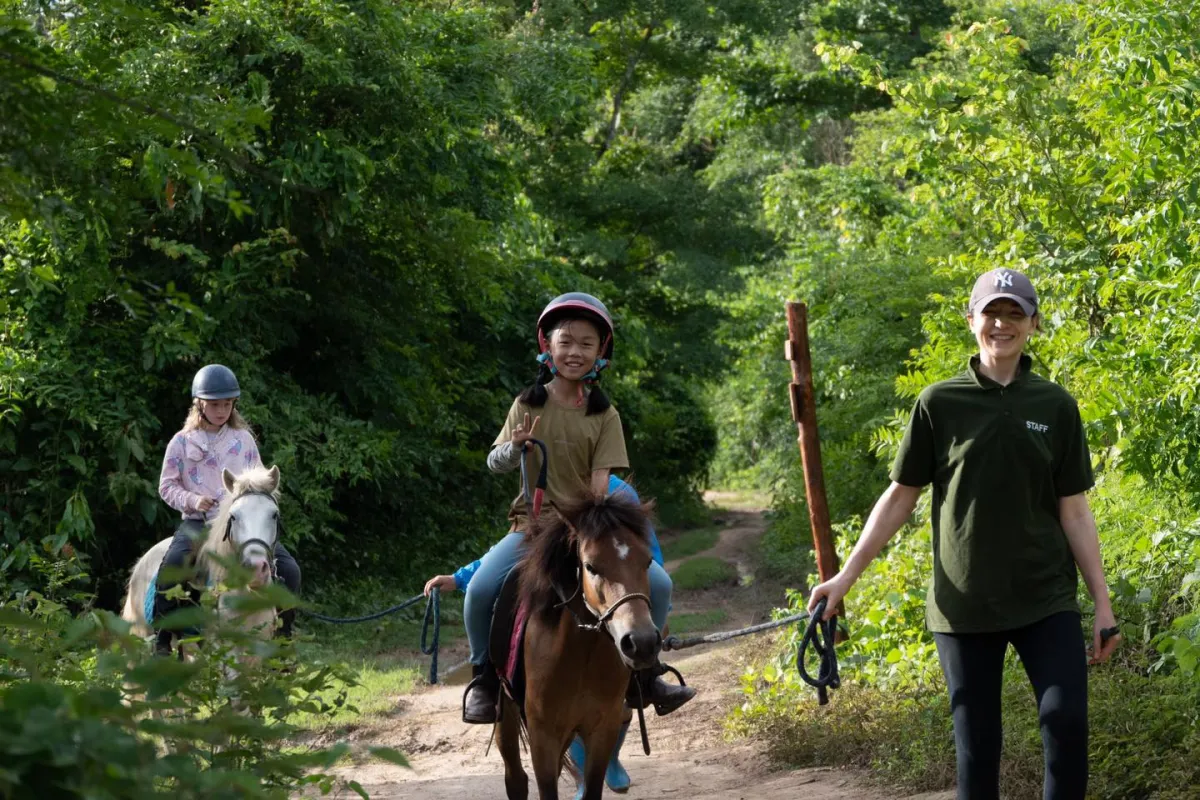
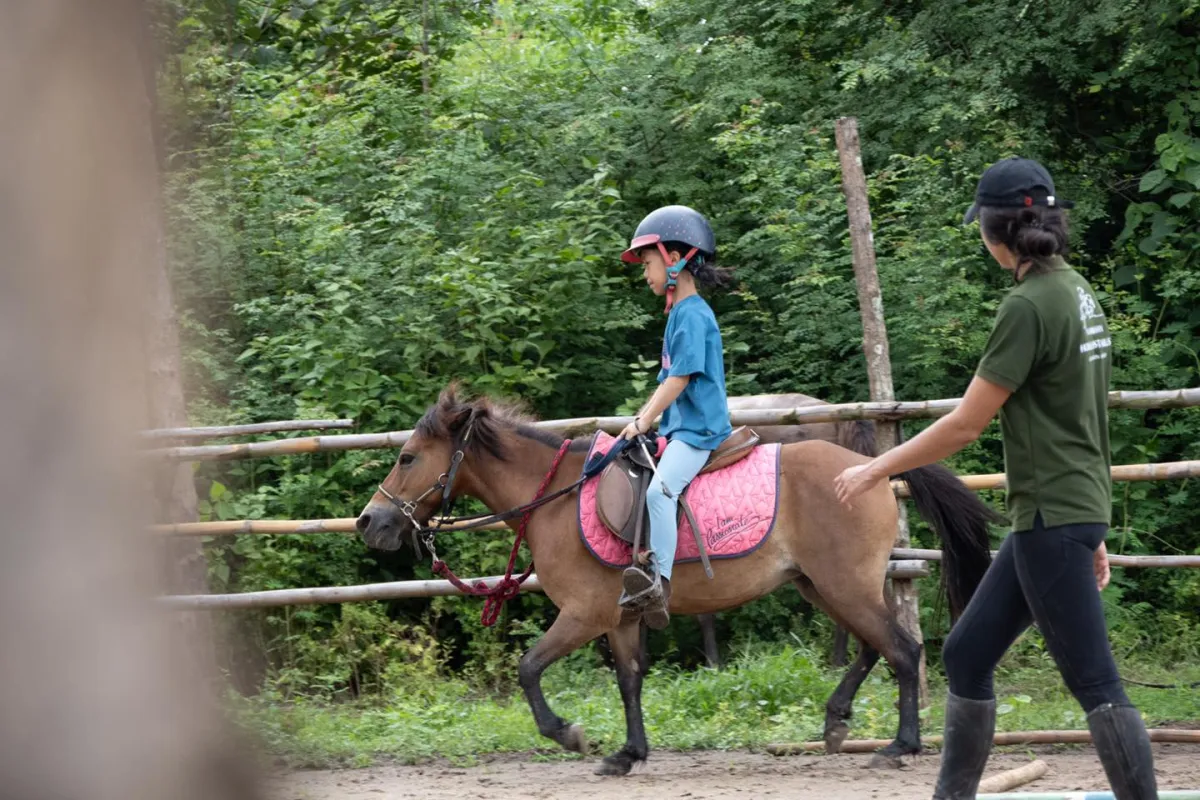
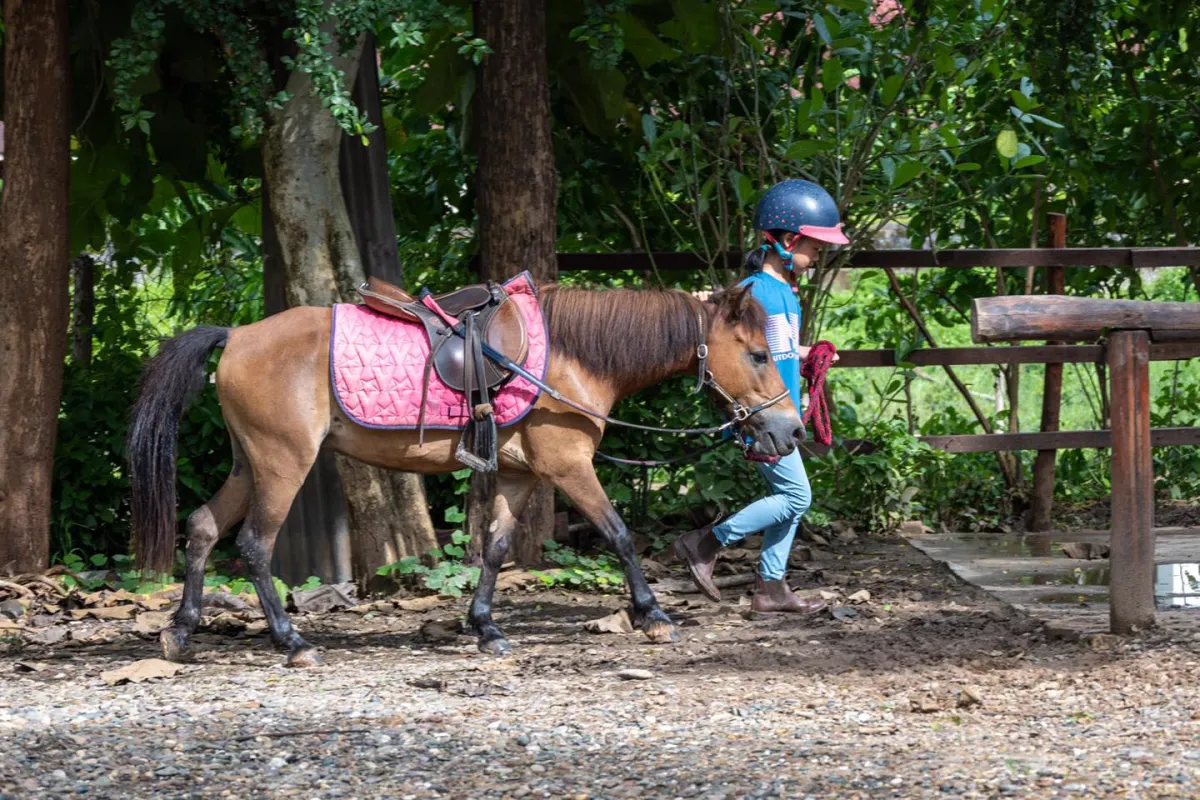
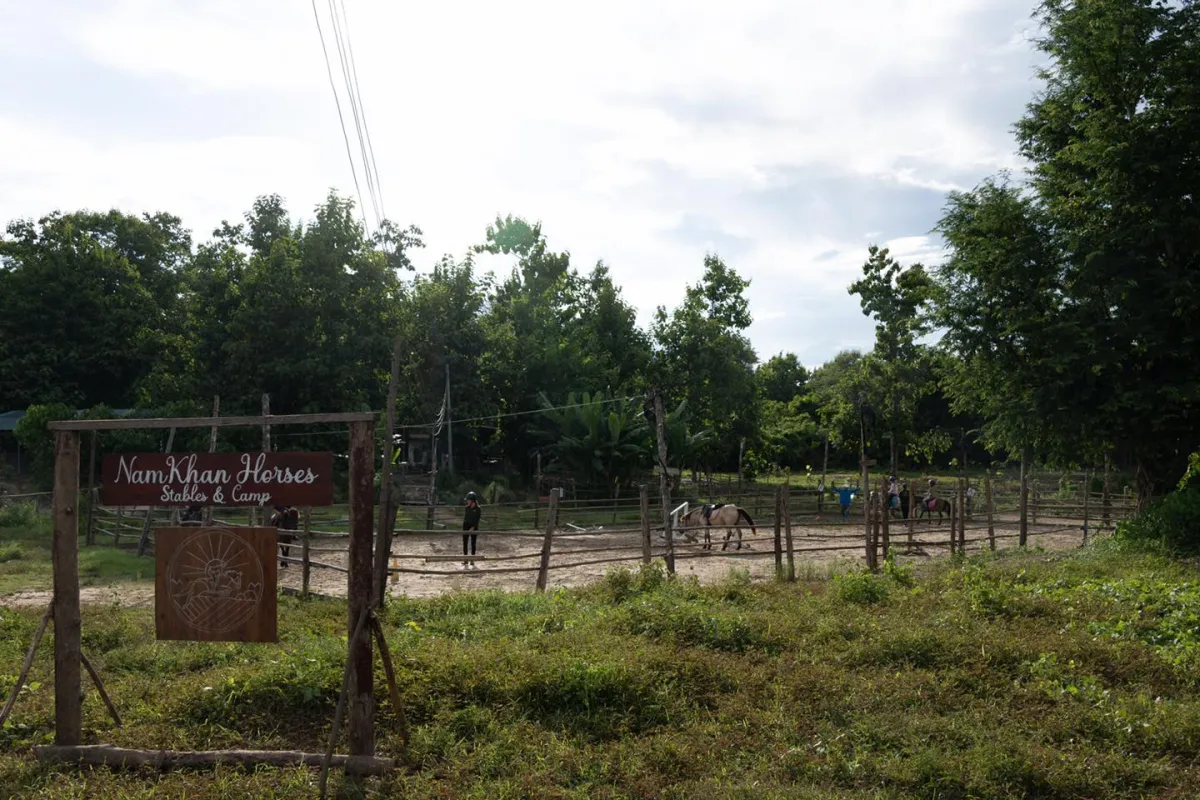
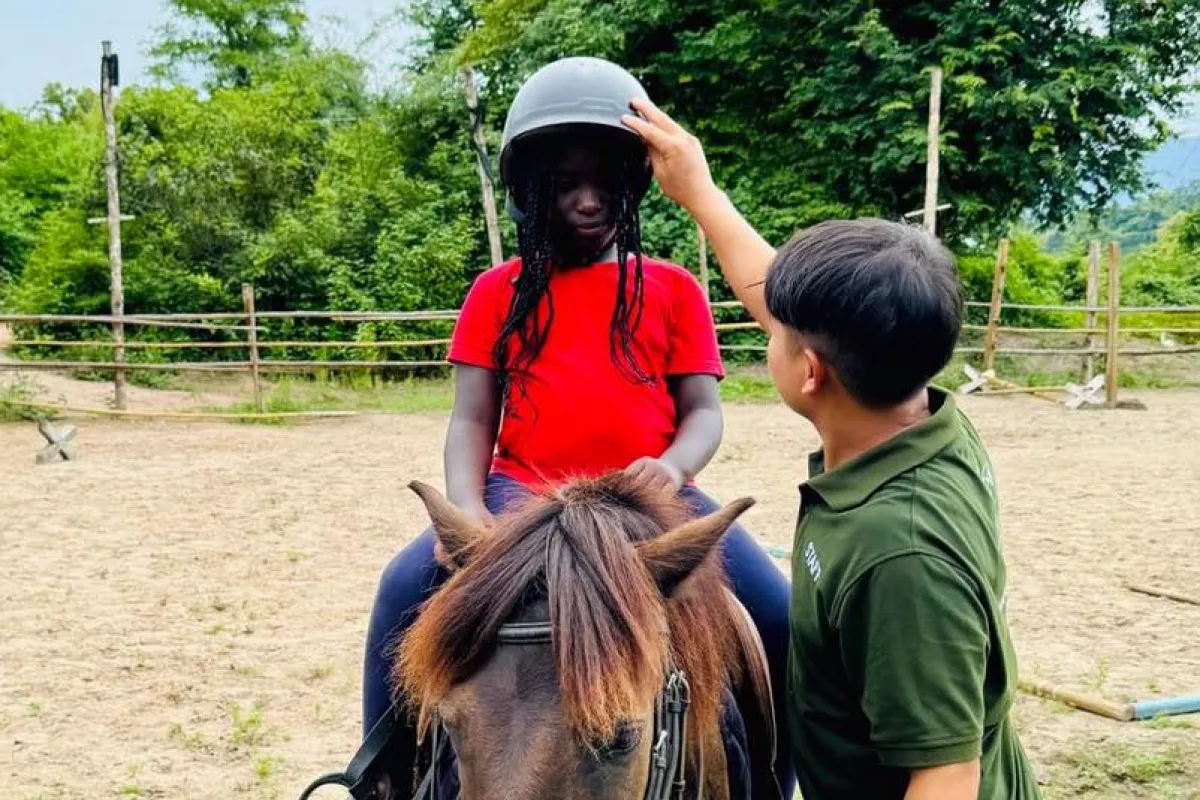
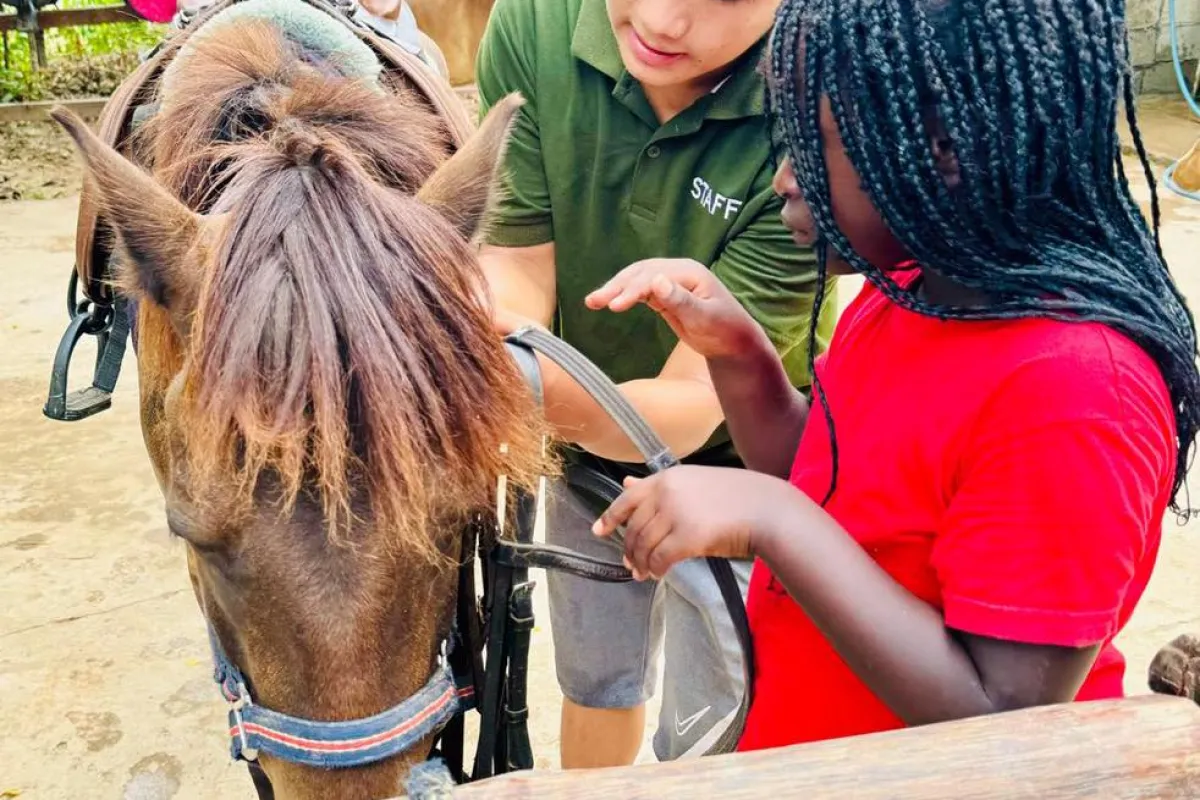
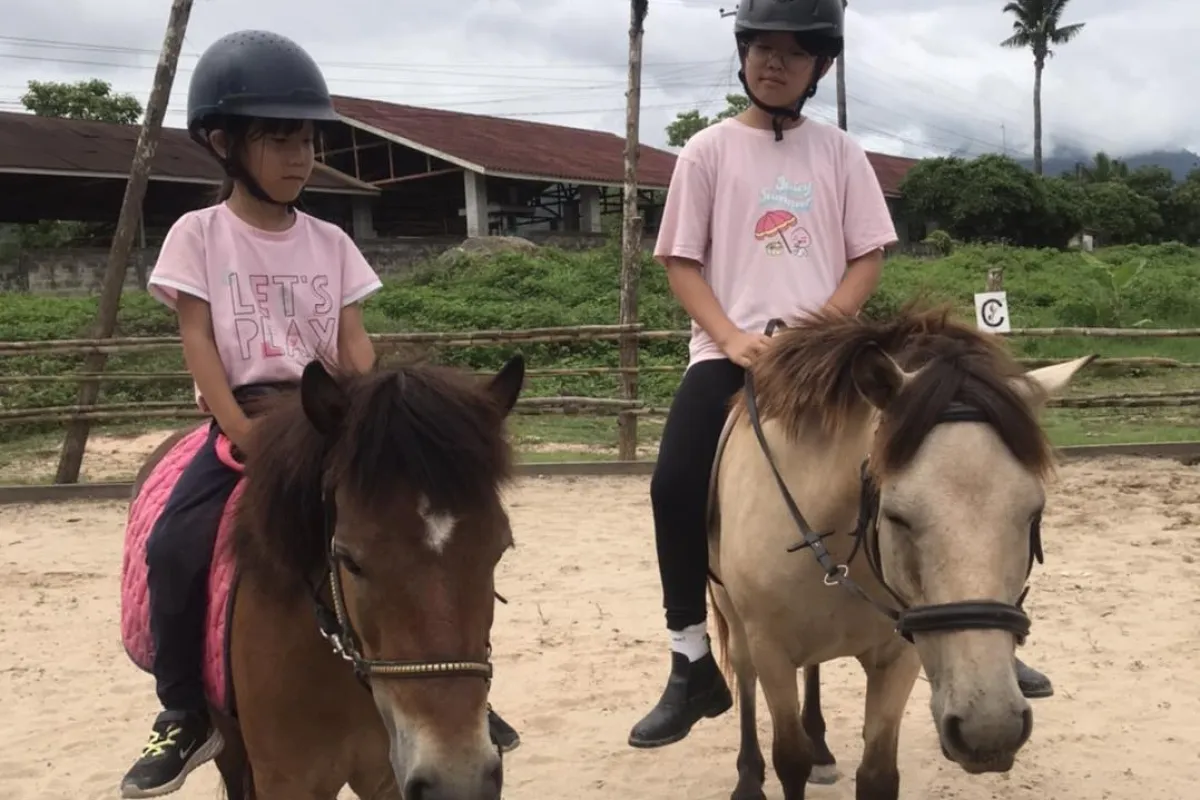
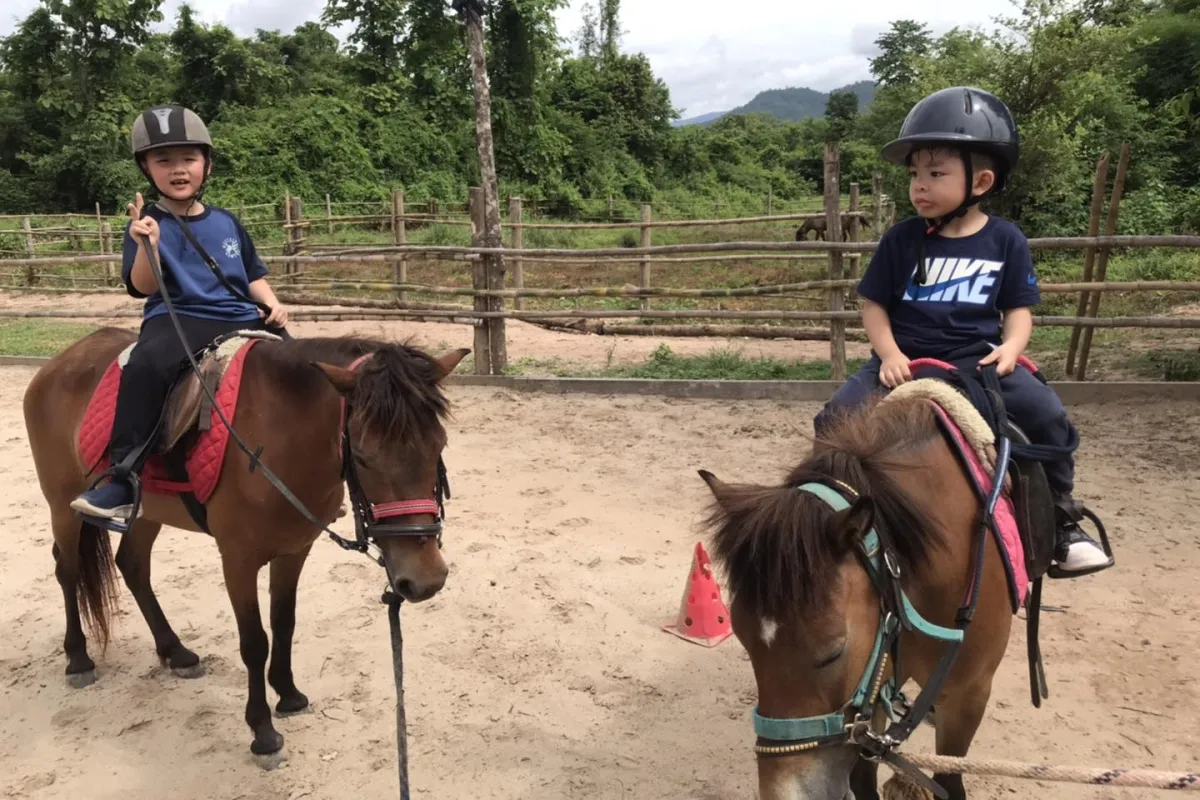
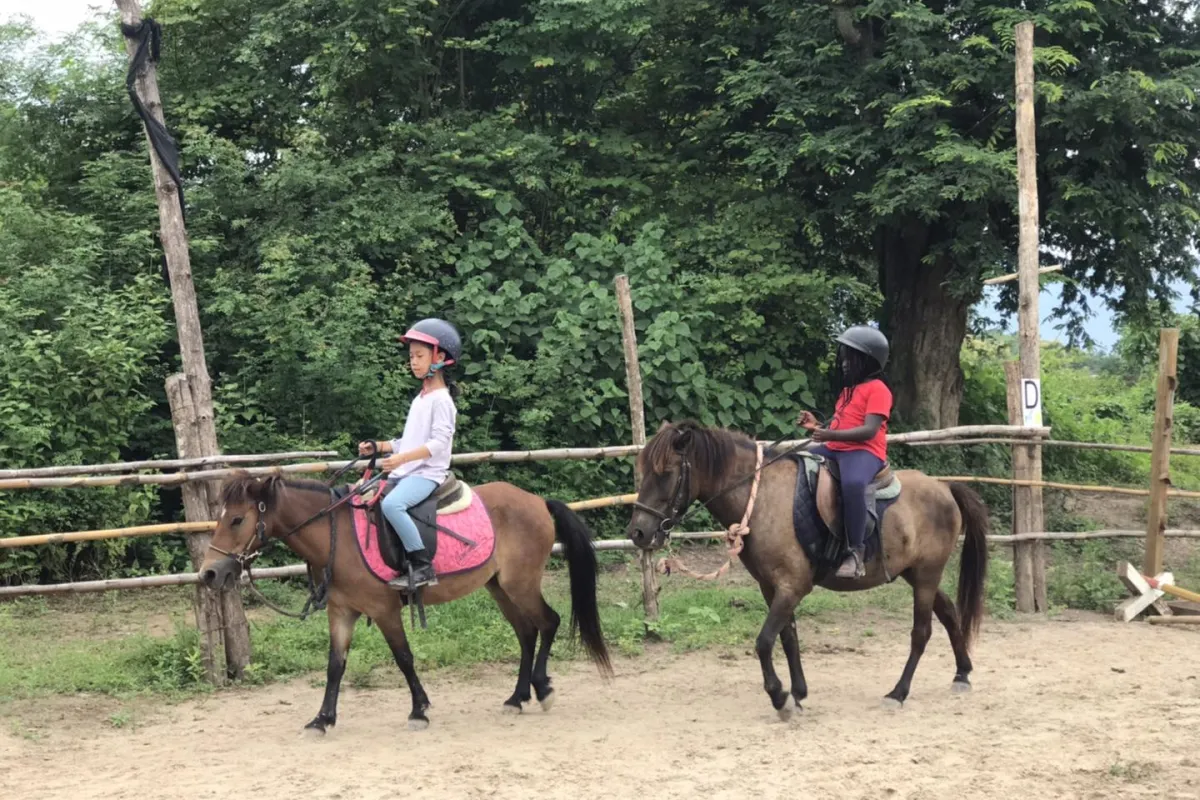
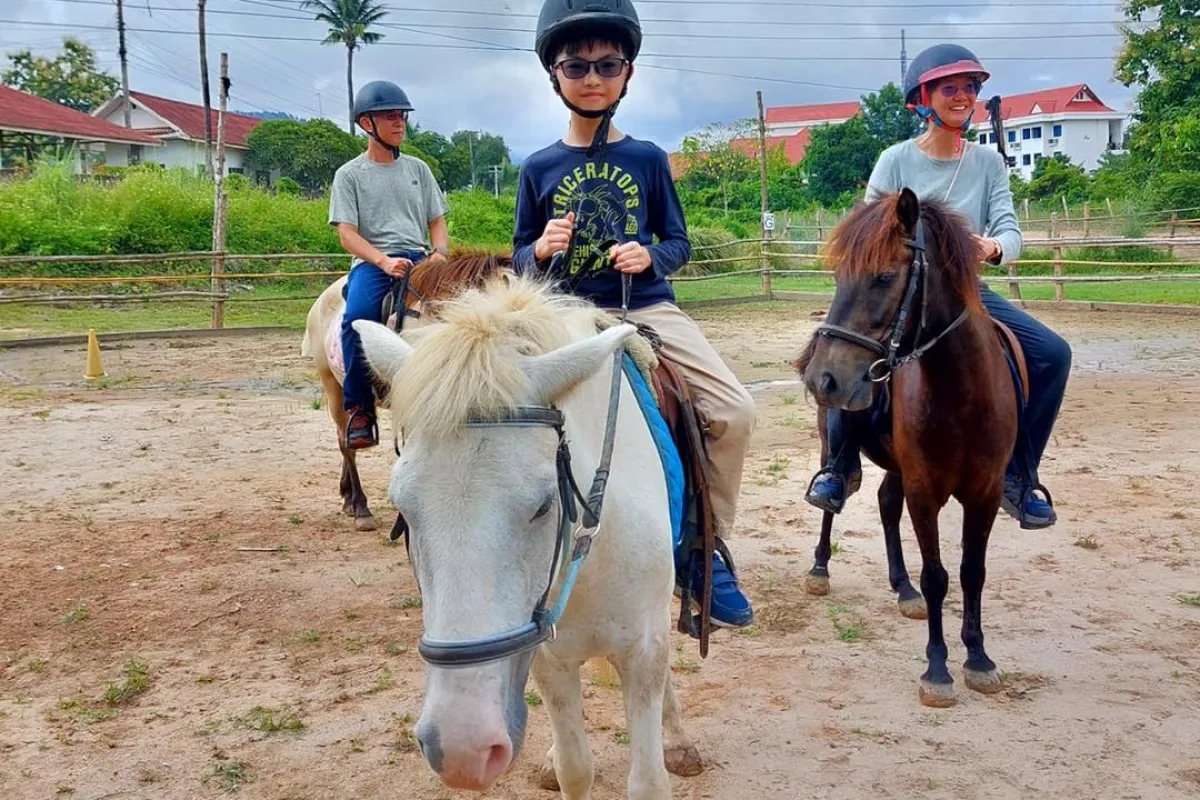
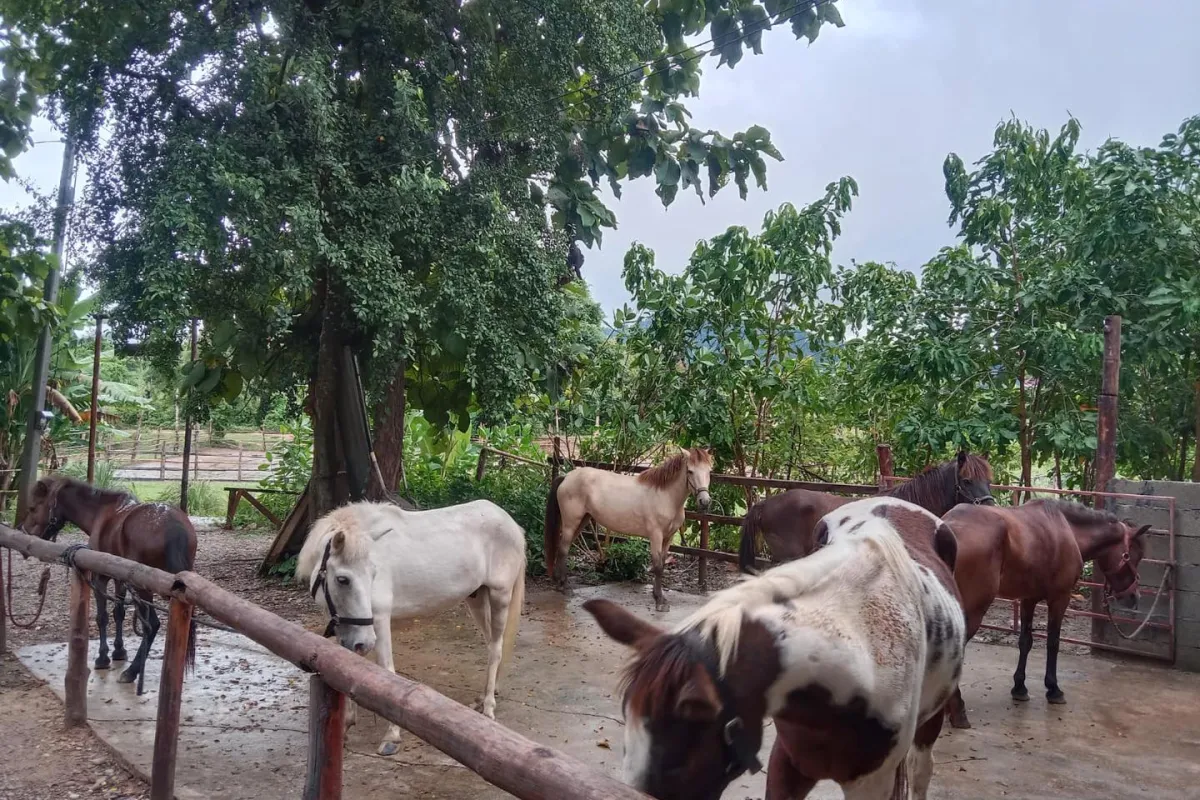
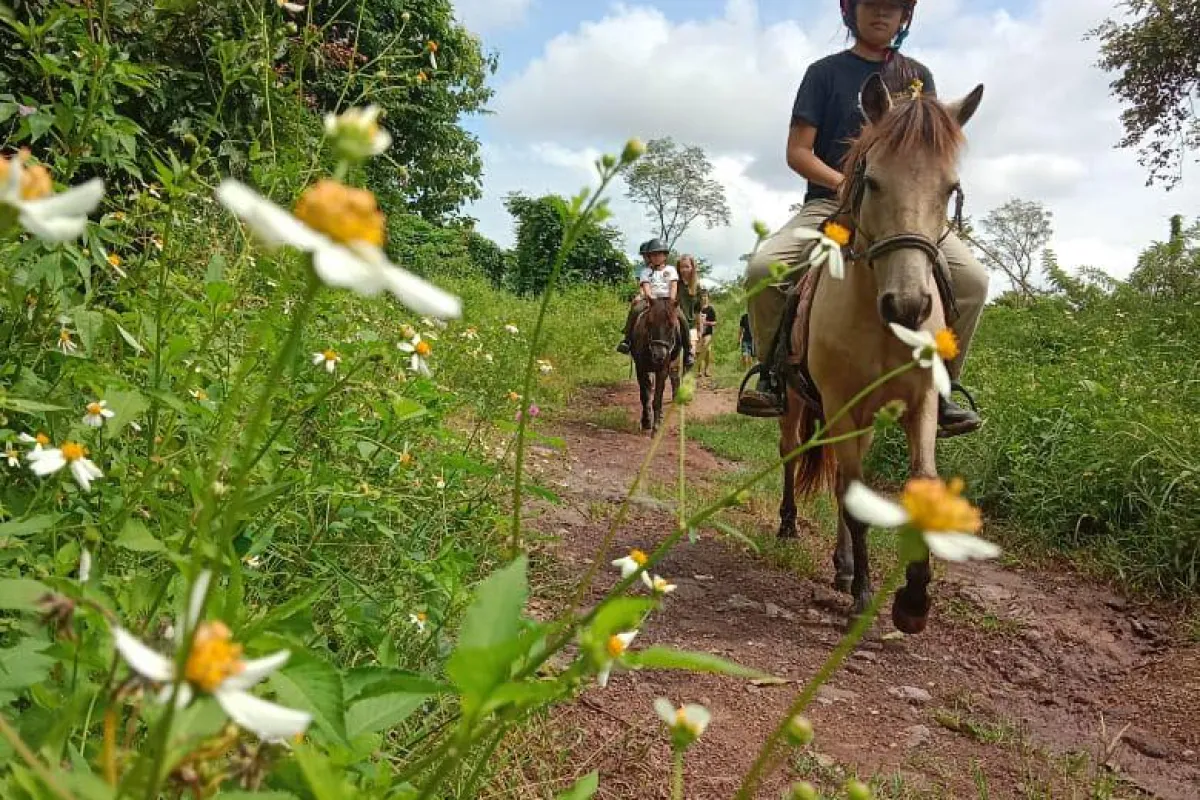
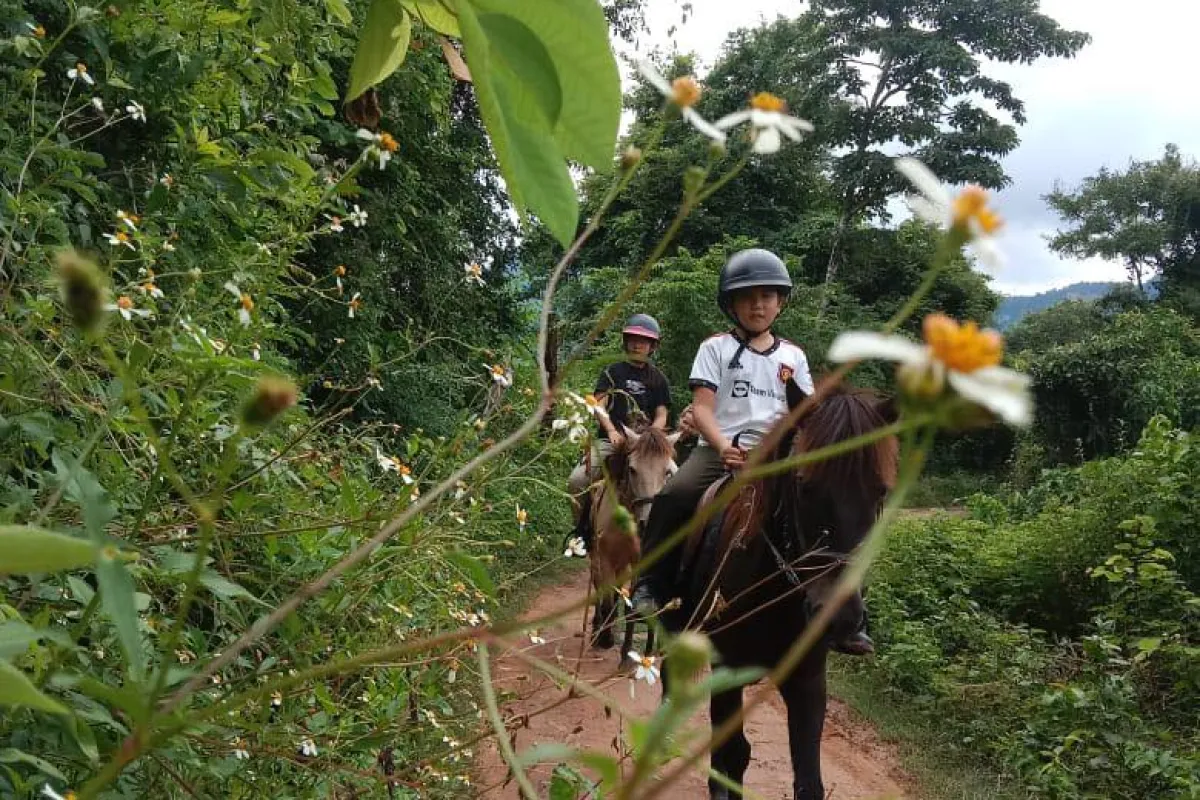
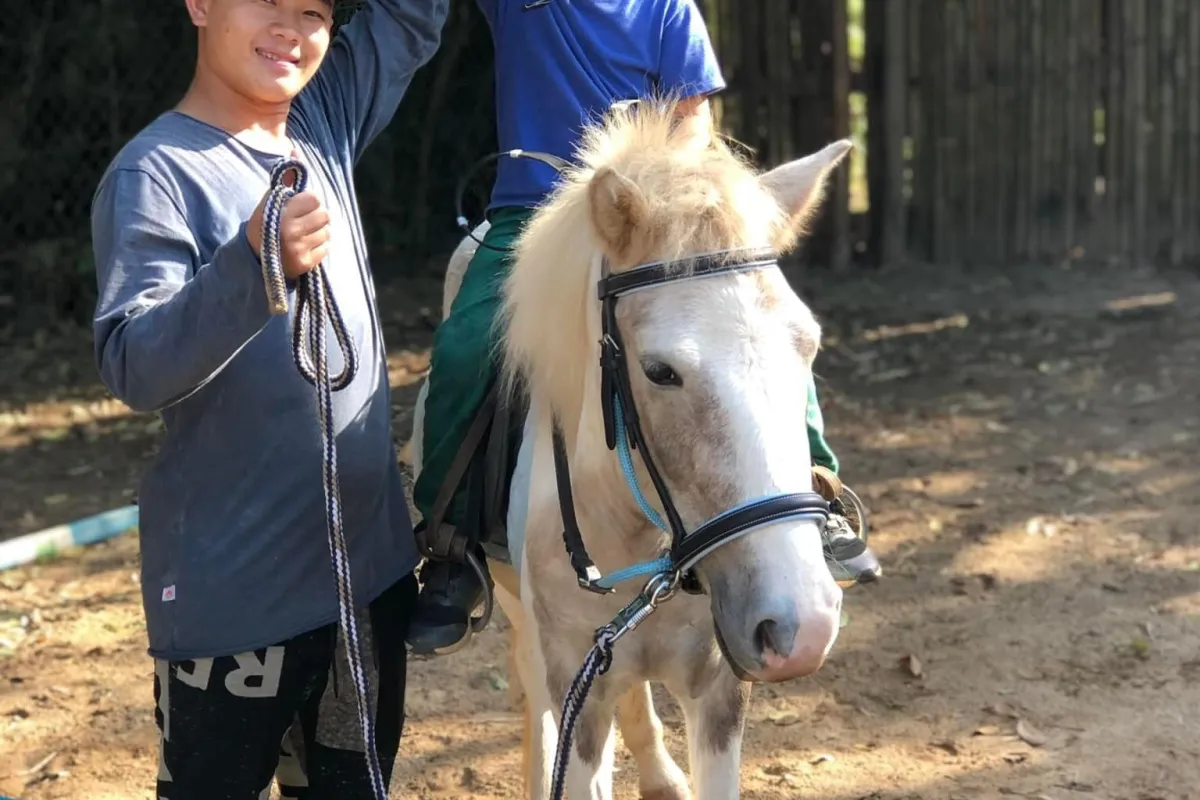
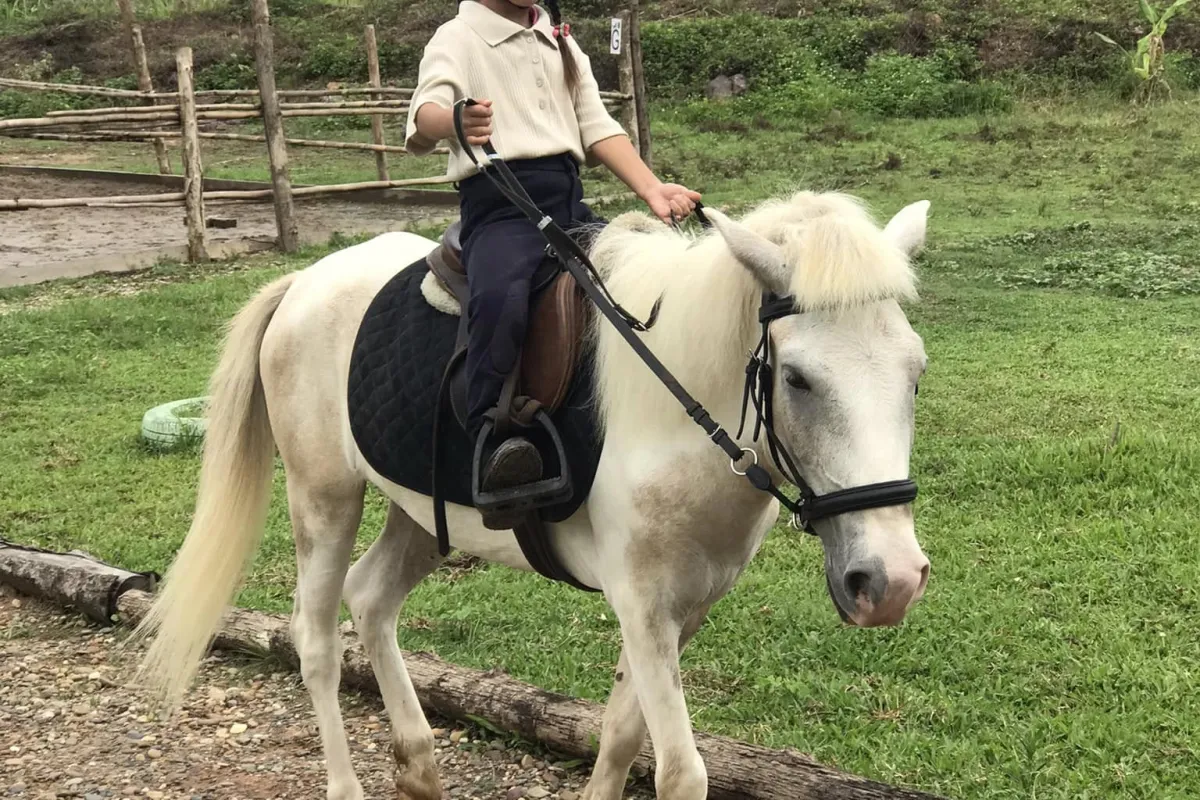
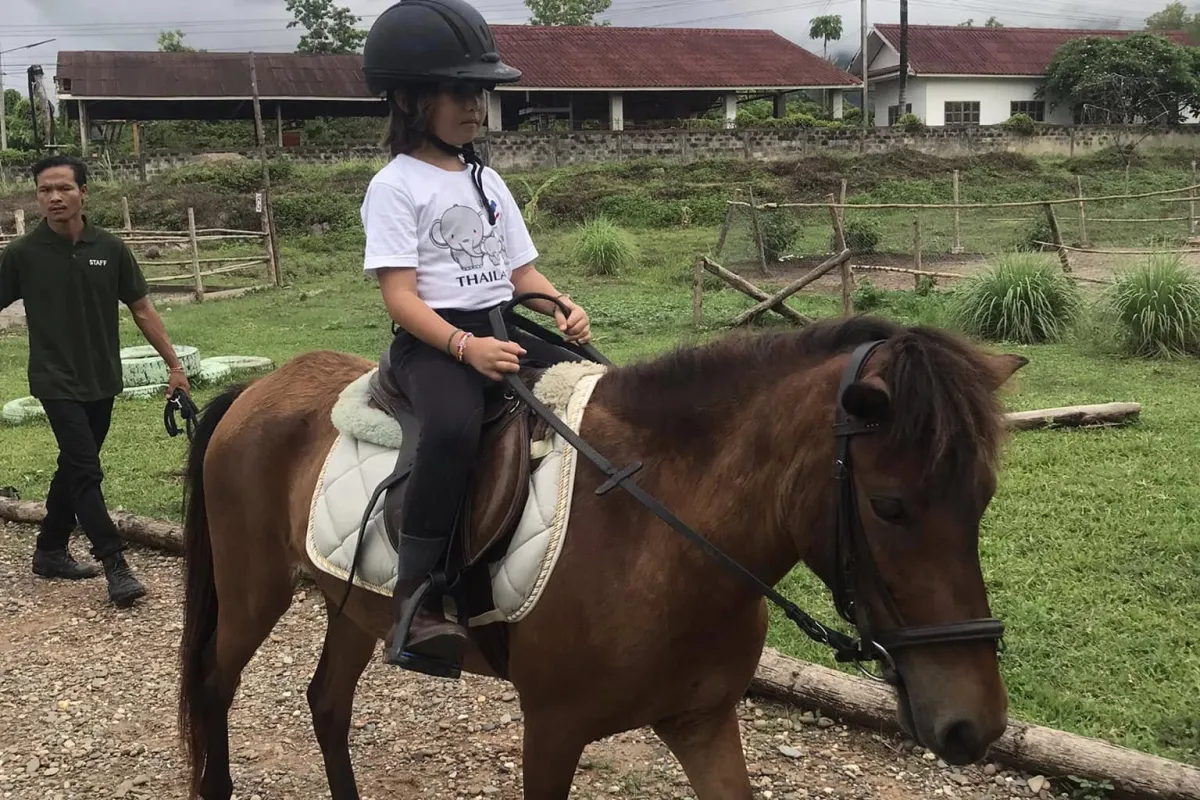
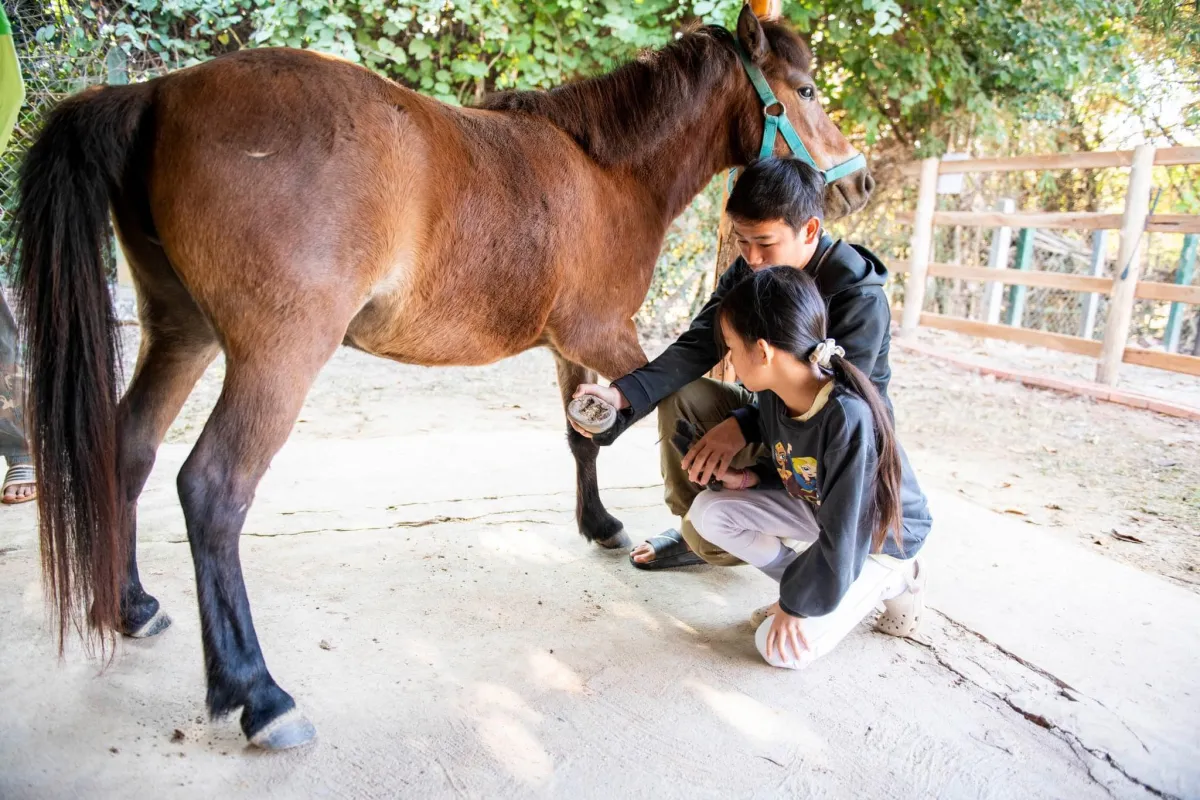
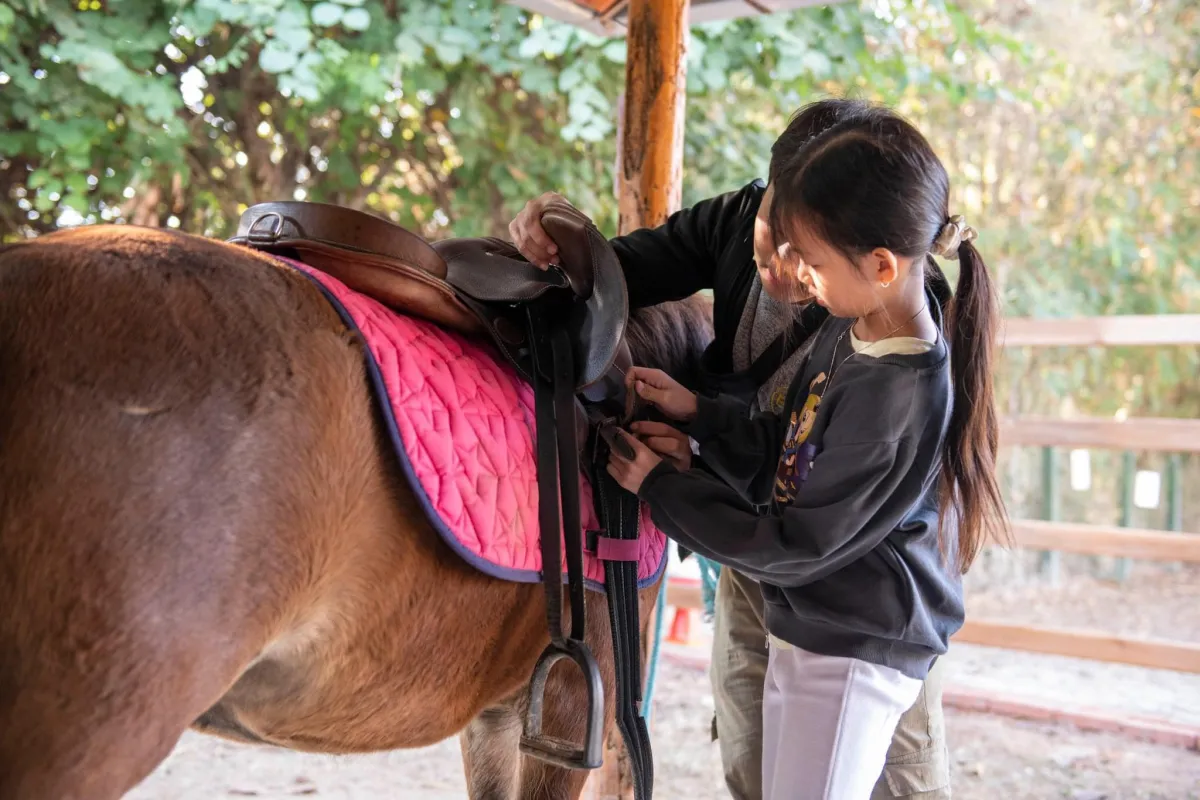
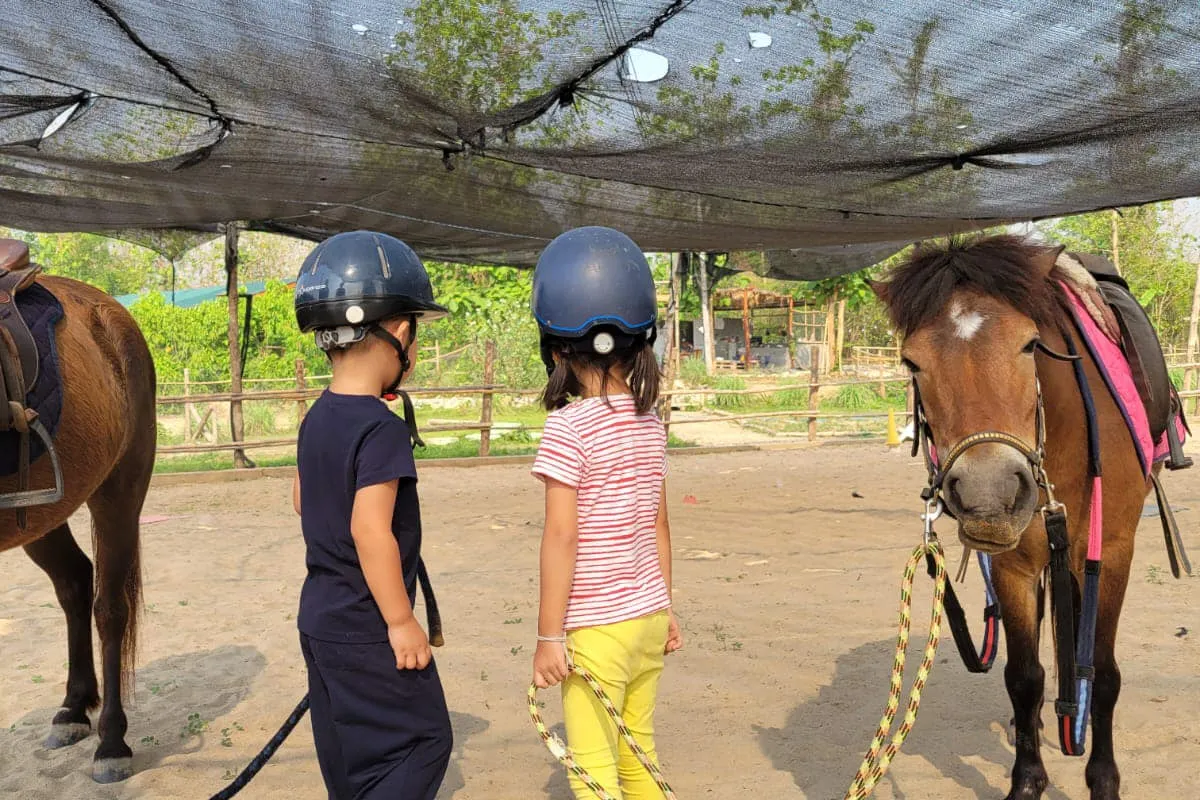
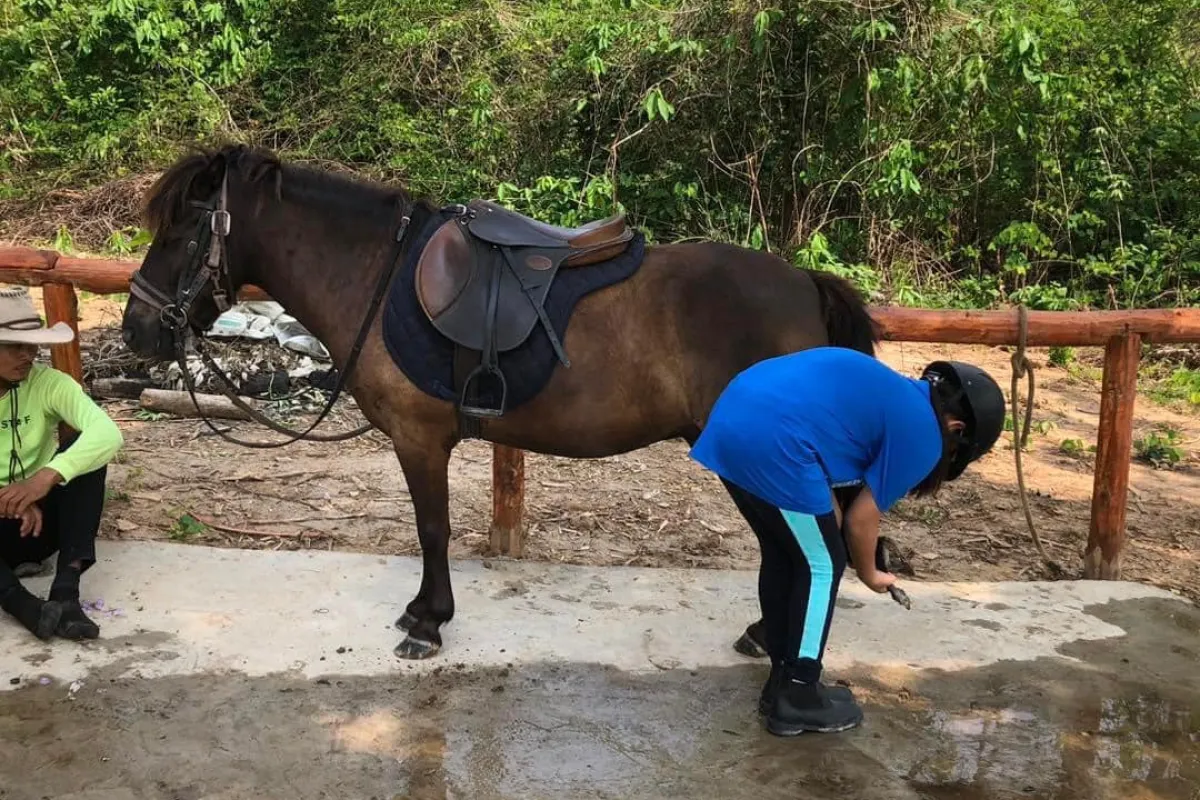
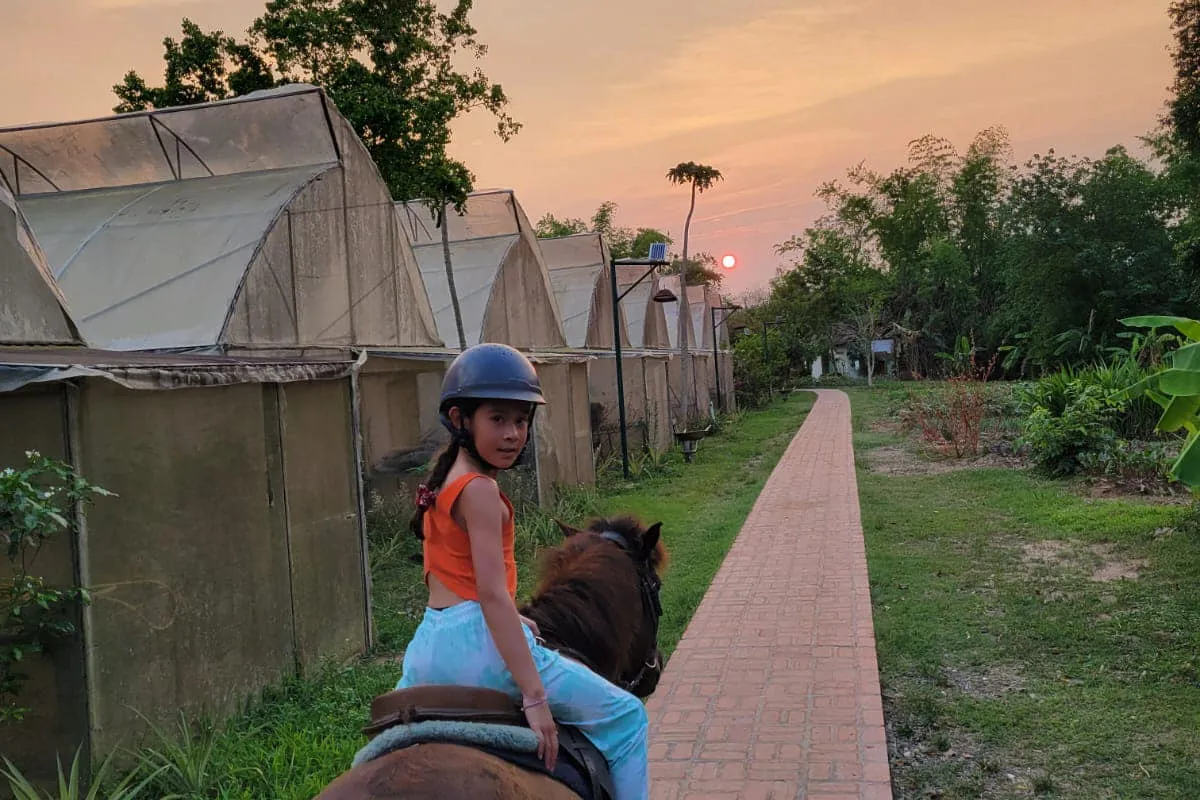
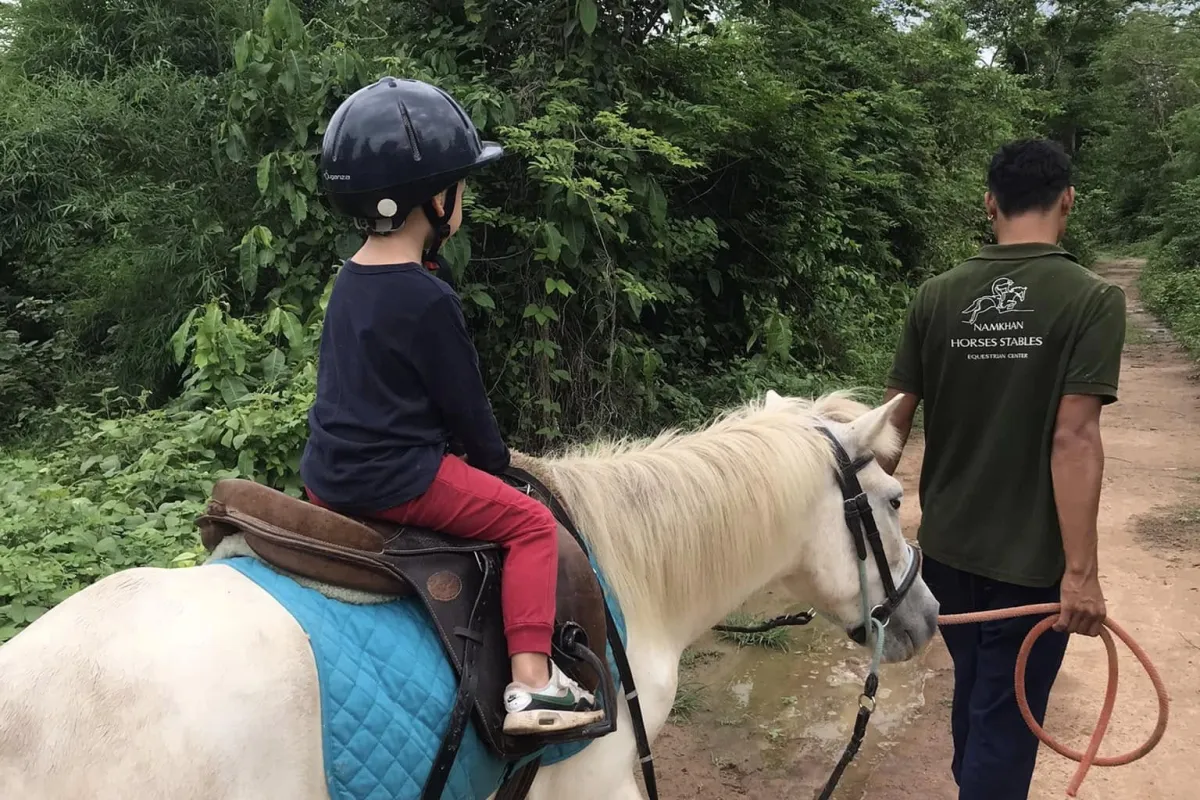
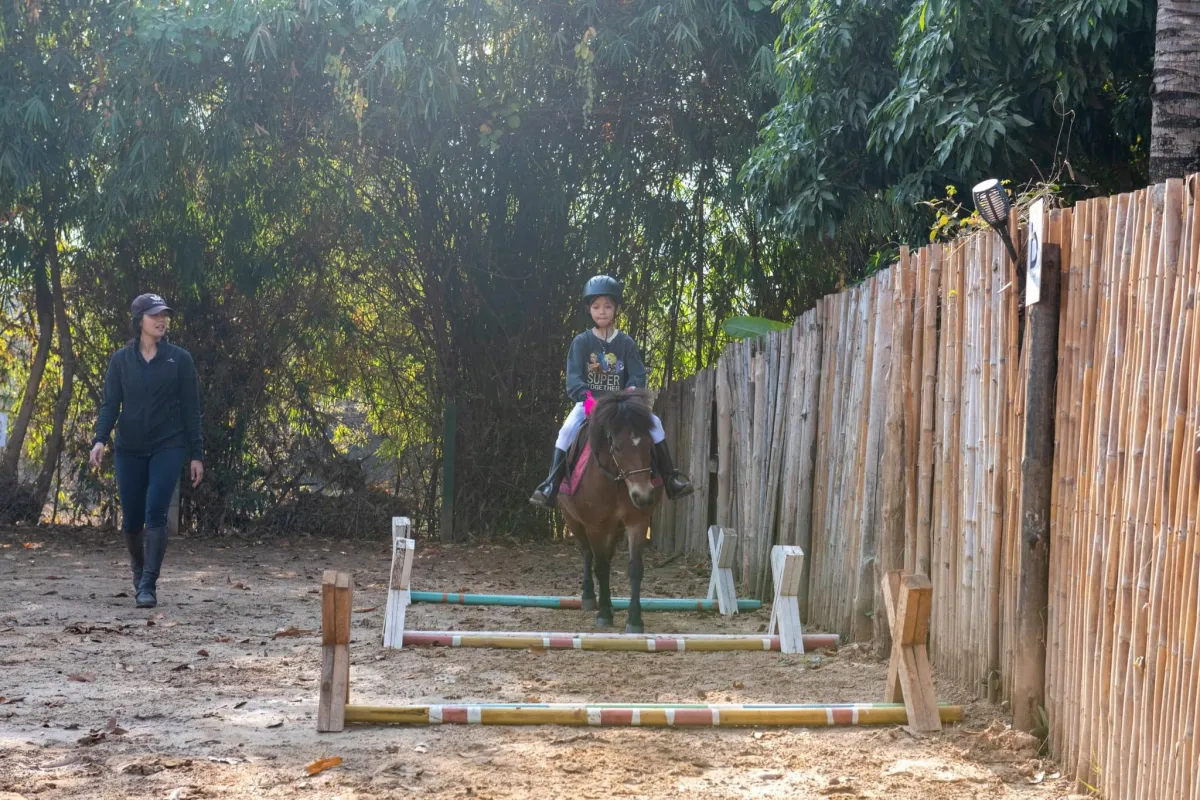
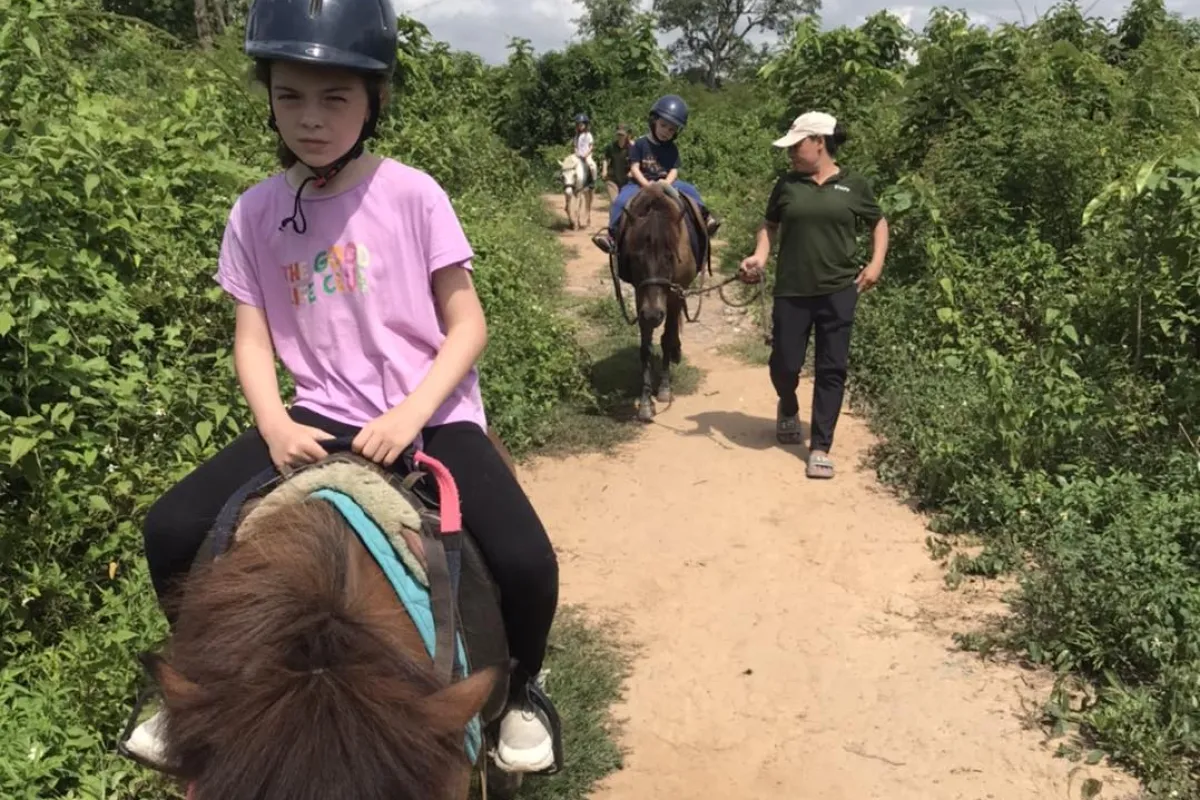
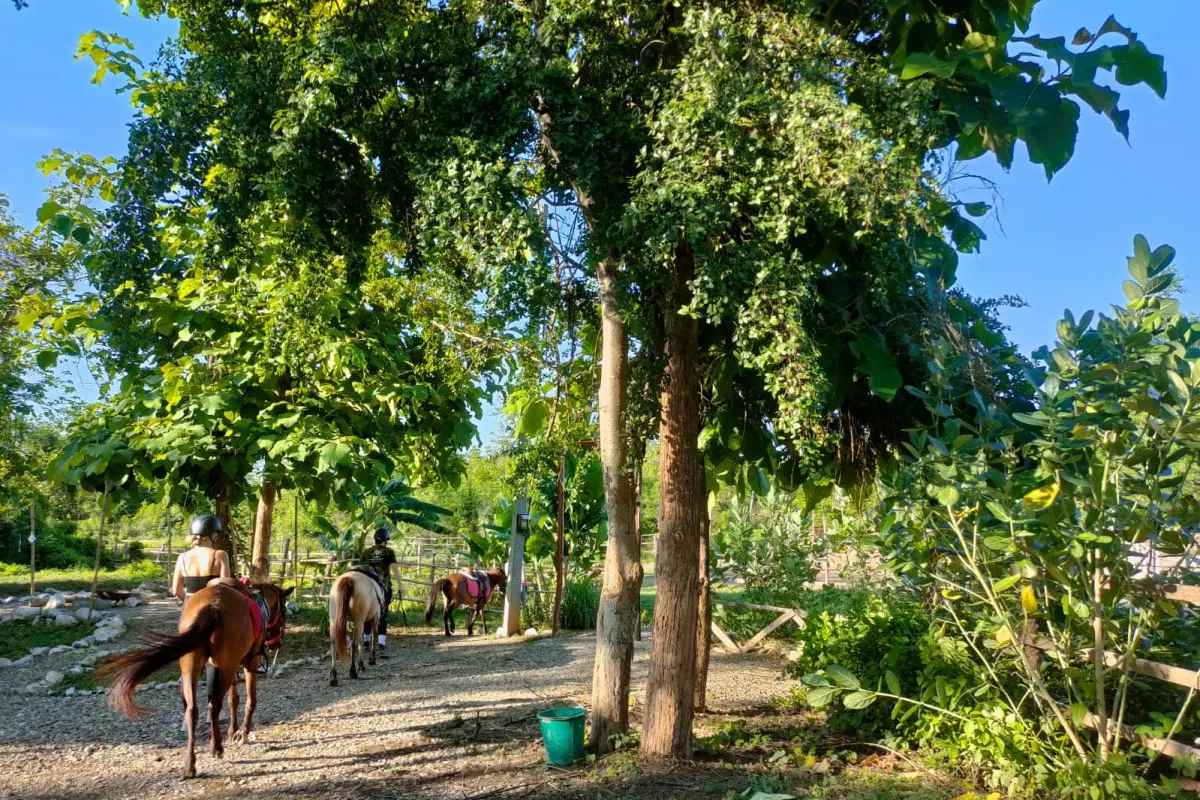
Pony Ride Experience in Luang Prabang
Discover the beauty and tranquility of Luang Prabang with a unique pony ride experience. Perfect for travelers of all ages, this activity takes you through the region's stunning landscapes, from serene rivers and lush forests to quaint villages and sacred temples.
As you ride, immerse yourself in the charm of traditional life, passing through bamboo and weaving villages where local artisans showcase their crafts. The journey offers a perfect blend of cultural exploration and natural serenity, making it a memorable way to connect with the rich heritage and breathtaking scenery of Laos.
Whether you’re seeking relaxation or adventure, a pony ride in Luang Prabang promises an unforgettable experience for everyone.
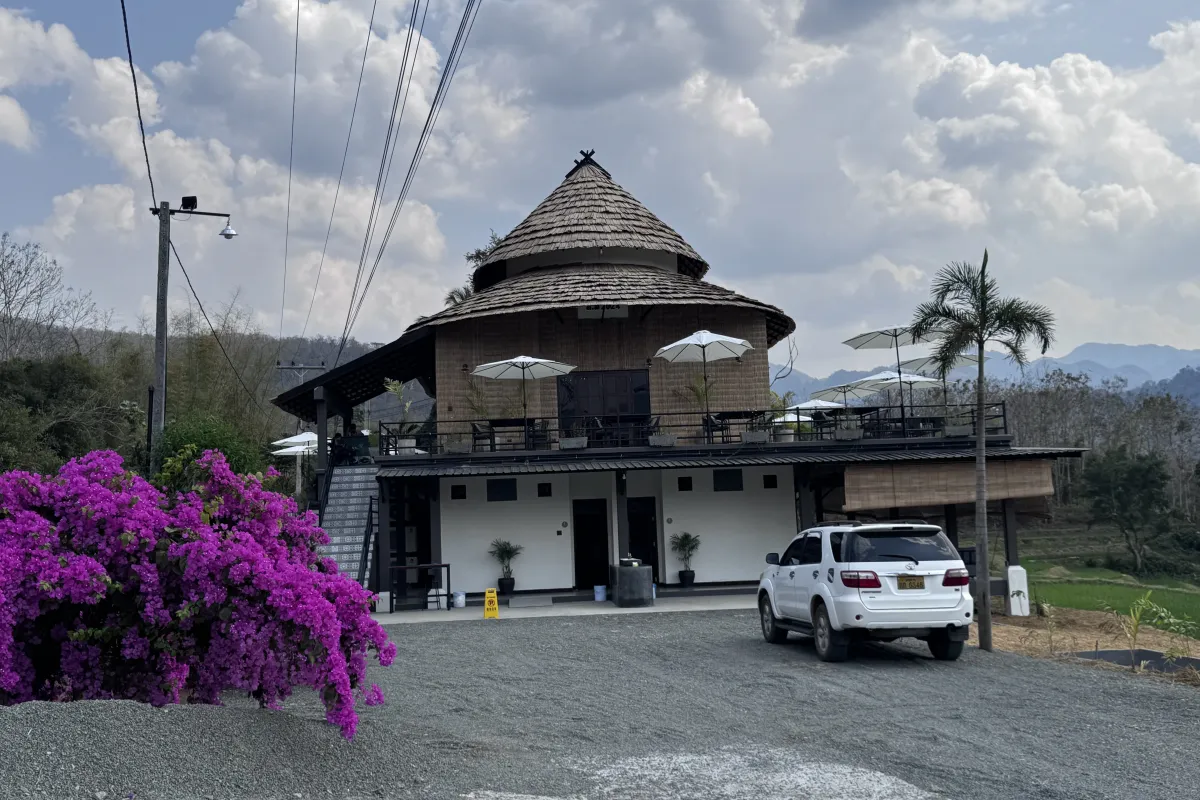
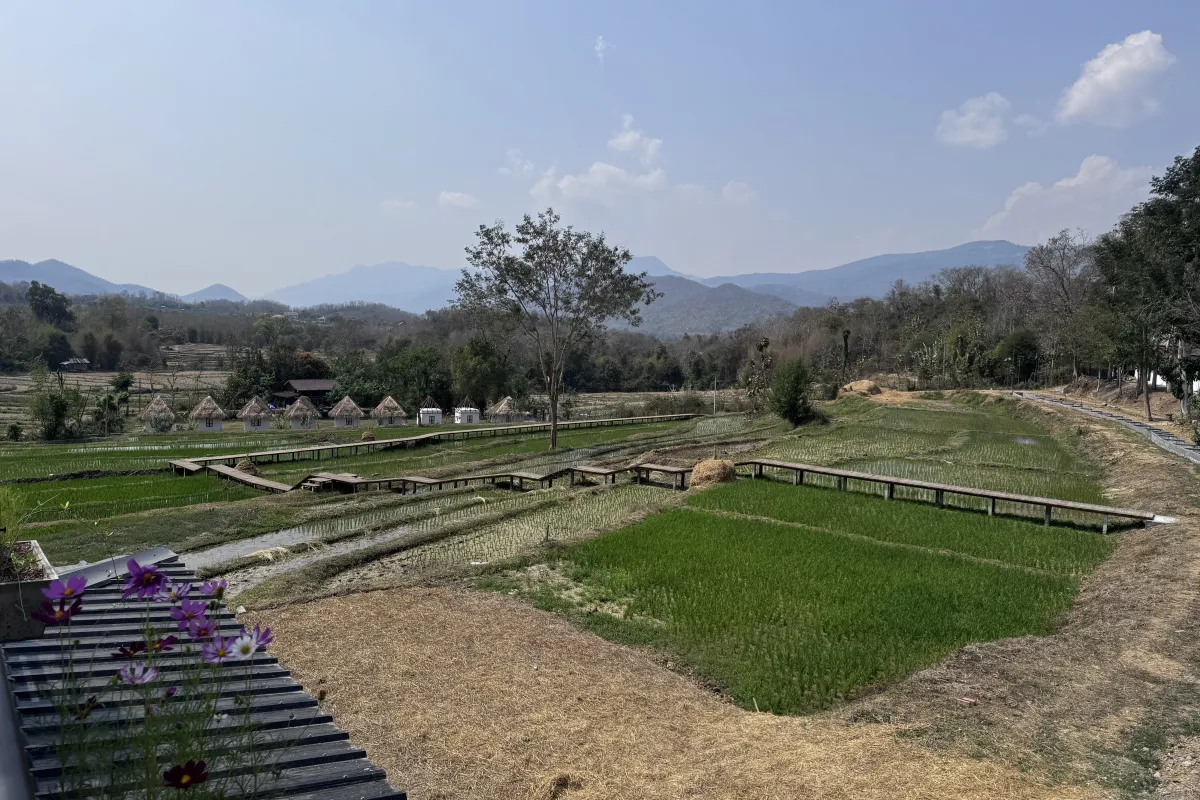
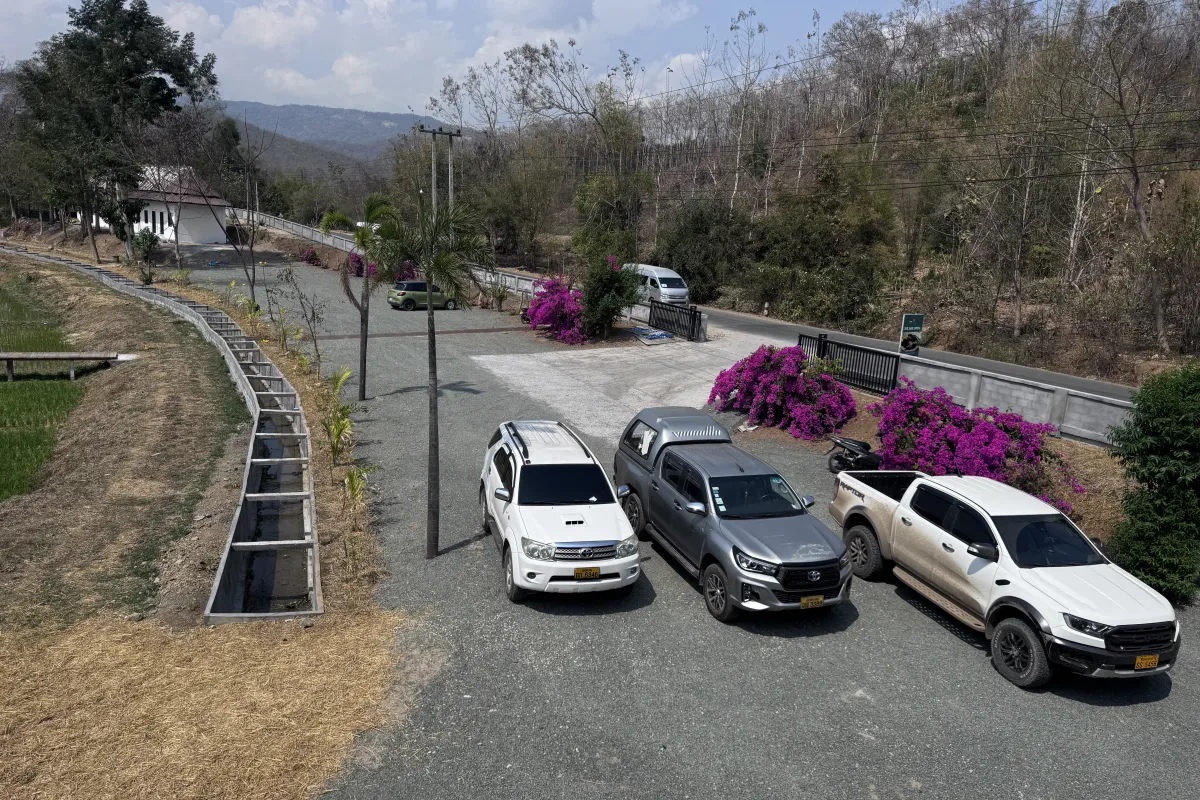
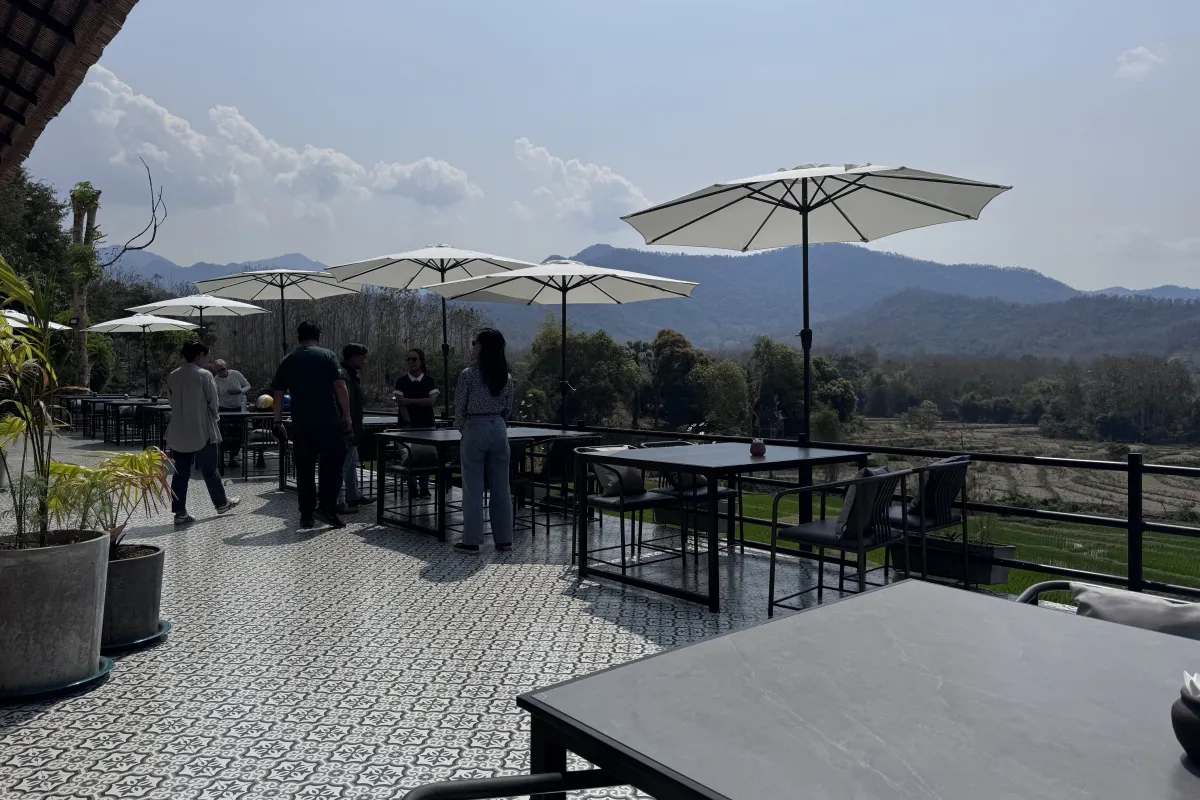
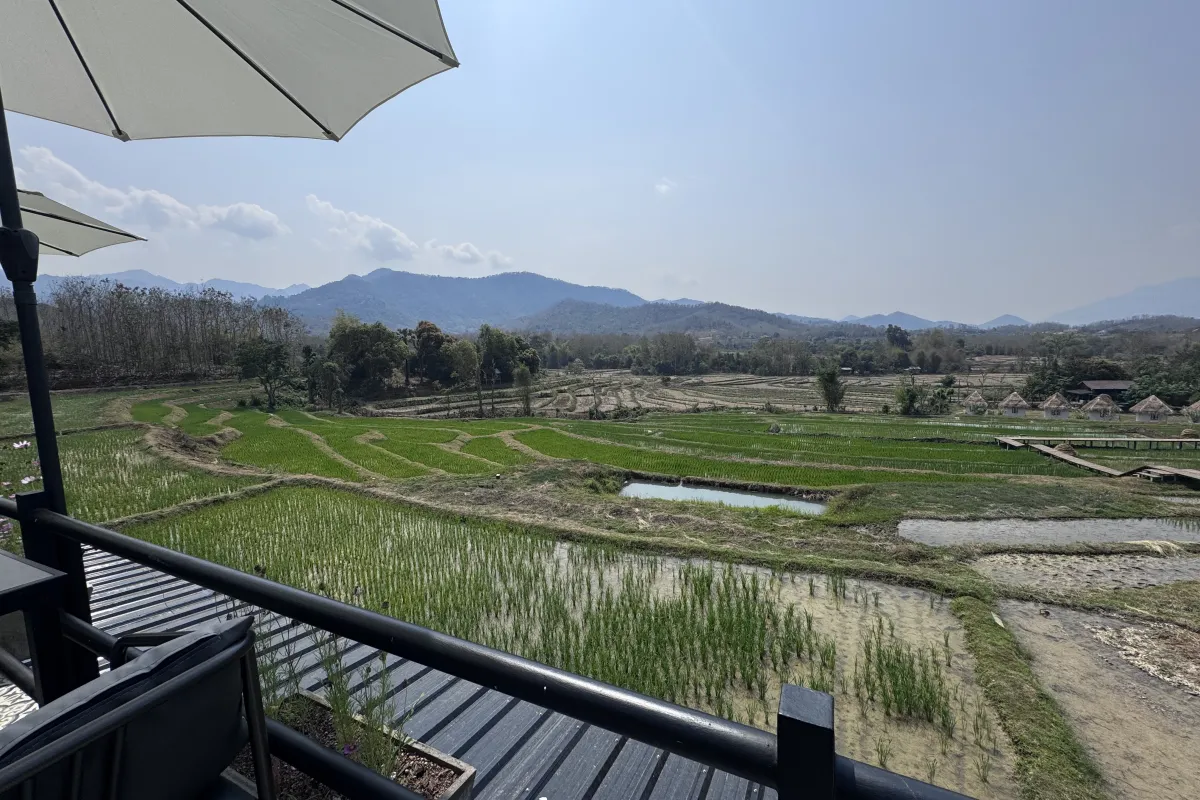
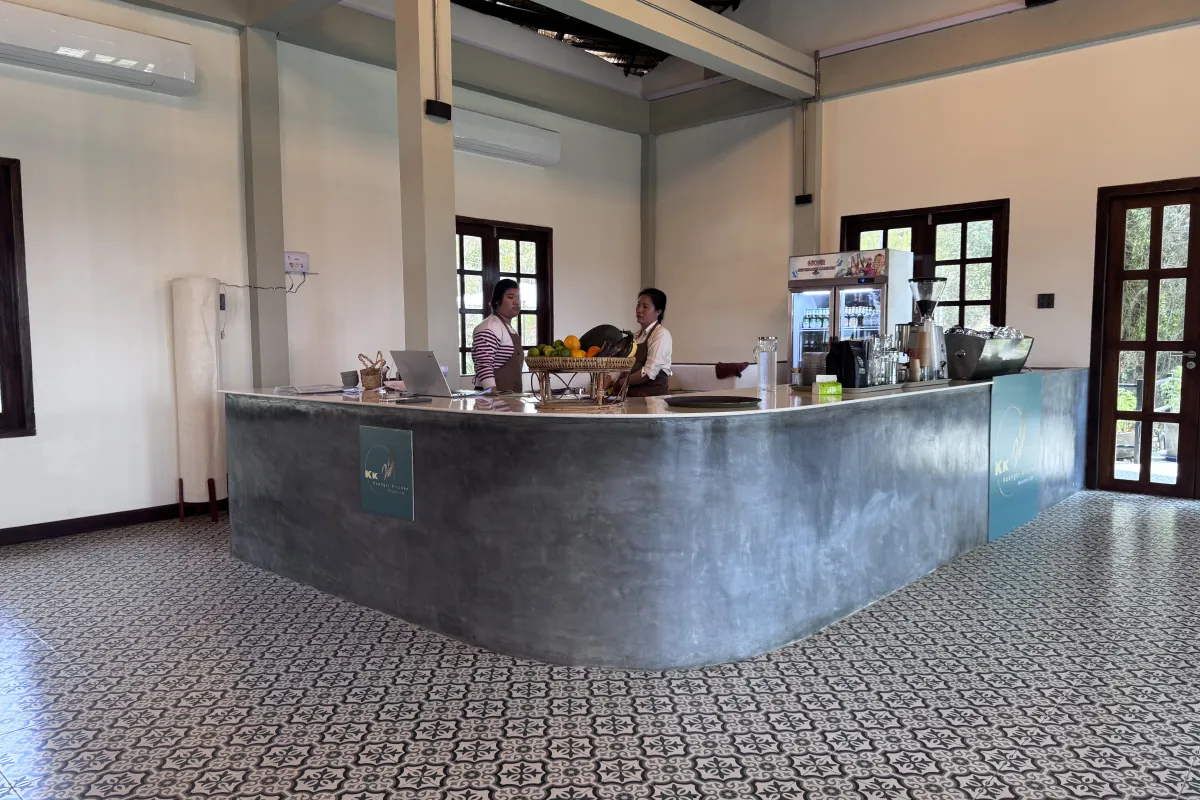
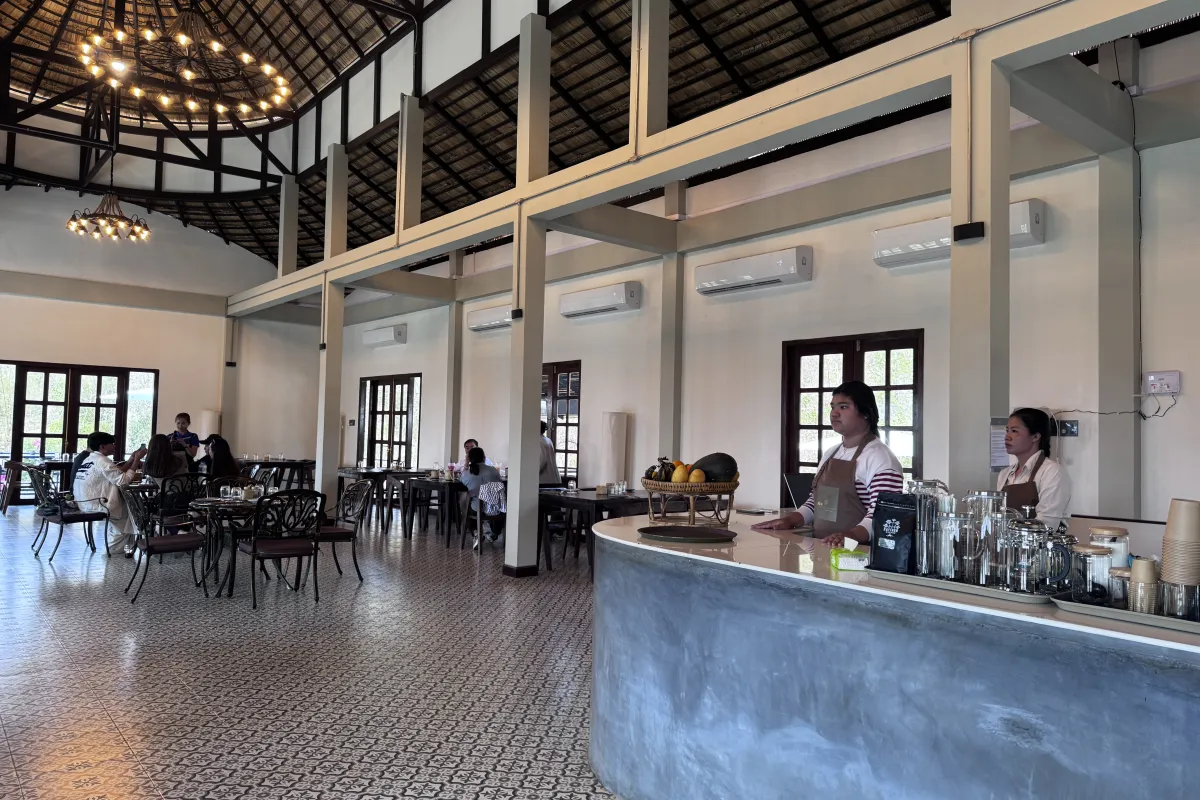
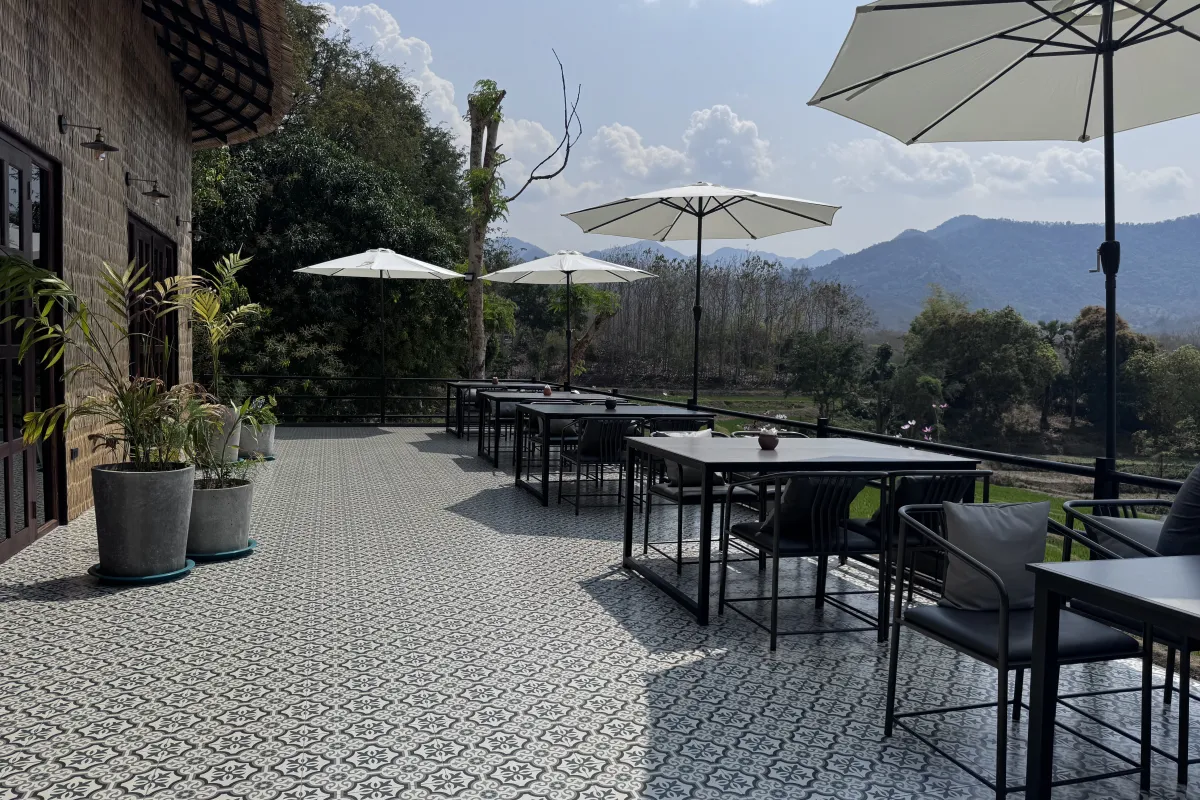
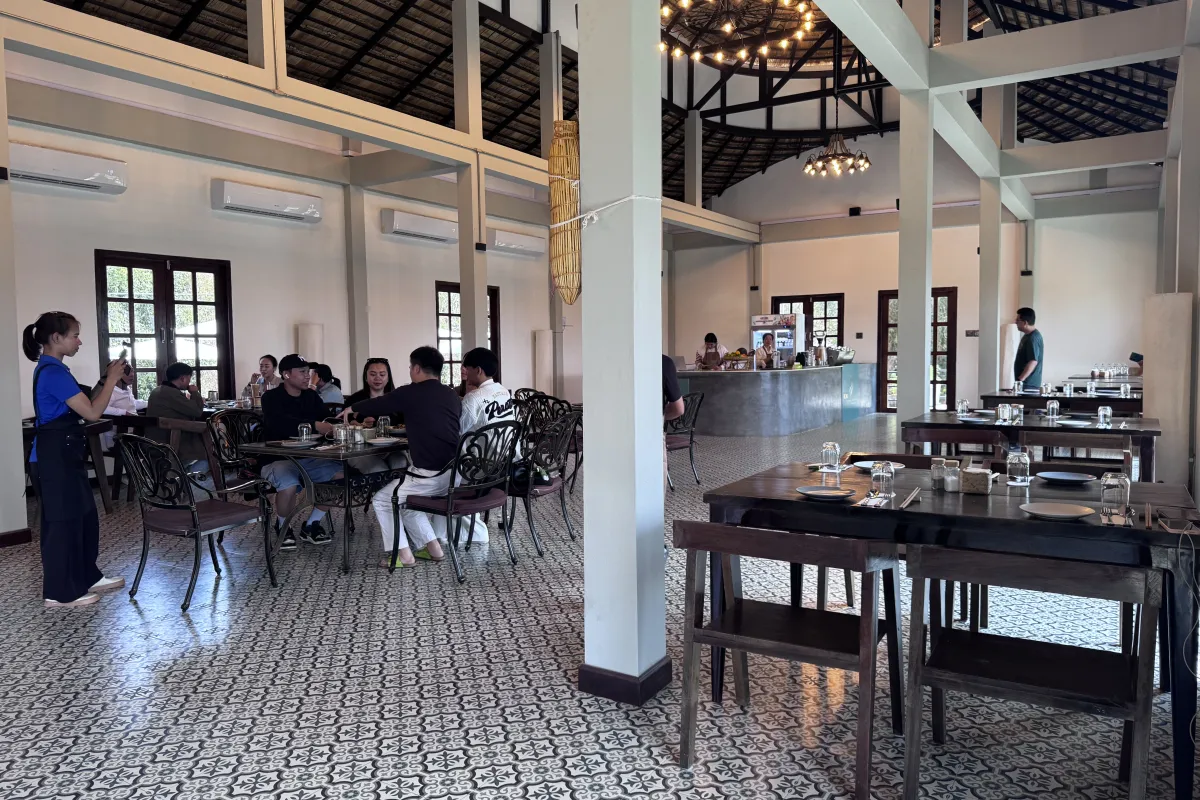
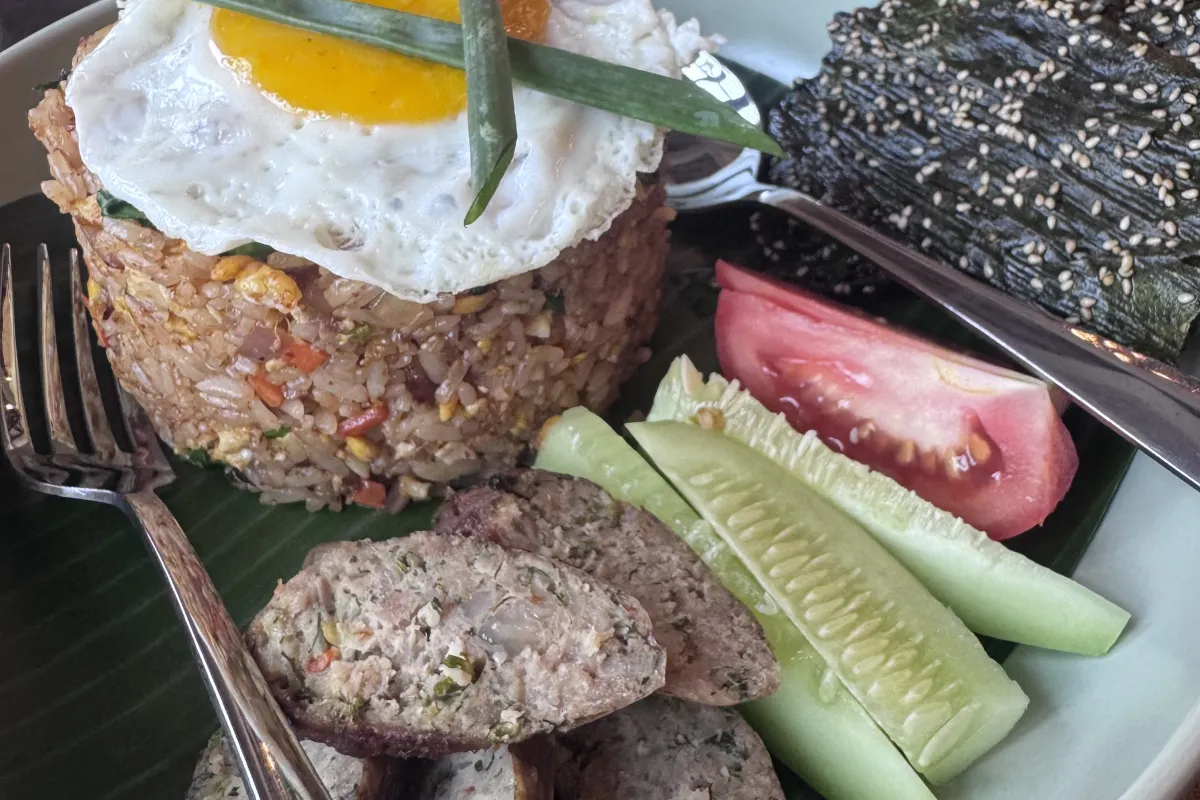
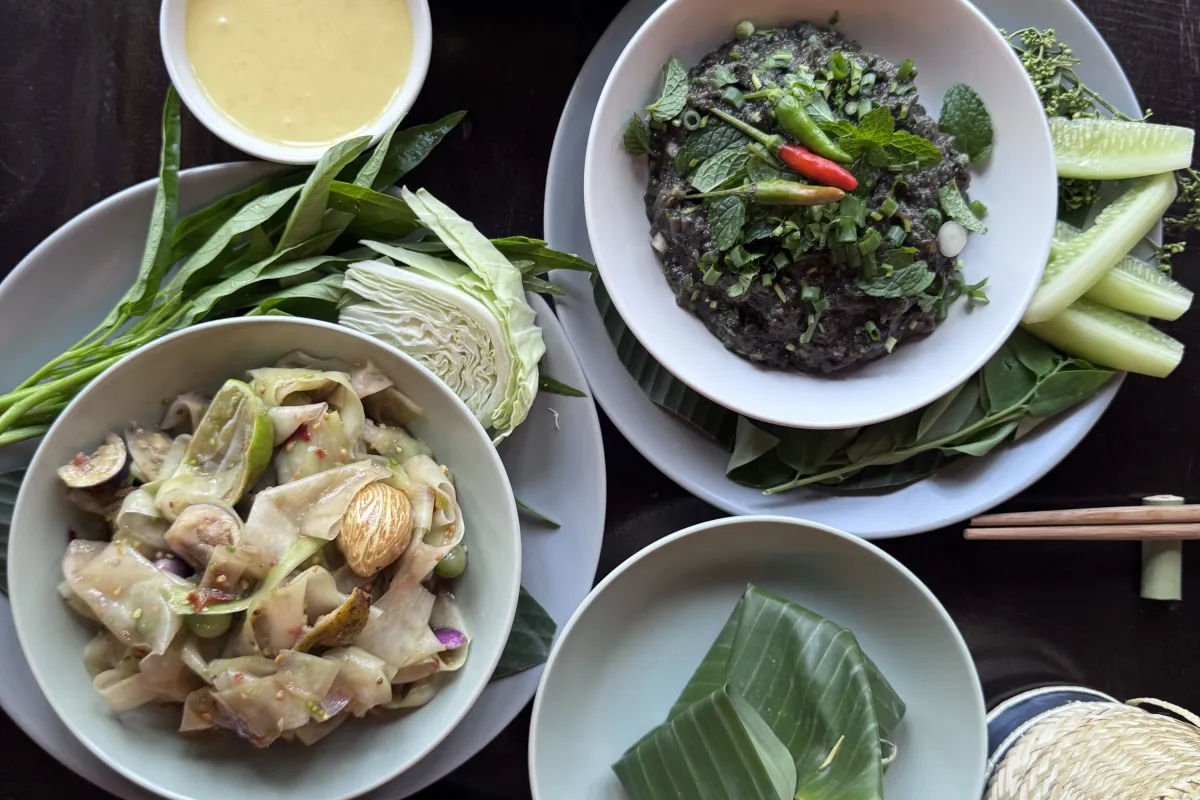
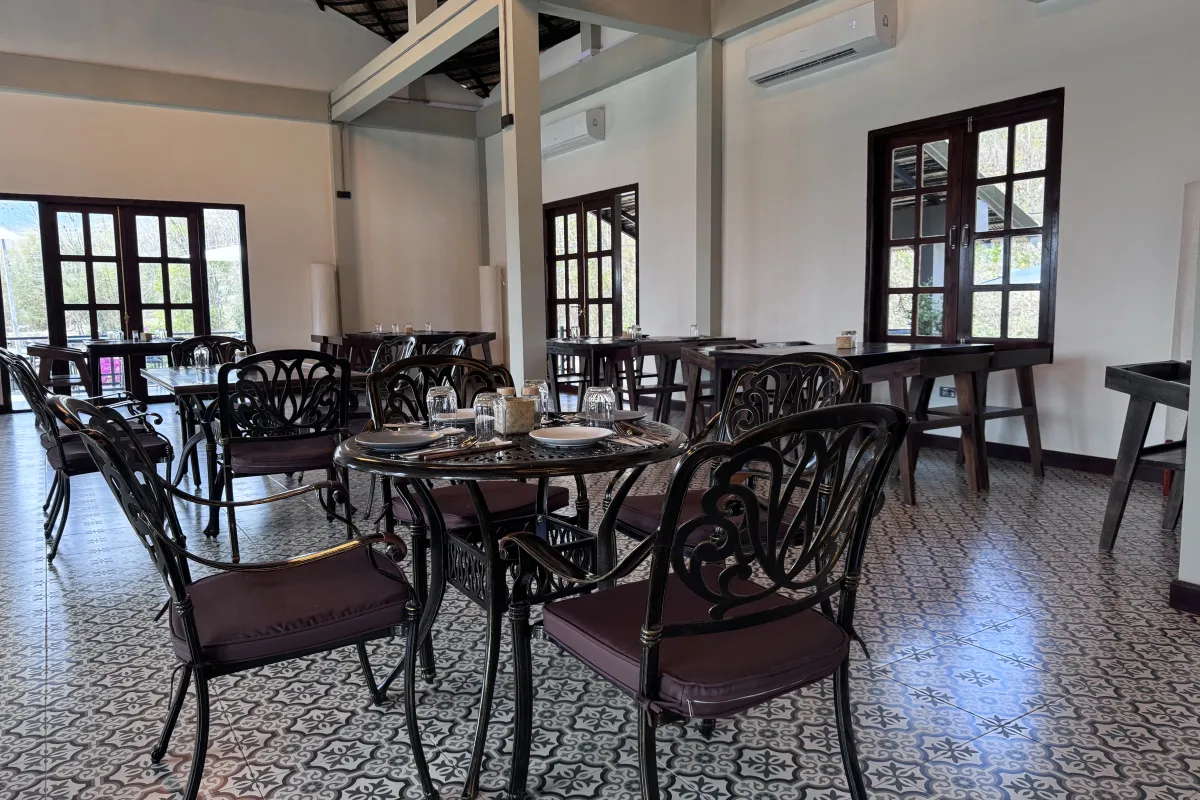
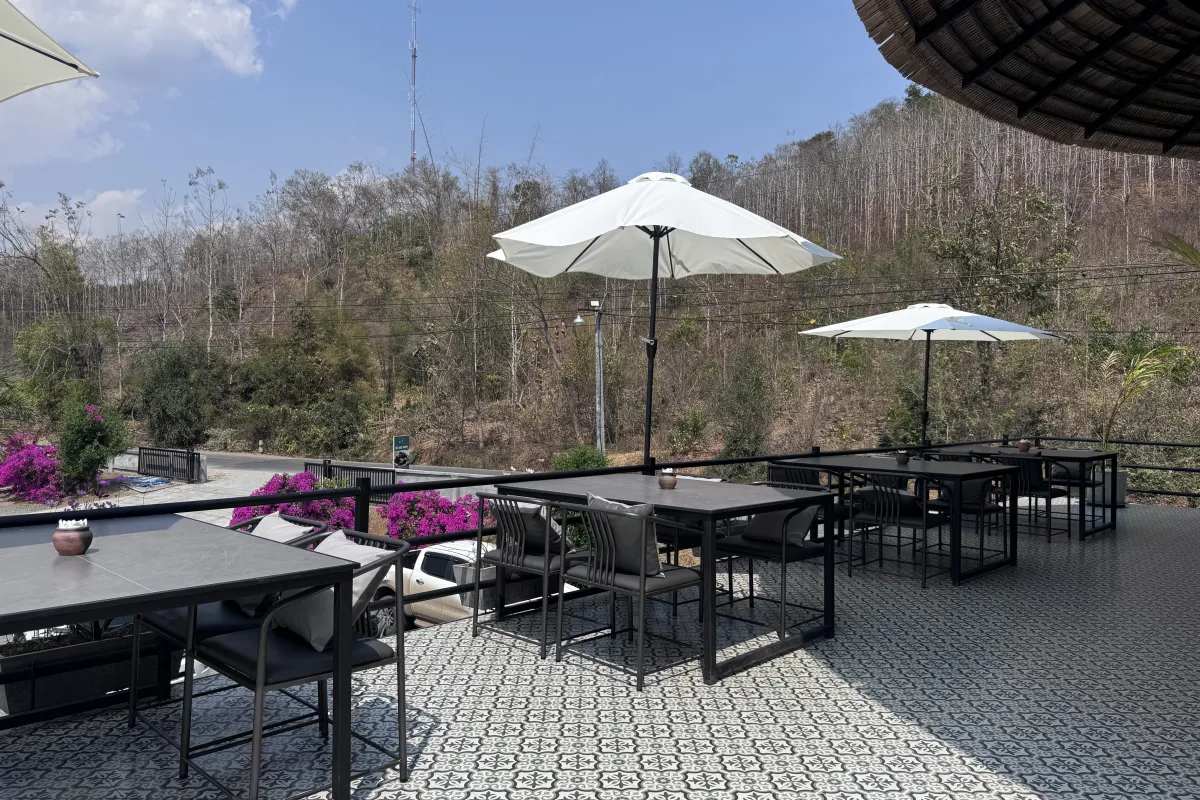
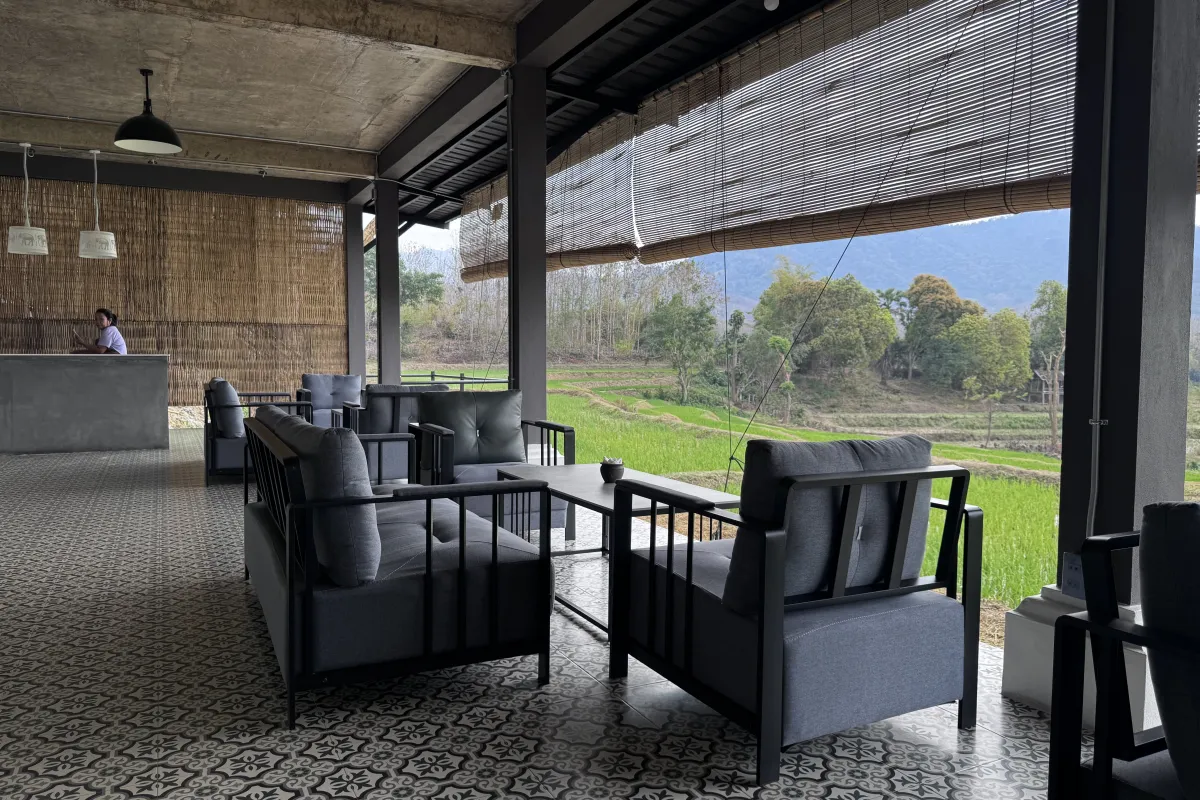
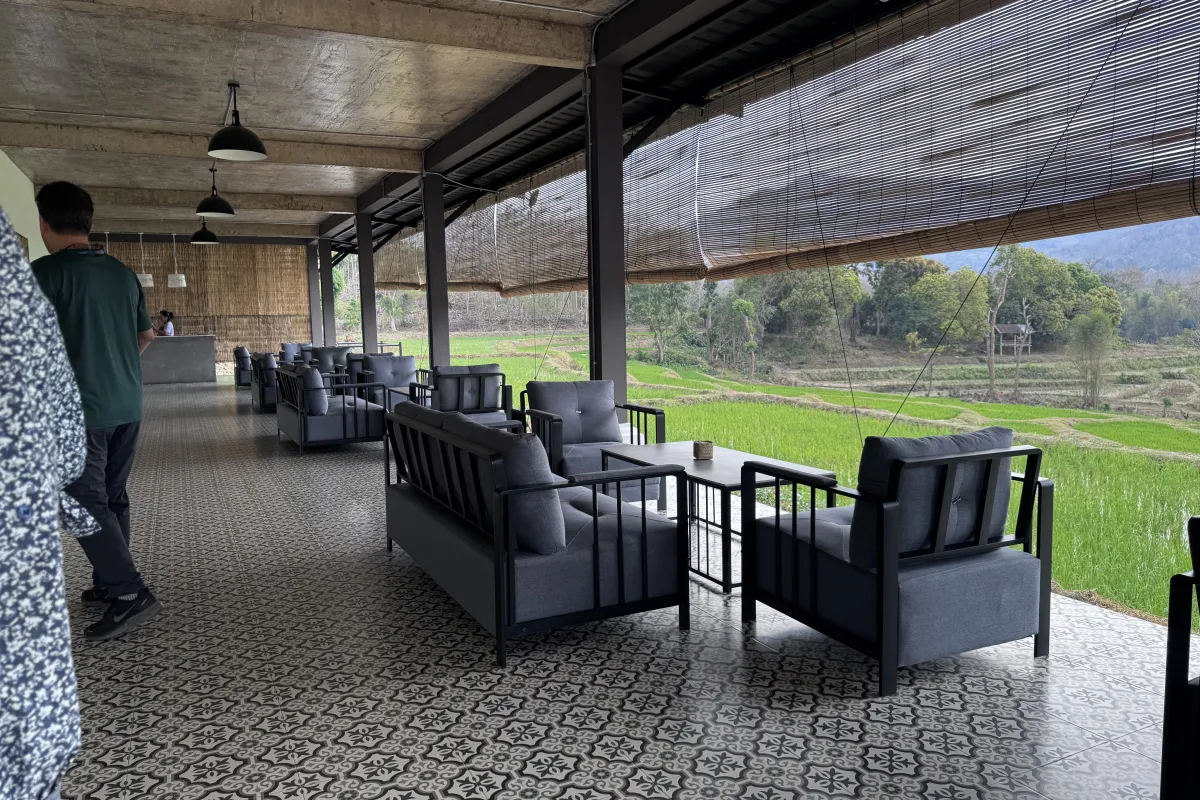
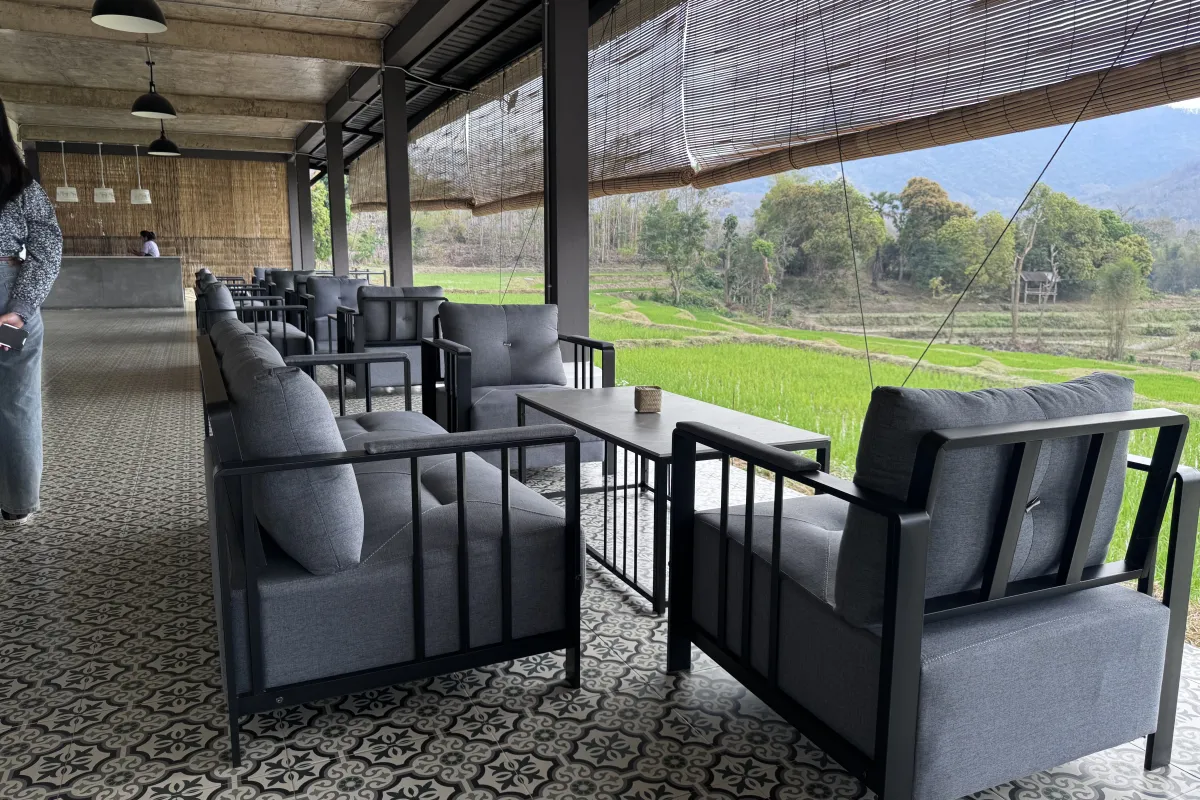
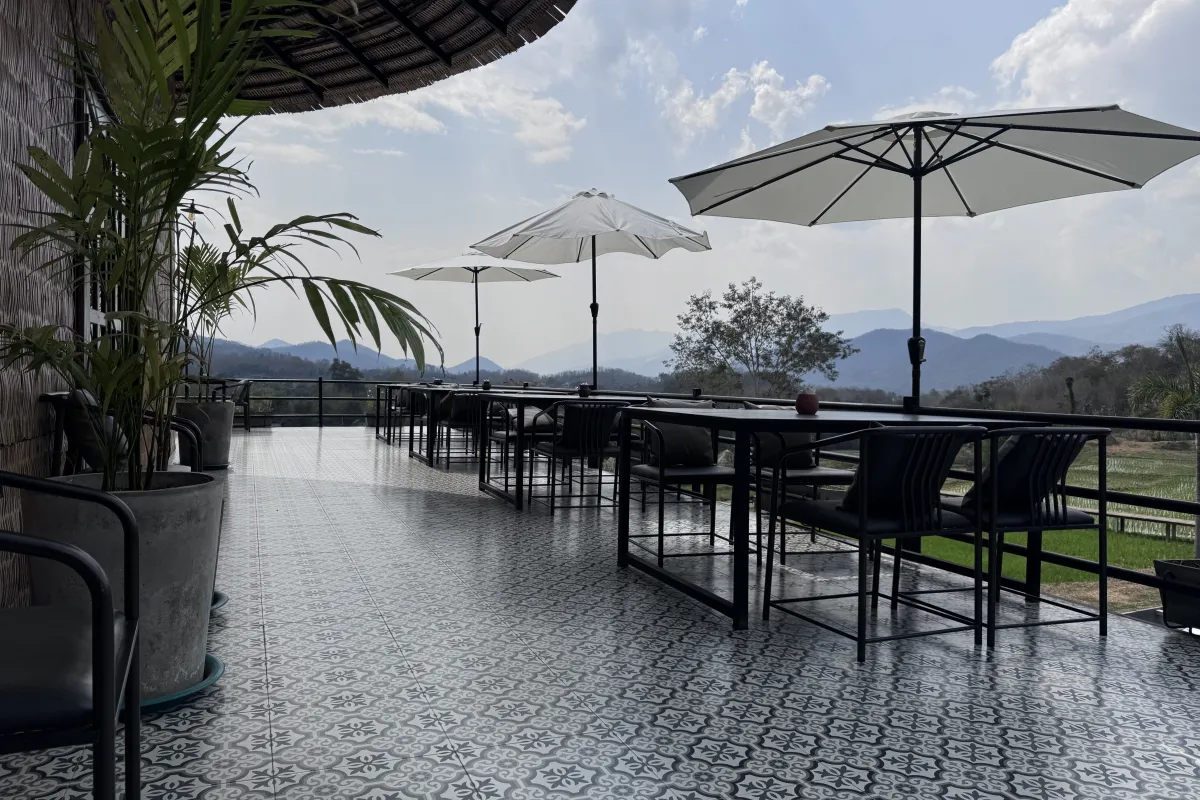
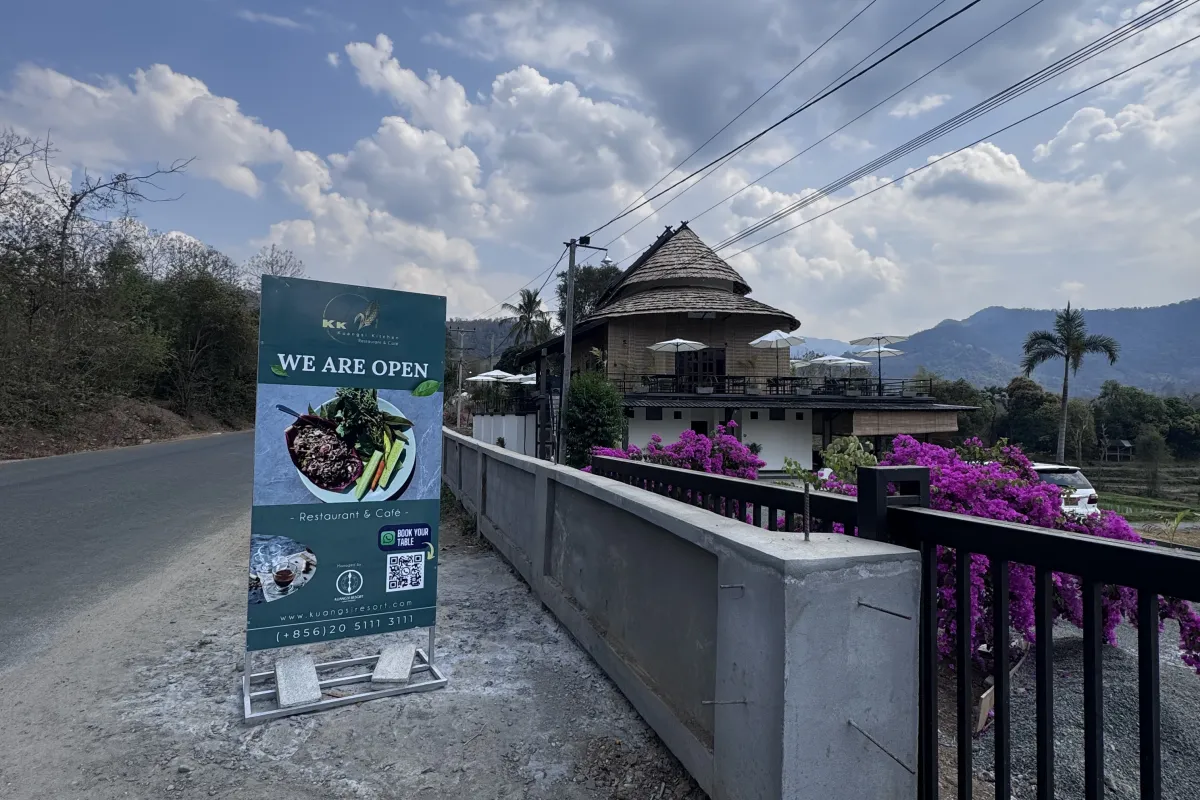
Kuang Si Kitchen, Luang Prabang
Tucked away in the peaceful countryside of Luang Prabang, Kuang Si Kitchen is a hidden gem offering an authentic taste of Lao cuisine in a serene and picturesque setting. Conveniently located 25km from Luang Prabang and just 4km from the famous Kuang Si Waterfalls, this charming restaurant provides the perfect stop for travelers looking to enjoy a delicious meal amidst nature.
Kuang Si Kitchen takes pride in serving freshly prepared local dishes made with high-quality ingredients, highlighting the rich flavors of Lao cuisine. From traditional Lao soups and grilled meats to fresh salads and vegetarian options, the menu caters to a variety of tastes. Guests can savor their meals while enjoying the tranquil ambiance, with stunning views of the surrounding mountains and lush greenery.
Whether you're stopping by after a refreshing swim at Kuang Si Waterfalls or looking for a peaceful retreat away from the city, Kuang Si Kitchen offers a welcoming and relaxing atmosphere. With friendly service, a cozy setting, and mouthwatering food, it’s a must-visit destination for those seeking an authentic and memorable dining experience in Luang Prabang’s countryside.
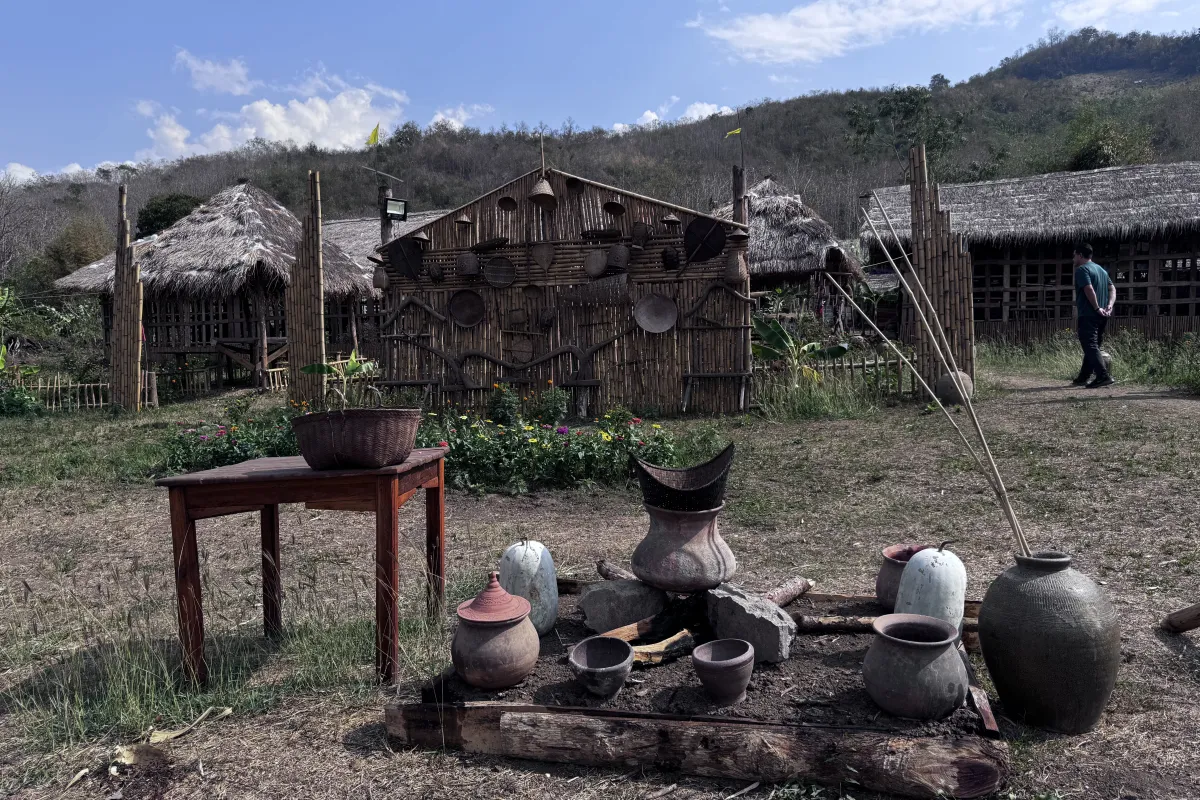
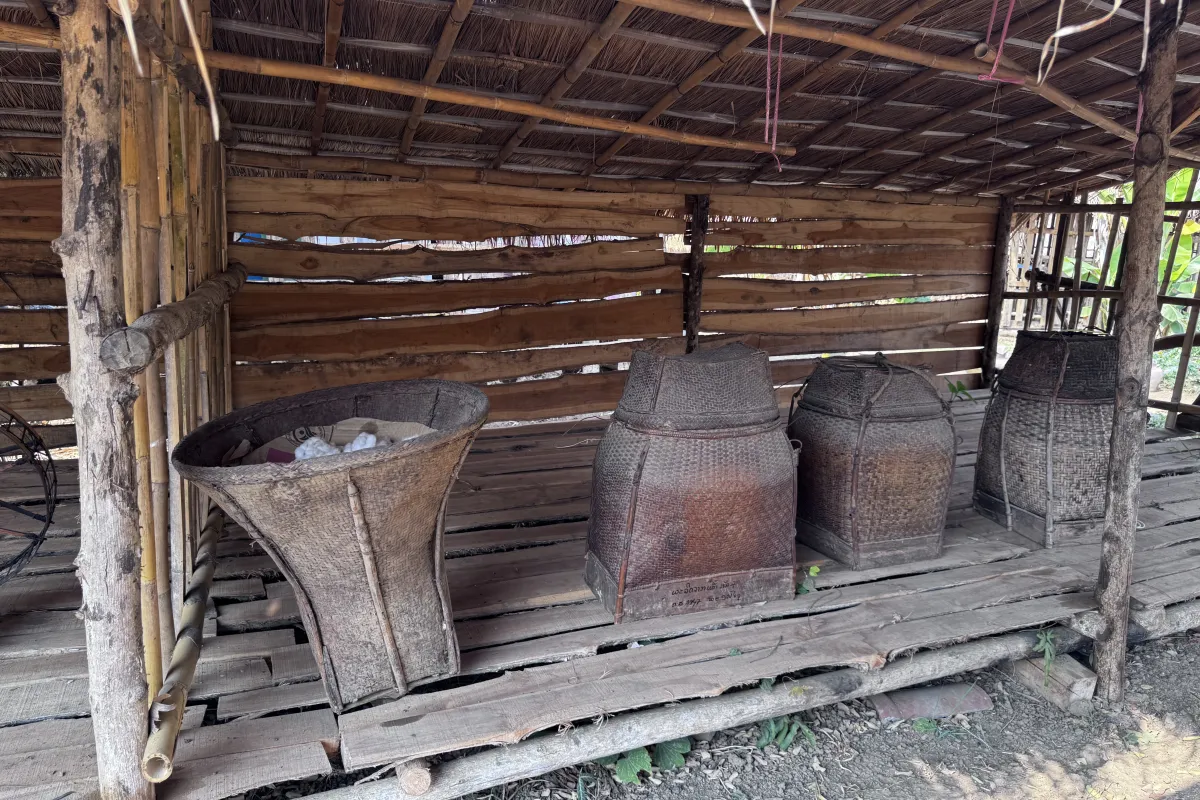
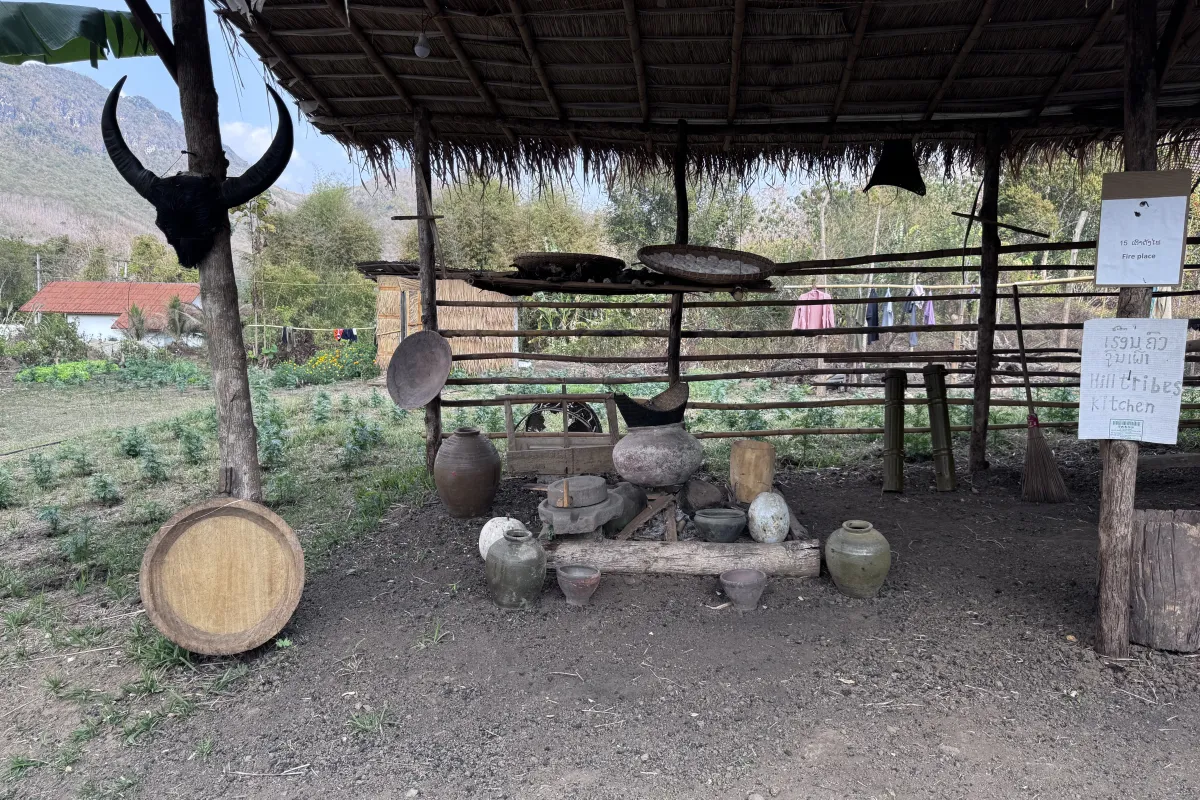
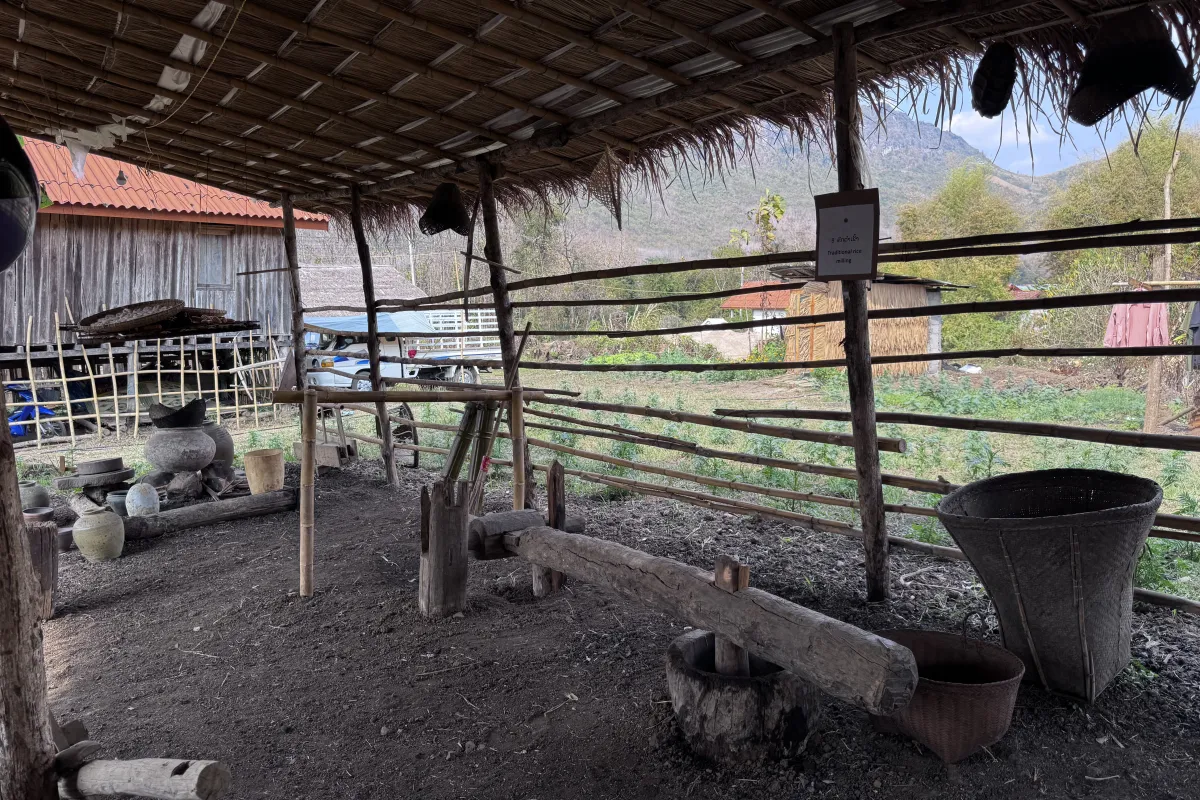
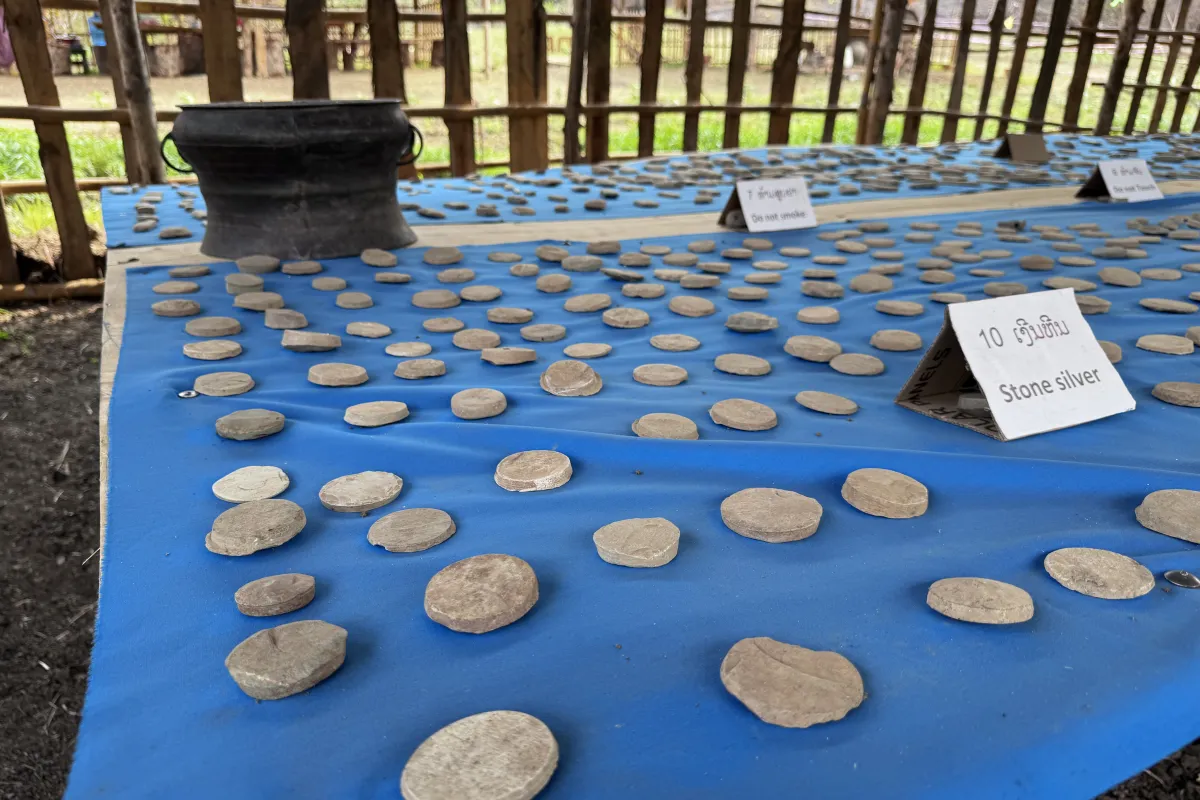
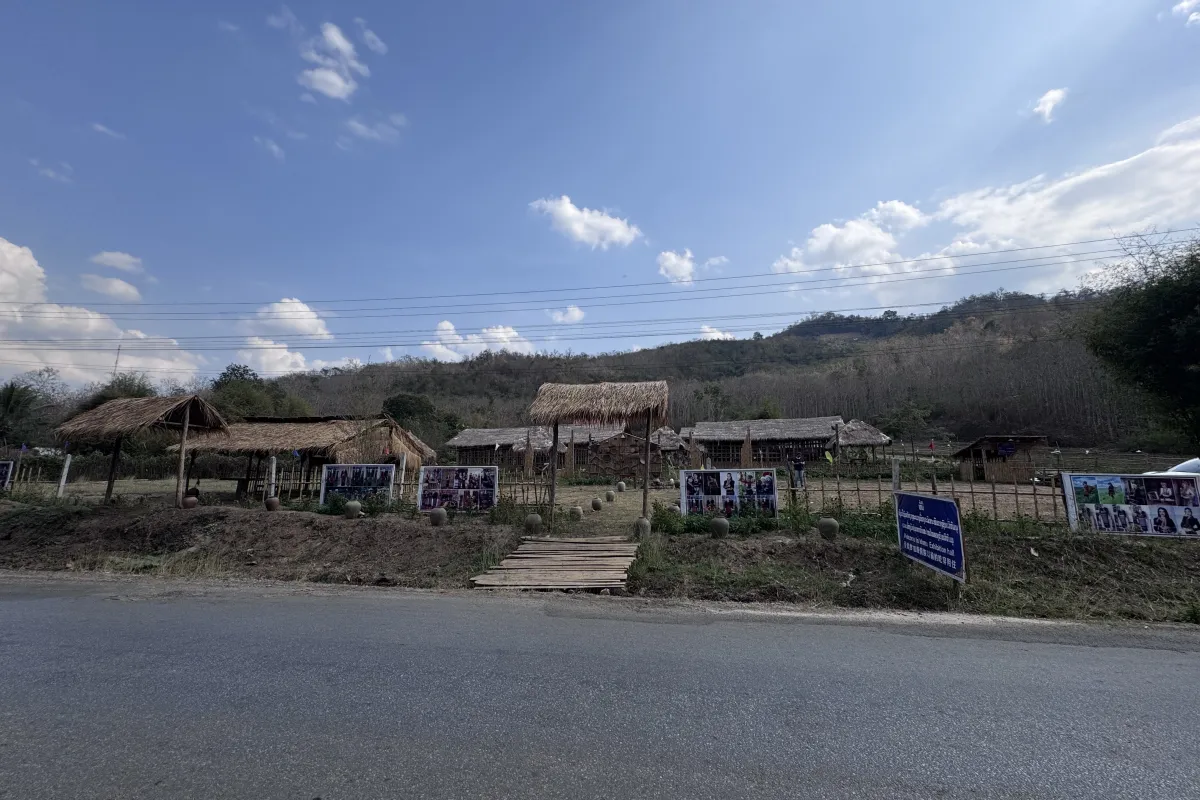
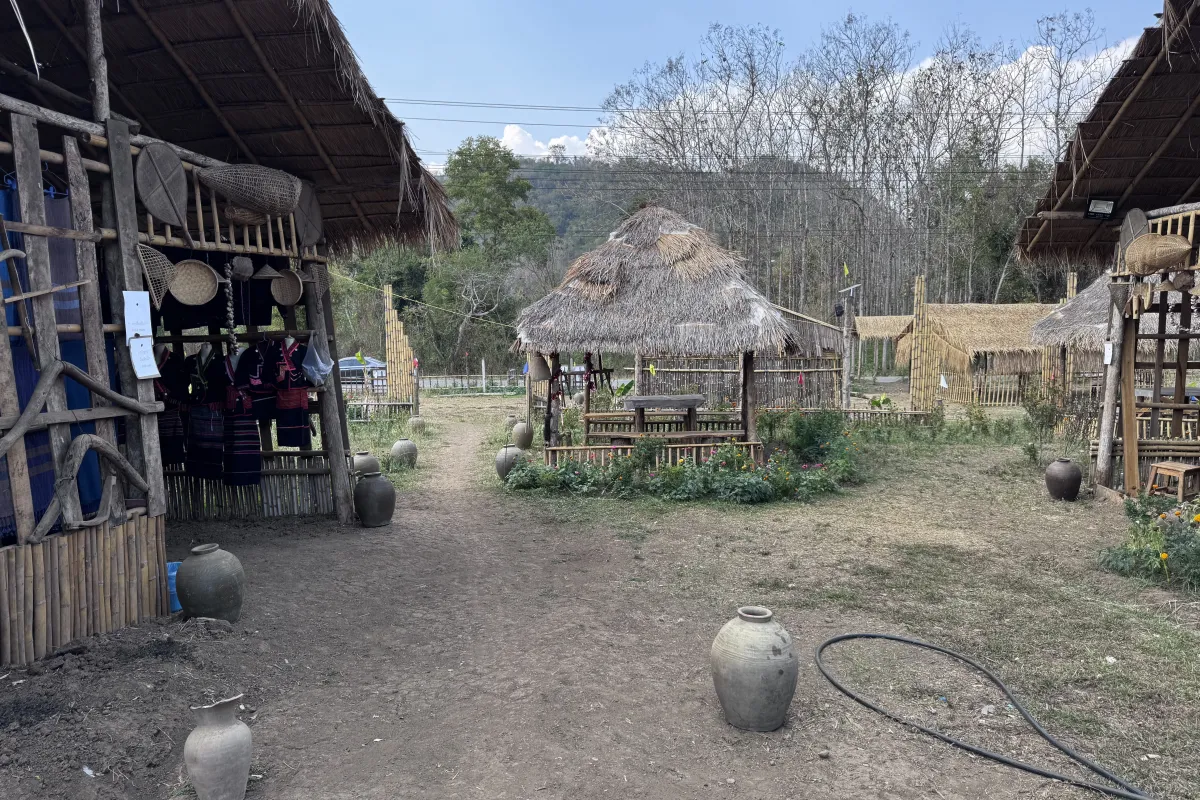
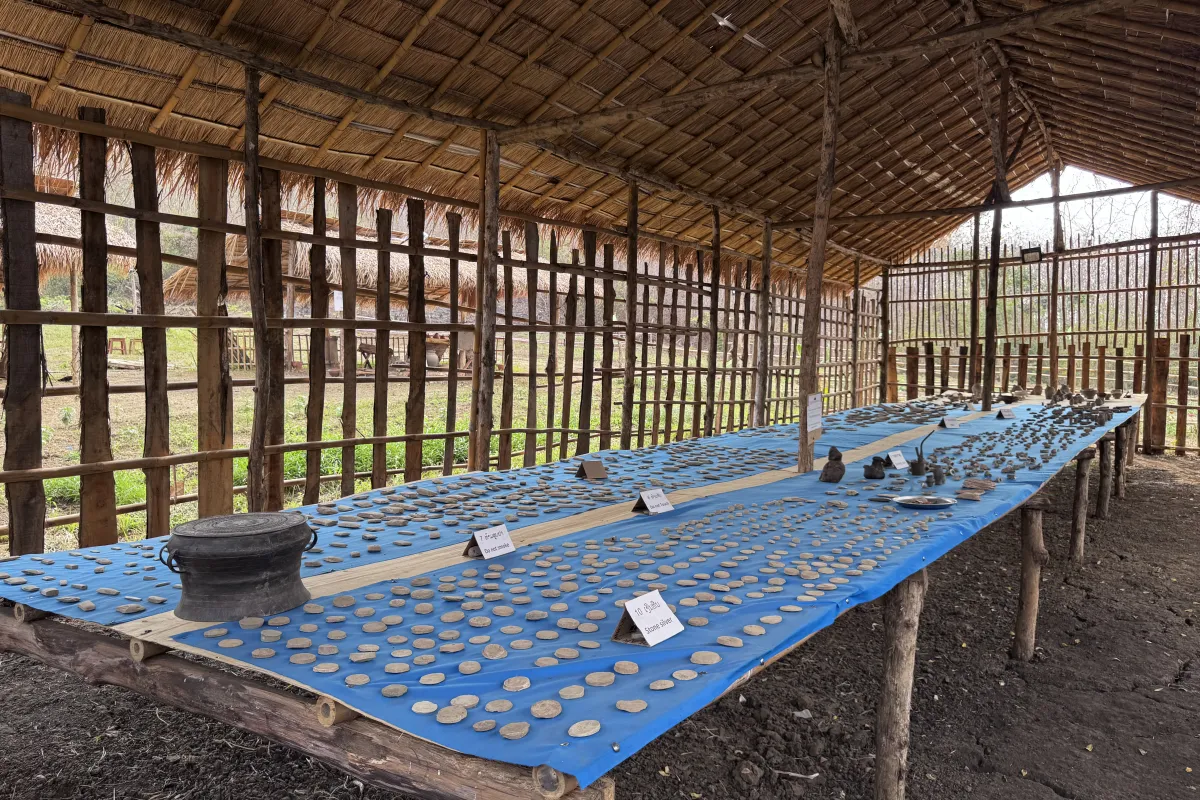
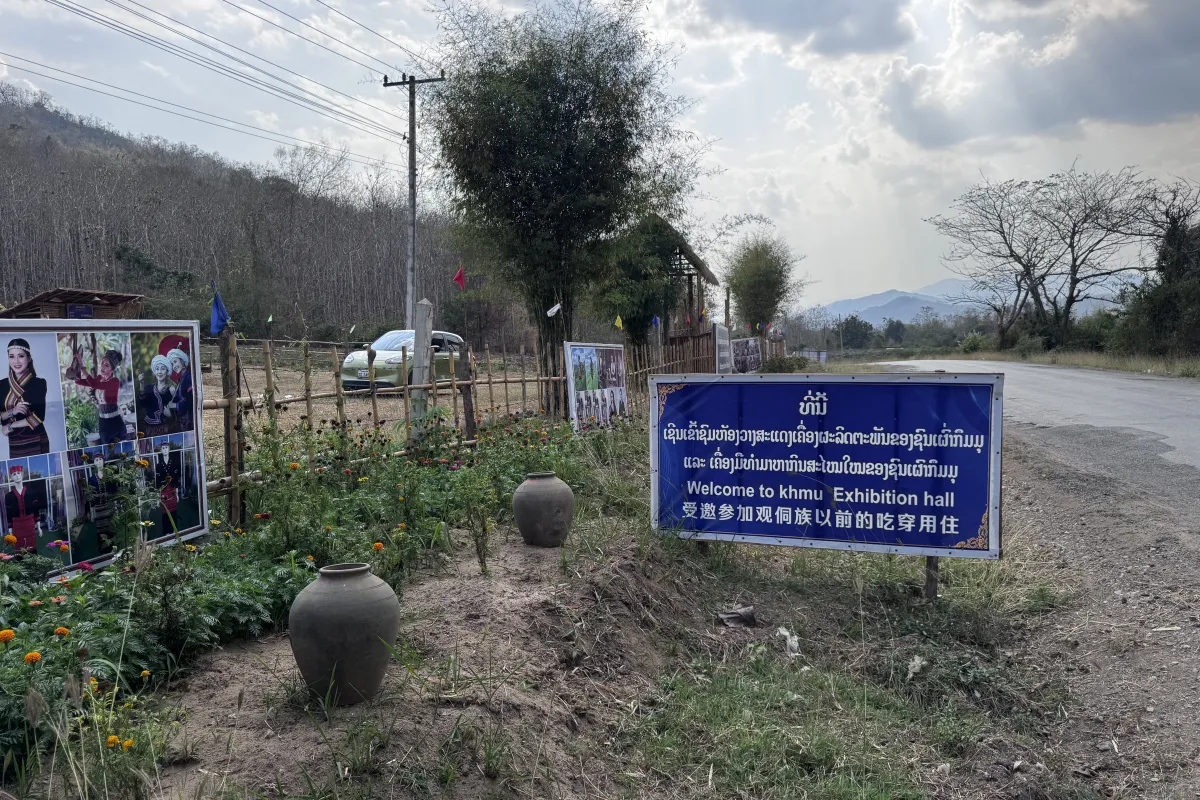
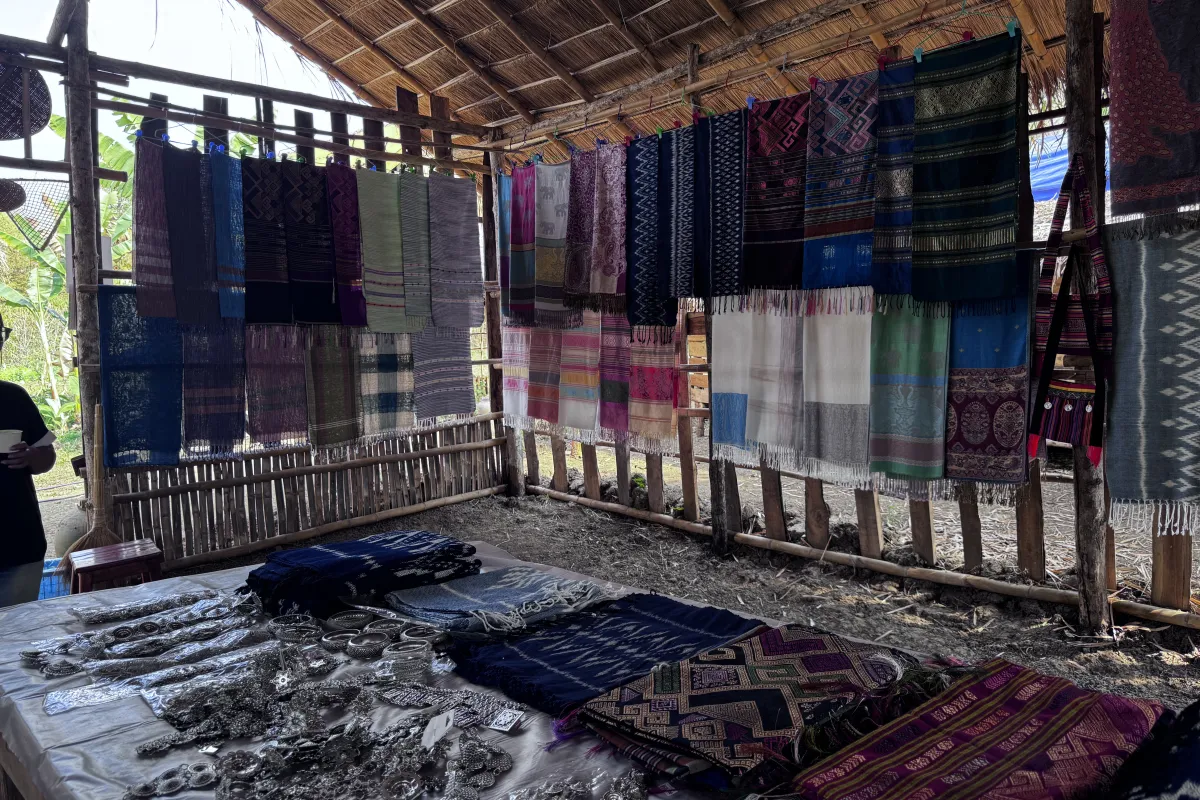
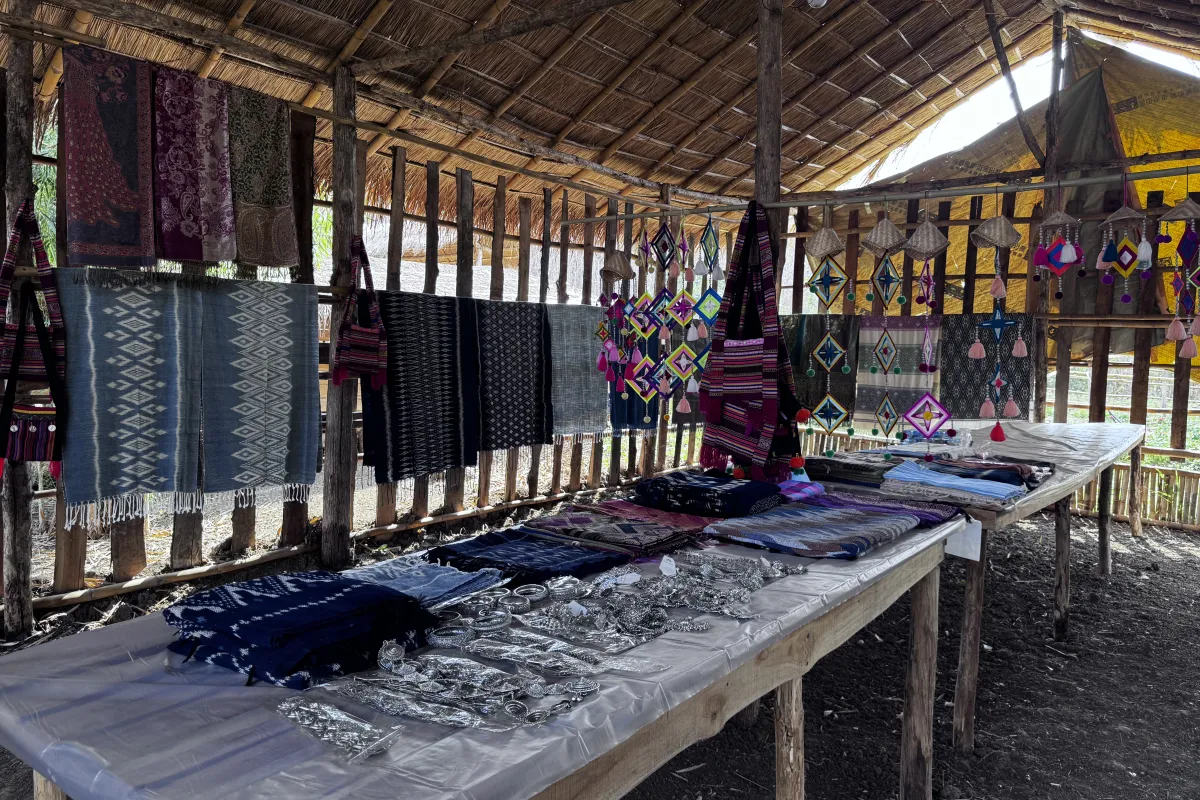
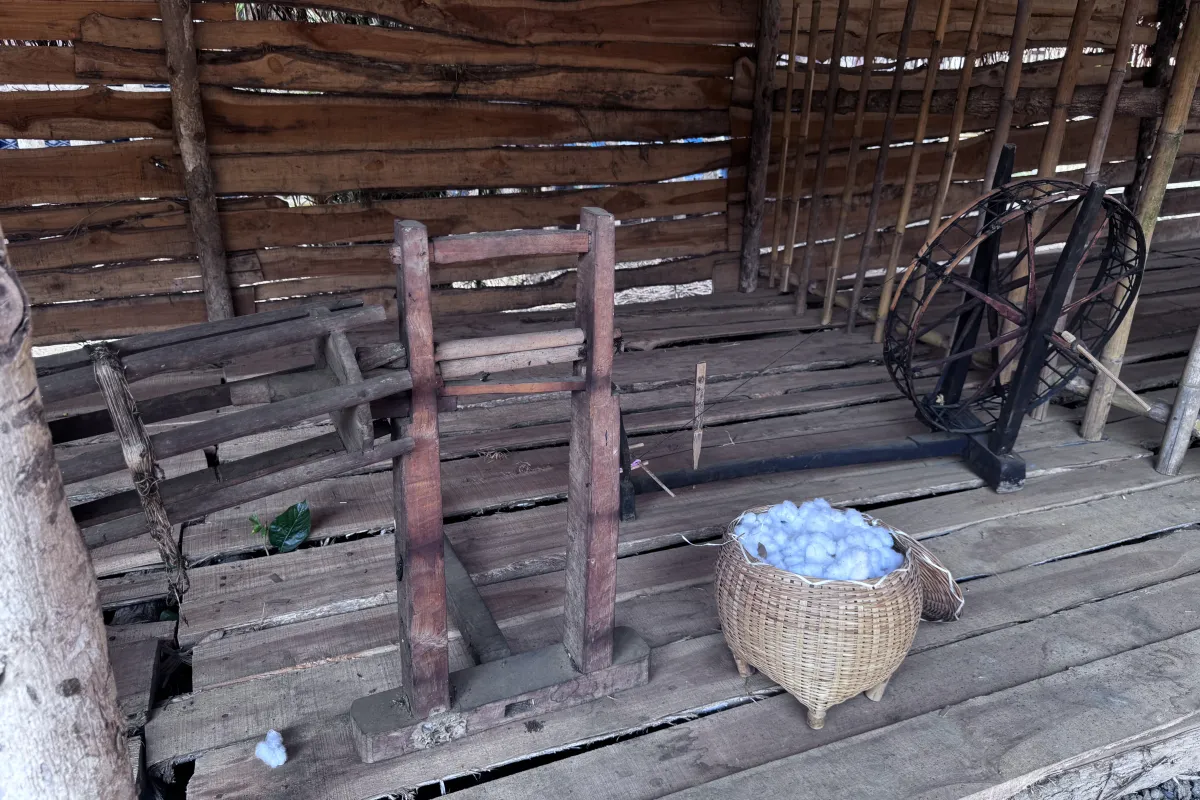
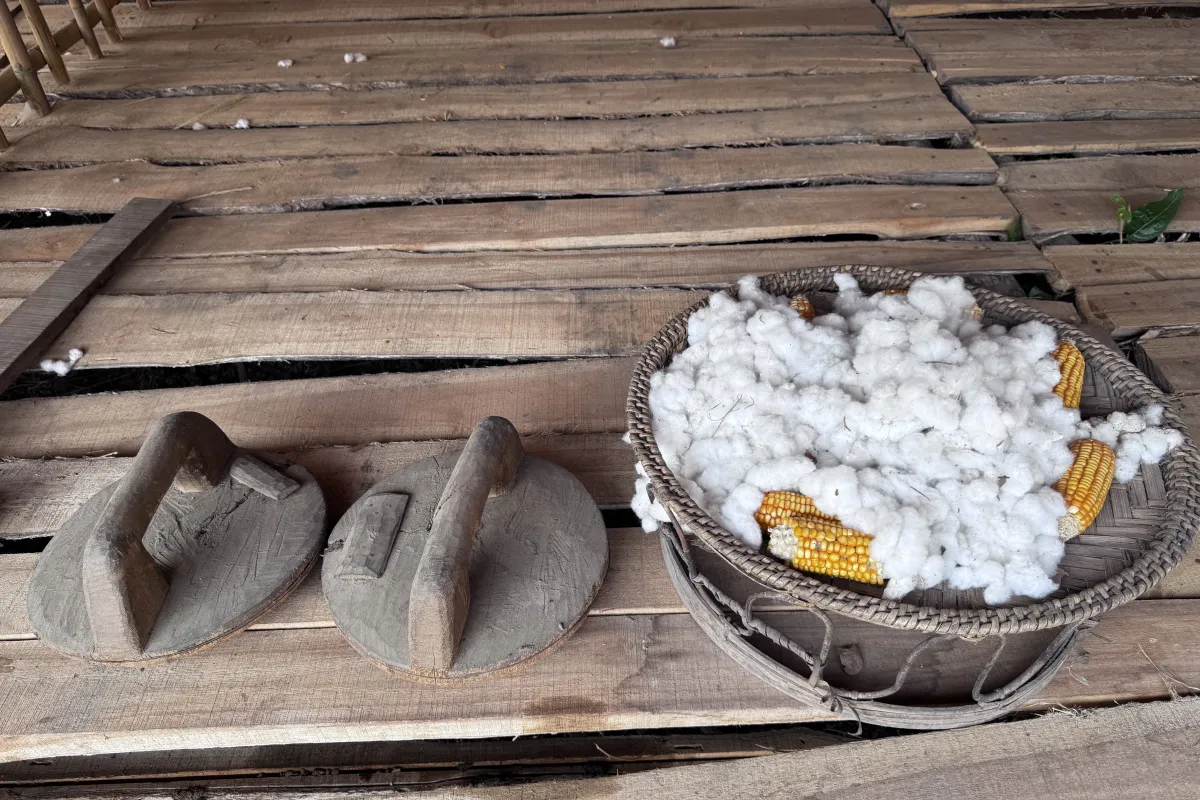
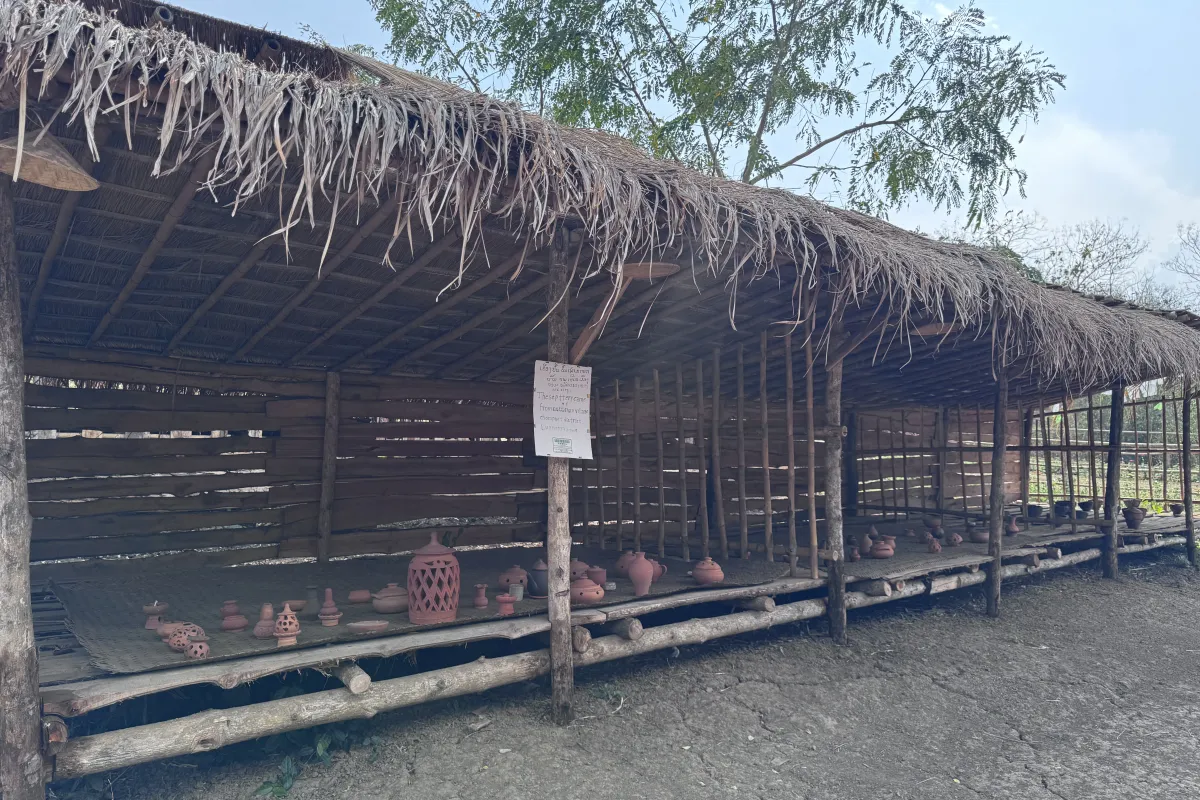
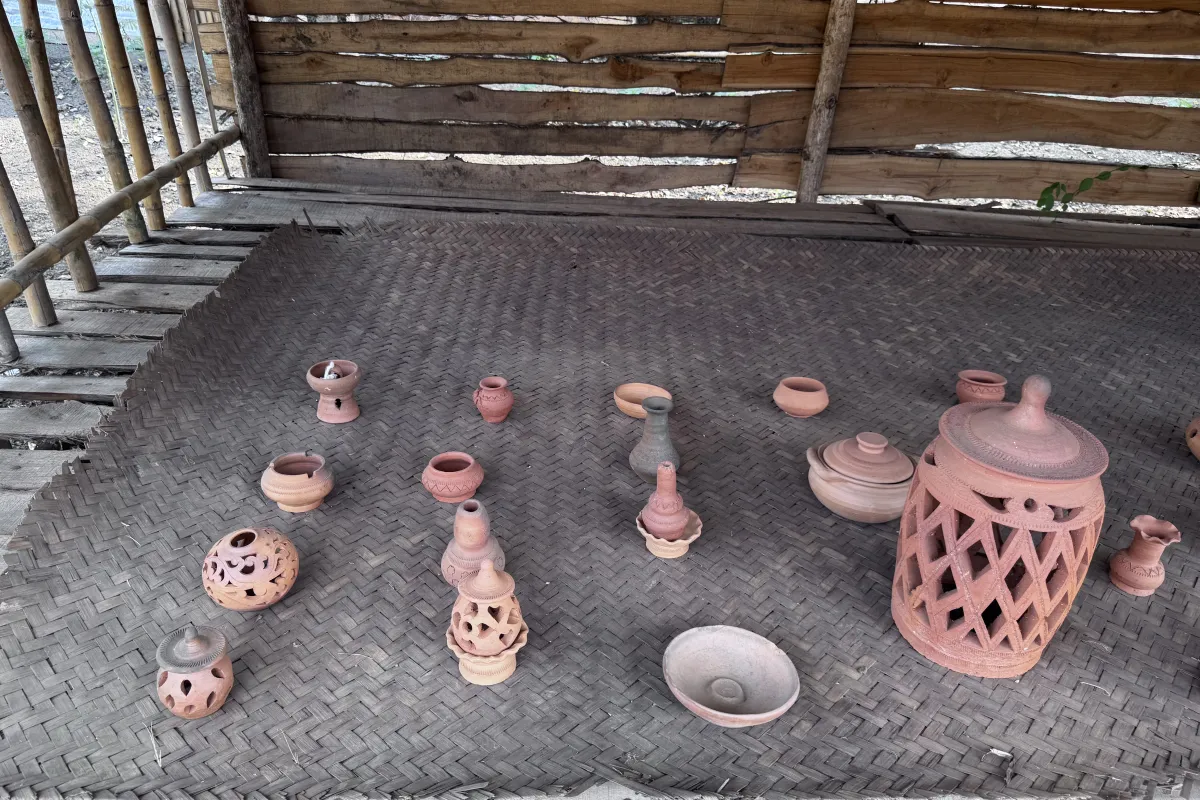
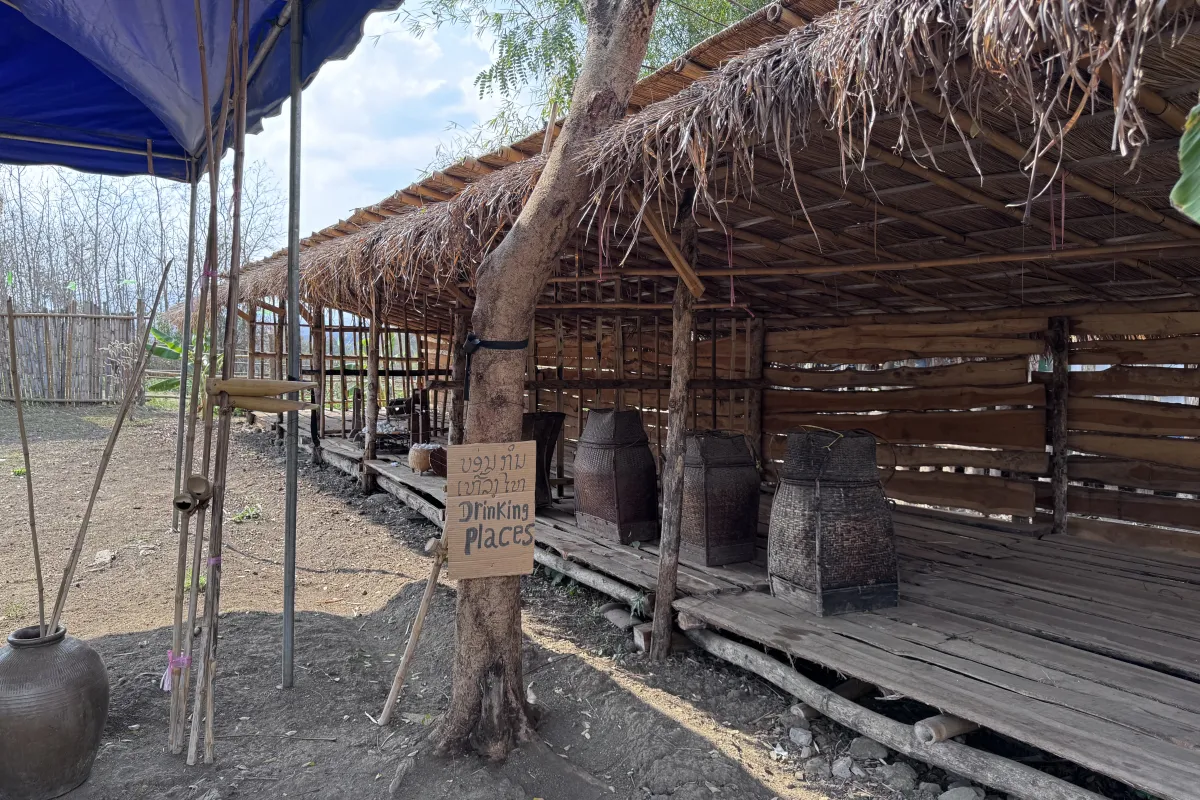
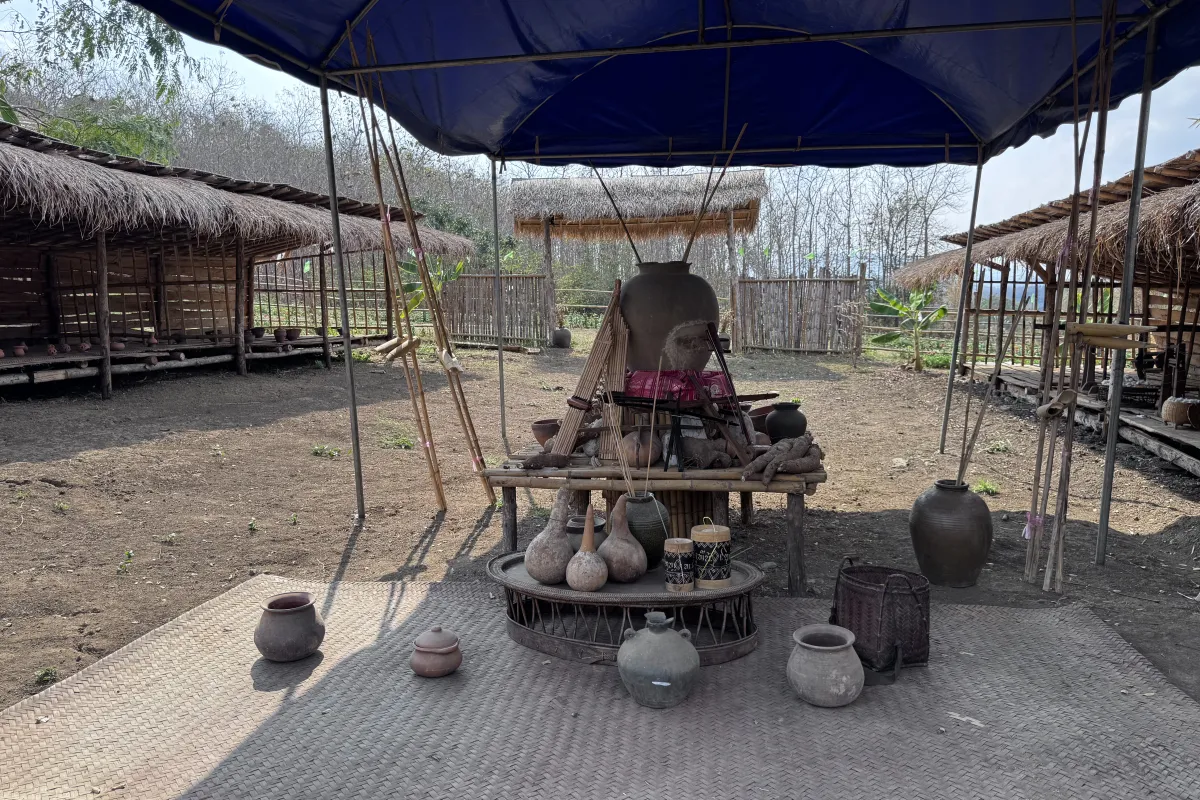
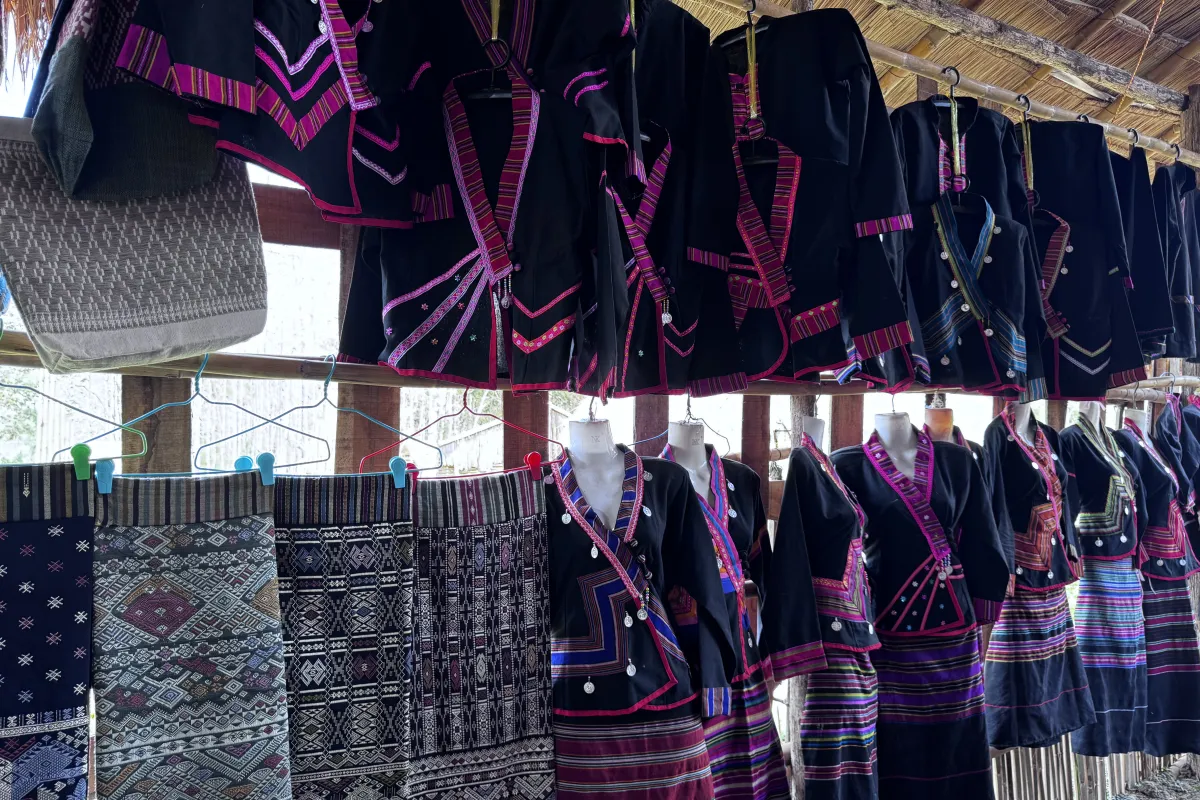
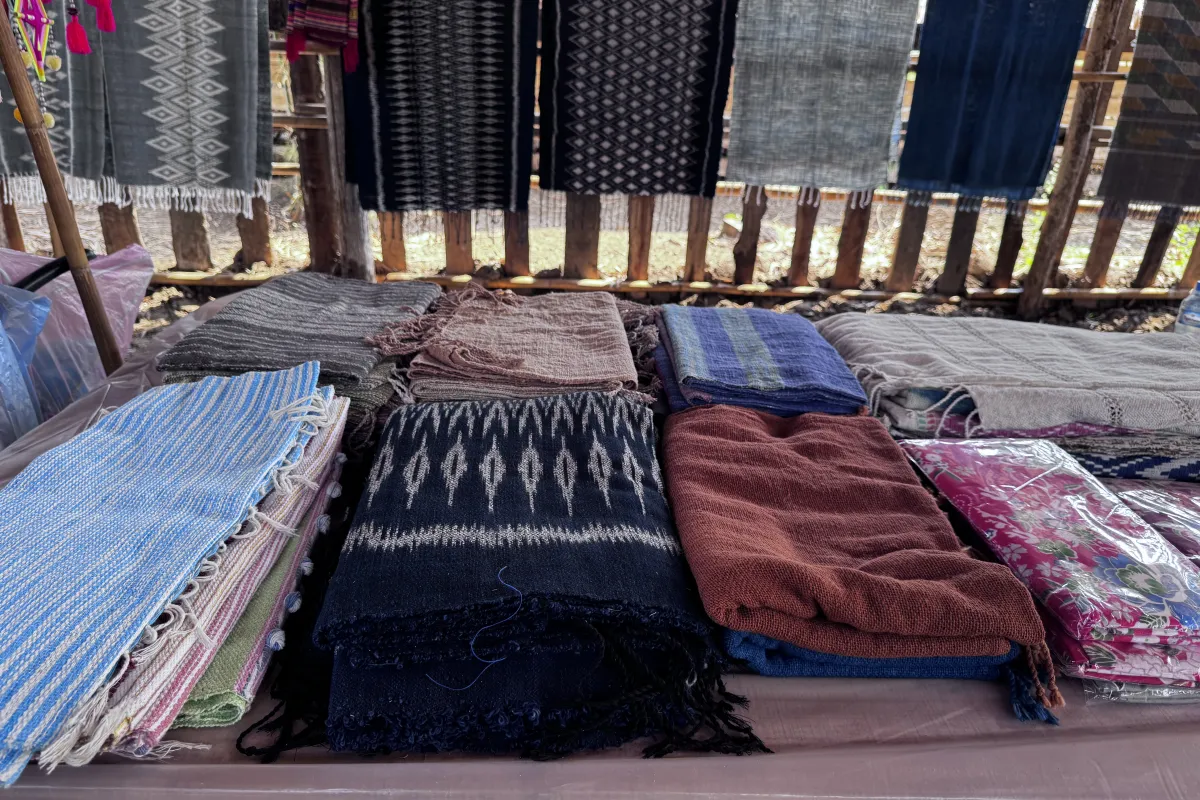
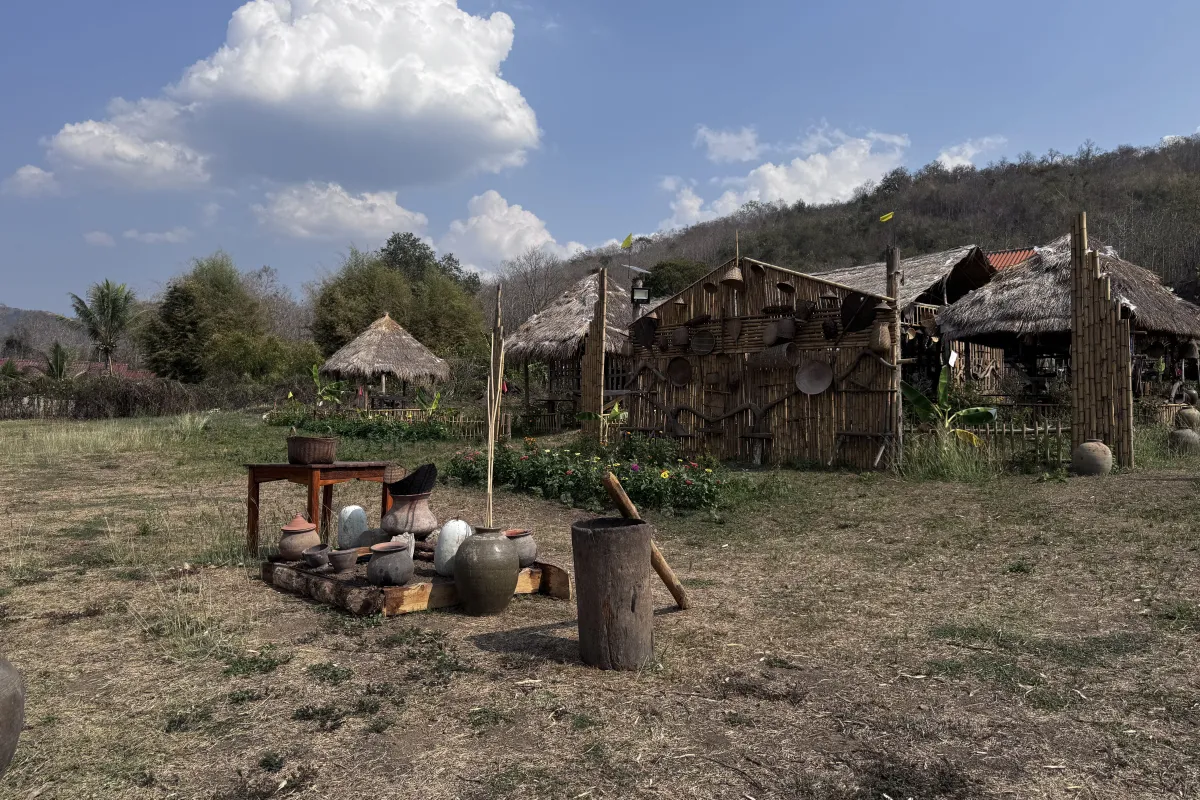
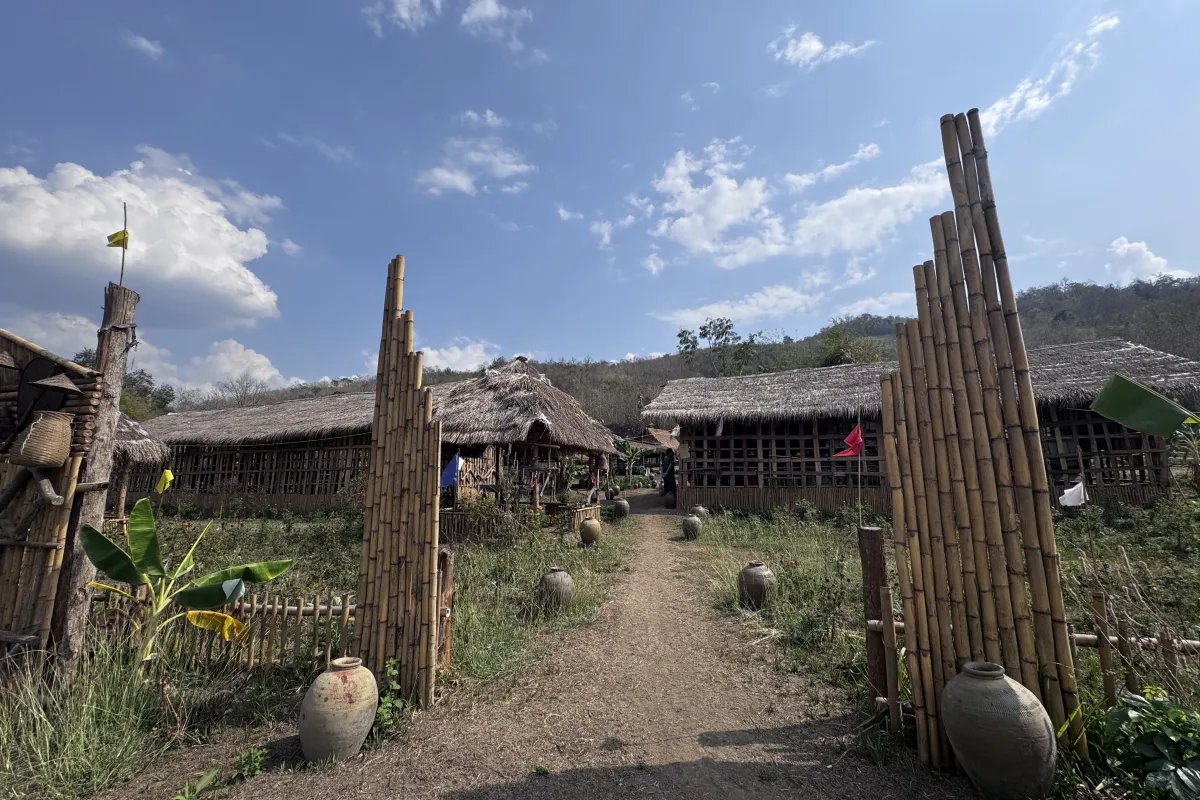
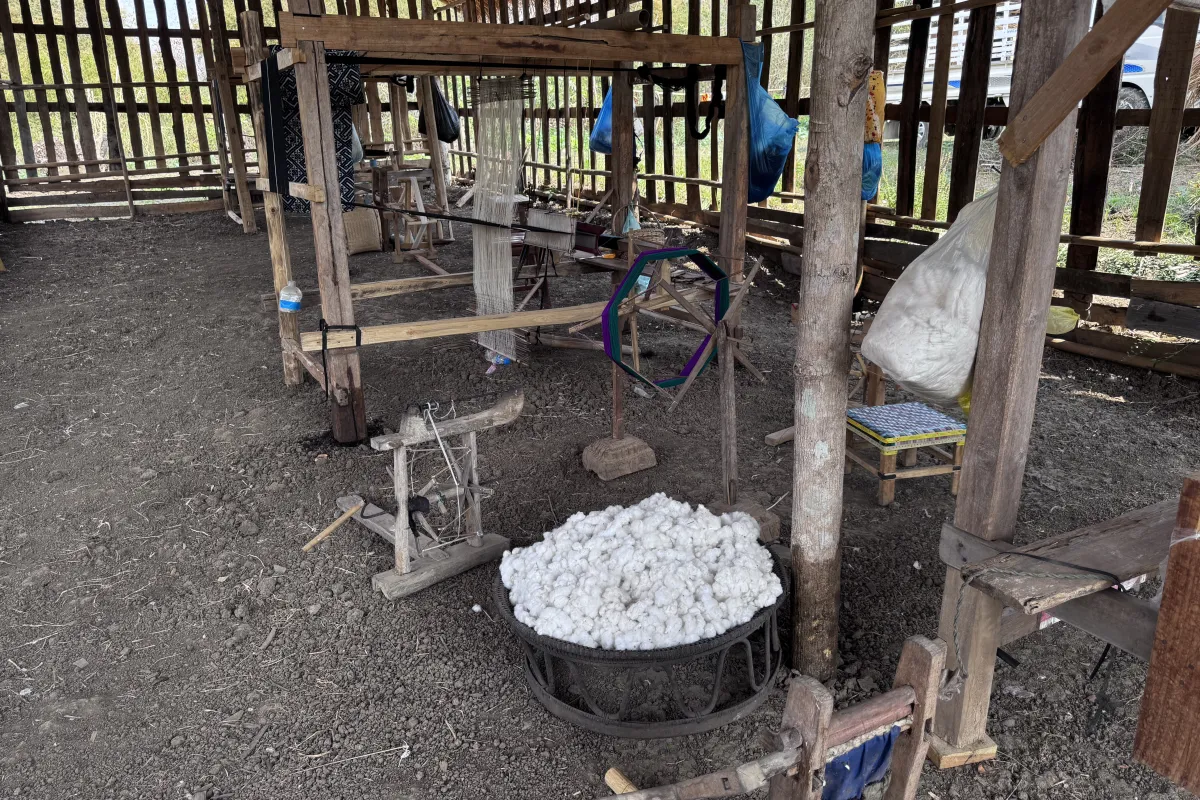
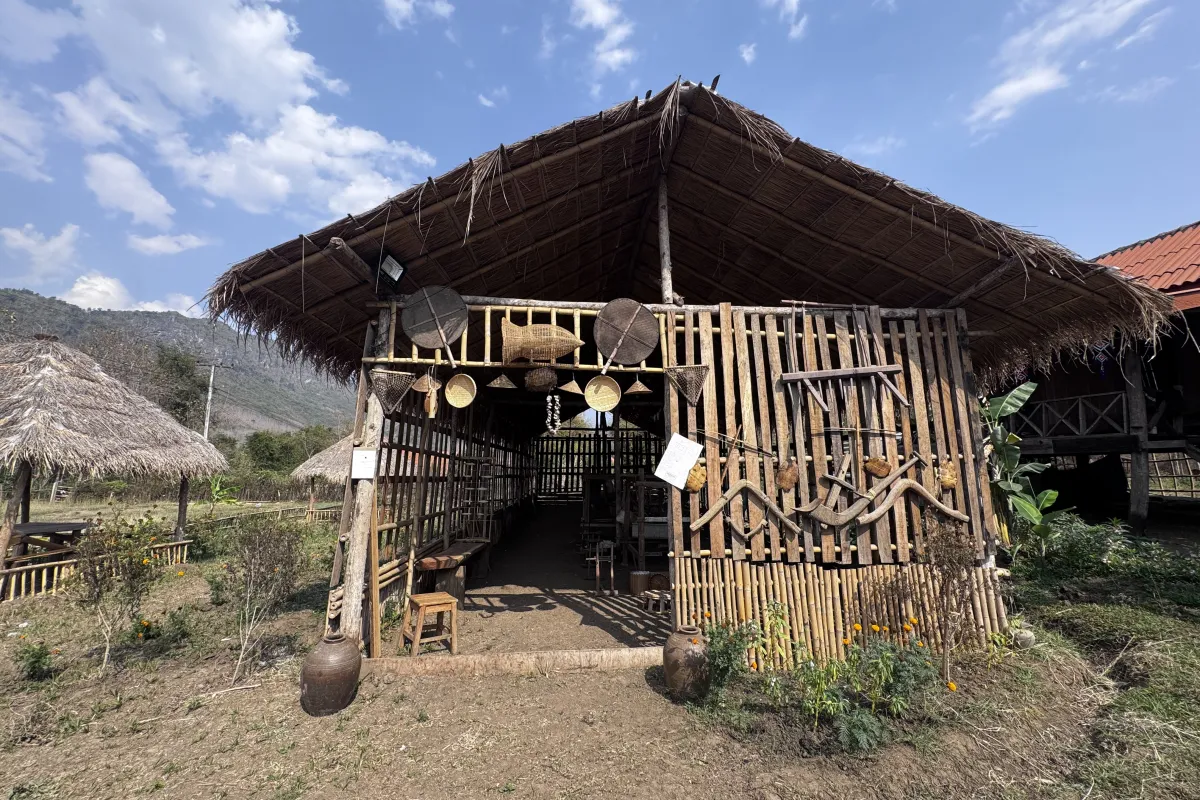
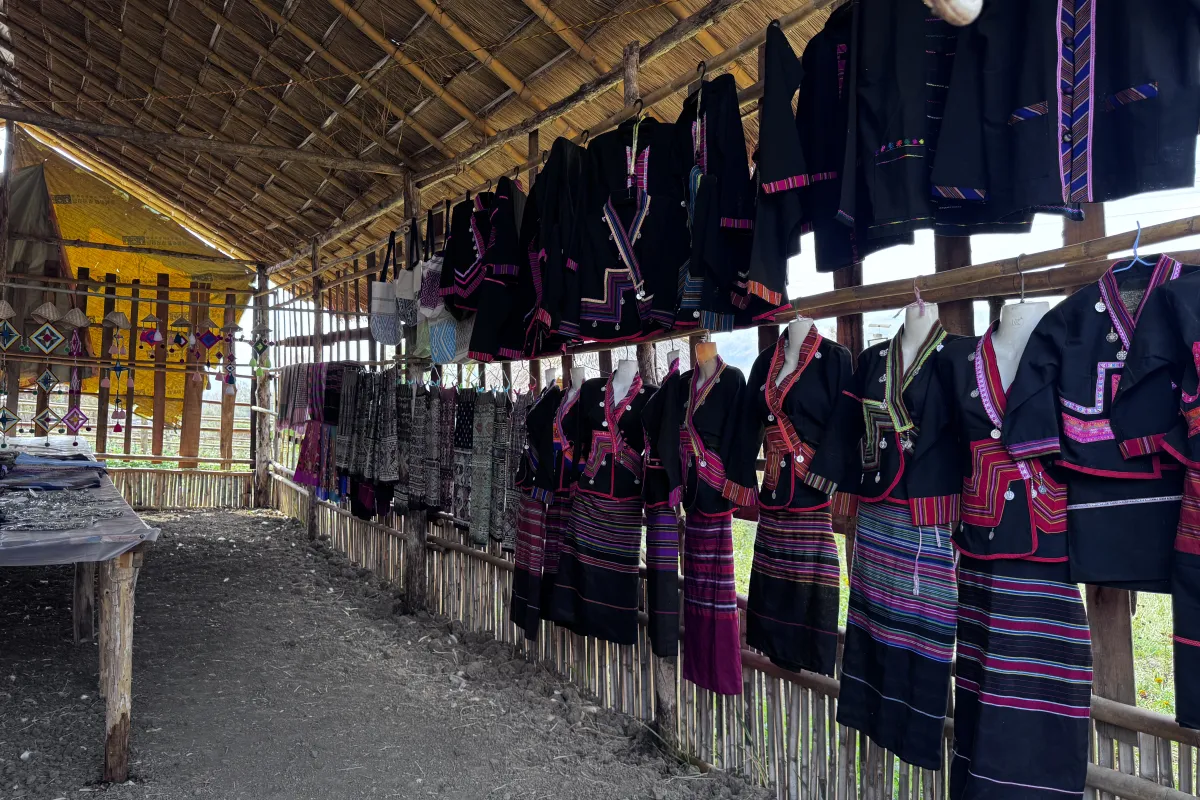
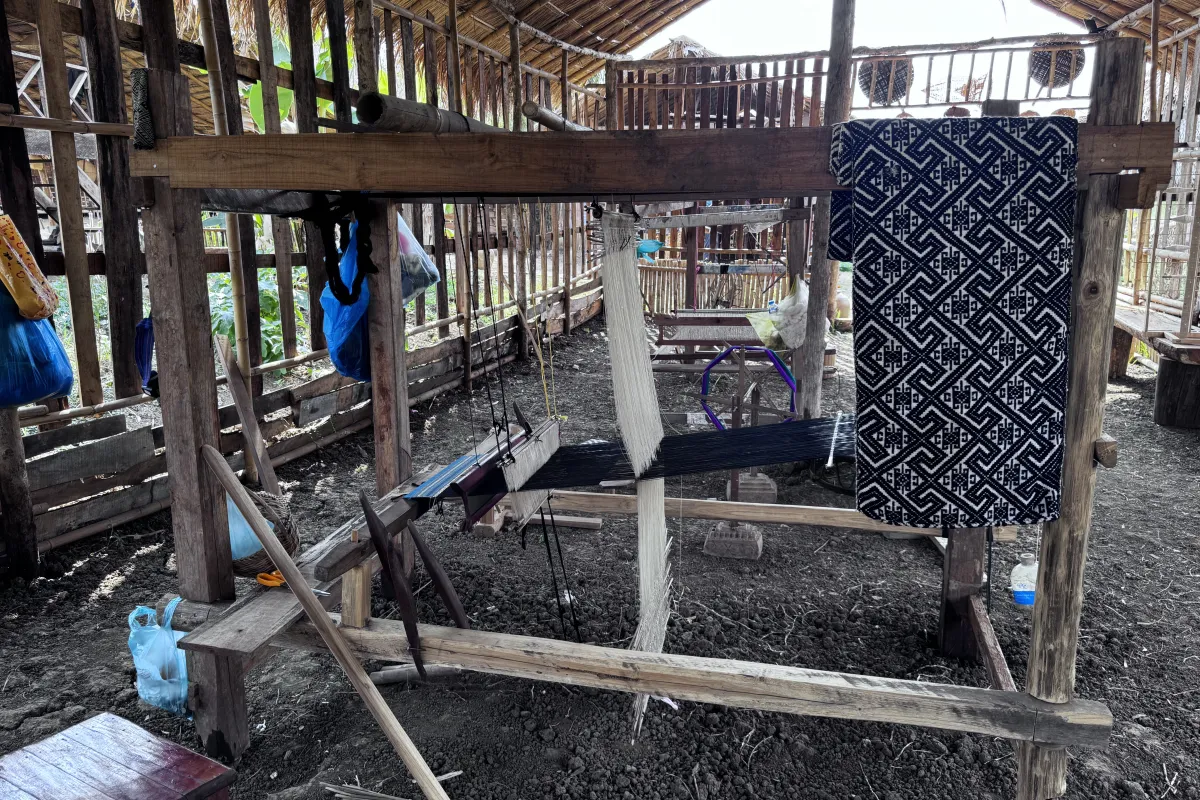

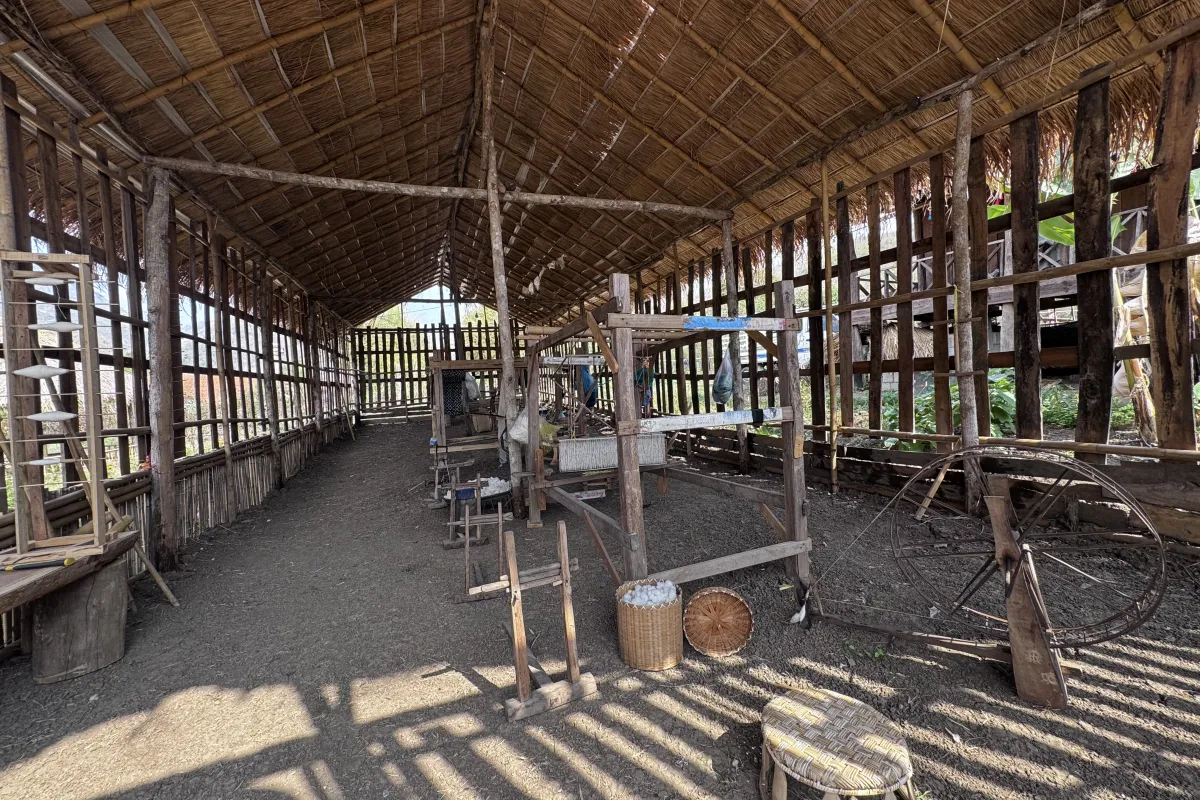
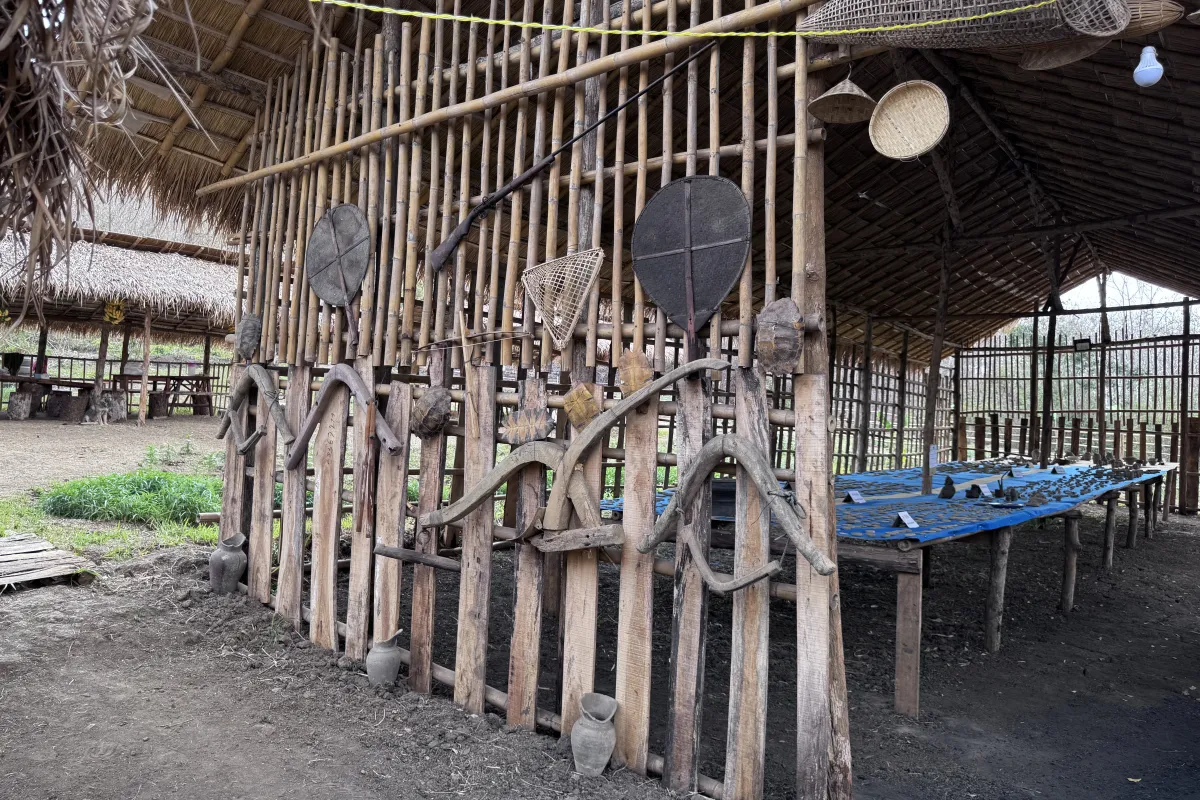
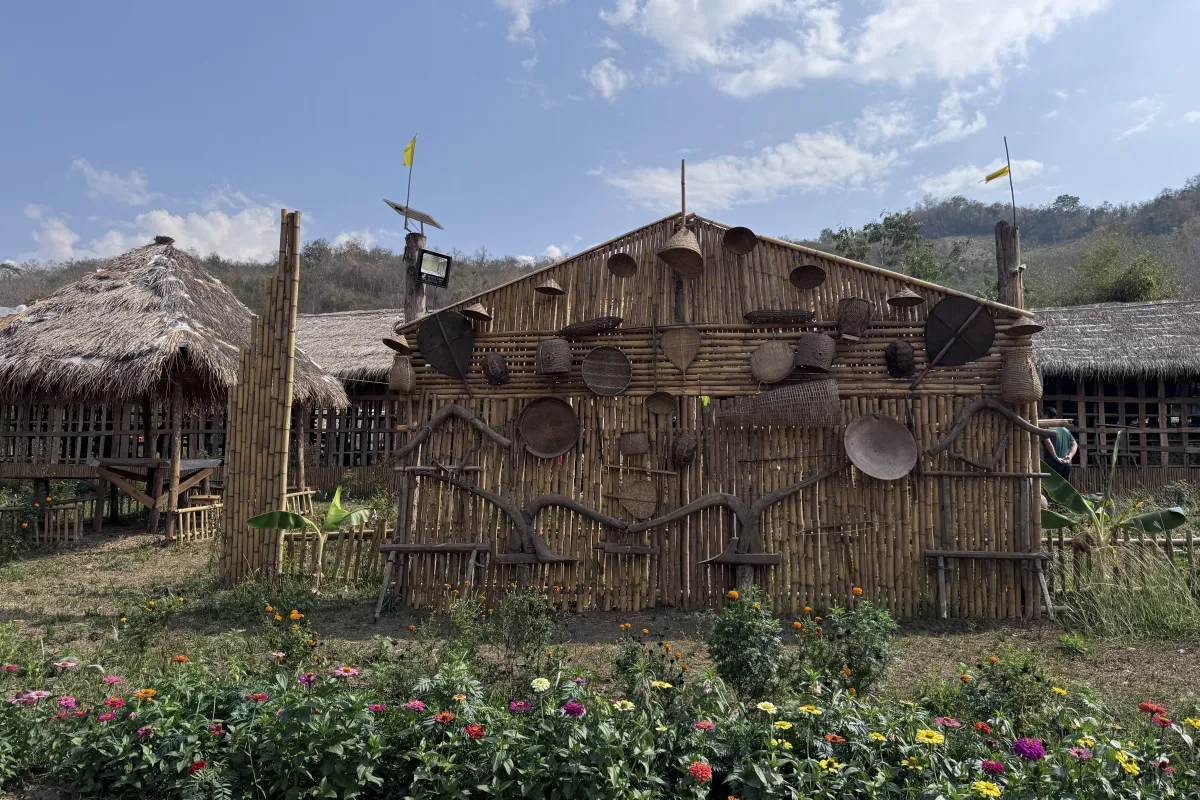
Khmu Exhibition Hall – A Cultural Stop on the Way to Kuang Si Waterfall
Located along the scenic route to Kuang Si Waterfall, the Khmu Exhibition Hall offers visitors a unique opportunity to learn about the Khmu people, one of Laos’ largest ethnic groups. This cultural exhibition provides an insightful glimpse into the traditions, lifestyle, and history of the Khmu community, who have lived in Laos for centuries.
Inside the hall, visitors can explore traditional Khmu artifacts, tools, textiles, and handicrafts, each telling a story of their deep connection to nature and sustainable way of life. The exhibition also highlights Khmu farming techniques, spiritual beliefs, and everyday customs, making it an enriching stop before reaching the famous waterfalls.
Whether you’re a history enthusiast or a traveler looking to understand Laos beyond its landscapes, the Khmu Exhibition Hall is a fascinating place to pause, appreciate local heritage, and gain a deeper understanding of the diverse cultures that shape Laos today.
Browse Tours
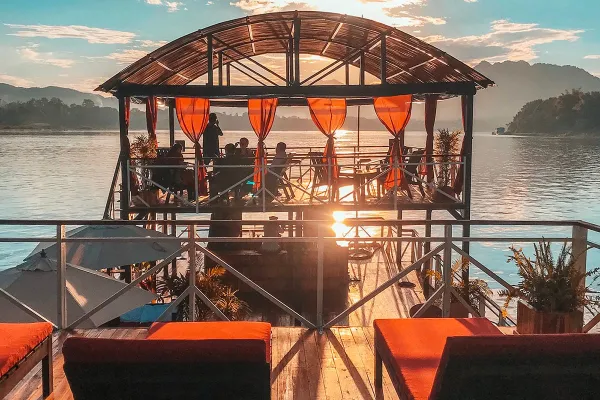
Experience the enchanting beauty of Luang Prabang with a sunset cruise on the Mekong River. As the sun begins to set, embark on a leisurely boat ride along the tranquil waters of the Mekong, surrounde...
Price from:
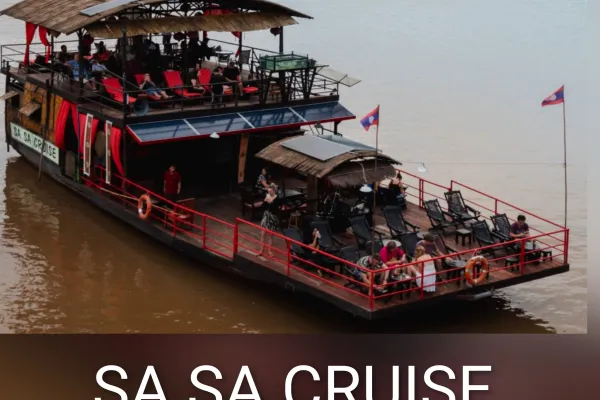
Capture unforgettable moments as the sun paints the sky with vibrant colors, creating a mesmerizing backdrop for your journey. The tranquil ambiance and stunning vistas make this sunset cruise a truly...
Price from:

Discover Laos Today provides a user-friendly and efficient online ticket booking system to save you considerable time when traveling throughout Laos. Travelers can reserve train tickets in Laos online...
Price from:

Discover Laos Today provides an easy-to-use and effective online ticket purchasing system to assist you save time when traveling around Laos. Travelers can reserve railway tickets in Laos online and p...
Price from:
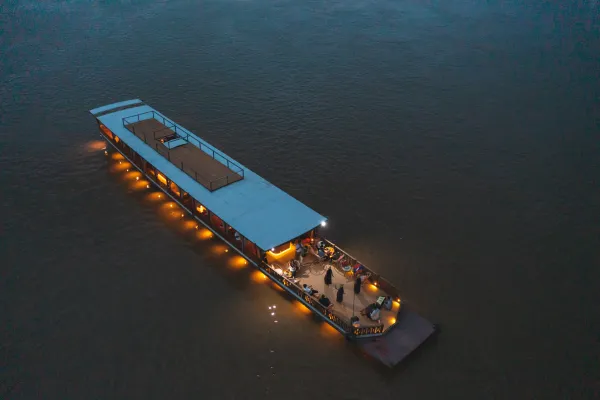
Experience the enchantment of a lifetime with our Sunset Cruise on the majestic Mekong River. Immerse yourself in the beauty of the setting sun as you glide along the tranquil waters. To make this exp...
Price from:
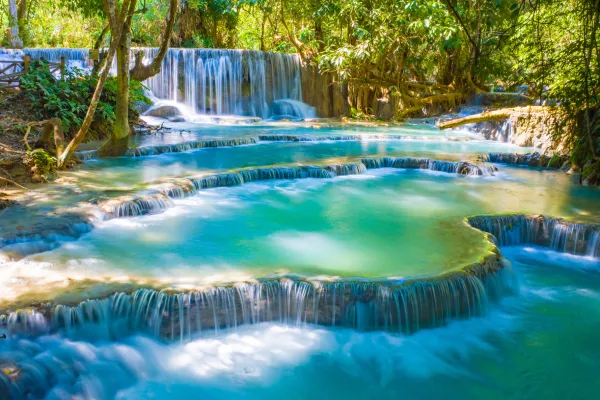
Visiting Kuang Si Waterfall and enjoying a sunset cruise back to town offers a perfect combination of natural beauty and relaxation, allowing you to immerse yourself in the enchanting surroundings of...
Price from:
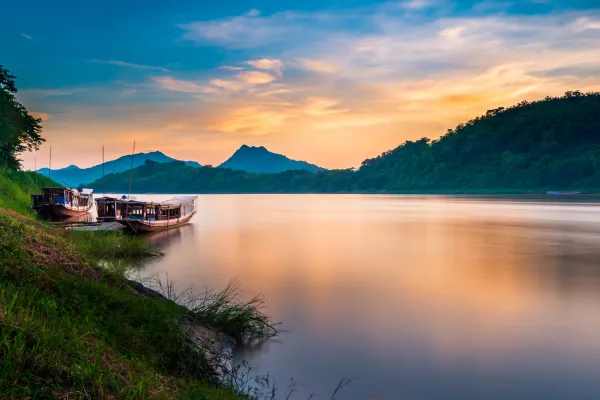
The 'Private 2-Hour Sunset Cruise on Mekong River' is a delightful experience that allows you to immerse yourself in the natural beauty of the Mekong River while enjoying a breathtaking sunset. This p...
Price from:
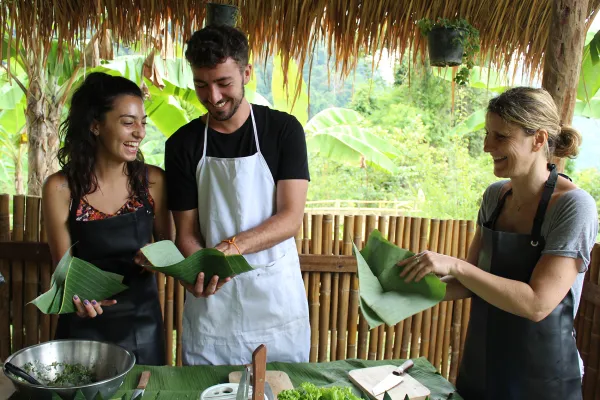
Discover the lao cuisine through several traditional dishes. Not only can you learn techniques and recipes but you can visit our gardens and pick some of your ingredients.The course is minimum 5 dishe...
Price from:
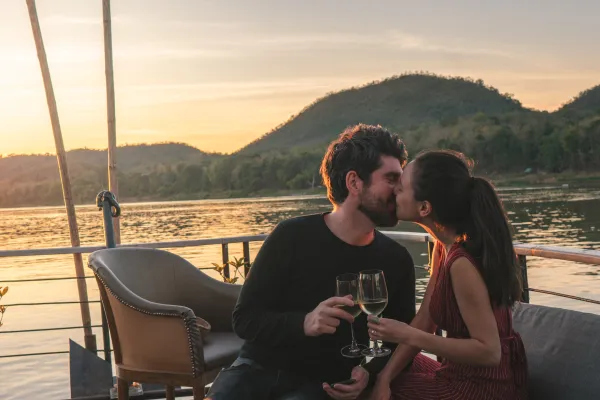
Experience the mighty Mekong River in all its glory, with Luang Prabang’s mountainous jungle providing a stunning scenic backdrop. A journey down this legendary waterway is unforgettable, and even mor...
Price from:
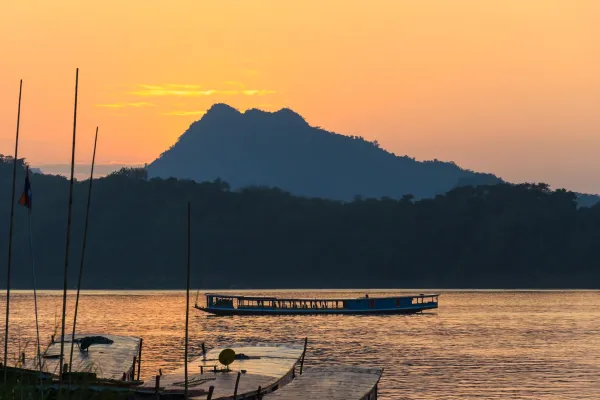
Indulge in the ultimate luxury of a private sunset cruise to Pak Ou Cave. Sail along the serene Mekong River, surrounded by breathtaking natural beauty. As the sun sets, witness the golden hues reflec...
Price from:
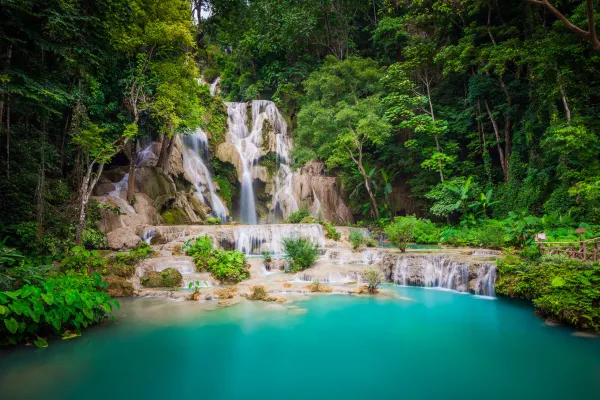
Visiting Kuang Si waterfall is an experience that will rejuvenate your soul and remind you of the beauty and power of nature. Prepare to be captivated by its charm and leave with memories that will la...
Price from:
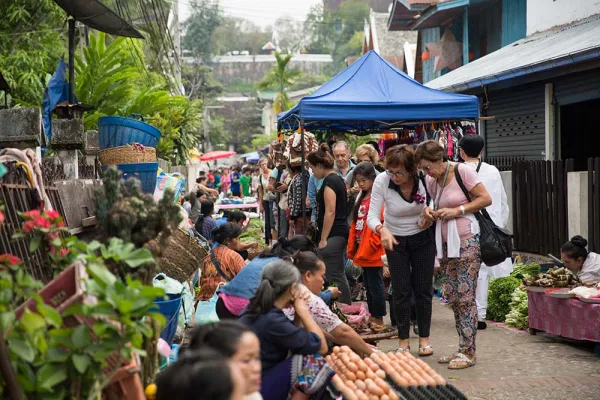
After picking you up from your hotel, our driver and guide will take you to the **Morning Market**, where you can sample traditional Lao delicacies and, if available, try your hand at preparing local...
Price from:
Browse hotels
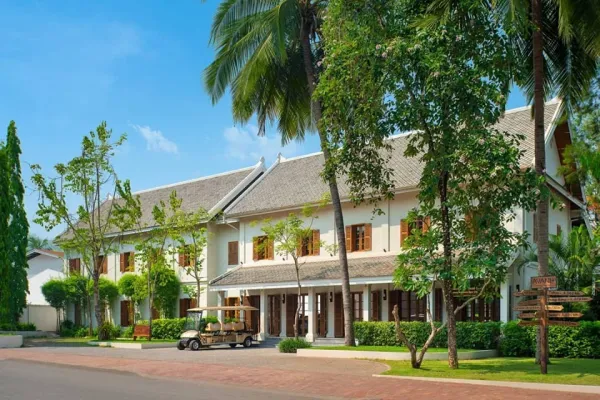
avaniplus.luang.prabang@avanihotels.com A central yet quiet location, charming design and a warm welcome.
Price From:
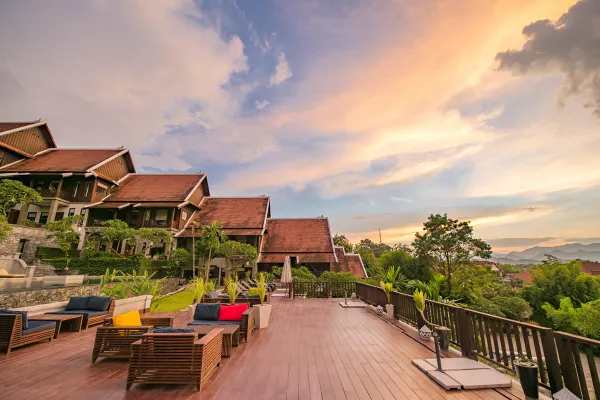
Your Next Great Escape Get away from it all and enjoy free breakfast and a room upgrade on us. Terms and conditions apply.
Price From:
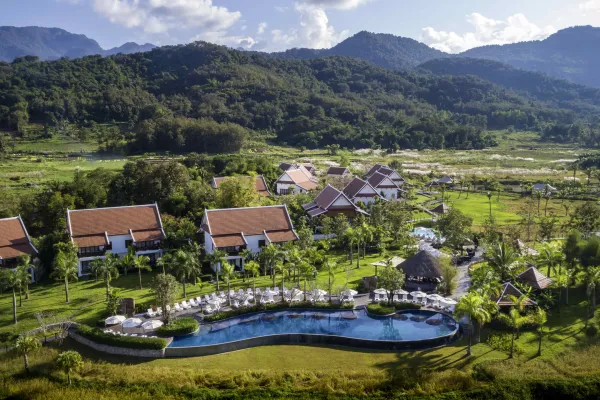
Surrounded by UNESCO sites, Pullman Luang Prabang is a 5-star resort providing the perfect setting for business and leisure travellers. This upscale hotel features a spa, gym, kid’s facilities, bars,...
Price From:
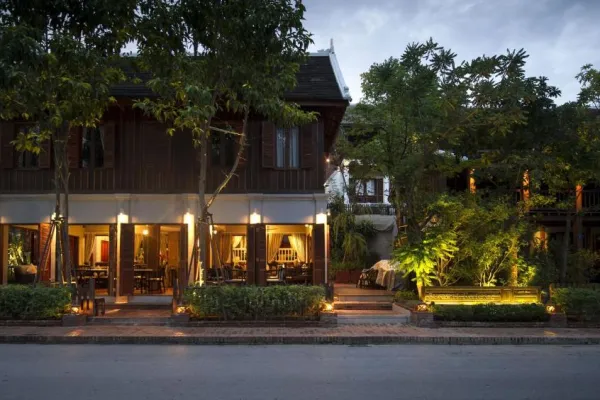
Price From:
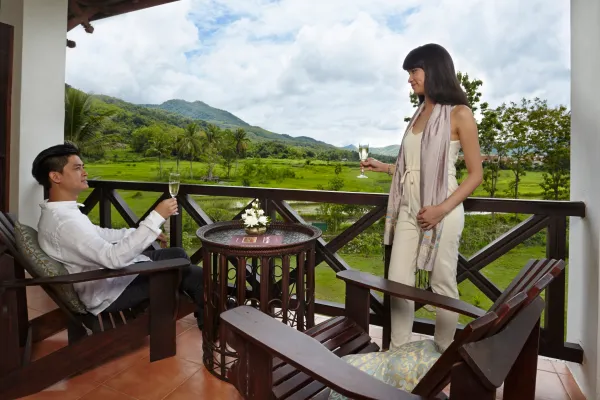
Price From:
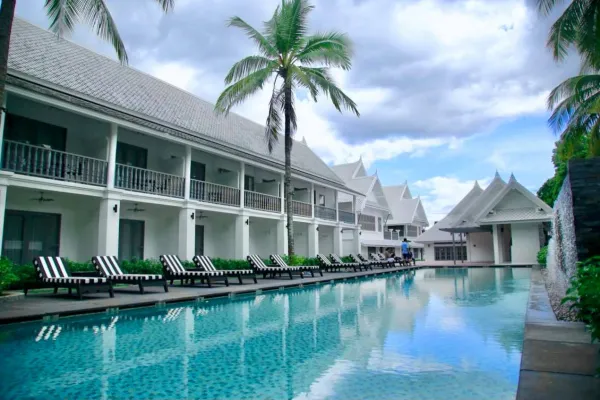
Price From:
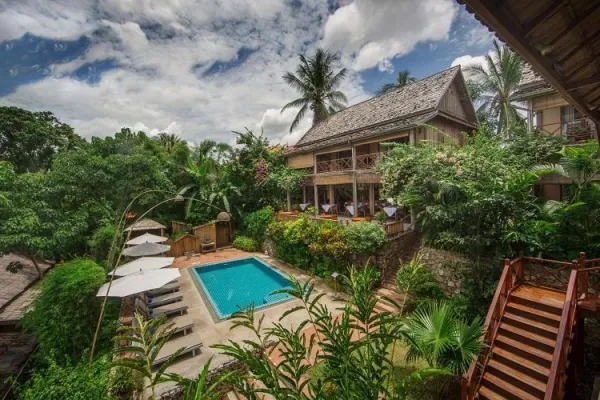
Price From:
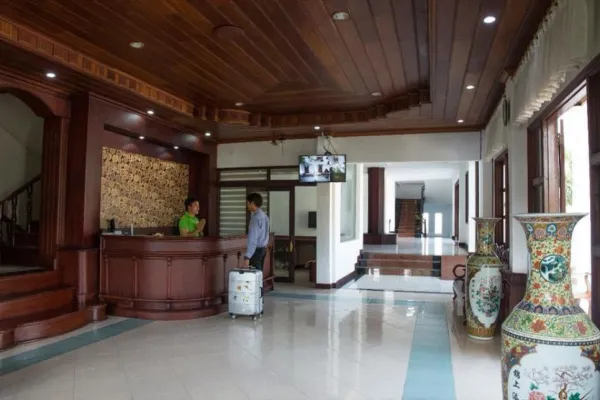
Price From:
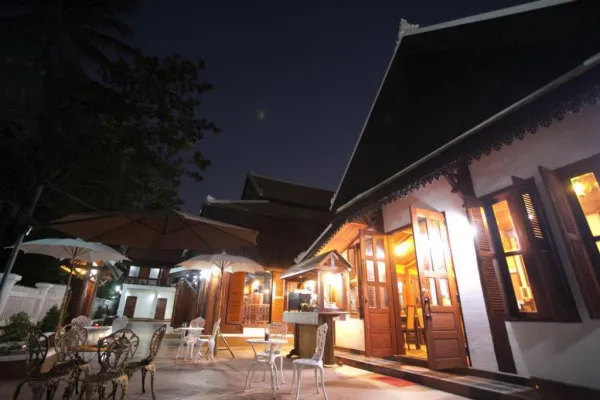
Price From:
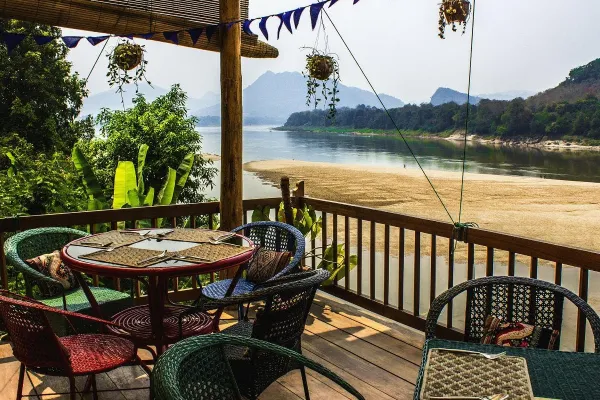
Price From:
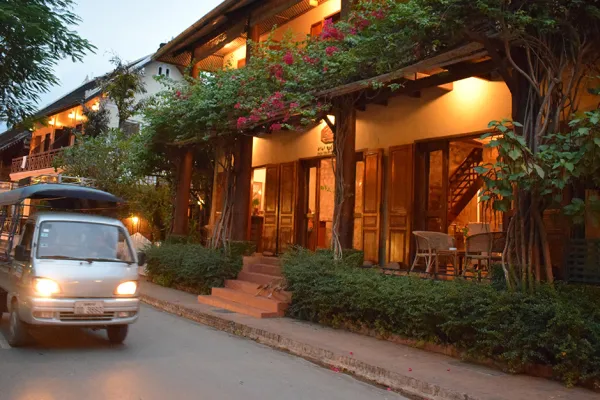
Price From:
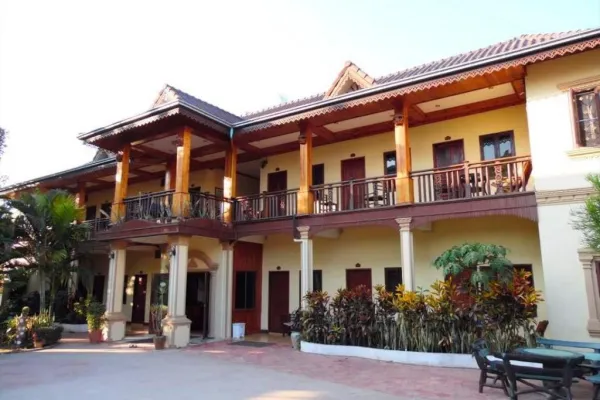
Thoulasith Guesthouse apartment is an accommodation with either a nice balcony or a terrace. The apartment features complimentary parking, a designated area for smoking and a restaurant provided for g...
Price From: